The Imperative of Experiential and Hands-On Learning

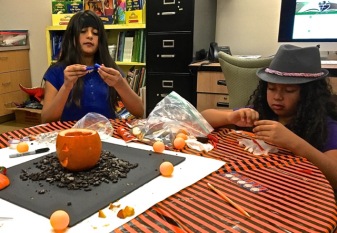
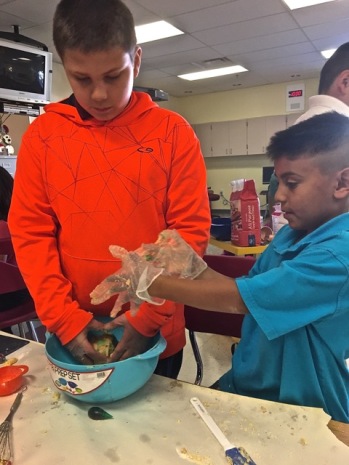
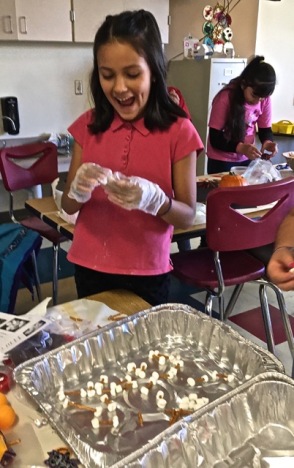
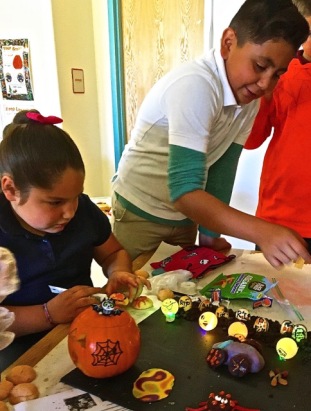
For the past several decades, I have had my feet in both elementary education and teacher training and development. Regardless of age, grade level, and setting, I include hands-on and experiential learning as a integral part of my instruction. It is learning by doing with a reflective element which, in turn, creates conditions for deeply engaged learning.

Experiential education is a philosophy in which educators purposefully engage with learners in direct experience and focused reflection in order to increase knowledge, develop skills, clarify values, and develop peopleโ€™s capacity to contribute to their communities. Throughout the experiential learning process, the learner is actively engaged in posing questions, investigating, experimenting, being curious, solving problems, assuming responsibility, being creative, and constructing meaning. (What is EE)

One of my favorite expressions is โ€œInsanity is doing the same thing over and over again and expecting different results.โ€  Thereโ€™s lots of lip service about closing the achievement gap, serving marginalized populations, helping students gain 21st century skills, and preparing students for STEM-related careers. The problem is that the school systems working toward these changes are using a factory model of education prevalent in the 19th and 20th centuries to do so. The changes that are being sought are not coming into fruition as different outcomes are expected out of doing more of the same thing. This is why I titled this post, The Imperative of Experiential and Hands On Learning. I believe that current instructional strategies need to be turned on their heads to achieve desired results and outcomes. Hands-on and experiential learning is used in some elementary schools but this diminishes as students get older. In too many high schools and colleges, instruction seems to occur through engaging the ears and sometimes the eyes (through visuals such as with slide presentations). Interestingly, though, a Study Finds 52% of U.S. Adults Say No. 1 Way to Learn is Through Active Participation, Followed by Visual Demonstration.

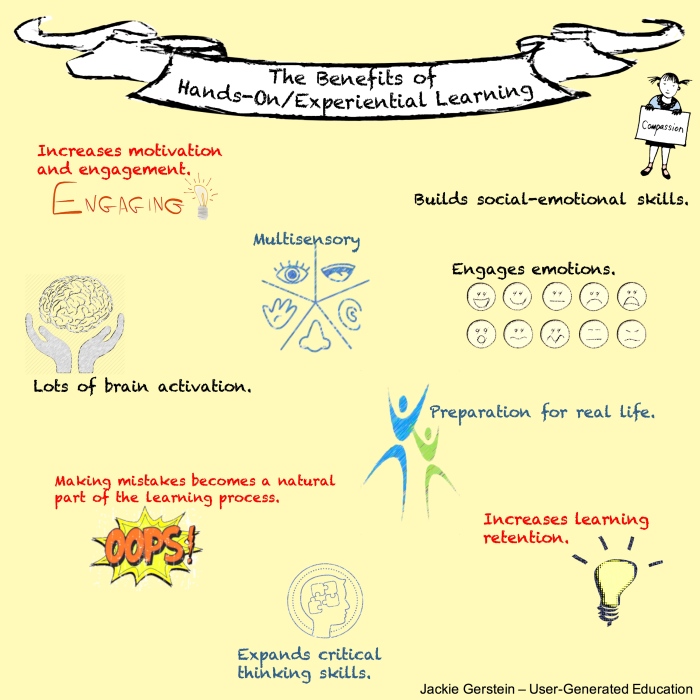
Some benefits of experiential and hands-on learning include:

  • Increases motivation and engagement.
  • Engages most of the senses.
  • Builds social emotional skills.
  • More likely to engage emotions.
  • Lots of brain activation.
  • Increases retention of learning.
  • Making mistakes becomes a natural part of the learning process.
  • Expands critical thinking skills.
  • Preparation for real life.

imperativeofhandson

Increases motivation and engagement.

Hands-on learning is often lots of fun; and having fun increases engagement and motivation.

Hands-on activities encourage a lifelong love of learning and motivate students to explore and discover new things (Bass, et al.).(Case for Hands-On Learning)

Learning by doing allows students to become personally invested in their own learning process. Becoming actively engaged in their education builds confidence, as the lessons require students to rely on their own abilities to obtain knowledge. That confidence and self-reliance inspires students to embrace the learning process and enthusiastically seek out additional knowledge.   (Importance of a Hands-On Experience in the Elementary Classroom)

Engages the senses.

Hands-on and experiential learning often is multi-sensory learning often engaging sight, hearing, tactile kinesthetic senses as learners participate in the educational activities.

By definition, hands-on learning requires students to engage in the education process using multiple senses, including sight, hearing and touch. Known as multisensory learning, the hands-on teaching strategy engages the senses in a way that promotes learning comprehension on multiple levels.  (Importance of a Hands-On Experience in the Elementary Classroom)

More likely to engage emotions.

The personal nature of experiential learning engages the studentsโ€™ emotions as well as enhancing their knowledge and skills. When students see the concrete fruits of their labor, they experience greater gratification and pride, thus enhancing their enthusiasm for continued learning.  (The Benefits of Experiential Learning)

Lots of brain activation.

When you combine activities that require movement, talking, and listening, it activates multiple areas of the brain. โ€œThe more parts of your brain you use, the more likely you are to retain information,โ€ says Judy Dodge, author of 25 Quick Formative Assessments for a Differentiated Classroom (Scholastic, 2009). โ€œIf youโ€™re only listening, youโ€™re only activating one part of the brain,โ€ she says, โ€œbut if youโ€™re drawing and explaining to a peer, then youโ€™re making connections in the brain.โ€(Hands-On is Minds-On)

Builds social-emotional skills.

Lots of social-emotional skills are addressed with hands-on, experiential learning.  Some of the specific skills that hands-on learning address are:

  • Goal-setting
  • Tolerance for frustration
  • Persistence
  • Asking for help
  • Working with others

Increases retention of learning.

When it comes to what learning methods work best, everyone is different, but the survey clearly demonstrates that hands-on training is favored by most Americans. Students who practice what theyโ€™re learning in a hands-on environment can often retain much more information when compared with sitting passively in a lecture room, so itโ€™s not a surprise that hands-on training is the overwhelming favorite. (Majority of Americans Prefer Hands-On Training in Educational Settings, Survey Finds)

There is a huge increase in the amount of information that is retained by students who are given the opportunity to practice what they are learning in the form of hands-on training. When students sit and listen passively in a lecture-style environment, they retain 20 percent of the information. When they are given the chance to practice what they have just learned, that percentage increases to 75 percent. (What Are the Benefits of Hands-on Training?)

Making mistakes becomes a natural part of the learning process.

Experiential learning involves trial by error. As students engage in hands-on tasks, they find that some approaches work better than others. They discard the methods that donโ€™t work, but the act of trying something and then abandoning it โ€“ ordinarily considered a โ€œmistakeโ€ โ€“ actually becomes a valuable part of the learning process. Thus, students learn not to fear mistakes, but to value them. (The Benefits of Experiential Learning)

Expands critical thinking skills.

The National Council for Excellence in Critical Thinking defines critical thinking as the โ€œprocess of actively and skillfully conceptualizing, applying, analyzing, synthesizing, and/or evaluating information gathered from, or generated by, observation, experience, reflection, reasoning, or communication.โ€  Hands-on learning allows students to experience a problem or task and make adjustments to improve outcomes. This โ€œtrial and errorโ€ exploration develops critical thinking and improves an understanding of abstract concepts that can be applied to real-life experience. (Improve Learning with Hands-on Activities)

Preparation for real life.

Experiential learning takes data and concepts and makes them โ€œrealโ€ by applying them to hands-on tasks, with real results. As the student interacts with the information, it becomes real to them.

Many experiential learning projects are career-oriented, because they are, by nature, grounded in โ€œreal-worldโ€ activities. Through these activities, students start to discover and develop their own skills, aptitudes and passions. This discovery in turn sets them on a more defined path to college and careers. (The Benefits of Experiential Learning)

Games or Worksheets: Is there really a question about the choice?

I work part time with gifted elementary students at two Title 1 schools where most of the students qualify for free or reduced lunches; and where they and/or their parents are learning English as a second language. What I quickly discovered about my students was that many were lacking in foundational skills in ELA and in math. Sadly, the instructional method used by way too many schools, especially those considered low performing like mine, is to give students lots of worksheets to teach such skills. I donโ€™t like worksheets. I didnโ€™t like them when I was an elementary student and donโ€™t know too many elementary students who say, โ€œI love doing worksheets.โ€

I have been using games in my classrooms (elementary and higher education) for decades. My use of games has included board games, team building and cooperative games, and more recently, video games. In order to help my gifted students learn some of the foundational skills, I integrate a variety of these games. This post is split into two parts:

  • Personal Observations About the Use of Games for Learning
  • Example Games Used to Teach and Reinforce

Personal Observations About the Use of Games for Learning

There has been a lot written about using games for learning. Research generally supports their use for learning:

Across 57 studies that compared teaching with a game to using other instructional tools, incorporating a game was more effective (SD .33). Using a game improved cognitive learning outcomes along with intrapersonal and interpersonal outcomes. Researchers looking at other collections of studies have found that games help students retain what theyโ€™ve learned.

I have written about the teacher as an ethnographer and the teacher as a reflective practitioner. In line with these beliefs, I have made my own personal observations about using games with gifted elementary students at low performing schools.

The Desire to Win is a Motivator

One of the biggest draw in the use of games is that students want to build their skills in order to win the game. Most, if not all, of my students embrace and engage in competitive games with the goal of winning. The need to win is a strong motivator; and to win they need to develop those skills. Even in group team building and cooperative learning, learning basic skills in order to be successful is a great motivator for learning basic skills. The same canโ€™t be said of worksheets. The major reward for completing a worksheet is a grade from the teacher. For many students, this type of reward is not all that motivating.

A Sense of Fun and Play

When games are used for learning, excitement and joy become part of the learning process. My learnersโ€™ excitement is seen with their squeals of joy, big smiles on their faces, and jumping out of their seats when they succeed in the games.  Doing worksheets is not fun and they do not elicit playful responses. They is limited joy in learning through worksheets.

Learning Doesnโ€™t Feel Contrived, Pushed, nor Painful

Most children play games and many adults do so, too. Games seem to be part of human existence.  Thus, when games are introduced into the learning environment, they feel natural to the learners. On the other hand, worksheets are not part of learnersโ€™ lives outside of the classroom. This translates into worksheets feeling contrived and pushed. Doing worksheets is often painful for the learners.

Noise is Expected

Games often include vocal elements. Learner voices and noise are expected and accepted when games are played. The opposite is true for doing worksheets. The expectation is that there is silence in the classroom while students work through their worksheets.

Increased and Engaging Repetition of Concepts

In general, repetition is needed to gain and remember basic skills. Usually this occurs through memorizing and repeating core skills. Games often offer the repetition of basic skills in a fun way as learners work towards completing the game challenges. Doing multiple worksheets can provide the repetition but not the engagement.

Learners Spontaneously Help One Another

Even in games that ask learners compete (see the second part of this post for examples), they often help one another out when one of their peers get stuck. This type of peer assistance is not promoted, may even be seen as cheating when students are completing worksheets.

Natural, Immediate, and Continual Formative Assessment

Most games offer continual feedback on learnersโ€™ performances. Games provide immediate feedback about the degree of success with a challenge as this function is built into the game mechanics. The same is not true for worksheets. The teacher is the one who often reviews and grades the worksheet. Feedback does not tend to be immediate nor continual with the use of worksheets.

Increased Engagement

The above characteristics equal increased engagement, and increased engagement often means increased learning. I have to wonder if one of the reasons my learners didnโ€™t develop foundational skills is that they werenโ€™t engaged in their learning processes; that they just went through the motions of doing the worksheets.

gamesvworksheets.jpg

Examples Games Used to Teach and Reinforce Basic Skills

Word Fluency

Scrabble Relay

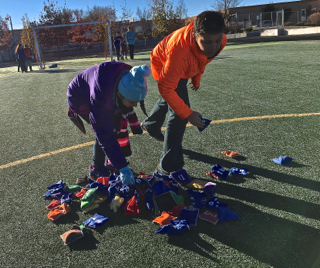
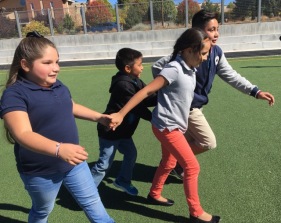
In this game, students were separated into two groups. A pile of several sets of Alphabet bean bags were placed about 25 yards from the starting line. In a relay type game, group members ran one a time to pick up and bring back to the starting line one bean bag at a time. The relay continued until all of the bean bags were picked up.

img_7015img_7017

The groups were then asked to create as many words as they could using the letters they collected. Letters could be reused after a word was created. Point values were: one point for words of 2 to 4 letters; two points for words with 5 to 9 letters; and 3 points for words with 10 letters or more.

img_2218img_2229

Words with Friends

I created a class account with Words with Friends EDU:

[embedded content]

The success of this game was better than I expected. The learners had never heard of nor played Scrabble so I was excited to see their level of engagement. They loved challenging one another; learning how the point values worked; and exploring the power words and their definitions.

Basic Number Sense

Similar to the word fluency games, I have been using a variety of both analog and digital games to increase my learnersโ€™ knowledge and skill with basic addition, subtraction, multiplication, and divisions.

Some of the analog math games Iโ€™ve used includeโ€

Some of the digital games Iโ€™ve used include:


Parting Shot: One of my gifted students yelled out this week during class (I meet with one group for a half a day and the other for a full day): I love coming to my gifted class. It is so much more fun than learning. On one hand, I was happy to hear how much he enjoys the class. On the other hand, I was saddened that: (1) he didnโ€™t see our fun activities as learning, and (2) his regular classroom lacked such fun.

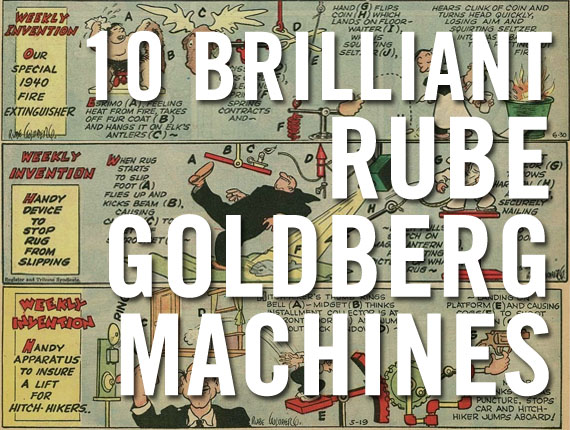
Simple and Rube Goldberg Machines: A Maker Education, STEAM Lesson

Recently I facilitated a simple-machines-leading-into-Rube-Goldberg-machines lesson with my gifted elementary students.

As Iโ€™ve discussed in past blog posts, I use several criteria to guide my lesson design:

  • Instructional challenges are hands-on and naturally engaging for learners.
  • There is a game-like atmosphere. There are elements of play, leveling up, and a sense of mastery or achievement during the instructional activities.
  • The challenges are designed to be novel and create excitement and joy for learners.
  • There is a healthy competition where the kids have to compete against one another.
  • Learners donโ€™t need to be graded about their performances as built-in consequences are natural.
  • There is a natural building of social emotional skills โ€“ tolerance for frustration, expression of needs, working as a team.
  • Lessons are interdisciplinary (like life) where multiple, cross-curricular content areas are integrated into the instructional activities.
  • Lessons are designed to get learners interested in and excited about a broad  array of topics especially in the areas of science, engineering, math, language arts, and the arts.

The lesson activities and sequence went as follows . . .

Simple Machines

  • As a group, learners watched the following video and reviewed the following webpage on the Smartboard:
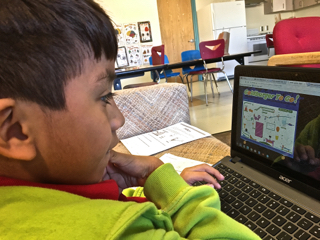
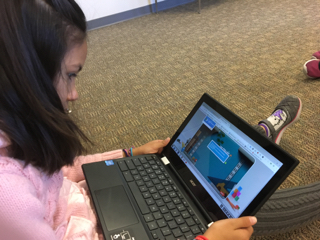
  • Via their own Chromebooks, they played the following online game: http://www.msichicago.org/play/simplemachines/
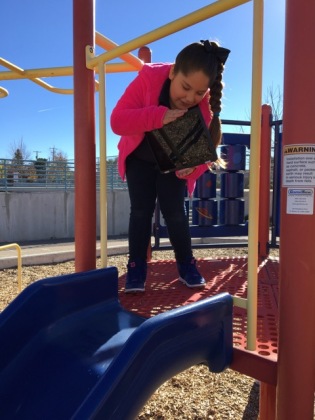
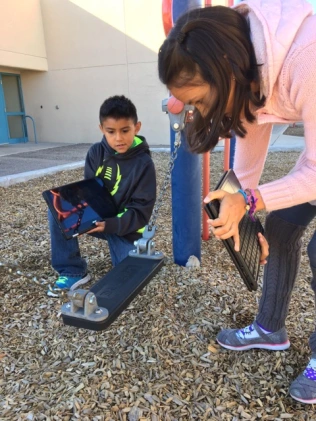
  • They used their Chromebooks to go on a scavenger hunt both inside and outside of the school to take photos of example simple machines.

img_6587img_6584

  • To conclude the simple machines component, learners were taught about Haikus and asked to write Haikus about simple machines to be posted on their Kidblogs.

2016-11-28_19262016-11-28_1928

Rube Goldberg Machines

  • Learners were shown several Rube Goldberg machines posted on Youtube.

img_6600img_6575

  • Learners were given a worksheet that contained several examples of Rube Goldberg Machines and asked to sketch their own cartoon versions.

  • Finally, they were given the task to create their own Rube Goldberg machines:
    • For inspiration, they were shown the following web resources โ€“
    • They were split into teams and given lots of materials (dominoes, hot wheels, hot wheel tracks, playing cards, assorted cardboard pieces. balls, tape).
    • They were told that they needed to have their creations end with doing a simple task as is characteristic of Rube Goldberg machines.
    • Finally, they were told that their creations would go into a display in the schoolโ€™s center hall.

This slideshow requires JavaScript.

What are the characteristics of high performing schools?

I am in the unique position of having several types of education jobs. I teach online graduate courses in educational technology to in-service teachers. I am a cohort facilitator for student teachers; and I am a part-time gifted teacher of elementary students at two different elementary schools that serve Kindergarten through 6th grade students. Out of the 16 elementary schools in my town, these two schools have some of the lowest end-of-year standardized test scores in the entire district; are composed of 85% to 90% Hispanic students; have a high percentage of English Language Learners; and all students on free or reduced lunch. These statistics present a dire picture, donโ€™t they?

I tell my student teachers that when they enter new schools for possible employment, they should be able to see and feel the culture of the school almost immediately upon entering the front doors. Because of this belief, I decided to do a photo essay of the artifacts found on the hallway walls at the schools where I teach:

This slideshow requires JavaScript.

Because of the variety of my jobs as well as being an active reader and contributor to social media, I do a lot of thinking and reading about the qualities of high performing schools. Again, the data shows that I work at very low performing schools, but how are intangibles measured? How are the following characteristics, which I see, hear, and feel at both of my schools, measured and quantified?

  • A positive school climate
  • A safe school climate
  • Dedicated teachers who love teaching and their students
  • Creative teachers
  • Students enjoyment of being at school and in learning
  • Student creativity and imagination
  • Lots of laughing and smiling students
  • The arts naturally integrated into content area learning
  • School walls filled with beautiful student artifacts

I wholeheartedly believe I am teaching in high performing schools.

Halloween Wars: An Interdisciplinary Lesson with a STEM, STEAM, Maker Education Focus

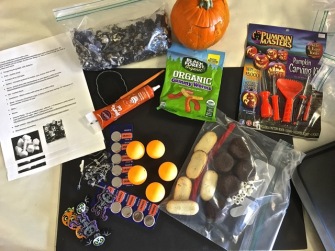
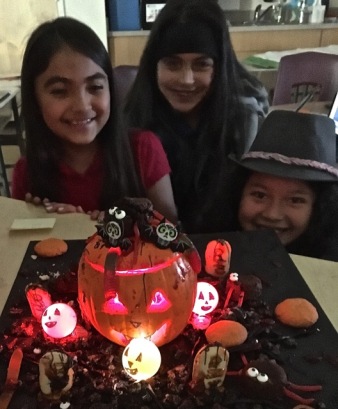
For Halloween 2016 and 2017, I did a version of Halloween Wars (a Food Network show) with my two classes of gifted elementary learners. I am sharing this lesson through my blog post as it reinforces how I approach lesson planning and teaching.

Background Information

Principles that drive my instructional approach. regardless of theme, include:

  • Instructional challenges are hands-on and naturally engaging for learners.
  • There is a game-like atmosphere. There are elements of play, leveling up, and a sense of mastery or achievement during the instructional activities.
  • The challenges are designed to be novel and create excitement and joy for learners.
  • There is a healthy competition where the kids have to compete against one another.
  • Learners donโ€™t need to be graded about their performances as built-in consequences are natural.
  • There is a natural building of social emotional skills โ€“ tolerance for frustration, expression of needs, working as a team.
  • Lessons are interdisciplinary (like life) where multiple, cross-curricular content areas are integrated into the instructional activities.

These have been further discussed in A Model of Good Teaching?

goodteaching

Halloween Wars Lesson

For this Halloween Wars lesson, the goals included the following:

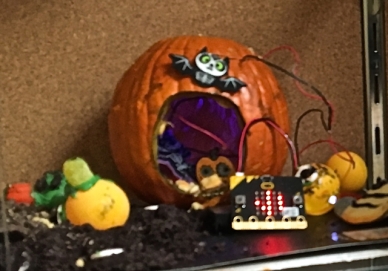
  • To work in a small group to create a Halloween scene using food items, cooked goods, LED lights, and miscellaneous materials.
  • To work as a small group to craft a story about their scene.
  • To introduce and reinforce ideas, concepts, and skills associated with maker education, STEM, and STEM.

Standards addressed during this lesson included:

  • Generate and conceptualize artistic ideas and work. (National Core Arts Standards)
  • Exercise flexibility and willingness to be helpful in making necessary compromises to accomplish a common goal; and assume shared responsibility for collaborative work, and value the individual contributions made by each team member. (21st Century Skills)
  • Solve problems involving measurement and conversion of measurements. (CCSS.Math)
  • Write narratives to develop real or imagined experiences or events using effective technique, descriptive details, and clear event sequences. (CCSS.ELA-Literacy.W.5.3)
  • Publish or present content that customizes the message and medium for their intended audiences. (ISTE NETS for Students)

Time Frame: 3 to 4 hours

IMG_2412

Procedures:

  • Learners were introduced to the lesson through the following presentation โ€“
  • Learners were split into groups of 3 or 4 members. In their small groups, they worked together on a shared Google doc to compose their story. The story was displayed on the Smartboard and read aloud. One member made editing changes to grammar and spelling based on suggestions by their classmates. (This strategy is further discussed in Teaching Grammar in Context.)   Here is one student groupโ€™s example:
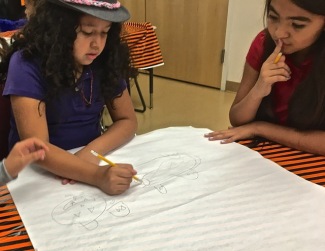
  • They were then shown their materials and asked to sketch their designs.

img_6414img_6473

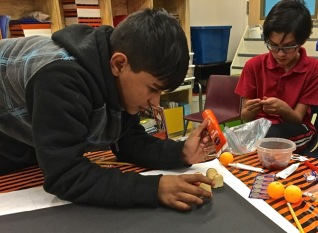
  • In their small groups, learners needed to work together cooperatively to make their display scenes using the materials provided.

img_6485img_6483

  • Learners made sugar cookies using a recipe projected on the Smartboard. They were asked to cut the recipe in half reinforcing math skills.

img_6437img_6443

  • LED lights, which learners connected to coin batteries, were placed in decorated ping-pong balls and their carved pumpkin.

img_6453img_6501

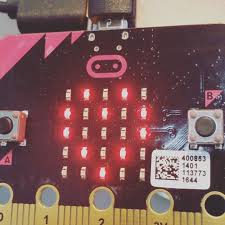
  • Microbits were programming to add a title to their scenes.

imagesIMG_2483

. . . and some final displays:

This slideshow requires JavaScript.

  • Their final task for Halloween Wars was to write a blog post on their Kidblogs that reflect on their processes. I worked with individual students to help them edit their work.

2017-10-31_1403

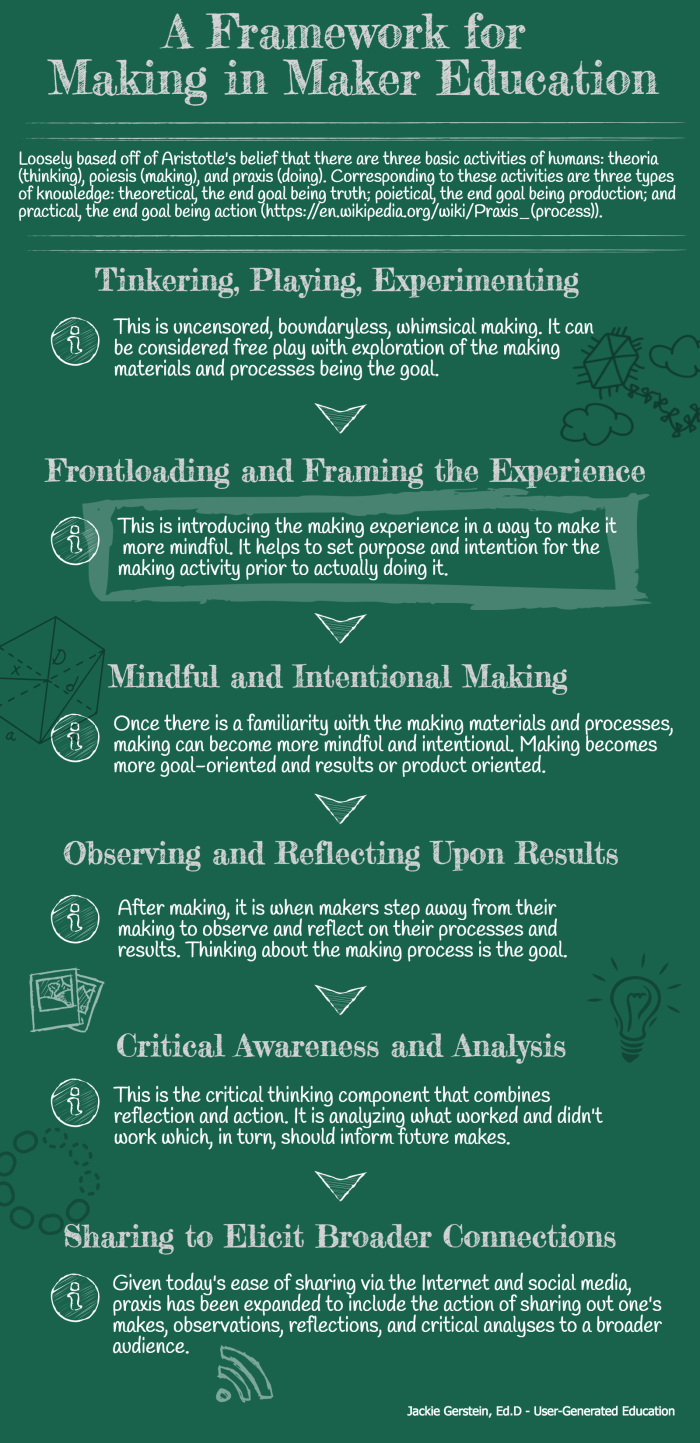
A Fuller Framework for Making in Maker Education

Background Information

I recently learned, for the first time, about Aristotleโ€™s belief that there were three basic activities of humans: theoria (thinking), poiesis (making), and praxis (doing). Corresponding to these activities were three types of knowledge: theoretical, the end goal being truth; poietical, the end goal being production; and practical, the end goal being action (https://en.wikipedia.org/wiki/Praxis_(process)).

The Greek theoria, from which the English word โ€œtheoryโ€ is derived, meant โ€œcontemplation, speculation, a looking at, things looked atโ€.  The word theoria is derived from a verb meaning to look, or to see: for the Greeks, knowing was a kind of seeing, a sort of intellectual seeing (https://en.wikipedia.org/wiki/Theoria).

Poรฏesis is etymologically derived from the ancient Greek term ฯ€ฮฟฮนฮญฯ‰, which means โ€œto makeโ€ (https://en.wikipedia.org/wiki/Poiesis).

Praxis (From ancient Greek: ฯ€ฯแพถฮพฮนฯ‚) is the process by which a theory, lesson, or skill is enacted, embodied, or realized (https://en.wikipedia.org/wiki/Praxis_(process)). โ€œPraxisโ€ may also refer to the act of engaging, applying, exercising, realizing, or practicing ideas. Praxis may be described as a form of critical thinking and comprises the combination of reflection and action. Paulo Freire defines praxis โ€œreflection and action directed at the structures to be transformed.โ€(https://en.wikipedia.org/wiki/Praxis_(process))

Implementing a Broader Framework of Making in Maker Education

All of this led me to think about how this would translate into a full spectrum of making in the context of maker educator. Having such a framework would help insure that learning from the making experience is more robust, not left up to chance. I believe a fuller spectrum or framework would including the following elements:

  • Play, Tinkering, Experimentation โ€“ This is uncensored, boundaryless, whimsical making. It can be considered free play.  This, in my mind, is the first part of of Poรฏesis which translated from Greek โ€œto makeโ€.  How this translates into practice is by providing learners with lots of making materials; and telling them to just dive in and play hard with those materials.
  • Framing or Frontloading the Making Experience โ€“ This is the introducing the making experience for more mindful and intentional making. It helps both the educators and learners to set purpose and intention for the making activity prior to actually doing it. This is discussed in Framing and Frontloading Maker Activities where I go in more detail how to frontload or frame the maker activities:
    • Using and Reviewing Essential Questions
    • Using Scenarios
    • Specifying Standards
    • Asking Questions Related To Personal Skills
    • Asking Questions to Help with Scaffolding and Sequencing the Activities
    • Asking Questions Related To Using Peer Support-Working Collaboratively
  • Mindful and Intentional Making โ€“ Once there is a familiarity with the making materials and processes,  making can become more mindful and intentional.This is the second part of poisis or the making process. Making becomes more goal-oriented, focused, and more results or product oriented (although process is still important).
  • Observing and Reflecting Upon Results โ€“ This is the theoria or thinking part of the process. After making, it is when makers step back away from their making to observe and reflect on their processes and results.โ€Being able to reflect is a skill to be learned, a habit to develop. Reflection requires metacognition (thinking about your thinking), articulation of that thinking and the ability to make connections (past, present, future, outliers, relevant information, etc.)โ€ (Amplifying Reflection).
  • Critical Awareness and Analysis โ€“  This is the praxis, the critical thinking component that combines reflection and action. It takes reflection to a deeper level by dissecting the making process to analyze what worked and didnโ€™t work which, in turn, will inform future makes. This critical analysis should directly and strongly influence future making experiences โ€“ the action part.
  • Sharing to Elicit Broader Connections and Change โ€“ Given todayโ€™s ease of sharing via the Internet and social media, the action part of praxis has been expanded, in this framework, to include sharing out oneโ€™s makes, observations, reflections, and critical analyses to a broader audience. This can occur by writing about the making process, and/or by doing a photo essay, video, podcast to share via social media. By doing so, others can benefit from oneโ€™s make.

a-framework-for_17172814_ad53e9ef20a574d3e44d93f984241673d1c3da24

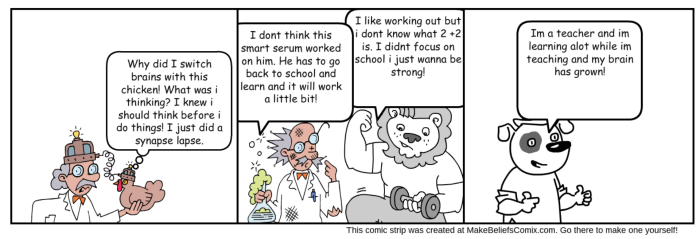
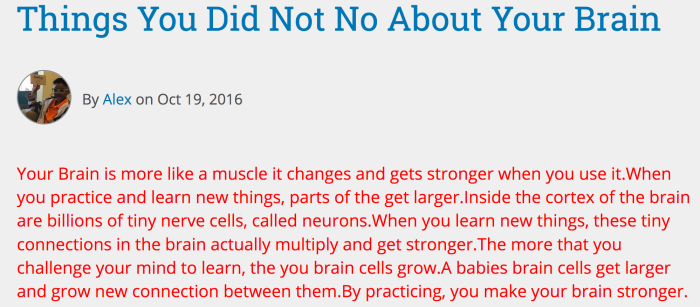
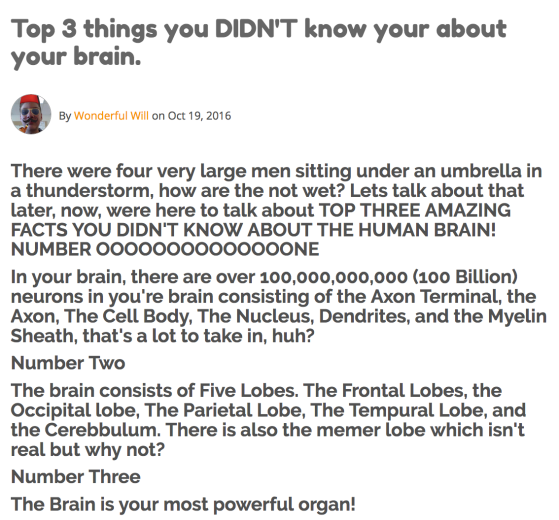
Teaching Elementary-Level Learners About the Brain

Judy Willis in How to Teach Students About the Brain writes:

If we want to empower students, we must show them how they can control their own cognitive and emotional health and their own learning. Teaching students how the brain operates is a huge step. Even young students can learn strategies for priming their brains to learn more efficiently.

Teaching students the mechanism behind how the brain operates and teaching them approaches they can use to work that mechanism more effectively helps students believe they can create a more intelligent, creative, and powerful brain. It also shows them that striving for emotional awareness and physical health is part of keeping an optimally functioning brain. Thus, instruction in brain function will lead to healthier learners as well as wiser ones.

Here is a run down of the learning activities I did with my gifted elementary students to teach them about their brains:

Introduction to the Brain

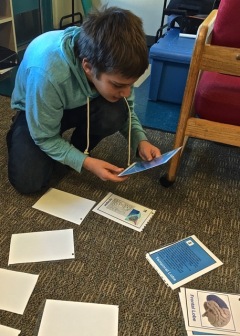
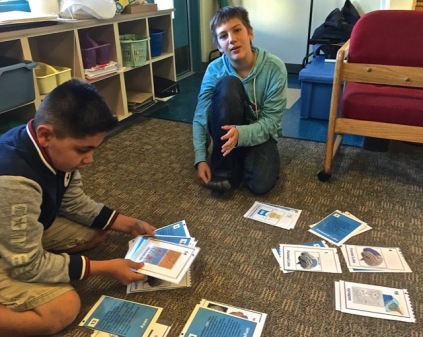
  • Learners played a concentration brain game I created. Cards were created that had parts of the brain images on one of the paired cards and the definitions on the other. Games cards included: cerebral cortex, frontal cortex, parietal lobe, temporal lobe, occipital lobe, cerebellum, limbic system, hypothalamus, amygdala, neuron, axon, dendrite, neurotransmitters, synapse. Students were asked to read aloud the definitions when they match a pair. An alternative is to play Neuro-Jeopardy found at http://faculty.washington.edu/chudler/jeopardy.html.

img_6319img_6323

Learning about the Brain Lobes

  • Learners completed a jigsaw puzzle I created about the brain lobes and their functions.

img_6303img_6309

  • Using the Smartboard, the interactive website, https://www.koshland-science-museum.org/explore-the-science/interactives/brain-anatomy, about the brain lobes was shown to the learners.
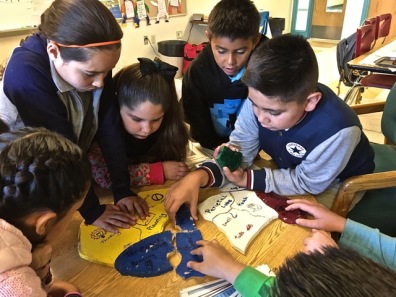
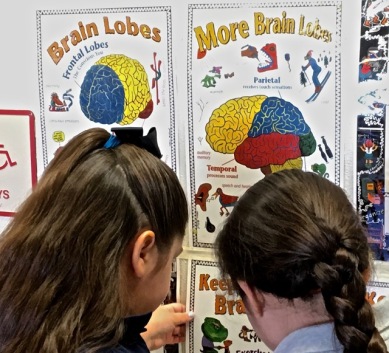
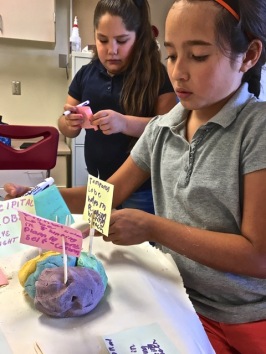
  • Using this website and brain anatomy posters on the wall as references, learners, in small groups, created their own model brains using dough (that they made themselves) for the lobes and sticky notes/toothpicks to label the lobes and their functions.

img_6341IMG_6353.jpg

img_6351img_6348

Brain Operation Game

  • I adapted the directions for their brain operation game from https://iamclaudius.com/makey-makey-operation-game/. I gave them an outline of the brain with lobes outlined for them to color and rubber cement onto a pizza box (see video below). For their brain parts, I gave them air drying clay. They were asked to create parts that represent the functions of the individual lobes, e.g., eye for occipital lobe, mouth for temporal lobe, a ball for the cerebellum, etc.
  • They were then asked to code their games using Scratch. Here is the example I used to get them started: https://scratch.mit.edu/projects/283935140/editor/. I instructed them to include, for each lobe, its name and some kind of pun about its function.
  • Finally, they hooked up the Makey Makey using the directions found at https://iamclaudius.com/makey-makey-operation-game/.

Learning About Neurons

  • Neurons were introduced to the learners through this Neuroscience for Kids webpage โ€“ https://faculty.washington.edu/chudler/synapse.html
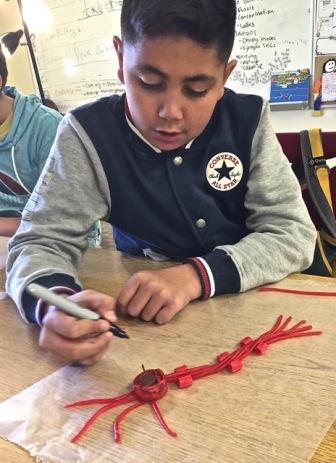
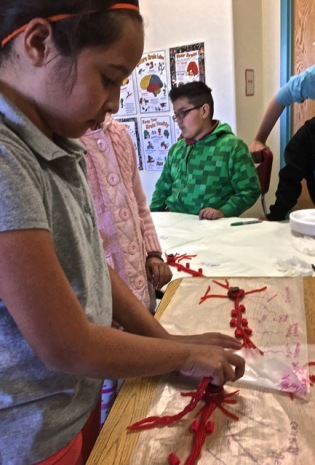
  • Learners made their own neurons out of licorice, fruit roll ups, and min-Reeseโ€™s cups on top of wax paper and labeled the parts of the neuron on their wax paper. This was inspired by the Neuroscience for Kids webpage โ€“ http://faculty.washington.edu/chudler/chmodel.html.  Learners were then asked to show how their neurons would correctly connect to one another as they would be in the brain.

img_6361img_6377

stagimg_6397

Finishing Up with a Creative Writing Activity About the Brain

2016-10-21_1931

2016-10-21_1933

2016-10-21_1925

Teaching Grammar-In-Context

Archaic Ways of Teaching Grammar

We construct grammatically correct sentences or correct our mistakes by intuitively applying the rules that govern English syntax. If, instead, we had to apply those rules consciously, they would only get in our way, making it impossible for us to speak or write at all. To construct a simple two-word sentence, such as โ€œHe dreams,โ€ requires the application of at least seven grammar rules. Imagine trying to apply them consciously following the rules of English grammar.

Over the years, the teaching of grammar has continued to be prominent in English and foreign language instruction, leaving less class time or student energy for students to speak, read, or write in those languages.  As early as 1906, studies were undertaken that attempted to show the relationship between knowledge of school-taught grammar and language skills. Since then, hundreds of such studies have produced some clear and unequivocal conclusions: The teaching of formal grammar does not help a studentโ€™s ability to speak, to write, to think, or to learn languages.

It is important for educators to know that, among recent research studies, not one justifies teaching grammar to help students write better.  Although we accept the fact that social, economic, and political forces influence education in many areas, we ought not to allow such forces to outweigh knowledge and reason in determining the school curriculum. (Is Teaching Grammar Necessary?)

A recent โ€“ November, 2017 โ€“ research article entitled, Experimental trials and โ€˜what works?โ€™ in education: The case of grammar for writing, concluded:

With regard to our substantive case of grammar, the current evidence from randomised controlled trials does not support the widespread use of grammar teaching for improving writing among native English-speaking children. Based on the experimental trial and meta-analysis evidence about writing teaching more generally, our hypotheses are that supporting primary/elementary pupilsโ€™ grammar is most likely to require teachers intervening during the writing process, and interacting to discuss the use of grammar in relation to the overall purpose of the writing task and the purpose of the writing. Small-group and whole-class teaching that includes a focus on the actual use of grammar in real examples of writing (including professionally produced pieces, realistic examples produced by teachers including โ€˜think aloudโ€™ live drafting of text and drafts of pupilsโ€™ writing) may be more effective.

Learning Needs a Context

I often discuss and blog about teaching content within a context, that learning needs a context. . .

How often have students been asked to memorize mass amounts of facts โ€“ historical dates, vocabulary words, science facts; get tested on them, just to forget almost all those memorized facts a week or two later? Given that is this learning experience is more common than not, why do educators insist on continuing this archaic and ineffective instructional practice?

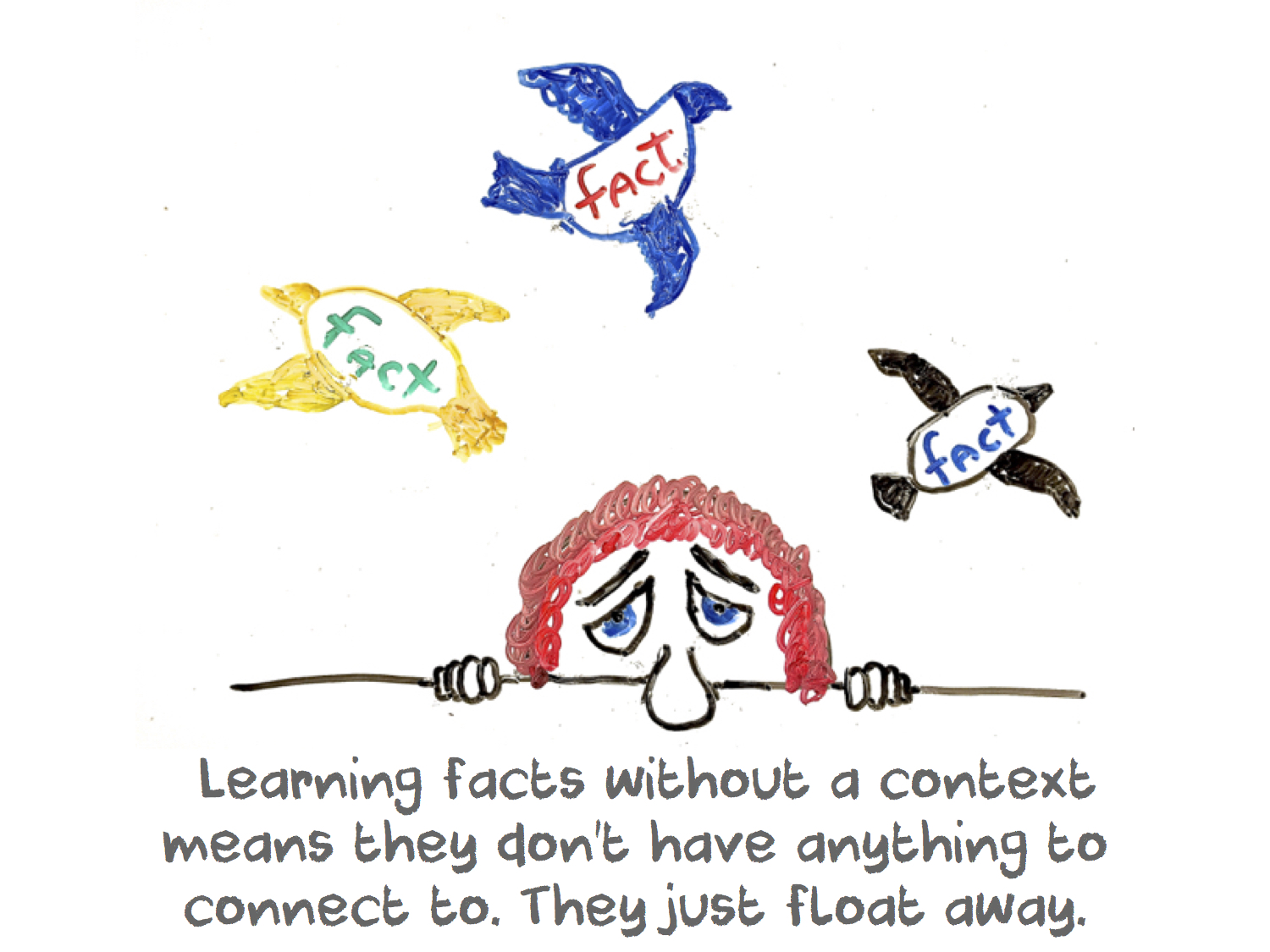
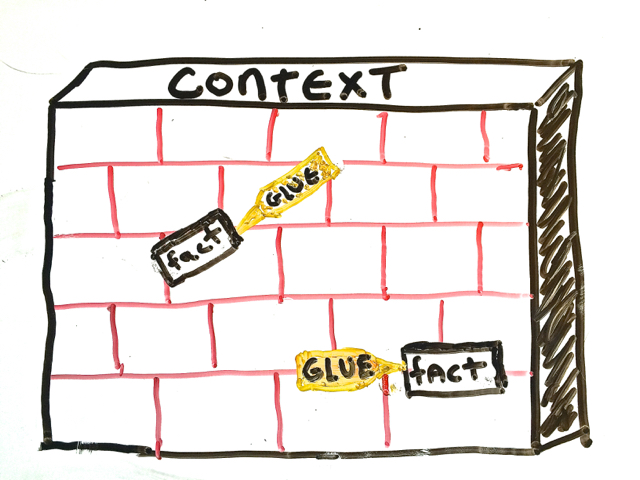
The visual image I use to describe this is that there are all of these unconnected facts floating around in the learnerโ€™s brain. Since they have nothing to connect to, they end up flying away. This is especially true for abstract concepts including memorizing grammar rules.

floating facts

The key to increased understanding is providing a context for the facts and the rules. The context becomes the glue to increase the stickiness, the longevity of long term memory of those facts and rules. This is especially true for abstract concepts such as grammar rules. These concepts need something concrete with which to attach.context

Providing a Context for Grammar Instruction

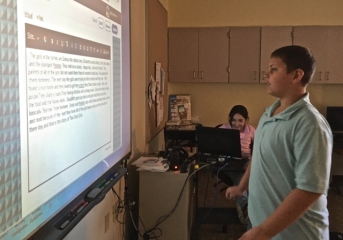
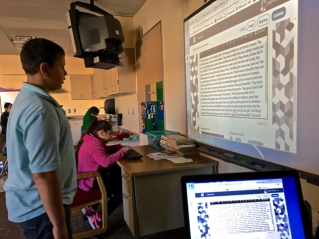
I teach gifted elementary level classes with a good portion of the students being English Language Learners. This translates into ELA grammar making even less sense for them than for English only learners. I do a lot of maker education, STEM (science, technology, engineering, and mathematics), and STEAM (adding arts to it) activities with them, and ask them to document their learning through taking photos and blogging about those activities using their Chromebooks. Because of the article about grammar and talking with the schoolโ€™s literacy coach, I decided to bring grammar-in-context into my classrooms. How Iโ€™ve done this is through projecting individual blog posts onto the Smartboard. The writer of the blog opens his or her blog post in an editing mode. Another learner reads the blog post out loud. The rest of the learners make suggestions for improvement as it is read out loud. I help guide them asking questions like:

  • Does that sound right?
  • Is that the correct verb for that noun?
  • What tense should that verb be?
  • What type of punctuation in the different pauses?
  • Is that spelling correct?
  • Is that possessive? If so, what is the punctuation?

. . . and again, these questions and the suggested edits are done in the context of the individual learnersโ€™ blog posts that have already been composed.

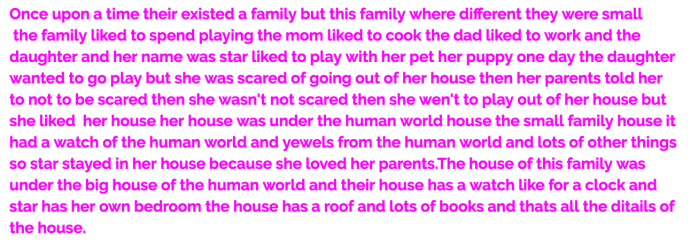
Here is an example of one such blog prior to editing:

Some of my observations from this process that I noted includes:

  • Learners eagerly volunteer to have their blog posts reviewed. First, they really enjoy having their posts read out loud. Second, I believe this is also due to the focus being on improving their means to communicate better not for a grade.
  • The learners know that their blogs are viewed by their own classmates and their sister school (I teach gifted education at two schools and have opened my Kidblog to both schools to view one anotherโ€™s posts). They have authentic audiences and what to present their best selves.
  • As it becomes a group exercise, the other class members seem to enjoy the challenge and become engaged in offering corrections and improvements.
  • To keep up the motivation and make it manageable, I only do 2 or 3 during any giving sitting.

An Engagement Story

Update: This is the second year that I am continuing this practice with my gifted elementary learners. I have a student who dislikes the hands-on activities I do in my class. Since I do so many of them, I often struggle to find ways to engage him. One of his strengths is writing and grammar. Iโ€™ve made him the โ€œofficialโ€ grammar coach helping the other learners edit their blog posts. When he is doing so, he definitely finds his stride; a purpose in my class.

IMG_2613IMG_2623

He work with an English language learner to help her edit her blog post. Both learners were highly engaged in this process,

Here is the before:

2017-11-16_1722.png. .  and here is the after:

2017-11-16_1732.png

Not perfect, but better, and I believe they both learned from the process.

Introducing Design Thinking to Elementary Learners

Design thinking is an approach to learning that includes considering real-world problems, research, analysis, conceiving original ideas, lots of experimentation, and sometimes building things by hand. The projects teach students how to make a stable product, use tools, think about the needs of another, solve challenges, overcome setbacks and stay motivated on a long-term problem. The projects also teach students to build on the ideas of others, vet sources, generate questions, deeply analyze topics, and think creatively and analytically. Many of those same qualities are goals of the Common Core State Standards. (What Does โ€˜Design Thinkingโ€™ Look Like in School?)

I use the following activities to introduce elementary students to the design thinking process. The ultimate goal is for the learners to work on their own, self-selected problems in which they will apply the design thinking.

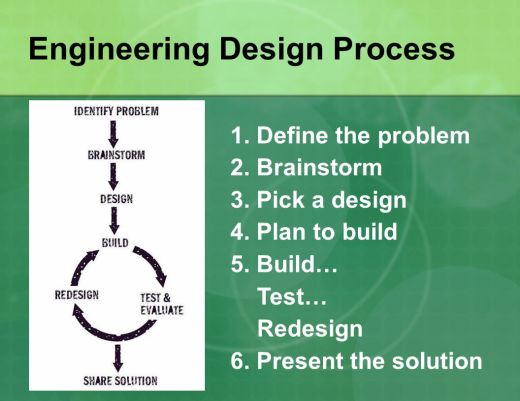
Introducing the general design process to elementary student occurs through showing the following video about the engineering process:

The Task: Build the Highest Tower

The Goal

The goal of this activity is to have learners practice a simple version of the engineering design process.

slide_10

Source: http://slideplayer.com/slide/9058715/

The Task

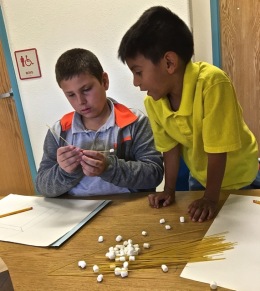
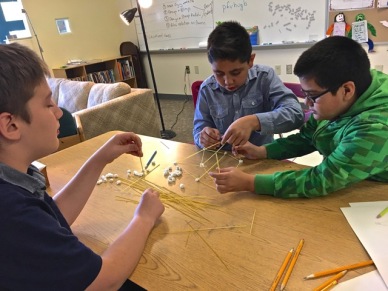
In teams of 3 to 4 members, learners are asked to build the highest tower out of 50 small marshmallows and 50 spaghetti noodles.

The Process

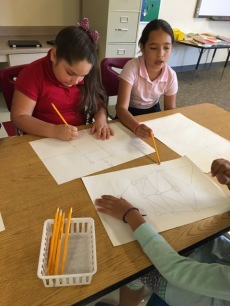
As a team, ask learners to sketch out possible solutions

Design thinking requires that no matter how obvious the solution may seem, many solutions be created for consideration. And created in a way that allows them to be judged equally as possible answers. Looking at a problem from more than one perspective always yields richer results. (Design thinkingโ€ฆ what is that?)

img_5437img_5462

Prototype and test ideas

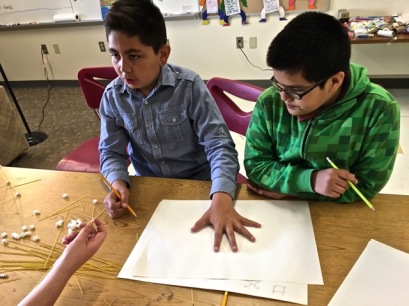
After brainstorming and sketching possible designs, learners begin the process of building this spaghetti-marshmallow towers.

img_5440img_5453

Revisit the design process

After some time prototyping, a time-out is called so learners can reflect on what is working and not working. Learners are encouraged to see what the other groups have created to spark new ideas.

Design thinking allows their potential to be realized by creating an environment conducive to growth and experimentation, and the making of mistakes in order to achieve out of the ordinary results. At this stage many times options will need to be combined and smaller ideas integrated into the selected schemes that make it through. (Design thinkingโ€ฆ what is that?)

Return to the building and testing process

Next Step: Introduction to Empathy

As a design thinker, the problems you are trying to solve are rarely your ownโ€”they are those of a particular group of people; in order to design for them, you must gain empathy for who they are and what is important to them. As a design thinker, the problems you are trying to solve are rarely your ownโ€”they are those of a particular group of people; in order to design for them, you must gain empathy for who they are and what is important to them. (from the d-school)

The second part of the introducing elementary-level learners to the design process is introducing them to empathy and its connection to the design process.

The Goal

To have learners discover and explore the elements of empathy as it relates to design.

The Process

Introduction to Empathy

For younger kids (but even the 5th and 6th graders seemed to enjoy it):

Warm-Up: Great Egg Drop

Preparation and introduction:

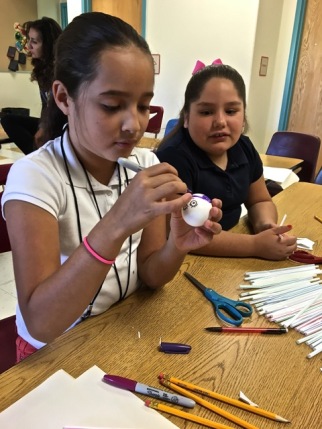
Learners are asked to draw a face on an egg and are given the following directions: โ€œPretend the egg is alive โ€“ has thoughts, feelings, and opinions. Your job is to use the straws to create a protective covering for the egg so it will not crack when dropped from a 10 foot height. Address the following questions prior to building your egg structure:

  • What do you think your egg is feeling about his or her upcoming drop?
  • What do you need to make your eggโ€™s journey less stressful?
  • What can you do to reassure your egg that everything will work out okay?
  • What forces do you need to consider in order to keep your egg safe? Consider gravity, rate of descent, impact.

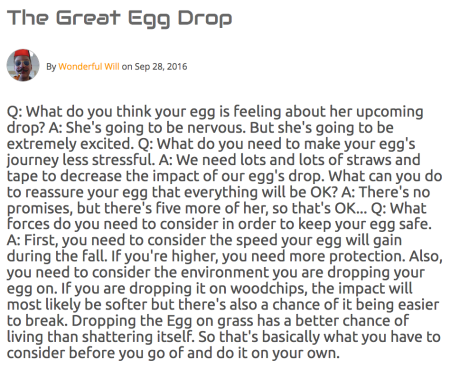
Example Responses from a 6th grade group:

2016-09-28_1905

The Task

To begin, assemble groups of 4 or 5 and give each group various materials for building (e.g. 5-20 straws, a roll of masking tape, one fresh egg, newspaper, etc.)  Instruct the participants and give them a set amount of time (e.g. 30 minutes) to complete building a structure, with the egg inside in which the structures are dropped from at least 10 feet in elevation and then inspected to see if the eggs survived. The winners are the groups that were successful in protecting the egg. (http://www.icebreakers.ws/medium-group/defend-the-egg.html)

img_5646img_5713

Delving Deeper: An Environment for a Gamibot

Lead learners through the following steps:

img_5723img_5731

  • Develop the Backstory for the Gamibot: Report via a Blog Post or Voki
  • Create an Environment for the Gamibot Out of Natural and Art Materials. Make sure it fits your Gamibotโ€™s backstory creating an environment that is tailored for your Gamibot. Be ready to explain why it fits your Gamibot.

2016-09-28_1947

2016-09-28_1941

Squishy Circuits: Designing for a Human Being

The Goal

To put everything together by creating a design for another human being.

The Task

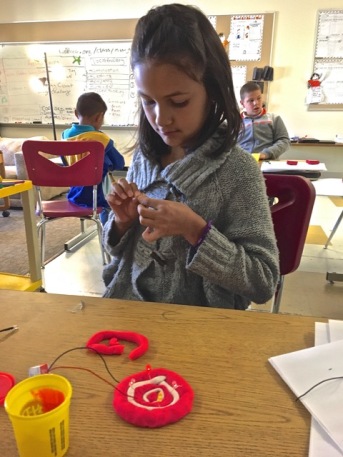
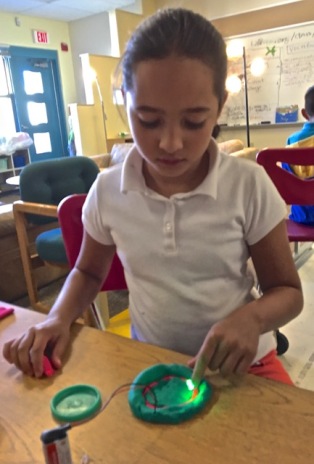
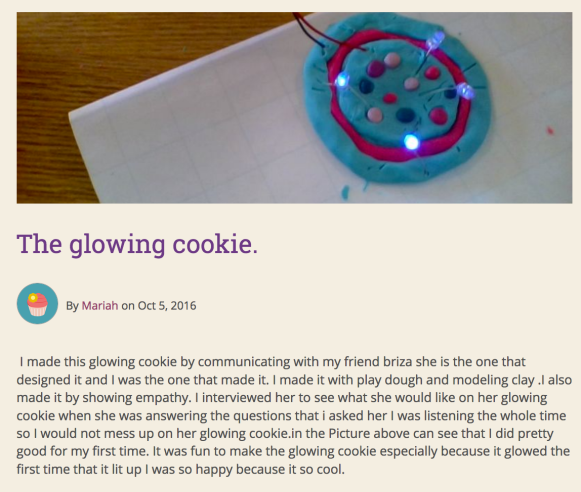
Learners design a squishy circuit product based on the specifications given to them by a classmate โ€“ the client from all of the available colors of Play-Doh (conductive clay), modeling clay (insulating clay), and LED lights.

The Process

Lead learners through the following steps:

img_5914IMG_5916.jpg

  • As partners, decide who will be the designer and who will have a product designed for him or her โ€“ the client.
  • As a designer, find out the following from the client:
    • What do you want me to build?
    • What size do you want it to be? It needs to be scaled in some way. (Note: learners are given graph flip chart paper with 1โ€ณ squares and taught about scale, e.g., 1โ€ณ = 1โ€ฒ, 1โ€ณ = 2โ€ฒ, etc.)
    • What color Play-Doh? Modeling clay? LED lights.
  • Construct the design while your client gives you feedback. The client is not permitted to touch the Squishy Circuit during the design process.
  • After completion, roles are switched.

2016-10-09_1636

Natural Differentiation and Personalization Through Open Ended Learning Activities

This past summer I facilitated maker education classes for 5 to 10 year old kids. This school year I am a gifted teacher meeting with 2nd through 6 grades one day per week per group. I like mixed age groups and have no problem designing learning activities for them. I realized that the reason for this is that these activities are open ended permitting each student to naturally and instinctively to work at or slightly above his or her ability level.  This actually is a definition of differentiation.

Many classrooms consist of students from different knowledge backgrounds, multiple cultures, both genders, and students with a range of disabilities or exceptionalities (Alavinia & Fardy, 2012). Differentiated instruction is defined as โ€œa philosophy of teaching that is based on the premise that students learn best when their teachers accommodate the differences in their readiness levels, interest, and learning profilesโ€ (Konstantinou-Katzi et al., 2012, p. 333). (in http://edutechwiki.unige.ch/en/Differentiated_learning)
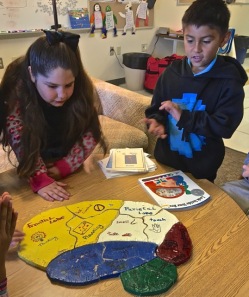
One of results or consequences of providing such activities is an increase in learner engagement, excitement, and motivation. Open ended learning activities permit and encourage learners to bring their โ€œselvesโ€ into the work. They become agents of their own learning.

Because of this freedom, they often shine as true selves come through. Learners often surprise both the educator and themselves with what they produce and create. It becomes passion-based learning.  Not only do the activities become self-differentiated, they become personalized:

Personalization only comes when students have authentic choice over how to tackle a problem. A personalized environment gives students the freedom to follow a meaningful line of inquiry, while building the skills to connect, synthesize and analyze information into original productions. Diane Laufenberg in What Do We Really Mean When We Say โ€˜Personalized Learningโ€™?

Personalized learning means that learning starts with the learner. Learning is tailored to the individual needs of each learner instead of by age or grade level. It is more than teaching to โ€œone size fits allโ€ or just moving to learner-centered learning and changing instruction. Personalized Learning takes a holistic view of the individual, skill levels, interests, strengths and challenges, and prior knowledge. The learner owns their learning. Barbara Bray in What is Personalized Learning?

The educator, in this environment, introduces the activities and then steps back to let the learners take over their own personal learning. The educator lets go of expectations what the final produce should be; should look like; should do.  The educator becomes a provider of resources, feedback giver, and communications facilitator. S/he becomes a tour guide of learning possibilities. S/he shows learners the possibilities and then gets out of the way.

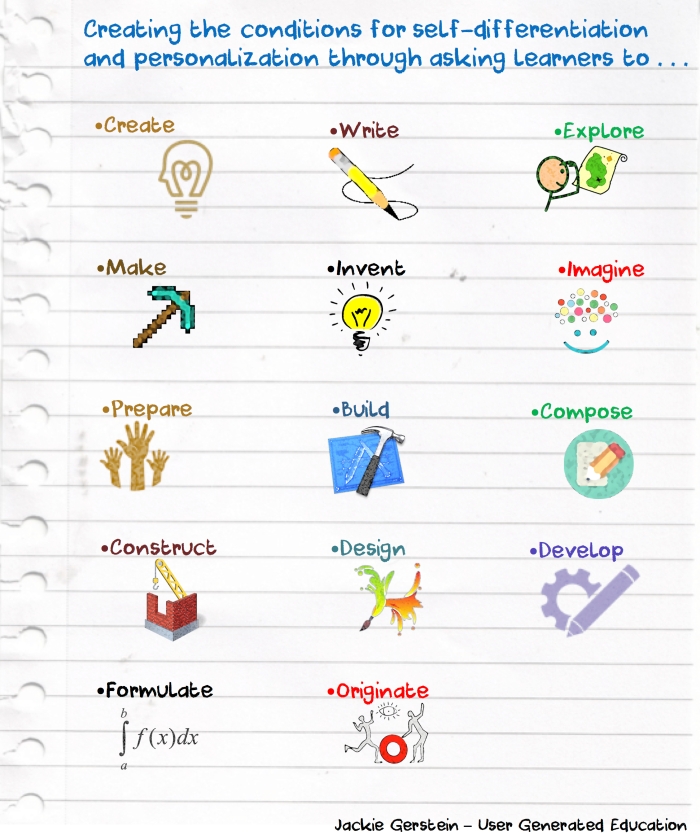
Creating the conditions for self-differentiation and personalization can occur with learning objectives that start with action verbs such: create, write, explore, invent, make, imagine, prepare, build, compose, construct, design, develop, formulate, originate.

selfdifferentiating

Parting Shot: The following is an Animoto I created to show how many forms of making there are, but it also demonstrates what can happen when open ended projects are introduced into the learning environment.

Natural Resources and Planning

1. Introduction

Natural resources play a fundamental role in the development and planning of cities, regions, and nations. They include elements of the natural environment such as land, water, forests, minerals, energy sources, and biodiversity that are essential for human survival and economic activities. The availability and management of natural resources significantly influence patterns of settlement, economic development, infrastructure planning, and environmental sustainability.

Planning must ensure that natural resources are used efficiently while maintaining ecological balance and sustainability for future generations. In modern planning practice, the integration of natural resource management into development planning is considered essential to achieve sustainable development and environmental protection.

Photo by ThisIsEngineering on Pexels.com

2. Meaning of Natural Resources

Natural resources are materials and environmental components that occur naturally and are utilized by humans for various purposes. These resources provide the foundation for economic development, industrial growth, agricultural production, and human settlements.

Natural resources are broadly categorized into the following types:

Renewable Resources

These resources can be replenished naturally over time. Examples include:

  • Forests
  • Water resources
  • Solar energy
  • Wind energy
  • Agricultural land

Proper management is required to ensure their sustainability.

Non-Renewable Resources

These resources are finite and cannot be replenished within a short period of time. Examples include:

  • Coal
  • Petroleum
  • Natural gas
  • Minerals and metals

Excessive exploitation of non-renewable resources can lead to depletion and environmental degradation.


3. Importance of Natural Resources in Planning

Natural resources play a crucial role in planning because they influence the location and development of settlements, industries, and infrastructure.

Resource-Based Development

Many cities and regions develop around natural resources. For example:

  • Mining towns develop near mineral deposits.
  • Agricultural settlements develop in fertile regions.
  • Port cities develop near coastal areas.

The availability of natural resources often determines economic specialization and regional development patterns.

Environmental Sustainability

Planning must ensure that natural resources are used responsibly to prevent environmental degradation. Sustainable planning practices aim to balance economic growth with environmental conservation.

Infrastructure Development

Infrastructure systems such as water supply, energy production, and transportation networks depend heavily on natural resources.


4. Role of Natural Resources in Urban and Regional Planning

Land Resources

Land is one of the most important natural resources in planning. Land-use planning determines how land is allocated for various activities such as residential areas, industrial zones, commercial centers, agriculture, and open spaces.

Efficient land-use planning helps prevent problems such as urban sprawl, land degradation, and environmental damage.

Water Resources

Water is essential for domestic use, agriculture, industries, and ecosystem health. Urban planners must ensure the availability and management of water resources through:

  • Water supply systems
  • Watershed management
  • Protection of rivers, lakes, and wetlands
  • Stormwater drainage systems

Water resource planning is particularly important in rapidly growing cities.

Forest Resources

Forests contribute to ecological balance, climate regulation, and biodiversity conservation. Urban planning must incorporate green spaces, urban forests, and protected natural areas to maintain environmental quality.

Mineral and Energy Resources

Mineral resources support industrial development and economic growth. Planning decisions must consider the location of mineral deposits and ensure responsible extraction practices.

Energy resources such as coal, oil, natural gas, and renewable energy sources influence industrial location and infrastructure development.


5. Natural Resource Conservation in Planning

Effective planning must include strategies for conserving natural resources and minimizing environmental impacts.

Sustainable Land Use

Planning policies should promote sustainable land use by protecting agricultural land, forests, and ecologically sensitive areas.

Environmental Impact Assessment (EIA)

Before implementing major development projects, environmental impact assessments are conducted to evaluate potential environmental consequences.

Protection of Ecosystems

Planning should protect ecosystems such as wetlands, forests, and coastal areas that provide essential ecological services.

Promotion of Renewable Energy

Encouraging renewable energy sources such as solar and wind power can reduce dependence on non-renewable resources and minimize environmental pollution.


6. Natural Resource Planning at Different Levels

Natural resource management must be integrated into planning at various levels.

National Level

At the national level, policies and strategies are developed to manage natural resources and ensure sustainable development.

Regional Level

Regional planning focuses on managing resources across large geographic areas such as river basins, forest regions, and agricultural zones.

Local Level

Local planning ensures the efficient use of land, water, and other resources within cities and towns.


7. Challenges in Natural Resource Planning

Despite the importance of natural resources, several challenges affect their management.

Overexploitation

Rapid population growth and economic development often lead to excessive exploitation of natural resources.

Environmental Degradation

Deforestation, pollution, and land degradation threaten the sustainability of natural ecosystems.

Climate Change

Climate change affects water availability, agricultural productivity, and ecosystem stability.

Urban Expansion

Unplanned urban expansion often encroaches on agricultural land, forests, and wetlands.

These challenges highlight the need for sustainable planning strategies.


8. Sustainable Resource Management in Planning

Modern planning emphasizes sustainable resource management to ensure long-term environmental and economic stability.

Important strategies include:

  • Integrated land-use planning
  • Conservation of biodiversity
  • Sustainable water management
  • Promotion of renewable energy
  • Protection of environmentally sensitive areas

Such strategies help balance development needs with environmental protection.


9. Conclusion

Natural resources are essential for the development and sustainability of cities and regions. They influence settlement patterns, economic activities, infrastructure development, and environmental quality. Effective planning must ensure that natural resources are used efficiently while protecting ecosystems and maintaining ecological balance.

Integrating natural resource management into planning processes is crucial for achieving sustainable development. Through responsible resource management, environmental conservation, and sustainable planning strategies, societies can ensure that natural resources remain available for future generations while supporting economic and social development.

Daily writing prompt
Are you superstitious?