My 2019 Highlights

The post describes my 2019 Highlights. I did this for four main reasons:

  1. We, especially as teachers, should spend more time reflecting on what we are doing well โ€“ our accomplishments. Often, we donโ€™t get the recognition we deserve. Too often educators feel too timid or undeserving to publicly acknowledge their accomplishments believing that others will perceive them as braggarts. (Self-disclosure: I actually spend way too much time being critical of myself so this is actually really healthy for me to do.)
  2. I believe and include in the bio I share for conference presentations and PD consults that one of the major responsibilities of the modern day educator is to share resources, learning activities, thoughts, and insights with other educators. I do so through this blog and my Twitter account.
  3. I have a โ€œnice boxโ€ which, for me, is actually a basket. It is where I put cards and gifts I have received from my students over the years. I tell my pre-service teachers to start one so that when they are feeling ineffective, challenged, or disillusioned, they can go to it for a boost. This post will act as a type of โ€œnice box.โ€
  4. Finally, I am a strong proponent of being a reflective practitioner. For more about this, see Stephen Brookfieldโ€™s book, Becoming a Critically Reflective Teacher. Blogging, such as this post, is part of my reflective practice.

Here is my list.

I had a book on maker education published by ASCD.
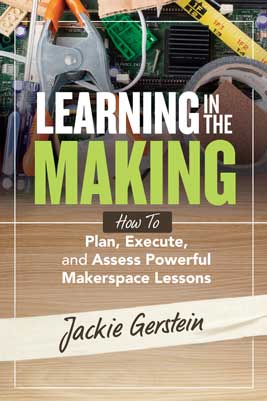
I really love the maker movement. I have always had my students make things. As such, I was often seen as an outlier by the other teachers and principals at my schools. Now that it has become more mainstream, there is a much greater acceptance by my colleagues (and it helps that I now have an amazing and supportive principal). Words cannot describe how exciting I find this movement and hope it stands the test of time in our schools.

Writing this book took about two years but it fits with my mission of sharing resources, learning activities, and ideas with other educators. Given the amount of work it took, I am proud of this accomplishment. The description of the book is:

Transferring this innovative, collaborative, and creative mindset to the classroom is the goal of maker education. A makerspace isnโ€™t about the latest tools and equipment. Rather, itโ€™s about the learning experiences and opportunities provided to students. Maker education spaces can be as large as a school workshop with high-tech tools (e.g., 3D printers and laser cutters) or as small and low-tech as the corner of a classroom with bins of craft supplies. Ultimately, itโ€™s about the mindsetโ€”not the โ€œstuff.โ€

In Learning in the Making, Jackie Gerstein helps you plan, execute, facilitate, and reflect on maker experiences so both you and your students understand how the knowledge, skills, and attitudes of maker education transfer to real-world settings. She also shows how to seamlessly integrate these activities into your curriculum with intention and a clearly defined purpose (http://www.ascd.org/publications/books/119025.aspx).


I keynoted and presented a workshop at Edutech Asia in Singapore.
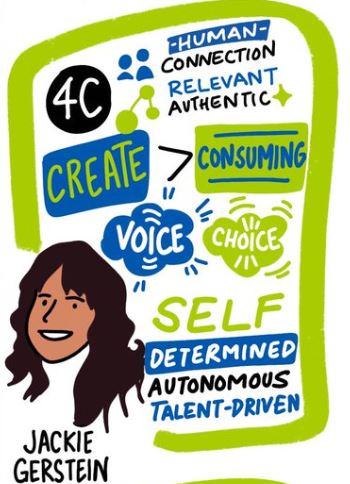
Sketchnote Made During My Keynote

I did a keynote in front of 1000+ people. Due to this anticipated audience size, I was worried about it for months. Because I focus on active participation, I asked them to make a one page book and then answer some reflection questions. It didnโ€™t go over as well as I would have liked (yes, being self-critical) but I did something I feared. I also (re)learned I am a facilitator of experiences rather than a public speaker.
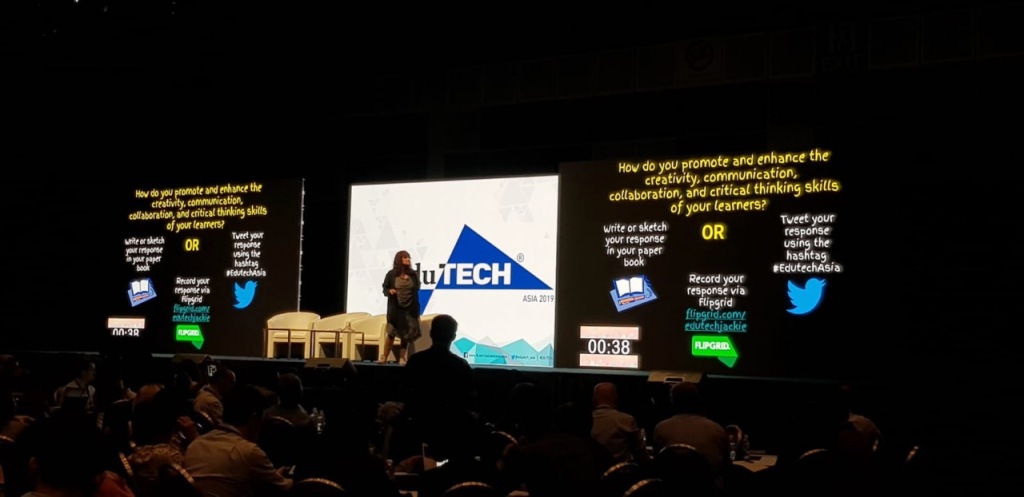
Slides from my keynote:


The final day I did a full day workshop. I was excited about having teachers and other professionals from Singapore, Thailand, Philippines, Cambodia, India, Malaysia, and New Zealand attend. This was way more successful โ€“ the participants being very engaged and excited. Here are the slides:


I did some very cool activities with my gifted students.

I love designing and implementing cross-curricular project-based learning with my gifted students, grades 3rd through 6th. Below are blog post links to some of my favorites from the 2018-19 school year.

Social Entrepreneurship

This is one of my favorites . . . ever. I am now in the process of doing it for a 3rd time with a current group of students. For more about this project, visit https://usergeneratededucation.wordpress.com/2018/05/13/elementary-social-entrepreneurship-a-perfect-steam-lesson/. Here is a video of a few of my students delivering raised monies to a local charity.

Design a Shoe
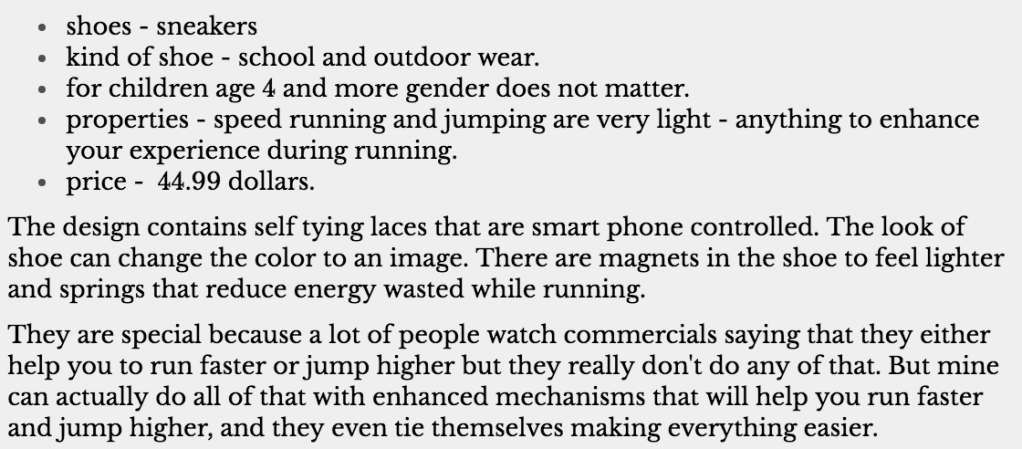
https://usergeneratededucation.wordpress.com/2018/05/13/elementary-social-entrepreneurship-a-perfect-steam-lesson/

Game Jam: Designing a Video Game

https://usergeneratededucation.wordpress.com/2019/05/24/game-jam-creating-a-video-game/

I passed my ISTE Certification

ISTE Certification is a competency-based, vendor-neutral teacher certification based on the ISTE Standards for Educators. It recognizes educators who use edtech for learning in meaningful and transformative ways (https://www.iste.org/learn/iste-certification)

Doing the portfolio for the ISTE certification was a bear of a task. I worked on it for weeks for several hours a day during this past summer. I did enjoy the process of aggregating and discussing some of the edtech projects I have done.

My List of Best Education Videos โ€“ 2019

Here is my annual list of best education videos.

Youth Voice

As youโ€™ll notice the first several are youth voices.

โ€œThe power of youth is the common wealth of the entire worldโ€ฆ No segment in society can match the power, idealism, enthusiasm and courage of young people.โ€ Kailash Satyarthi, Nobel Peace Prize laureate


Swedish climate activist Greta Thunberg chastised world leaders Monday, Sep. 23, for failing younger generations by not taking sufficient steps to stop climate change. โ€œYou have stolen my childhood and my dreams with your empty words,โ€ Thunberg said at the United Nations Climate Action Summit in New York. โ€œYouโ€™re failing us, but young people are starting to understand your betrayal. The eyes of all future generations are upon you. And if you choose to fail us, I say we will never forgive you,โ€ she added.


โ€œChange will happen when we put the flourishing neighbor above our own hero status. Even though we donโ€™t always get to be the hero, we always have the chance to be a world changer. โ€œHow should we respond to the current wave of activism? Megan calls us to treat this political moment as a time for both celebration and self-examination. See how she recommends we share power and resources and prioritize others above ourselves.


Jahkini Bisselink is the Dutch Youth Ambassador of the United Nations representing all young people in The Netherlands. Jakhini is auspiciously bridging the gap between young people and politics, fighting to let their voices be heard in national and international decision-making.


Education Thought Leaders

โ€œAre we helping children find solutions to their own challenges? This will become their strengths.โ€ Leading thinker, best selling author and friend of Big Change, Simon Sinek shares his thoughts on the future of education โ€“ the change thatโ€™s needed and the change that is possible.


Catlin Tuckerโ€™s keynote at Fall CUE 2019. Grade better, make your life less stressful and be more effective. 


In her SXSW EDU keynote, Jennifer Gonzalez explores the Aerodynamics of Exceptional Schools. In any school, just as in air travel, different forces impact our progress: some of these forces push us forward and lift us up, while others pull us back and drag us down. The success of our schools depends largely on how well we manage these forces. By applying wisdom from change management theory, instructional coaching, the tech industry, and even the fitness world, we can learn how to fight weight and drag, increase lift and thrust, and make our schools truly exceptional.


Pedro Noguera shares his insights on educational equity, Project Based Learning, and more at PBL World 2019. Pedro Noguera is a Distinguished Professor of Education at the Graduate School of Education and Information Studies at UCLA. His research focuses on the ways in which schools are influenced by social and economic conditions, as well as by demographic trends in local, regional and global contexts.


Hereโ€™s an overview of the benefits of PBL. To read more, check out: http://www.spencerauthor.com/10-things-happen-students-engage-project-based-learning/


The Future of Social Media?

Social media has become our new home. Can we build it better? Taking design cues from urban planners and social scientists, technologist Eli Pariser shows how the problems weโ€™re encountering on digital platforms arenโ€™t all that new โ€” and shares how, by following the model of thriving towns and cities, we can create trustworthy online communities.


Feel Good Videos


Released at the end of 2018 and received a 2019 Oscar nomination for best animated short. Luna is a vibrant young Chinese American girl who dreams of becoming an astronaut. From the day she witnesses a rocket launching into space on TV, Luna is driven to reach for the stars. In the big city, Luna lives with her loving father Chu, who supports her with a humble shoe repair business he runs out of his garage. As Luna grows up, she enters college, facing adversity of all kinds in pursuit of her dreams.


Anna Hopson, 5, was born with a rare neurodegenerative disorder. But that hasnโ€™t dampened her spirit. As Steve Hartman explains, her good mood has even rubbed off on her school bus driver.


First Lady Michelle Obama brings gifts and surprises to Randle Highlands Elementary School in Washington, D.C. (Videos like this make me cry โ€“ not so much due to the studentsโ€™ and teachersโ€™ joy, although that does touch my heart, but because they are so happy about receiving resources that all schools should have โ€“ an up-to-date computer lab and a basketball court.)


. . . and because this feels so good. Michael Clark Jr. had crowd of supporters at his adoption hearing this week, which included his kindergarten classmates from Wealthy Elementary in East Grand Rapids.

A STE(A)M Professional Development Course

I had the privilege of teaching a STE(A)M graduate course for Antioch University [New England]. I thought other teachers might benefit from access to a few of my project assignments and resources as well as example projects that teachers in the course produced.

Course Description

What does it mean to teach and engage our students in our modern world? How might we use principles of STE(A)M to engage all students? How can we design and implement STEM education and design thinking strategies building on our professional priorities (ie., the Critical Skills Classroom, nature based education, arts integration, etc) as well as developmentally appropriate pedagogy? How cam we use technology to support student learning? Whatโ€™s the difference between STEM, STEAM, and STREAM? These questions will be explored in this online course designed to deepen understanding and inspire teachers to a new level of practice. Students will work both on their own and collaboratively to explore learn about these various topics for practical classroom implementation. Focus will also be given to modern tools to support STE(A)M and learning both face-to-face and virtual environments. Participants will design powerful learning experiences for these classrooms as well as formative and summative assessments. Online course.


STE(A)M Elevator Pitch

Using the resources https://www.pearltrees.com/jackiegerstein/stem-steam-stream-resources/id25727284 as reference, post an โ€œelevator pitchโ€ recording that defines these concepts on Flipgrid โ€“ https://flipgrid.com/5ab9c3cb

https://flipgrid.com/5ab9c3cb?embed=true


Collaboratively Curated Resources

Assignment Description

For the first part of this assignment. individually you are going to do a search for STEM/STEAM related resources from social media such as Twitter, Pinterest, Facebook, Instagram using hashtags (#STEM, #MakerEd, #STEAM, #edtech) to help identify them.

As a group, using a collaborative curation tool and collaborative process, create a curated list of resources that you discovered in the first part of this assignment and may prove useful to the beginning practitioner. Here is a resource to learn more about content curation: http://www.spencerauthor.com/content-curation/.

Here is a list of tools that can be used to collaborative curate your groupโ€™s resources. Your group will decide which one to use:

Student Examples


STE(A)M Lesson Plan

Assignment Description

Design a Lesson Plan or Unit that incorporates elements of STEAM. Review the following resources:

Make sure to include the following elements plus any others you would like to include:

  • Topic
  • Vision for the Lesson
  • Essential Questions 
  • Cross Curricular Standards Addressed
  • Prerequisite Knowledge and Skills
  • Vocabulary
  • Needed Materials
  • Instructional Activities
  • Any resources used. 

Student Examples


STE(A)M Assessment

Assignment Description

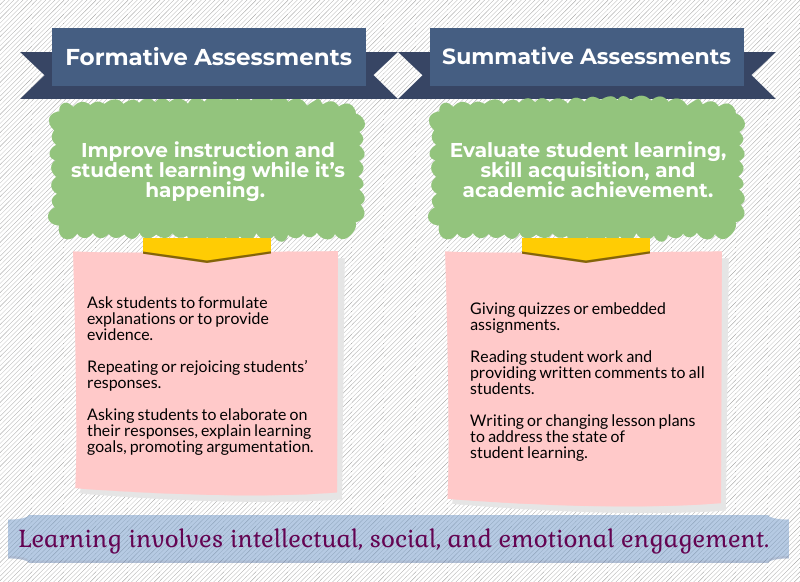
Create a list possible strategies to assess students STEM/STEAM projects. It should be tailored to the (expected) age level of your learners, the focus of your learning activities (STEM, STEAM, or STREAM). Discuss several forms of formative and summative assessments that you can draw upon when you teach STEAM-based lessons.

Review the following:

In developing your strategies and ideas include at least one strategy from each of the following:

  • Documenting Learning Strategies (formative)
  • Reflecting on Learning (formative)
  • Strategies that Leverage Technology, e.g., blogs, podcasts, videos, online tools (formative and summative) 
  • Assessing the Cross-Curricular Standards and Goals Associated with STEAM Education (formative and summative)
  • Going Beyond the Rubric (formative and summative)

You can share it in written form or create your version of assessment ideas using one of the following EdTech tools (they have free versions):

Student Examples


Assessing STREAM

Final Course Reflection

Description

The goal of this reflective piece is the documentation of your understanding of the standards for this course, based in both your learning in class and in your experiences.  The format of this piece is up to you but it must demonstrate that you understand the following:

  • How do you define STE(A)M education within your context? (Please include specific examples of experiential learning: project, problem, place, and design challenge learning and any other relevant methodologies.)
  • What are the key ideas that should guide you in making good choices about the selection, acquisition, organization, evaluation, and reconsideration of resources and activities related to STE(A)M?
  • What are your next steps to support yourself and others in implementation of STE(A)M curriculum?
  • What skills and knowledge do you need to further develop in order to develop your expertise in STE(A)M instruction?

Student Example

Assessing STE(A)M Learning

In Learning in the Making, I discuss assessment as follows:

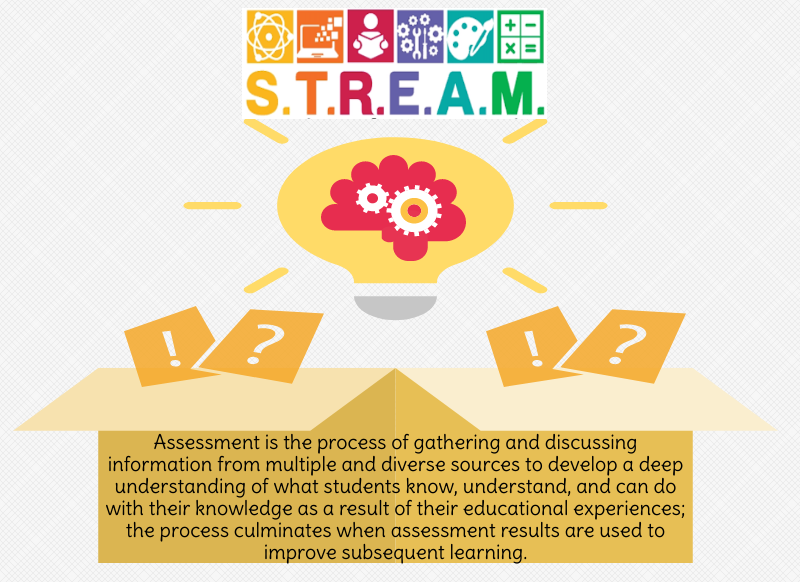
Educators should be clear about how and why they include assessment in their instruction. They need to be strategic and intentional in its use. Assessment should be about informing learners about their performance so increased learning and future improvements can result. โ€œAssessment is the process of gathering and discussing information from multiple and diverse sources in order to develop a deep understanding of what students know, understand, and can do with their knowledge as a result of their educational experiences; the process culminates when assessment results are used to improve subsequent learningโ€ (Huba & Freed, 2000, p. 8). 

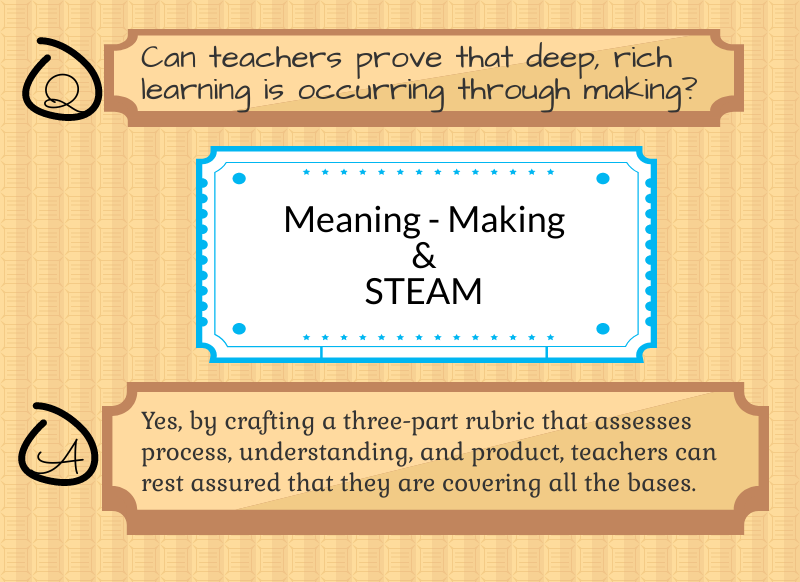
During Fall, 2019, I taught a graduate level STE(A)M [Science, Technology, Engineering, (Arts), Math] course for Antioch University. Their last major assignment was to create methods for assessing STE(AM) learning. My goal was for the students, who are classroom teachers, to develop assessment strategies based on above. The description of the assignment follows:

Create a list possible strategies to assess students STEM/STEAM projects. It should be tailored to the (expected) age level of your learners, the focus of your learning activities (STEM, STEAM, or STREAM). Discuss several forms of formative and summative assessments that you can draw upon when you teach STEAM-based lessons. Review the following:

In developing your strategies and ideas include at least one strategy from each of the following:

  • Documenting Learning Strategies (formative)
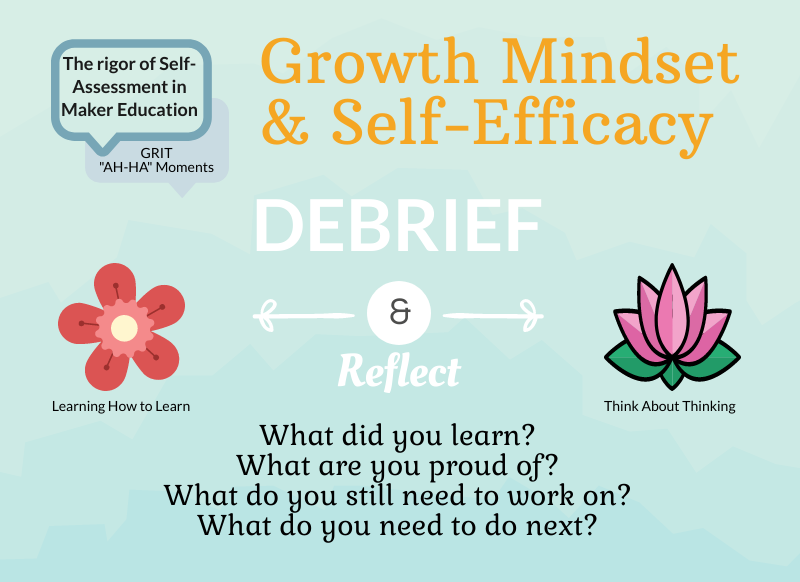
  • Reflecting on Learning (formative)
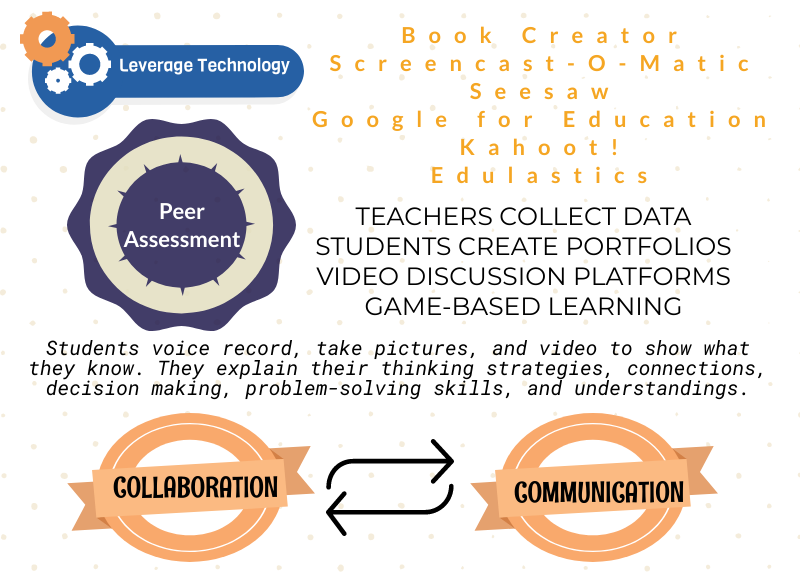
  • Strategies that Leverage Technology, e.g., blogs, podcasts, videos, online tools (formative and summative) 
  • Assessing the Cross-Curricular Standards and Goals Associated with STEAM Education (formative and summative)
  • Going Beyond the Rubric (formative and summative)

You can share it in written form or create your version of assessment ideas using one of the following EdTech tools (they have free versions):

Student Examples

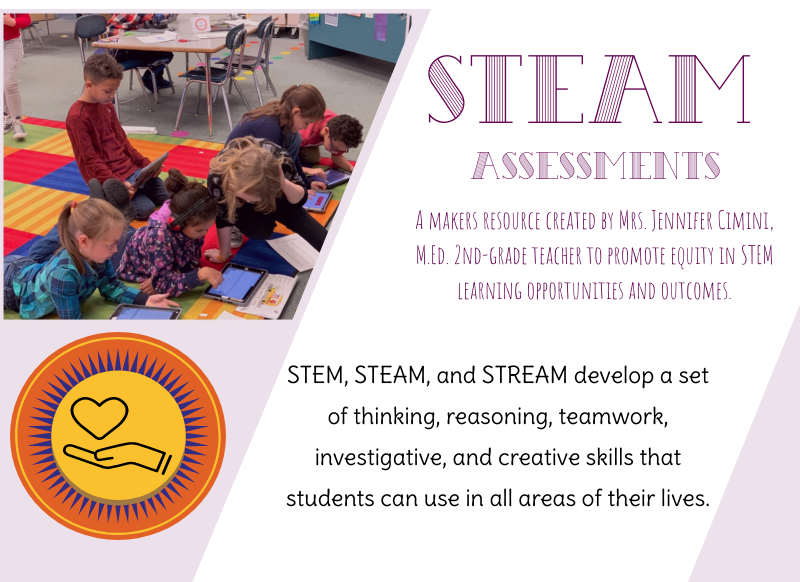
Two example student projects follow. One chose to use Book Creator while the other selected Piktochart. What was impressive to me was the professionalism of their work โ€“ both in their content and presentation, and that they created work that has the potential to be beneficial and useful for a wide audience of educators.

STE(A)M Assessments via Book Creator

Assessing STREAM

STE(A)M Assessments via Piktochart

micro:bits for good

At the beginning of November, 2019, I had the opportunity to travel to Singapore to attend and present at Edutech Asia 2019. During that time, I had the opportunity to hear about their initiative to use micro:bits to help students learn technology in authentic ways. An article from 2017, Micro:bit launch: What you need to know about the coding gadget Singapore plans to introduce, explained it as:

School-going children in Singapore will soon be using a pocket-sized, codeable computer, called the micro:bit, to pick up coding skills. The move is aimed at instilling passion for technology among young Singaporeans. The Infocomm Media Development Authority (IMDA) will work with the Ministry of Education (MOE) to roll out micro:bit as part of its new Digital Maker Programme over the next two years.

In the exhibit hall at the conference, IMDA showcased the micro:bit-for-good projects that groups of Singapore students created. The following video provides a sampling of students explaining their projects.

micro:bit Global Challenge

The Micro:bit Education is sponsoring a challenge to use micro:bits to address two of the UNโ€™s Global Goals: Life Below Water and Life on Land. They provide lots of resources on their website:

Previous micro:bit Global Challenge

In 2015, world leaders came together to decide on a series of โ€œglobal goalsโ€ to build a better world. We challenged students aged 8-12 across the globe to consider how these goals could change the lives of themselves and others, and to design solutions to these goals using the micro:bit (https://microbit.org/global-challenge/)

Although this contest/initiative has officially ended, it could still be used by groups of students as a reference to create micro:bit-for-good projects. Some resources from this challenge follow:

The following is a guide developed by Canada Learn Code to help students prototype their micro:bit global challenge idea.

A Maker Education PD Workshop

I had the privilege of presenting a day long maker education workshop at Edutech Asia on November 7, 2019. I was excited about having teachers and other professionals from Singapore, Thailand, Philippines, Cambodia, India, Malaysia, and New Zealand attend. What follows are some details and highlights.

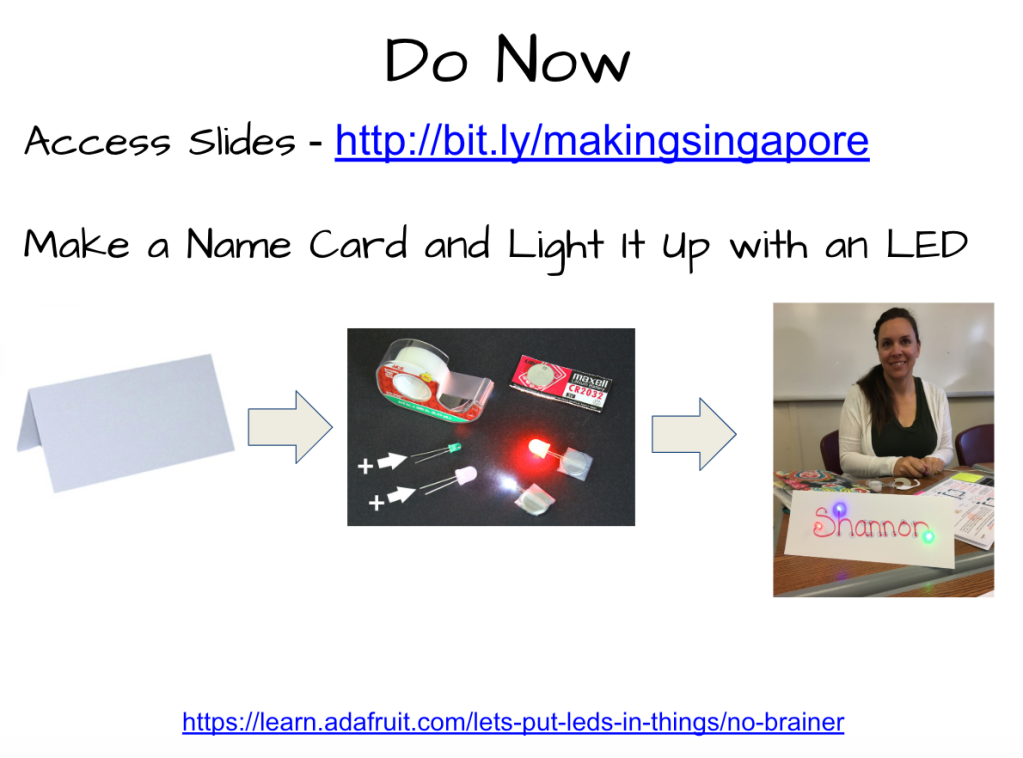
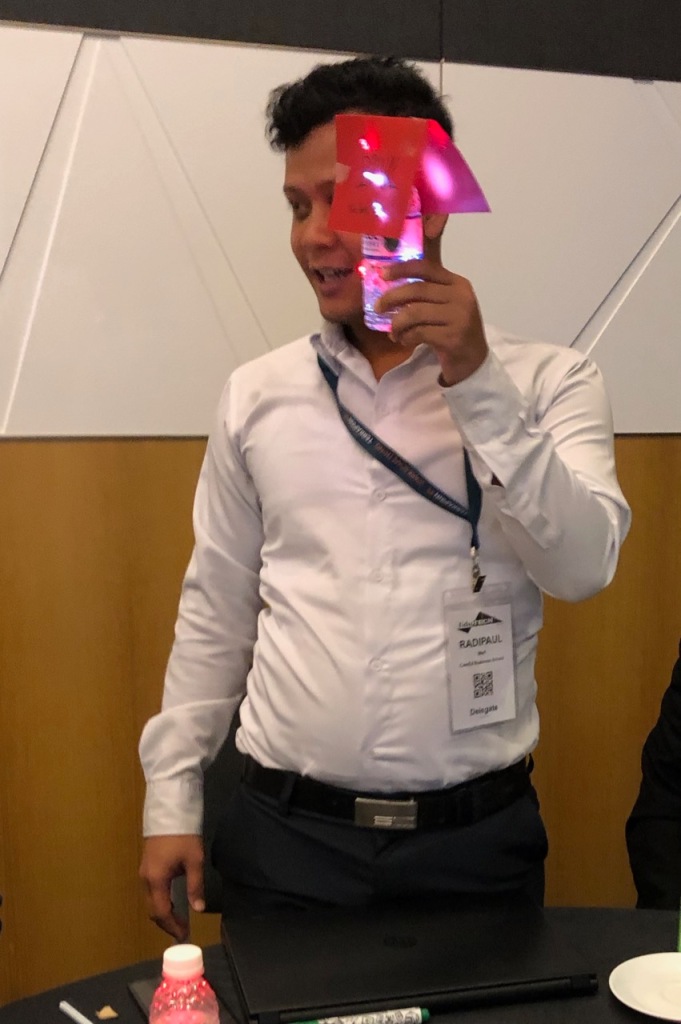
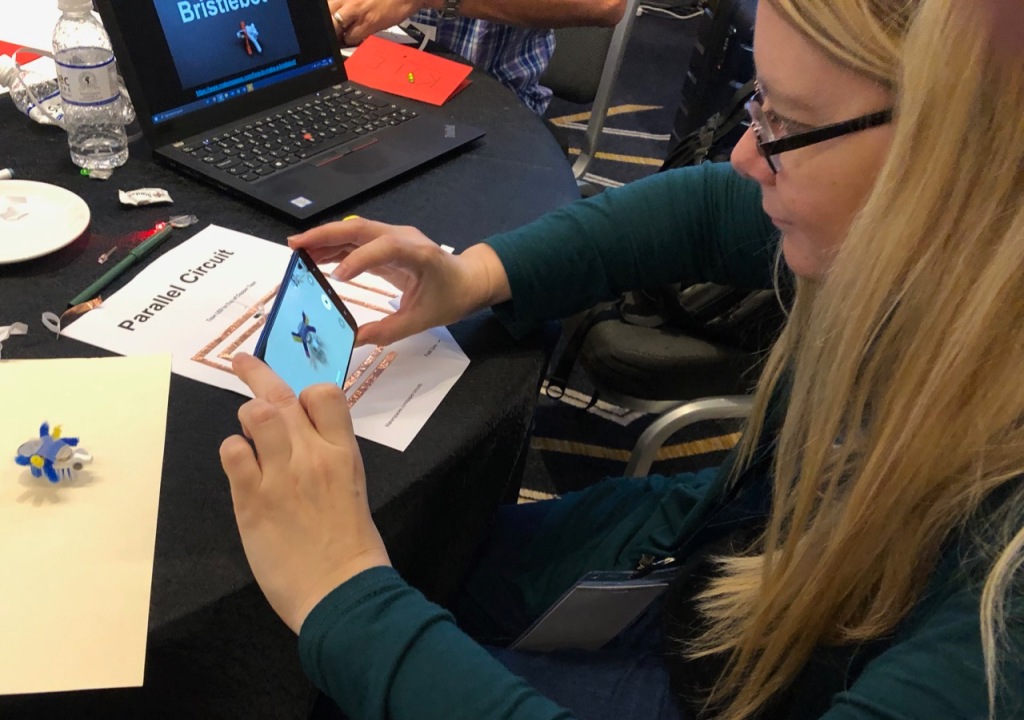
As they arrived in the morning, I asked them to access the workshop slides and create a name card lit up with an LED.

They then used these name cards to introduce themselves.

Next, they were provided with copper tape, coin batteries, LEDs, and Chibitronicsโ€™ circuit stickers along with instructions about how to make series and parallel circuits; and asked to create pictures from their circuits. Here is a video of some of the participants sharing their processes:

Then, they were asked to further reflect on their learning by playing my Maker Reflection Game.

They were then introduced to their next making segment in which they could pick to do one or more of the following projects:

  • Bristlebots
  • Gami-bots
  • More advanced paper circuits
  • micro:bit books
  • Makey-Makey Characters

I repeatedly encouraged them to take pictures throughout their making processes in order to document their learning.

To reflect on this making segment, they were introduced to several types of online educational technology creation tools to use for their reflective piece. I believe that reflection and assessment should be as fun, exciting, valuable, and informative as the making process itself. Here are some examples from the workshop:


Finally, they were instructed to create a poster using visuals and LEDs in their small groups about their day and how they can apply their learnings when they return to their work environments.

. . . and here are the slides provided to the participants:

Language Arts Lesson Using a micro:book

In Learning in the Making I discuss the importance of and strategies for integrating technology into the curriculum.

Maker education needs to be intentional. It follows, then, that if we want to bring maker education into more formal and traditional classroomsโ€”as well as more informal environments such as afterschool and community programsโ€”it needs to be integrated into the curriculum using lesson plans. This chapter begins with a discussion of the characteristics of an effective maker education curriculum and then suggests a lesson plan framework for maker educationโ€“ enhanced lesson plans.  A powerful maker education curriculum includes the following elements: 

  • Instructional challenges are hands-on, experiential, and naturally engaging for learners. 
  • Learning tasks are authentic and relevant, and they promote life skills outside of the formal classroom. 
  • Challenges are designed to be novel and create excitement and joy for learners. 
  • Learner choice and voice are valued. 
  • Lessons address cross-curricular standards and are interdisciplinary (like life).
  • Learning activities get learners interested in and excited about a broad array of topics, especially in the areas of science, engineering, math, language arts, and fine arts. 
  • Communication, collaboration, and problem solving are built into the learning process. 
  • Reading and writing are integrated into learning activities in the form of fun, interesting books and stories and through writing original stories, narratives, and journalistic reports. 
  • Educational technology is incorporated in authentic ways; the emphasis is not to learn technology just for the sake of learning it. 

Educators need to approach their curriculum and lessons with a maker mindset. With this mindset, they can figure out creative ways to integrate maker activities into existing lessons and instructional activities. Educators in these situations start with the standards and objectives of their lessons, as they typically do with โ€œregularโ€ lessons, and then design or identify maker activities that meet the standards and the lesson. It simply becomes a matter of โ€œHow can I add a making element to my lessons to reinforce concepts being learned?โ€ 

The micro:book Lesson

After showing the micro:book activity (see https://make.techwillsaveus.com/microbit/activities/animated-microbook) to a bi-lingual co-teacher, Natalia, she took off with it to develop a lesson to teach her Spanish-speaking students types of sentences. See the video below for her explanation of this lesson and a student example.

A Brain Science Hyperdoc Activity

Judy Willis, a neuroscientist turned teacher, in How to Teach Students About the Brain writes:

If we want to empower students, we must show them how they can control their own cognitive and emotional health and their own learning. Teaching students how the brain operates is a huge step. Teaching students the mechanism behind how the brain operates and teaching them approaches they can use to work that mechanism more effectively helps students believe they can create a more intelligent, creative, and powerful brain. It also shows them that striving for emotional awareness and physical health is part of keeping an optimally functioning brain. Thus, instruction in brain function will lead to healthier learners as well as wiser ones.

I teach a unit on the brain each year. This year I am teaching a 9th grade freshman seminar and decided to do a brain science unit with them. For this unit , I created a brain science hyperdoc for them. A hyperdoc is:

A HyperDoc is a digital documentโ€”such as a Google Docโ€”where all components of a learning cycle have been pulled together into one central hub. Within a single document, students are provided with hyperlinks to all of the resources they need to complete that learning cycle (https://www.cultofpedagogy.com/hyperdocs/).

The Brain Science Hyperdoc

Here is a completed brain science hyperdoc so you can see what was required and how one student completed it.

Making Models of the Brain

One of the hands-on activities was to work in a small group to create a model of the brain lobes + cerebellum out of playdoh, and then add post-it note โ€œflagsโ€ for each part that indicates its name, function, and how to promote its health.

Creating Neuron Models

As a treat and to reinforce the parts of the neuron, students used candy to make a neuron, label its parts on a paper below, and then show as a group how one neuron would communicate with the next neuron and then to the next and so on.

Creative Writing Activity

One of the final projects of their brain science activities was to pick two activities from the list of creative writing activities about the brain found at https://faculty.washington.edu/chudler/writing.html. One of my students went all out to create a newspaper called The Brainiac News which follows. Using her own initiative, she started a Google Site to post a series of tongue-in-cheek stories. So impressive!

Creating a New Makerspace at Our School

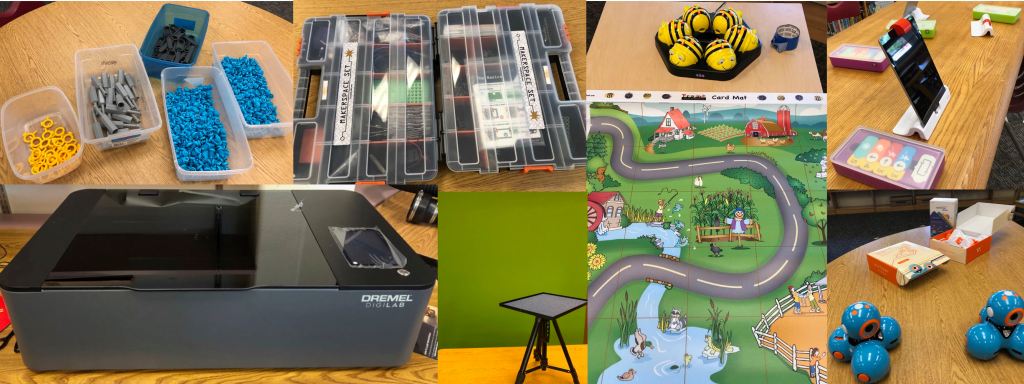
I am beyond elated โ€“ our PreK-6 elementary school received monies, through our districtโ€™s Computer Science Resolution 2025, to create a STEAM (science, technology, arts, math) makerspace. I never thought our Title 1 school would get the opportunity to create such a space. I never thought I would get the opportunity to help create a fully equipped makerspace. A few of use spent the past few weeks rearranging our library so that one side contains our books and the other our STEAM materials.

We received the following items. Some were put out in the STEAM makerspace and some items the teachers will check out for use in their classrooms:

  • Dremel Laser Cutter (in makerspace)
  • Makedo Kits (in makerspace)
  • Strawbees (in makerspace)
  • Dash and Dot (in makerspace and can be checked out)
  • OSMO Coding (in makerspace)
  • Makerspace Kit (in makerspace)
  • BeeBot Robots (in makerspace)
  • Squishy Circuits (in makerspace)
  • Makey-Makeys (can be checked out)
  • littleBits Base Invent Kit (in makerspace)
  • micro:bits (3rd-6th grade teachers received their own sets)
  • Circuit Playground (can be checked out)
  • SAM Lab (can be checked out)
  • Green Screen (in makerspace)

Integrating Maker Education Activities Into the Curriculum

As we (the steering committee) envisioned adding a STEAM โ€“ Makerspace at our school, we realized that its success will be dependent on the teachers integrating these activities into their curriculum rather than an extra โ€œrecreationalโ€ activity.

Maker education needs to be intentional. It follows, then, for maker education to be brought into more formal and traditional classrooms as well as more informal ones such as with afterschool and community programs, it needs to be integrated into the curriculum using lesson plans to assist with this integration (Learning in the Making).


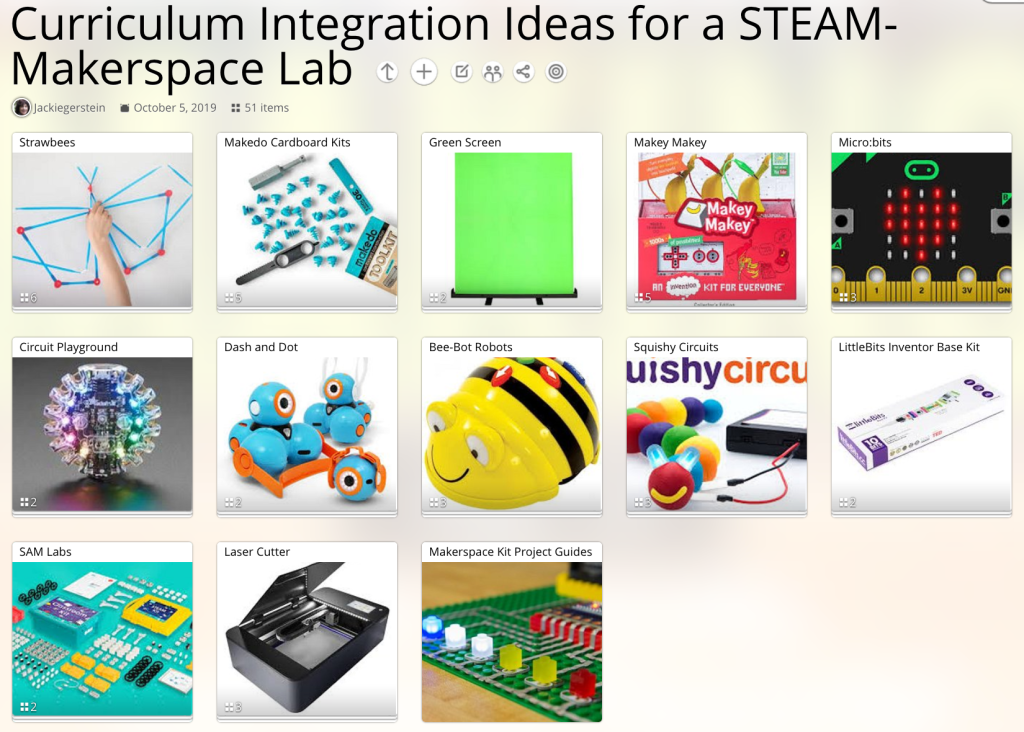
To assist our teachers with integrating maker education activities into the curriculum, I created the following Pearltrees aggregate of possible classroom lessons and activities for each of the materials โ€“ products we purchased for our school:

https://www.pearltrees.com/jackiegerstein/curriculum-integration/id27094864

In this post, I am also including the following lesson plan template from my book, Learning in the Making that can help with integrating maker education activities into the curriculum :

Cross-Curricular Lesson: Communicating with Parents

As someone who has been in teacher education for several decades, I often think about โ€“ teach about how to make curriculum engaging, fun, effective, authentic, and relevant for learners. I believe interdisciplinary or cross-curricular lessons have the potential to do so. I also add, when I am working with pre- and inservice teachers, that there is not enough time in a day to teach-learn everything that is desirable. Cross-curricular activities can help โ€œcreateโ€ more time as several content area standards can be addressed in one lesson.

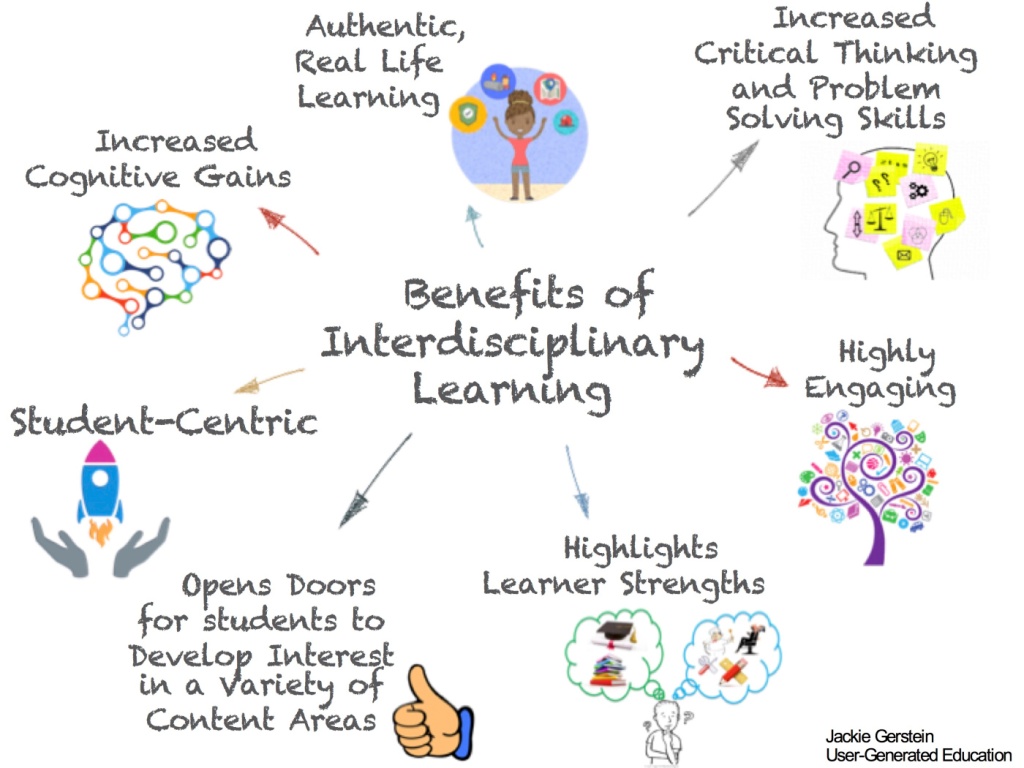
Multidisciplinary or interdisciplinary learning is a โ€œwholeโ€ or โ€œcomprehensiveโ€ method that covers an idea, topic, or text by integrating multiple knowledge domains. It is a very powerful method of teaching that crosses the boundaries of a discipline or curriculum in order to enhance the scope and depth of learning. Each discipline sheds light on the topic like the facets of a gem.

I created the following graphic to show the benefits of interdisciplinary standards.

An Example: Communicating with Parents

This past week I asked my freshman seminar class to do a few activities related to communicating with their parents. The goal of this lesson was, obviously, to have to students develop some more effective communication strategies.

Social Emotional Learning and 21st Century Standards

This lesson, at its core, falls into the areas socio-emotional learning and 21st Century Competencies. Ohio established their own set of K-12 Social and Emotional Learning Standards and the following are related to the goals of this lesson.

  • Actively engage in positive interactions to make connections with peers, adults and community to support and achieve common goals,
  • Establish and actively participate in a healthy network of personal, school and community relationships.

The Framework for 21st Century also identified communication as an important skill with the following standards.

  • Articulate thoughts and ideas effectively using oral, written and nonverbal communication skills in a variety of forms and contexts,
  • Listen effectively to decipher meaning, including knowledge, values, attitudes and intentions.

English Language Arts Standards

Because the learners were asked to do research and write a letter to their parents, English Language Arts standards were also addressed:

CCSS.ELA-LITERACY.W.9-10.7
Conduct short as well as more sustained research projects to answer a question (including a self-generated question) or solve a problem; narrow or broaden the inquiry when appropriate; synthesize multiple sources on the subject, demonstrating understanding of the subject under investigation.

CCSS.ELA-LITERACY.W.9-10.2
Write informative/explanatory texts to examine and convey complex ideas, concepts, and information clearly and accurately through the effective selection, organization, and analysis of content.

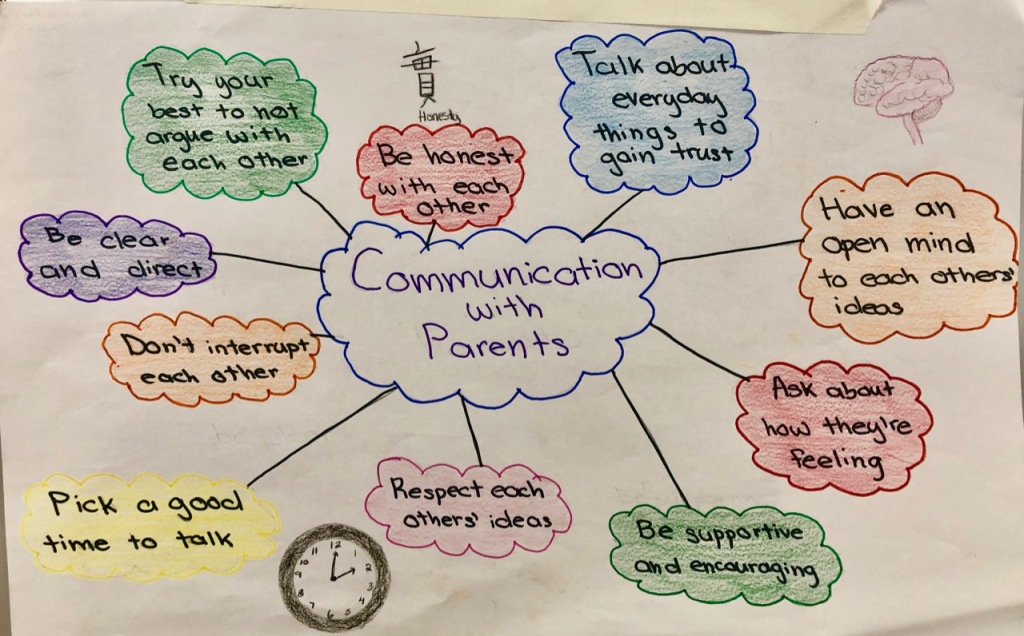
Communicating with Parents Poster

Learners were asked to review some online articles about communicating with parents and then make a poster that reflected strategies they believe to be important.

Letter to My Parents

Next, the learners were asked to write a letter to their parents that discussed:

  1. What types of communications are going well,
  2. What types of communications are not going well,
  3. Suggested goals for improving communications.

They were told they were not required to share the letter with their parents. Some examples follow:


Town and Country Planning: Definitions, Goals, and Objectives of Planning

1. Introduction

Town and country planning is an important discipline that focuses on the organized development and management of both urban and rural areas. It aims to ensure the efficient use of land, proper infrastructure development, environmental protection, and improved quality of life for communities. Planning helps guide the growth of cities, towns, and rural settlements in a systematic manner so that development occurs in a balanced, sustainable, and equitable way.

With increasing population growth, urbanization, and industrialization, planning has become essential to address problems such as housing shortages, traffic congestion, environmental degradation, and uneven regional development. Town and country planning provides a framework for coordinating social, economic, and physical development within a region.

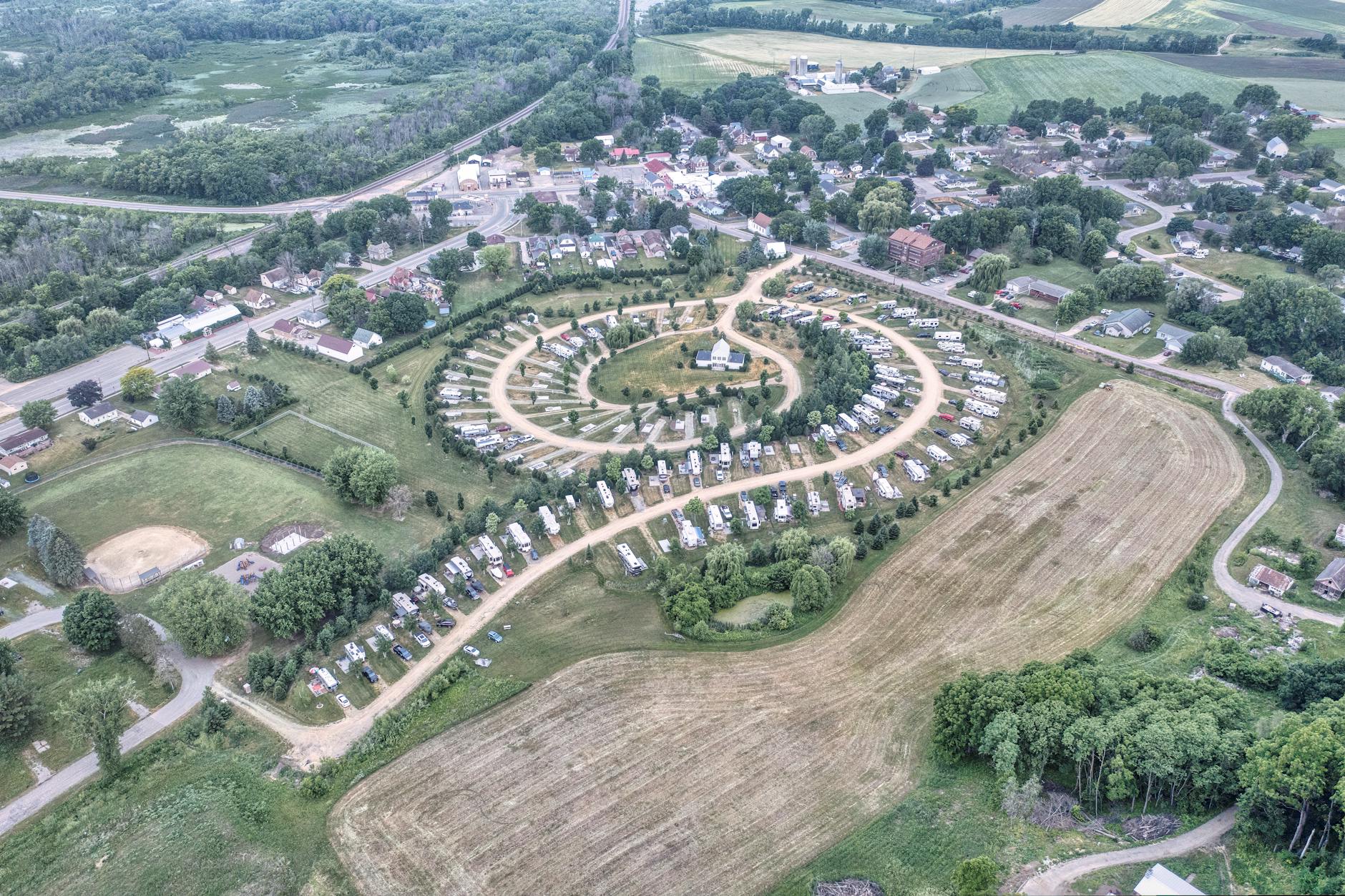
Photo by Tom Fisk on Pexels.com

2. Meaning of Town and Country Planning

Town and country planning refers to the process of organizing and controlling the development of land and resources in both urban and rural areas. It includes the planning of settlements, infrastructure, transportation systems, public services, and environmental management.

The term โ€œtown planningโ€ generally refers to the planning of urban areas such as cities and towns, while โ€œcountry planningโ€ focuses on rural areas including villages, agricultural land, forests, and natural resources.

Together, town and country planning aims to create well-organized and sustainable environments for human activities.


3. Definitions of Town and Country Planning

Various scholars and planning organizations have defined town and country planning in different ways.

Lewis Keeble

Lewis Keeble defined town planning as:

โ€œThe art and science of ordering the use of land and the siting of buildings and communication routes so as to secure the maximum practicable degree of economy, convenience and beauty.โ€

This definition highlights the importance of efficient land use, functional design, and aesthetic quality in urban development.


Patrick Geddes

Patrick Geddes emphasized the importance of understanding the relationship between people, environment, and economic activities. He introduced the idea that planning should be based on comprehensive surveys of social and environmental conditions.

His approach is often summarized through the concept of โ€œPlace, Work, and Folk.โ€


Town and Country Planning Association

According to the Town and Country Planning Association, planning is:

โ€œThe process of guiding the development and use of land in order to improve the quality of life and promote sustainable development.โ€


General Definition

In general terms, town and country planning can be defined as:

โ€œA systematic process of organizing land use, infrastructure, and development activities in urban and rural areas to achieve orderly growth, economic efficiency, social welfare, and environmental sustainability.โ€


4. Goals of Planning

The goals of planning represent the broad outcomes that planning aims to achieve. These goals guide the development strategies and policies prepared by planners.

Sustainable Development

One of the major goals of planning is to promote sustainable development by balancing economic growth, social welfare, and environmental protection.

Balanced Regional Development

Planning aims to reduce disparities between urban and rural areas and promote balanced development across regions.

Efficient Use of Land and Resources

Planning ensures that land and natural resources are used efficiently and responsibly.

Improved Quality of Life

Providing better housing, infrastructure, public services, and environmental conditions helps improve the overall quality of life for residents.

Environmental Protection

Planning aims to conserve natural resources, protect ecosystems, and reduce pollution.


5. Objectives of Planning

While goals represent broad aspirations, objectives are specific targets that help achieve these goals.

Orderly Urban Development

Planning ensures that cities and towns grow in a planned and organized manner rather than through uncontrolled expansion.

Efficient Land Use

Land-use planning helps allocate land for different purposes such as residential, commercial, industrial, and recreational activities.

Infrastructure Development

Planning focuses on providing adequate infrastructure including roads, water supply, sewage systems, electricity, and public transportation.

Housing Provision

Ensuring access to safe and affordable housing is a key objective of planning.

Social Welfare

Planning aims to improve social services such as education, healthcare, recreation, and community facilities.

Economic Development

Planning supports economic growth by promoting industries, businesses, and employment opportunities.

Environmental Sustainability

Protecting natural resources and maintaining ecological balance are essential objectives of planning.


6. Importance of Town and Country Planning

Town and country planning plays an essential role in managing development and improving living conditions.

Managing Urban Growth

Planning helps control urban expansion and prevents problems such as overcrowding and slum development.

Infrastructure Coordination

Planning ensures that infrastructure systems are developed in coordination with population growth and land use.

Environmental Management

Planning helps protect natural resources and reduce environmental degradation.

Social Equity

Planning promotes equitable access to housing, services, and economic opportunities.


7. Conclusion

Town and country planning is a comprehensive discipline that guides the development and management of urban and rural areas. It involves organizing land use, infrastructure, transportation, and public services in a systematic manner to achieve sustainable and balanced development.

Various scholars such as Lewis Keeble and Patrick Geddes have defined planning as both an art and a science that integrates social, economic, and environmental considerations. The goals of planning include sustainable development, balanced regional growth, and improved quality of life, while the objectives focus on efficient land use, infrastructure provision, housing development, and environmental protection.

Effective planning is essential for creating organized, livable, and sustainable settlements that meet the needs of present and future generations.

Daily writing prompt
What activities do you lose yourself in?

Urban and Rural India: Planning Concerns of Cities, Towns, and Villages

1. Introduction

India is characterized by a diverse settlement system consisting of large metropolitan cities, medium and small towns, and a vast network of villages. According to demographic patterns, India has historically been a predominantly rural country, although urbanization has been steadily increasing. Both urban and rural areas play significant roles in national development, and planning must address the specific needs and challenges of each type of settlement.

Urban areas are centers of industry, commerce, education, and services, while rural areas are primarily associated with agriculture, natural resource management, and traditional livelihoods. Effective planning in India requires an integrated approach that considers the development of cities, towns, and villages together rather than in isolation. Balanced development helps reduce regional disparities, improve living standards, and promote sustainable growth.

Photo by Markus Winkler on Pexels.com

2. Urban and Rural Structure in India

Indiaโ€™s settlement pattern includes three main categories:

  • Cities and metropolitan areas
  • Towns and small urban centers
  • Villages and rural settlements

Each category has different economic activities, population characteristics, infrastructure requirements, and development challenges.

Urban areas generally have higher population density, diverse economic activities, and developed infrastructure, whereas rural areas have lower population density and depend largely on agriculture and natural resources.


3. Planning Concerns of Cities

Cities are large and complex settlements that serve as economic and administrative centers. Rapid urbanization in India has created several planning challenges.

3.1 Housing and Urban Poverty

One of the major concerns in cities is the shortage of affordable housing. Rapid population growth and migration from rural areas have resulted in the expansion of slums and informal settlements.

Urban planning must focus on providing affordable housing, improving living conditions, and reducing homelessness.

3.2 Infrastructure and Basic Services

Cities require extensive infrastructure such as:

  • Water supply systems
  • Sewerage and sanitation networks
  • Electricity supply
  • Solid waste management
  • Transportation systems

In many Indian cities, infrastructure development has not kept pace with population growth.

3.3 Transportation and Mobility

Traffic congestion is a major issue in many urban areas. Efficient public transportation systems, pedestrian infrastructure, and traffic management strategies are essential for improving urban mobility.

3.4 Environmental Management

Urban areas face environmental challenges such as air pollution, water pollution, and loss of green spaces. Sustainable urban planning must include environmental protection and climate resilience.

3.5 Land Use Management

Efficient land-use planning is necessary to prevent unplanned development and ensure balanced distribution of residential, commercial, industrial, and recreational areas.


4. Planning Concerns of Towns

Towns serve as important intermediate settlements between cities and villages. They often function as regional service centers and support surrounding rural areas.

4.1 Infrastructure Development

Many towns in India lack adequate infrastructure such as proper roads, water supply, sanitation systems, and public transportation.

Planning must focus on improving basic infrastructure to support population growth and economic activities.

4.2 Economic Development

Towns play an important role in regional economic development by supporting small industries, markets, and service sectors.

Planning strategies should promote local economic activities and employment opportunities.

4.3 Urban Governance

Many towns face challenges related to weak administrative capacity and limited financial resources.

Strengthening local governance institutions is essential for effective planning and development.

4.4 Balanced Regional Development

Towns can help reduce migration to large cities by providing employment opportunities and essential services within smaller urban centers.


5. Planning Concerns of Villages

Villages are the backbone of rural India and are primarily dependent on agriculture and natural resources.

5.1 Agricultural Development

Planning in rural areas must focus on improving agricultural productivity through better irrigation systems, modern farming techniques, and access to markets.

5.2 Rural Infrastructure

Rural development requires improved infrastructure such as:

  • Rural roads
  • Electricity supply
  • Drinking water facilities
  • Sanitation systems
  • Healthcare and education facilities

These improvements help enhance the quality of life in rural communities.

5.3 Employment and Livelihoods

Many rural areas face challenges related to unemployment and underemployment. Planning must promote rural industries, agro-based enterprises, and skill development programs.

5.4 Rural Housing

Providing adequate housing in villages is another important planning concern. Rural housing programs aim to improve living conditions and ensure access to basic amenities.

5.5 Environmental Sustainability

Rural planning must also focus on sustainable management of natural resources such as land, forests, and water bodies.


6. Ruralโ€“Urban Linkages

Urban and rural areas are interconnected through economic, social, and transportation networks.

Cities depend on rural areas for:

  • Agricultural products
  • Natural resources
  • Labor supply

Rural areas depend on cities for:

  • Markets for agricultural goods
  • Employment opportunities
  • Education and healthcare services

Strengthening ruralโ€“urban linkages is essential for balanced regional development.


7. Integrated Planning for Urban and Rural Development

Integrated planning approaches aim to coordinate development between urban and rural areas.

Key strategies include:

  • Development of small and medium towns to reduce pressure on large cities
  • Promotion of regional planning to address spatial inequalities
  • Improvement of transportation networks connecting rural and urban areas
  • Encouraging rural industrialization and economic diversification

Such approaches help create a balanced settlement system.


8. Government Initiatives for Urban and Rural Development

The Government of India has introduced several programs to address planning concerns in both urban and rural areas.

Examples include:

Urban Development Programs

  • Smart Cities Mission
  • AMRUT (Atal Mission for Rejuvenation and Urban Transformation)
  • Pradhan Mantri Awas Yojana (Urban)

Rural Development Programs

  • Mahatma Gandhi National Rural Employment Guarantee Act (MGNREGA)
  • Pradhan Mantri Awas Yojana (Gramin)
  • National Rural Livelihood Mission

These programs aim to improve infrastructure, housing, employment, and service delivery.


9. Conclusion

Urban and rural India together form a complex settlement system that requires comprehensive and integrated planning. Cities face challenges related to housing, infrastructure, transportation, and environmental management. Towns require improved infrastructure and economic development to serve as regional growth centers. Villages need better agricultural productivity, rural infrastructure, employment opportunities, and resource management.

Effective planning must address the specific needs of cities, towns, and villages while strengthening ruralโ€“urban linkages. By promoting balanced regional development and improving infrastructure and services across all types of settlements, planners can contribute to sustainable and inclusive development in India.

Daily writing prompt
Which animal would you compare yourself to and why?