
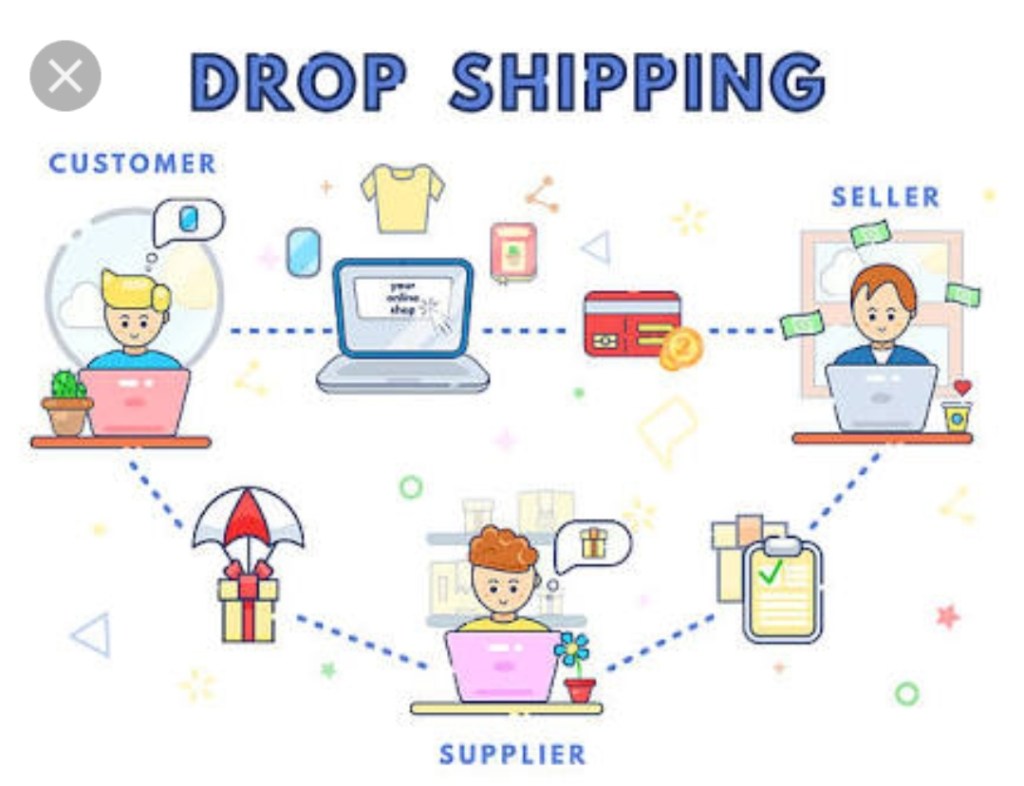
Dropshipping is a retail fulfillment method where a store doesn’t keep the products it sells in stock. Instead, when a store sells a product using the dropshipping model, it purchases the item from a third party and has it shipped directly to the customer. As a result, the seller doesn’t have to handle the product directly.
The biggest difference between dropshipping and the standard retail model is that the selling merchant doesn’t stock or own inventory. Instead, the seller purchases inventory as needed from a third party—usually a wholesaler or manufacturer—to fulfill orders.
Benefits of dropshipping
Dropshipping is a great business model for aspiring entrepreneurs to start with because it’s accessible. With dropshipping, you can quickly test different business ideas with limited downside, which lets you learn a lot about how to choose and market in-demand products. Here are a few other reasons why dropshipping is such a popular model.
1. Less capital is required
Probably the biggest advantage to dropshipping is that it’s possible to launch an ecommerce store without having to invest thousands of dollars in inventory up front. Traditionally, retailers have had to tie up huge amounts of capital purchasing inventory.
With the dropshipping model, you don’t have to purchase a product unless you’ve already made the sale and have been paid by the customer. Without significant up-front inventory investments, it’s possible to start sourcing products and launch a successful dropshipping business with very little money. And because you’re not committed to selling-through any inventory purchased up front, like in a traditional retail business, there’s less risk involved in starting a dropshipping store.
2. Easy to get started
Running an ecommerce business is much easier when you don’t have to deal with physical products. With dropshipping, you don’t have to worry about:
- Managing or paying for a warehouse
- Packing and shipping your orders
- Tracking inventory for accounting reasons
- Handling returns and inbound shipments
- Continually ordering products and managing stock level
3. Low overhead
Because you don’t have to deal with purchasing inventory or managing a warehouse, your overhead expenses are quite low. In fact, many successful dropshipping stores are run as home-based businesses, requiring little more than a laptop and a few recurring expenses to operate. As you grow, these costs will likely increase but will still be low compared to those of traditional brick-and-mortar businesses.
4. Flexible location
A dropshipping business can be run from just about anywhere with an internet connection. As long as you can communicate with suppliers and customers easily, you can run and manage your business.
How does dropshipping work?
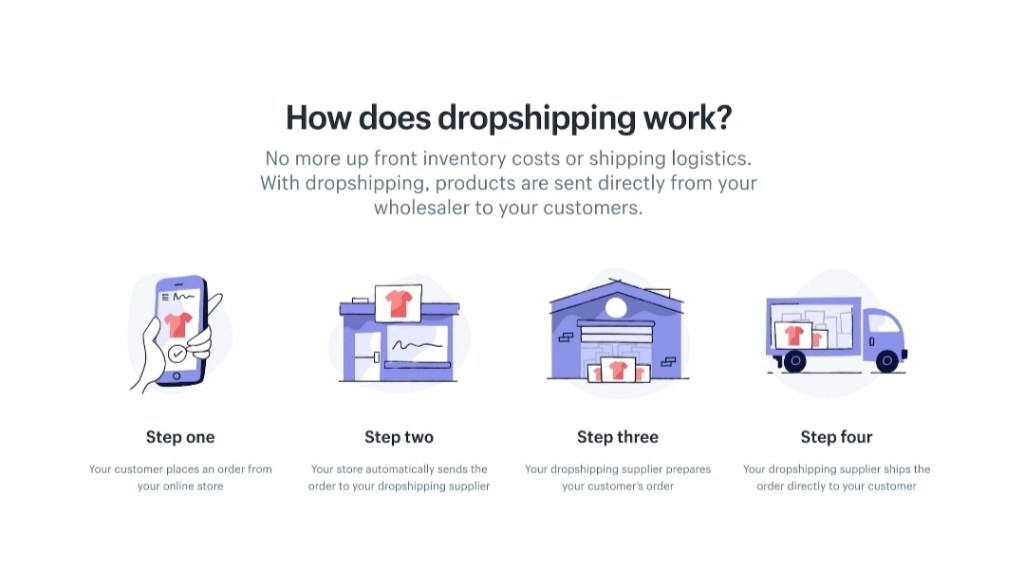
The working process of drop shipping is quite simple. It includes 3 simple steps as follows:
- The store owner publishes products he wishes to sell on his online store. The customer sees the product and places an order on the website.
- The retailer receives details about the order and forwards the details of the customer and order manually or automatically to the dropship supplier.
- The supplier then packages and ships the required products directly to the customer with the store owner’s branding.
This is an attractive business model as it eliminates the warehousing cost of the store owner. Also, he need not have a physical business location.
 Track2Training
You must be logged in to post a comment.