
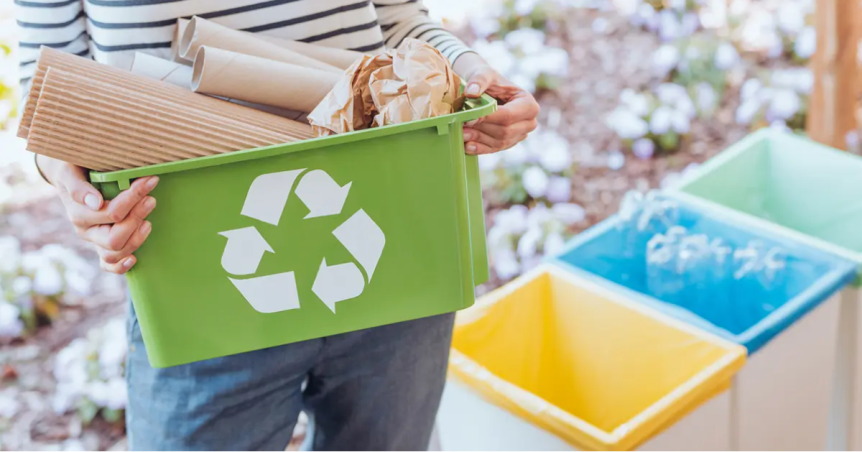
In today’s world recycling is an essential thing. Today when new goods are generated on a daily basis and the proper disposal of old ones is becoming a huge concern, recycling is the only way to ensure judicial use of resources. It is our responsibility to leave a healthy planet full of natural resources for the future generation.
As we know that charity begins at home, similarly recycling also begins at home. We can make new products from the old ones instead of just throwing them. The idea is to take the whole concept of reducing, reuse, and recycle into consideration for us to protect of environment. The world in which we live is a consumer-driven one, and the urge to get new things every day is increasing exponentially. This in turn leads to heaps of waste generation. We need to see this generation of waste in a different light in order to solve this issue and promote the idea of recycling and making it compulsory.
Common household items that contain various recyclable materials like newspapers, steel cans, plastic laundry detergents, and soft drink containers. These materials when recycled can be used in new ways such as recovered glass in asphalt to pave roads.
How can recycling be defined properly?
The United States Environmental Protection Agency (EPA), defines recycling as, “Recycling is the process of collecting and processing materials that would otherwise be thrown away as trash and turning them into new products. Recycling can benefit your community and the environment.”
It is the process of separating, collecting, and remanufacturing the used or waste products into new material. It does not help to extend the usefulness of something which has already served its original purpose but builds the idea of sustainable development.
Products made up of material like plastic, paper or metals are far from worthless even after they have served their original purpose. Studies show that up to 75 percent of all the waste can be recycled. If we carefully look around ourselves there is almost nothing that cannot be recycled. For example, stuff like batteries, biodegradable waste, clothing, electronics, garments, glass, metals, paper, plastics, and a lot more can be recycled.
Advantages of Recycling
Starting with the very basic one, recycling of wood and paper. As we already know that the natural resources are only limited and some have already started to deplete. In such a scenario recycling of wood and paper becomes fundamental as it saves trees and forests. It would result in a reduction in deforestation. When we recycle plastic, it would lead to reduced production of new plastic and less pollution caused by plastic waste which is even harmful to animals. Recycling of metals decreases mining activities.
Recycling plays an essential role when it comes to the economy of a country. It has been observed that it is six times cheaper to dispose of recycled waste than regular waste. This means, the more we recycle, the lesser is the amount of trash we produce and more money is saved. This can be beneficial for household businesses and local public services. For example, recycling food waste and green waste can reduce the cost of compost.
In short, we can say that recycling is extremely crucial to protect our environment as it prevents pollution, reduces the need to produce new raw material, saves energy and money. It is a way to sustainable development and an eco-friendly lifestyle.
References
https://www.conserve-energy-future.com/importance_of_recycling.php
 Track2Training