
Norman Foster: A Detailed Overview
Full Name: Norman Robert Foster
Title: Lord Foster of Thames Bank
Born: June 1, 1935, Stockport, England
Nationality: British
Profession: Architect, Designer, Urban Planner
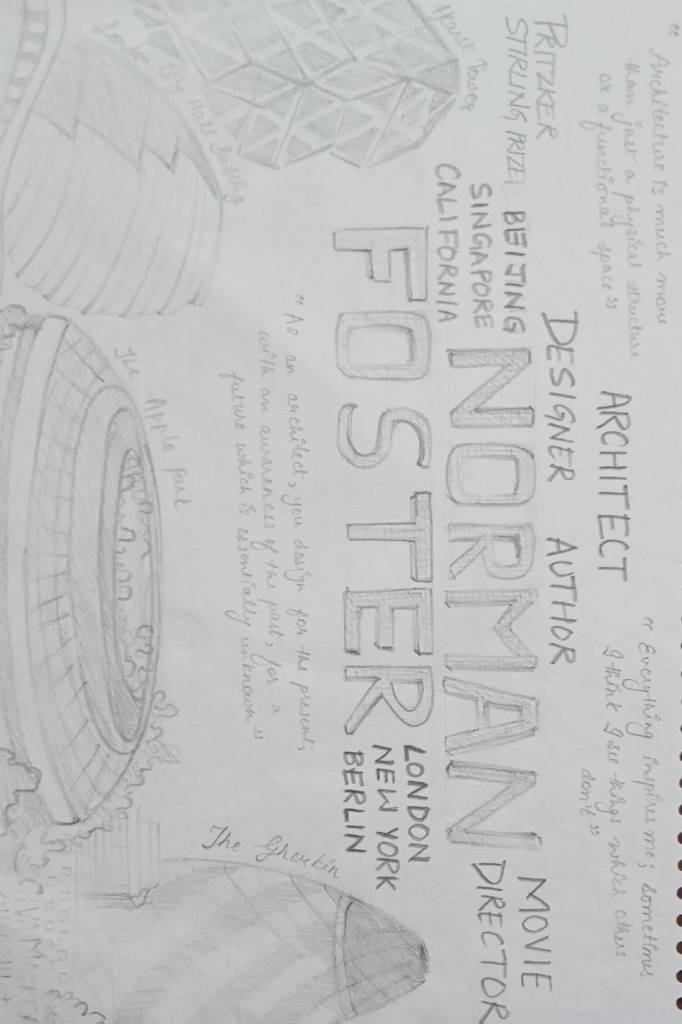
Early Life and Education
Norman Foster was born into a working-class family in Stockport, near Manchester, England. His father worked in a machine shop and his mother in a bakery. From an early age, Foster showed a fascination with engineering, airplanes, and design.
He studied architecture at the University of Manchester School of Architecture and City Planning, graduating in 1961. With a scholarship, he went on to pursue a Master’s degree at Yale University, where he studied under influential modernists such as Paul Rudolph and met Richard Rogers, who would later become a lifelong friend and colleague.
Career and Practice
Team 4 (1963–1967)
Foster co-founded Team 4 with Richard Rogers, Su Brumwell, and Wendy Cheesman (his future wife). The group became known for its high-tech, modernist approach to architecture.
Foster Associates / Foster + Partners (1967–Present)
After Team 4 dissolved, Foster founded his own practice, Foster Associates, which later became Foster + Partners. The firm grew into one of the most prestigious and globally recognized architecture firms, with projects on every continent.
Architectural Style and Philosophy
Norman Foster is known for a style that is:
- High-tech and modernist
- Focused on lightweight structures, transparency, and open space
- Deeply rooted in sustainability and environmental responsibility
- Highly influenced by aeronautical and industrial design
Foster’s work emphasizes technology, innovation, and efficiency, with a strong focus on integrating architecture with the surrounding environment.
Key Works and Projects
Here are some of Norman Foster’s most important and iconic buildings:
1. Willis Faber & Dumas Headquarters (Ipswich, UK, 1975)
One of his first major successes, this office building was innovative in its open-plan design, green roof, and energy-conscious features.
2. HSBC Building (Hong Kong, 1985)
A breakthrough high-tech building featuring a modular design, steel skeleton, and services (like escalators and lifts) placed on the exterior for flexibility.
3. 30 St Mary Axe (The Gherkin) (London, UK, 2003)
One of London’s most recognizable buildings, known for its aerodynamic, eco-friendly design. It uses natural ventilation and passive solar heating.
4. Reichstag Renovation (Berlin, Germany, 1999)
Foster redesigned the German parliament building with a striking glass dome, symbolizing transparency in government. It’s one of the most admired adaptive reuse projects in history.
5. Millau Viaduct (Southern France, 2004)
The tallest bridge in the world at the time of completion. A marvel of engineering, built with elegance and structural clarity.
6. Apple Park (Cupertino, California, 2017)
Foster + Partners designed Apple’s corporate headquarters, a circular glass-clad building that integrates cutting-edge technology with sustainability and landscape design.
7. London Stansted Airport (UK, 1991)
An airport terminal designed with an open layout and natural light in mind. Revolutionized how airport spaces could be conceived.
Awards and Honors
Foster has received numerous international awards, including:
- Pritzker Architecture Prize (1999)
- RIBA Gold Medal (1983)
- AIA Gold Medal (1994)
- Stirling Prize (1998, 2004)
- Knighted in 1990 and made a Life Peer in 1999 (Lord Foster of Thames Bank)
- Order of Merit (OM) by Queen Elizabeth II in 2002
Contributions Beyond Buildings
Urban Planning and Sustainability
Foster is also deeply engaged in urban planning, smart cities, and sustainable infrastructure. His firm has proposed visionary projects such as:
- Masdar City (UAE): A planned eco-city powered entirely by renewable energy
- SkyCycle (London): Elevated cycling paths over railways to promote safe commuting
Foster Foundation
Founded in 1999, the Norman Foster Foundation in Madrid promotes interdisciplinary thinking in architecture, design, and sustainability. It holds archives of Foster’s work and supports education and research.
Personal Life
Foster has been married twice and has five children. He is an aviation enthusiast and a trained pilot. He overcame a serious bout of cancer in the 2000s, returning to work with renewed focus and vigor.
Legacy
Norman Foster is widely regarded as one of the most important architects of the modern age. His designs have reshaped skylines around the world, blending technology, aesthetics, and environmental consciousness in ways that continue to influence generations of architects.
His firm, Foster + Partners, remains a global leader in architecture, urbanism, and industrial design, with over 1,500 staff working on landmark projects globally.
Conclusion
Norman Foster’s architecture is a celebration of innovation, clarity, and progress. He has redefined what is possible in architecture—not just in terms of design and materials, but in how buildings can reflect and shape society. With a legacy that spans continents and decades, he is both a master builder and a visionary thinker.
 Track2Training
You must be logged in to post a comment.