
Land is a fundamental resource in urban development, and its value varies significantly depending on its use, location, accessibility, and regulatory framework. The costing of land for different land use categories is essential for planning, land acquisition, infrastructure financing, taxation, and real estate development.
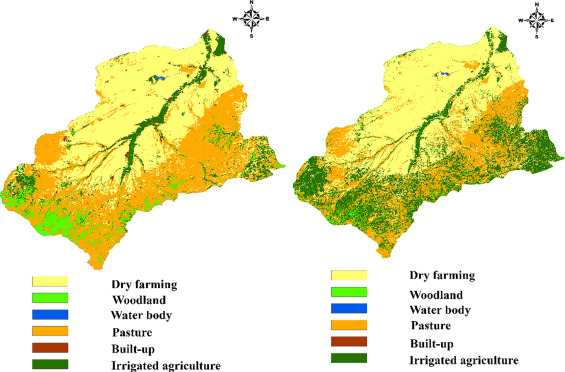
Land use categories such as residential, commercial, industrial, institutional, recreational, and transportation have distinct valuation principles due to differences in demand, intensity of use, infrastructure provision, and economic returns.
The costing procedure involves land valuation methods, adjustment factors, and policy considerations, often guided by government norms such as circle rates, guidance values, and market trends.
2. Objectives of Land Costing
- To determine fair land value
- To support land acquisition and compensation
- To assist in urban planning and zoning decisions
- To facilitate infrastructure financing (e.g., TOD, VCF)
- To guide real estate development
- To ensure equitable taxation
3. Land Use Categories
3.1 Residential Land
- Used for housing (EWS, LIG, MIG, HIG)
- Moderate demand and value
3.2 Commercial Land
- Shops, offices, malls
- Highest land value due to economic returns
3.3 Industrial Land
- Factories, warehouses
- Located in peripheral areas
3.4 Institutional Land
- Schools, hospitals, government buildings
- Often subsidized or regulated
3.5 Recreational / Open Space
- Parks, playgrounds
- Low or no direct market value
3.6 Transportation / Infrastructure Land
- Roads, railways, utilities
- Public ownership, not market-driven
4. Methods of Land Costing
4.1 Market Comparison Method
- Based on recent sales of similar properties
Formula:
Land Value=Comparable Rate×Area
4.2 Income Capitalization Method
- Used for commercial land
Formula:
Value=Capitalization RateNet Income
4.3 Development Method (Residual Method)
- Used for undeveloped land
Formula:
Land Value=Sale Value−Development Cost−Profit
4.4 Guidance Value / Circle Rate Method
- Government-defined minimum rates
- Used for registration and taxation
4.5 Cost Approach
- Based on cost of land + development cost
5. Costing Procedure
Step 1: Identification of Land Use
- Determine zoning (residential, commercial, etc.)
- Refer to Master Plan / Development Plan
Step 2: Data Collection
- Market rates
- Circle rates
- Recent transactions
- Infrastructure availability
Step 3: Selection of Valuation Method
- Residential → Market comparison
- Commercial → Income method
- Industrial → Cost or market method
- Public land → Administrative pricing
Step 4: Adjustment Factors
Adjust base value based on:
- Location (CBD, suburban, peripheral)
- Accessibility (road, metro, TOD influence)
- Plot size and shape
- Infrastructure availability
- Environmental factors
Step 5: Calculation of Base Cost
Base Cost=Rate×Area
Step 6: Add Development Charges
- Roads
- Water supply
- Sewerage
- Electricity
Step 7: Add Statutory Charges
- Stamp duty
- Registration fees
- Development fees
Step 8: Final Land Cost
Total Cost=Base Cost+Development Charges+Taxes
6. Cost Characteristics by Land Use
6.1 Residential Land
Factors
- Proximity to amenities
- Density regulations
Cost Range (India)
- ₹5,000 – ₹50,000 per sq.m (varies widely)
6.2 Commercial Land
Factors
- Footfall
- Accessibility
- TOD proximity
Characteristics
- Highest return potential
- Premium pricing
6.3 Industrial Land
Factors
- Connectivity (highways, rail)
- Availability of utilities
Characteristics
- Lower cost than residential/commercial
6.4 Institutional Land
Characteristics
- Subsidized rates
- Allocated by government
6.5 Recreational Land
Characteristics
- No direct revenue
- Cost borne by public agencies
6.6 Transportation Land
Characteristics
- Acquired by government
- Based on compensation rules
7. Example Calculation
Given
- Residential land area: 500 sq.m
- Market rate: ₹10,000/sq.m
- Development charges: ₹2,000/sq.m
Calculation
- Base cost = 500 × 10,000 = ₹50,00,000
- Development cost = 500 × 2,000 = ₹10,00,000
Total Cost
=₹60,00,000
8. Factors Affecting Land Cost
8.1 Location
- CBD vs peripheral
8.2 Accessibility
- Road, metro, TOD zones
8.3 Infrastructure Availability
- Water, sewer, electricity
8.4 Zoning Regulations
- FAR/FSI
- Land use restrictions
8.5 Market Demand
- Residential vs commercial demand
8.6 Government Policies
- Subsidies
- Taxes
- Land acquisition laws
9. Role in Urban Planning
- Guides land allocation
- Supports TOD development
- Helps in value capture financing (VCF)
- Influences density and land use patterns
10. Challenges in Land Costing
- Market fluctuations
- Lack of transparent data
- Speculation
- Legal disputes
11. Sustainability Considerations
- Promoting compact development
- Efficient land utilization
- Inclusionary zoning (affordable housing)
12. Conclusion
The costing of land across different land use categories is a complex process influenced by economic, regulatory, and spatial factors. Accurate valuation ensures efficient land use, supports infrastructure development, and promotes equitable urban growth. By integrating market analysis, planning regulations, and infrastructure considerations, planners can develop sustainable and financially viable urban systems.


 Track2Training
You must be logged in to post a comment.