
Incremental cost estimation is a critical financial and planning tool in architectural and infrastructure projects. It helps planners, architects, and decision-makers evaluate the additional cost incurred when a project is expanded, modified, or upgraded. Unlike total cost estimation, which considers the entire project cost, incremental costing focuses only on the marginal or additional costs associated with a specific change.
This concept is widely used in urban planning, transport infrastructure, housing projects, and building design, especially when evaluating alternatives, phasing, or design modifications.
1. Concept of Incremental Cost Estimation
Incremental cost refers to:
“The difference in total cost between two alternatives or between two levels of output or design.”
Basic Formula
Incremental Cost (IC)=Total CostNew−Total CostExisting
Where:
- Total CostNew = Cost after modification/expansion
- Total CostExisting = Original/base cost
2. Importance in Architectural and Planning Projects
Incremental cost estimation is useful in:
a. Design Alternatives
- Comparing two building layouts
- Choosing between materials (e.g., RCC vs Steel)
b. Project Expansion
- Adding additional floors
- Expanding built-up area
c. Technology Upgrades
- Installing HVAC systems
- Smart building features
d. Phasing of Development
- Stage-wise development in Town Planning Schemes
- TOD-based infrastructure scaling
3. Types of Incremental Costs in Architecture
1. Incremental Construction Cost
- Additional cost due to increased area or floors
2. Incremental Operational Cost
- Maintenance, energy consumption, staffing
3. Incremental Infrastructure Cost
- Parking, roads, utilities
4. Incremental Environmental Cost
- Sustainability features (solar panels, green roofs)
4. Key Formulas Used in Incremental Costing
4.1 Incremental Cost per Unit Area
ICunit=Additional AreaIncremental Cost
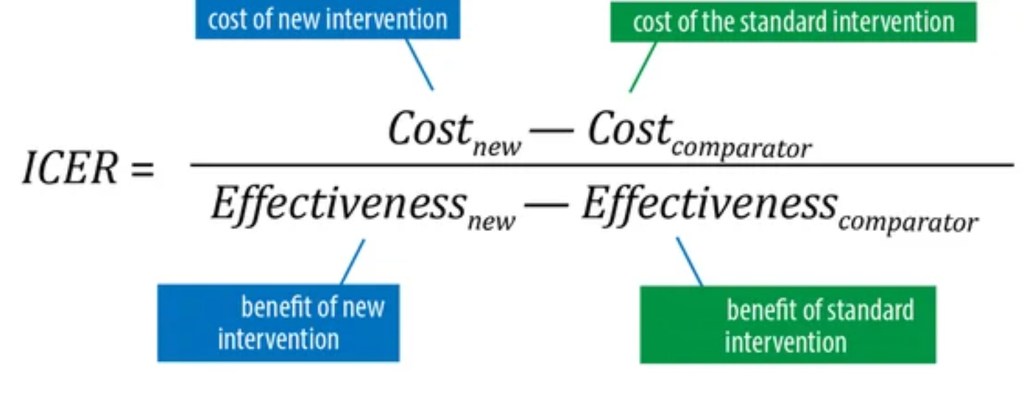
4.2 Incremental Cost-Effectiveness Ratio (ICER)
Widely used in planning and decision-making:ICER=ΔBenefitΔCost
Where:
- ΔCost = Change in cost
- ΔBenefit = Change in output (e.g., floor area, capacity)
4.3 Marginal Cost (MC)
MC=ΔQΔTC
Where:
- ΔTC = Change in total cost
- ΔQ = Change in quantity (e.g., square meters)
4.4 Life Cycle Incremental Cost
ICLCC=ICInitial+ICMaintenance+ICOperation
5. Step-by-Step Procedure
Step 1: Define Base Case
- Existing design or project
Step 2: Define Alternative Case
- Modified or expanded design
Step 3: Estimate Costs for Both
Include:
- Construction cost
- Services
- Land (if applicable)
- Contingencies
Step 4: Compute Incremental Cost
IC=C2−C1
Step 5: Evaluate Benefits
- Increased area
- Improved efficiency
- Increased revenue
Step 6: Decision Making
- Choose alternative with best cost-benefit balance
6. Detailed Example of an Architectural Project
Project Description
A residential apartment building in an urban area.
Scenario
- Base Design: G+4 building
- Alternative Design: G+6 building
6.1 Base Case (G+4 Building)
| Component | Cost (₹) |
|---|---|
| Construction Cost | 4,00,00,000 |
| Services (Electrical, Plumbing) | 80,00,000 |
| External Development | 50,00,000 |
| Total Cost (C1) | 5,30,00,000 |
6.2 Alternative Case (G+6 Building)
| Component | Cost (₹) |
|---|---|
| Construction Cost | 5,80,00,000 |
| Services | 1,20,00,000 |
| Lift Installation | 40,00,000 |
| External Development | 60,00,000 |
| Total Cost (C2) | 8,00,00,000 |
6.3 Incremental Cost Calculation
IC=C2−C1=8,00,00,000−5,30,00,000 IC=2,70,00,000
6.4 Additional Built-up Area
- G+4 = 4000 sq.m
- G+6 = 6000 sq.m
ΔArea=6000−4000=2000sq.m
6.5 Incremental Cost per sq.m
ICunit=20002,70,00,000 ICunit=₹13,500/sq.m
6.6 Incremental Cost-Effectiveness
Assume:
- Rental income increase = ₹40,00,000/year
ICER=40,00,0002,70,00,000=6.75years
👉 Interpretation:
The additional investment will be recovered in 6.75 years.
7. Application in Transit-Oriented Development (TOD)
In TOD contexts (like Delhi Metro influence zones):
Incremental costing is used for:
1. Increasing FAR
- Cost of vertical expansion vs benefits
2. Mixed Land Use
- Residential + commercial conversion
3. First-Last Mile Infrastructure
- Additional pedestrian/cycling facilities
Example (TOD Scenario)
| Case | Cost | Ridership |
|---|---|---|
| Without TOD | ₹100 Cr | 50,000 users |
| With TOD | ₹140 Cr | 80,000 users |
IC=40Cr ΔUsers=30,000 ICER=30,00040,00,00,000=₹13,333/user
8. Advantages of Incremental Cost Estimation
✔ Helps in rational decision-making
✔ Supports cost-benefit analysis
✔ Useful for phased development
✔ Enables efficient resource allocation
✔ Critical for policy and planning (TOD, smart cities)
9. Limitations
✖ Ignores sunk costs
✖ May not capture qualitative benefits (aesthetics, safety)
✖ Requires accurate baseline data
✖ Sensitive to assumptions
10. Practical Considerations
a. Inflation Adjustment
FutureCost=PresentCost×(1+r)n
b. Discounting (NPV)
NPV=∑(1+r)tBt−Ct
c. Contingency
- Usually 5–10% of project cost
11. Conclusion
Incremental cost estimation is an indispensable tool in architectural planning and urban development. It provides a clear financial perspective on whether modifications, expansions, or technological upgrades are justified.
In modern planning contexts—especially Transit-Oriented Development (TOD), sustainable design, and smart infrastructure—incremental costing helps bridge the gap between economic feasibility and design innovation.
By integrating cost, benefits, and long-term impacts, architects and planners can make data-driven, sustainable, and efficient decisions, ensuring optimal use of resources while enhancing functionality and urban livability.


You must be logged in to post a comment.