
Restoration & Rejuvenation of the River Yamuna Floodplain: Towards a Resilient and Living River System

Daily writing prompt
What do you complain about the most?

The restoration and rejuvenation of the River Yamuna floodplain has emerged as one of the most critical environmental and urban challenges in Delhi. The Yamuna River, despite being the lifeline of northern India and a river of immense cultural, ecological, and spiritual importance, has suffered severe degradationโ€”especially along its urban stretch in Delhi. The floodplain, which once acted as a natural buffer for floods, groundwater recharge, and biodiversity, has been progressively encroached upon, polluted, and ecologically fragmented. Restoration and rejuvenation of this floodplain are therefore essential not only for the health of the river but also for the long-term sustainability and resilience of the city.
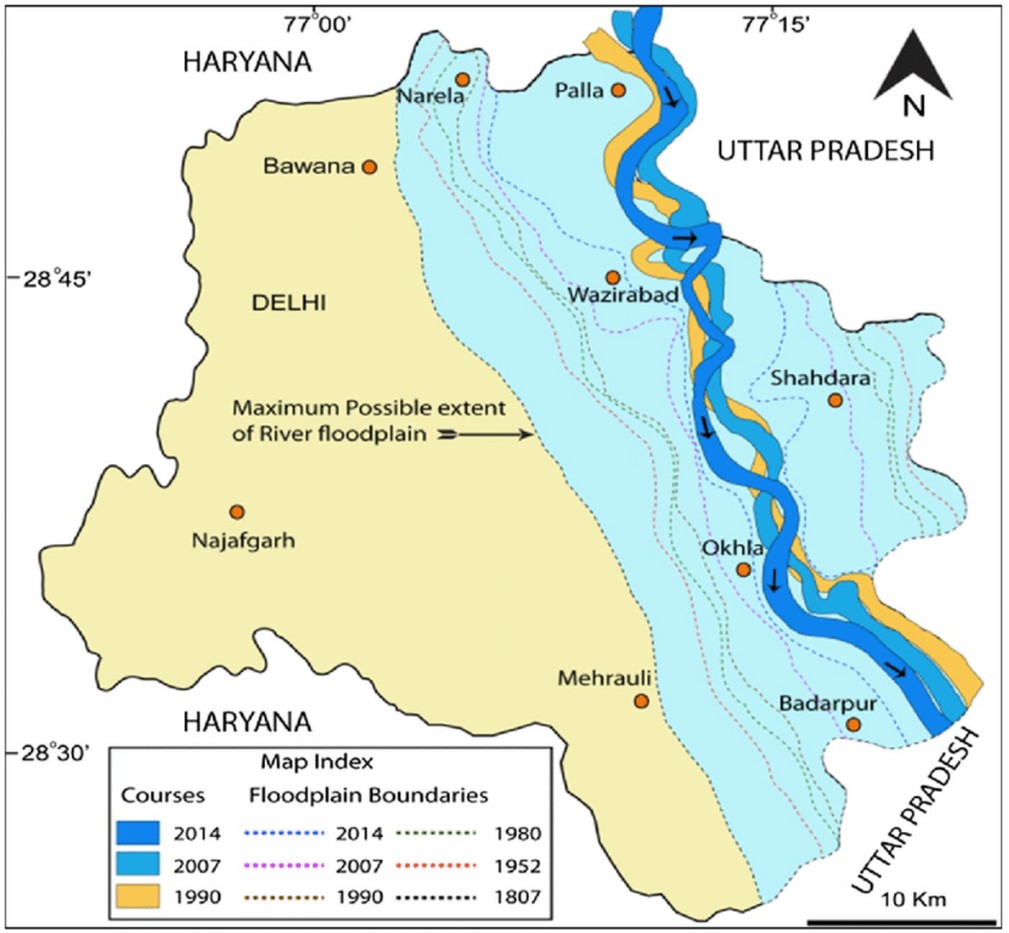

Understanding the Yamuna Floodplain

A river floodplain is the low-lying area adjacent to the river channel that gets periodically inundated during high flows. In its natural state, the Yamuna floodplain performed several vital functions: it absorbed excess floodwater, filtered pollutants, supported wetlands and forests, recharged groundwater, and provided habitat for diverse flora and fauna. In Delhi, the Yamuna floodplain once extended over several kilometres in width, acting as a vast ecological corridor cutting across the city.

However, rapid urbanisation, infrastructure development, and unplanned land-use changes have drastically reduced the effective floodplain area. Roads, power plants, landfills, housing, and event spaces have replaced natural vegetation and wetlands, disrupting the riverโ€“floodplain relationship.


Need for Restoration and Rejuvenation

The need for restoring and rejuvenating the Yamuna floodplain arises from multiple interlinked challenges:

  • Severe water pollution, caused mainly by untreated and partially treated sewage entering the river.
  • Loss of natural flood buffering capacity, increasing the risk of urban flooding.
  • Declining groundwater levels, as floodplain recharge zones are blocked or paved.
  • Degradation of biodiversity, with wetlands, bird habitats, and native vegetation disappearing.
  • Public disconnection from the river, as access has become restricted or environmentally unsafe.

Floodplain restoration is therefore not merely an environmental exercise but a necessity for urban water security, climate adaptation, and public well-being.


Key Components of Floodplain Restoration

1. Removal of Encroachments and Land-Use Regulation
A fundamental step in floodplain restoration is the identification and removal of illegal or incompatible land uses. This includes restricting permanent construction within the active floodplain and enforcing zoning regulations that prioritise ecological functions over commercial or real estate interests.

2. Ecological Restoration and Native Vegetation
Rejuvenation efforts focus on restoring native floodplain ecosystems such as grasslands, wetlands, and riparian forests. Native plant species are better adapted to periodic flooding and help stabilise soil, improve habitat quality, and enhance biodiversity. Recreating wetlands also aids in natural water purification and flood moderation.

3. Improving Water Quality
Floodplain restoration cannot succeed without addressing pollution at its source. Intercepting drains, upgrading sewage treatment plants, and ensuring environmental flows in the river are essential. Clean water allows restored floodplains to function effectively as living ecosystems rather than stagnant landscapes.

4. Reconnecting the River and Floodplain
Engineering interventions over the years have confined the river to a narrow channel. Rejuvenation involves allowing seasonal flooding in designated zones so that sediment deposition, nutrient cycling, and groundwater recharge can occur naturally.


Social and Urban Dimensions

The Yamuna floodplain also has a strong social dimension. Historically, communities depended on it for agriculture, grazing, fishing, and seasonal livelihoods. Restoration efforts must balance ecological goals with social justice by ensuring that vulnerable groups are not unfairly displaced and that alternative livelihood opportunities are created.

At the same time, a restored floodplain can become a public ecological spaceโ€”with controlled access for nature walks, environmental education, and low-impact recreation. This helps reconnect citizens with the river and builds public support for long-term conservation.


Climate Resilience and Flood Management

With climate change increasing the frequency of extreme rainfall events, floodplain restoration is a key strategy for urban climate resilience. A healthy floodplain absorbs excess water during floods, reducing pressure on embankments and drainage systems. It also stores moisture during dry periods, improving water availability and microclimatic conditions.

In this sense, restoring the Yamuna floodplain is far more cost-effective and sustainable than relying solely on hard engineering solutions such as embankments and floodwalls.


Institutional and Governance Challenges

Despite numerous policies, plans, and court directives, Yamuna floodplain restoration faces significant governance challenges:

  • Multiple agencies with overlapping responsibilities
  • Short-term, project-based approaches instead of long-term ecological planning
  • Conflicts between development pressures and environmental protection
  • Limited public awareness and participation

Effective restoration requires integrated river basin management, strong regulatory enforcement, scientific monitoring, and continuous public engagement.


Conclusion

The restoration and rejuvenation of the Yamuna floodplain represent a decisive step towards reclaiming the river as a living system rather than a polluted drain. For Delhi, the floodplain is not vacant land waiting to be developed, but critical natural infrastructure that supports water security, biodiversity, flood protection, and urban livability. A healthy Yamuna floodplain can act as the cityโ€™s ecological spineโ€”absorbing shocks, sustaining life, and reconnecting people with nature. While the challenges are complex, sustained political will, scientific planning, and community participation can transform the Yamuna floodplain into a resilient and vibrant landscape, ensuring that the river once again flows as a symbol of life, balance, and sustainability.

Golf Course at Sector-24, Dwarka: An Emerging Green and Recreational Landmark

Daily writing prompt
What do you complain about the most?

The Golf Course, Sector 24 Dwarka is envisioned as a major recreational and green infrastructure asset within the planned sub-city of Dwarka in Delhi. Set amidst a rapidly developing urban landscape, the golf course at Sector-24 represents more than just a sporting facilityโ€”it functions as an important open space, an environmental buffer, and a lifestyle destination that contributes to the overall quality of urban life. In the context of Delhiโ€™s high density, limited green cover, and growing demand for recreational amenities, the development of a golf course in Dwarka carries significant planning, ecological, and social relevance.


Urban Context and Location Significance

Dwarka was planned as one of Delhiโ€™s largest sub-cities, with a structured sectoral layout, wide road networks, metro connectivity, and designated zones for residential, institutional, recreational, and utility uses. Sector-24 occupies a strategic location within Dwarka, close to major arterial roads and well connected to surrounding residential sectors. The placement of a golf course in this sector aligns with the planning principle of distributing large recreational and open spaces evenly across urban areas, rather than concentrating them only in the city core.

The golf course also serves as a visual and spatial relief in an otherwise built-up environment. For surrounding residential sectors, it provides an expansive green frontage, enhances microclimatic conditions, and contributes to higher environmental and aesthetic value.


Concept of a Golf Course as Urban Open Space

Traditionally, golf courses are viewed primarily as elite sports facilities. However, in contemporary urban planning, they are increasingly recognised as multi-functional open spaces. The golf course at Sector-24, Dwarka fits into this broader understanding by acting as:

  • A recreational sports facility for professional and amateur golfers
  • A large urban green lung contributing to air quality and temperature regulation
  • A buffer zone reducing noise and visual stress in surrounding areas
  • A landmark space that enhances the identity of Dwarka as a premium, well-planned sub-city

Such facilities play an important role in cities like Delhi, where per capita open space availability is far below desirable standards.


Design and Spatial Characteristics

The design of the golf course at Sector-24 is guided by the need to balance sporting requirements with environmental sensitivity and urban compatibility. Key spatial characteristics generally include:

  • Large contiguous green areas with fairways, greens, and roughs designed to international or national standards
  • Natural landscaping elements such as gentle contours, water bodies, and tree clusters
  • Clubhouse and support facilities, including changing rooms, equipment storage, cafรฉs, and administrative spaces
  • Internal circulation systems for players, maintenance vehicles, and service access

The layout is typically low-rise and low-density, ensuring minimal visual obstruction and maximum landscape continuity. This openness differentiates the golf course from other urban land uses and reinforces its role as a passive and active recreational space.


Environmental and Ecological Importance

One of the most critical contributions of the Sector-24 golf course lies in its environmental benefits. Large green tracts within cities help mitigate the urban heat island effect, improve air quality, and support urban biodiversity. The extensive vegetation cover absorbs carbon dioxide, filters dust and pollutants, and provides habitat for birds and small fauna.

If planned and managed responsibly, the golf course can also promote sustainable water management through rainwater harvesting, reuse of treated wastewater for irrigation, and efficient sprinkler systems. Landscaped water bodies can aid in groundwater recharge and stormwater management, particularly during monsoon periods.


Social and Recreational Role

From a social perspective, the golf course contributes to the recreational hierarchy of Dwarka. Alongside neighbourhood parks, sports complexes, and city-level open spaces, it serves a specialised yet significant role. While golf itself may cater to a limited user group, the presence of the course enhances the overall recreational environment of the sub-city.

The development has the potential to host training programmes, amateur tournaments, and youth engagement initiatives, thereby broadening access to the sport. Indirectly, it also supports leisure activities, employment opportunities, and ancillary services related to sports and hospitality.


Economic and Urban Development Impact

The golf course at Sector-24 also influences urban development and land value patterns. Proximity to well-maintained green and recreational spaces often leads to improved property values and attracts higher-quality residential and institutional development. This, in turn, contributes to a more balanced and desirable urban environment.

At the city level, such facilities enhance Delhiโ€™s profile as a global metropolis with diverse recreational offerings. They also support sports tourism, events, and related economic activities.


Challenges and Critical Concerns

Despite its benefits, the development of a golf course in a city like Delhi raises certain concerns:

  • Land use efficiency, given the large area required for a single sport
  • Water consumption, especially in a water-stressed region
  • Equity and accessibility, as golf is often perceived as exclusive
  • Maintenance costs, which are significantly higher than those of conventional parks

Addressing these concerns requires careful policy oversight, sustainable management practices, and integration with broader public open-space planning.


Conclusion

The Golf Course at Sector-24, Dwarka represents an important urban intervention that combines recreation, environmental sustainability, and city-level identity. Within the planned framework of Dwarka, it functions as a major green asset, enhancing livability and environmental quality. While challenges related to resource use and inclusivity must be acknowledged, a well-planned and responsibly managed golf course can serve as a valuable component of Delhiโ€™s urban open-space system. In the long run, the Sector-24 golf course has the potential to stand not only as a sporting facility but also as a symbol of balanced, green, and forward-looking urban development in the national capital.