


1️⃣ What is Cost–Benefit Analysis?
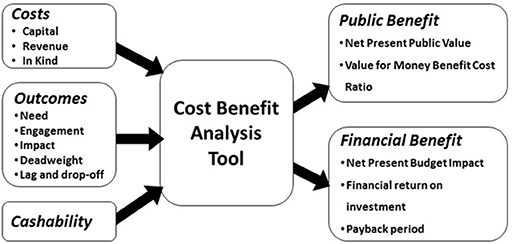
Cost–Benefit Analysis (CBA) is a systematic economic evaluation method used to compare the total costs of a project with its total benefits, expressed in monetary terms.
It helps answer:
“Do the benefits of this project justify its costs?”
CBA is widely used in:
- Urban infrastructure projects
- Transport planning
- Environmental planning
- Public policy decisions
- Smart city and TOD projects
2️⃣ Basic Principle of CBA
A project is considered acceptable if:Total Benefits>Total Costs
More formally:Net Benefit=Total Benefits−Total Costs
If Net Benefit > 0 → Project is viable.
3️⃣ Key Formulas in Cost–Benefit Analysis
🔹 1. Net Present Value (NPV)
Since most planning projects occur over many years, future benefits and costs are discounted:NPV=∑(1+r)tBenefitst−Costst
Where:
- r = discount rate
- t = time period
If NPV > 0 → Accept the project.
🔹 2. Benefit–Cost Ratio (BCR)
BCR=Present Value of CostsPresent Value of Benefits
If:
- BCR > 1 → Accept
- BCR < 1 → Reject
4️⃣ Steps in Conducting CBA for Planning Projects
- Define project scope
- Identify all costs
- Identify all benefits
- Convert benefits into monetary value
- Discount future values
- Compute NPV and BCR
- Perform sensitivity analysis
5️⃣ Types of Costs in Architecture & Planning
🔹 Direct Costs
- Land acquisition
- Construction cost
- Equipment
- Maintenance
🔹 Indirect Costs
- Environmental impact
- Traffic disruption during construction
- Social displacement
6️⃣ Types of Benefits in Planning Projects
🔹 Financial Benefits
- Rental income
- Property value increase
- Parking revenue
🔹 Social Benefits
- Reduced travel time
- Improved safety
- Public health improvement
🔹 Environmental Benefits
- Reduced pollution
- Energy savings
- Carbon reduction
7️⃣ Detailed Numerical Example
✅ Example: Urban Flyover Project
Initial Construction Cost (Year 0)
₹10,00,00,000
Annual Benefits:
- Travel time savings = ₹2,00,00,000
- Fuel savings = ₹1,00,00,000
- Accident reduction benefit = ₹50,00,000
Total Annual Benefit = ₹3,50,00,000
Project Life = 5 years
Discount Rate = 10%
Step 1: Calculate Present Value (PV) of Benefits
Using formula:PV=(1+r)tBenefitt
Year 1:
1.103,50,00,000=3,18,18,182
Year 2:
1.1023,50,00,000=2,89,25,620
Year 3:
1.1033,50,00,000=2,62,96,927
Year 4:
1.1043,50,00,000=2,39,06,297
Year 5:
1.1053,50,00,000=2,17,33,907
Total Present Value of Benefits:
≈ ₹13,26,80,933
Step 2: Calculate NPV
NPV=PV of Benefits−Initial Cost NPV=13,26,80,933−10,00,00,000 NPV=₹3,26,80,933
NPV is positive → Project is economically justified.
Step 3: Benefit–Cost Ratio (BCR)
BCR=10,00,00,00013,26,80,933 BCR=1.33
Since BCR > 1 → Accept the project.
8️⃣ Applications in Architecture & Urban Planning
🔹 1. Transit-Oriented Development (TOD)
Used to evaluate:
- Increased land value
- Reduced travel time
- Environmental benefits
🔹 2. Public Transport Projects
- Metro rail
- Bus Rapid Transit
- Multi-modal hubs
Evaluates:
- Time savings
- Fuel savings
- Reduced congestion
🔹 3. Urban Redevelopment
- Brownfield redevelopment
- Slum rehabilitation
- Heritage conservation
🔹 4. Environmental Infrastructure
- Stormwater management systems
- Solid waste management plants
- Solar energy installations
9️⃣ Advantages of CBA
✔ Considers social and environmental benefits
✔ Suitable for public sector projects
✔ Helps in policy formulation
✔ Supports grant and funding approval
✔ Allows comparison of alternatives
🔟 Limitations
❌ Difficult to monetize social benefits
❌ Sensitive to discount rate
❌ Long-term projections uncertain
❌ May ignore equity issues
11️⃣ Difference Between ROI and CBA
| ROI | CBA |
|---|---|
| Focus on financial profit | Includes social & environmental benefits |
| Used in private projects | Used in public projects |
| Simple calculation | More comprehensive |
| Short-term focus | Long-term societal focus |
12️⃣ Conclusion
Cost–Benefit Analysis is a crucial evaluation tool in architecture and urban planning. Unlike simple profitability measures, CBA:
- Incorporates social, environmental, and economic impacts
- Supports public infrastructure decisions
- Justifies large-scale urban investments
- Helps planners design economically sustainable cities
For planners, CBA ensures that projects create maximum societal benefit with minimum economic cost.
 Track2Training
You must be logged in to post a comment.