
Recently I facilitated a simple-machines-leading-into-Rube-Goldberg-machines lesson with my gifted elementary students.
As I’ve discussed in past blog posts, I use several criteria to guide my lesson design:
- Instructional challenges are hands-on and naturally engaging for learners.
- There is a game-like atmosphere. There are elements of play, leveling up, and a sense of mastery or achievement during the instructional activities.
- The challenges are designed to be novel and create excitement and joy for learners.
- There is a healthy competition where the kids have to compete against one another.
- Learners don’t need to be graded about their performances as built-in consequences are natural.
- There is a natural building of social emotional skills – tolerance for frustration, expression of needs, working as a team.
- Lessons are interdisciplinary (like life) where multiple, cross-curricular content areas are integrated into the instructional activities.
- Lessons are designed to get learners interested in and excited about a broad array of topics especially in the areas of science, engineering, math, language arts, and the arts.
The lesson activities and sequence went as follows . . .
Simple Machines
- As a group, learners watched the following video and reviewed the following webpage on the Smartboard:
- Via their own Chromebooks, they played the following online game: http://www.msichicago.org/play/simplemachines/
- They used their Chromebooks to go on a scavenger hunt both inside and outside of the school to take photos of example simple machines.
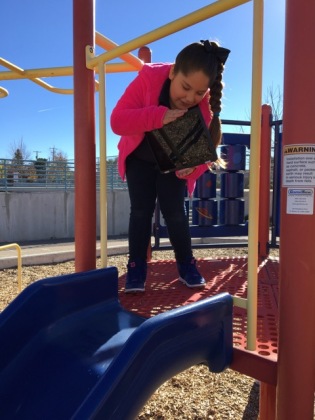
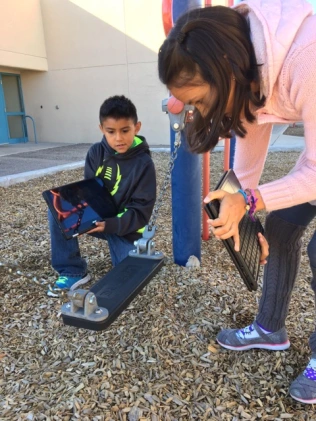
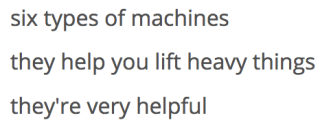
- To conclude the simple machines component, learners were taught about Haikus and asked to write Haikus about simple machines to be posted on their Kidblogs.

Rube Goldberg Machines
- Learners were shown several Rube Goldberg machines posted on Youtube.
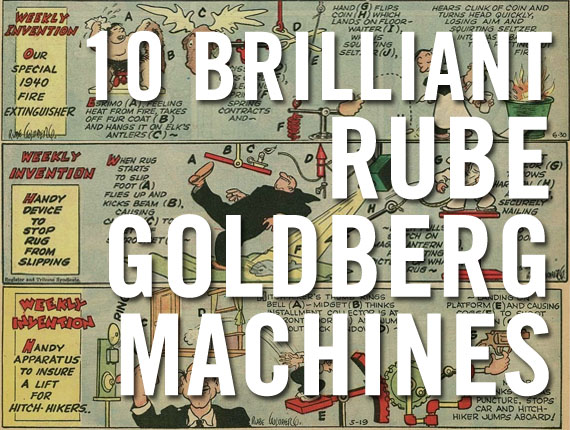
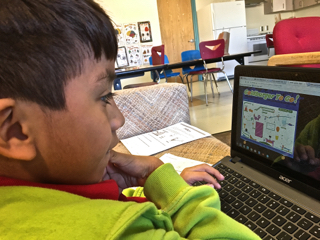
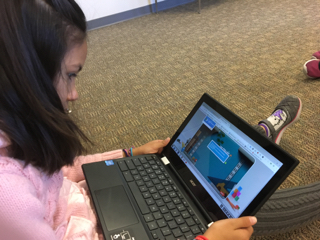
- Learners were given a worksheet that contained several examples of Rube Goldberg Machines and asked to sketch their own cartoon versions.
- Finally, they were given the task to create their own Rube Goldberg machines:
- For inspiration, they were shown the following web resources –
- They were split into teams and given lots of materials (dominoes, hot wheels, hot wheel tracks, playing cards, assorted cardboard pieces. balls, tape).
- They were told that they needed to have their creations end with doing a simple task as is characteristic of Rube Goldberg machines.
- Finally, they were told that their creations would go into a display in the school’s center hall.
 Track2Training
You must be logged in to post a comment.