
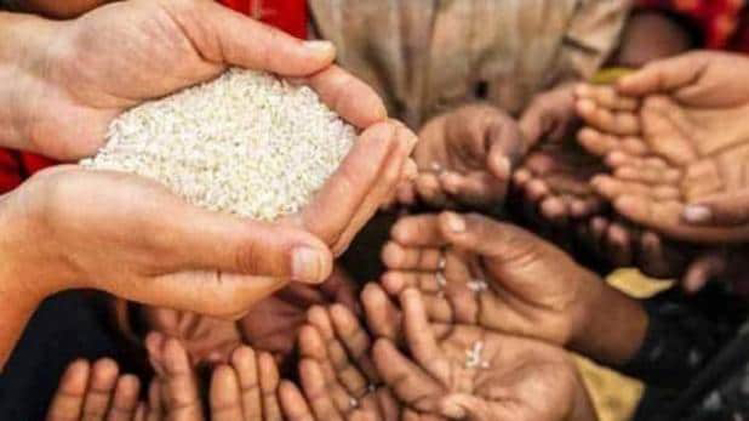
Right to food is a human right that protects the dignity of a human being by making sure there availability of food to all, in adequate amounts to feed all, and they are accessible to all in the nearest place possible. This right ensures that no person suffers with malnutrition or food security, and everyone is free from hunger.Right to food is one of the important human rights as food acts as a means of survival to everyone, and it ensures growth and development of a person, only if one is physically fit and healthy, they will be mentally and emotionally strong. We will be discussing the international and national perspectives of Right to food.
Internationally, the right to food was mentioned in many conferences and conventions, where there was a connection brought between right to food and human rights. Many stated that human rights can protected effectively and efficiently only if one is healthy, and has been guaranteed the right to food, hence a correlation existed between both of them. The Universal Declaration Of Human Rights (UDHR) of 1948 stated that “everyone has the right to a standard living adequate for health and well being for himself and his family, including food..” under its 25th article. Later in 1966 when the International Covenant on Economic Social and Cultural Rights (ICESCR) has stated that the state has an obligation towards its society to ensure standard of living by providing adequate means of survival like food, shelter and clothing, this was given under article 11, this convention came into force on 1976. Then in 1990 when the Convention on the rights of Child was enforced, it discussed about right to food, from a child’s perspective, how it is important for the growth of the child. It said that the state should ensure nutritious food, clean drinking water and proper health care to all the children, and measure have to be taken to reduce the rates of infant mortality rates that are being caused due to lack of care and food to the pregnant women. At the 1996 World Food Summit, which was conducted by the Food and Agriculture organisation of the United Nations at Rome, stated that all the specialised agencies which define the Right to Food, shall also define the ways to implement it, it gave statistical information regarding deaths caused due to malnutrition and hunger, therefore after the ways were stated the deaths caused due to the above stated reason has drastically reduced, but they still happen.In 2002 Right to Food was defined in a perfect manner by the Special Rapporteur on the Right To Food as “ The right to have regular, permanent and unrestricted access, either directly or by means of financial purchases, to quantitatively and qualitatively adequate and sufficient food corresponding to the cultural traditions of the people to which the consumer belongs, and which ensure a physical and mental, individual and collective, fulfilling and dignified life free of fear.” Various conventions and treatises have recognised Right to Food as a human right in the future, however the above stated ones were one of the first ones to do it, and they played an important role in shaping the right.
Now lets look in to the position of Right to Food as a fundamental right in India. The Right to Food is a fundamental right and has been guaranteed under Article 21 of the constitution which gives the Right to Life and Personal Liberty, it is not stated in written but it is assumed that life can go on with dignity only if one has the access and availability to adequate food, and there can be an existence of life only if one consumes food. This article should be read along with Article 39(a) and 47 which are the Directive principles of the State Policy (DPSP), which gives the duties of the state towards its citizens to promote the Right to Food. Article 39(a) states that the state has the obligation towards all its citizens to maintain adequate means of livelihood, and article 47 states the duty of the state to raise the levels of standard of living and nutrition in the society. The above two articles indirectly give existence to the Right to Food as a fundamental right. To achieve the right India has taken many efforts, one of them is by passing the the National Food Security Bill, 2011, which was widely known as the Right to Food Bill, this act ensure that subsidised food was given at different rated according to level of poverty and the least among them were the people below the poverty line (BPL) they were given food items with the least cost, and the distribution of such food would be done through public distribution systems (PDS) they were run by the government, also known as ration shops by the local people. The subsidised food items were only given if one had a ration card, which authorises them as the people who can avail such goods, it was only given to the people who were just above and below the poverty line. This measure was quite successful in India.
Hence, we can to a conclusion that efforts were taken nationally and internationally to promote Right to Food as a human right, and it has brought a change in the rates of death caused due to hunger and malnutrition, but more measures have to be taken to ensure development and progress in the nation. It is said that only if all the human rights are guaranteed in a nation, it leads to increased welfare of its citizen correspondingly making it a more developed country.
 Track2Training