
Nature is God’s best creation. It is indeed the best gift God has given to us. Sometimes,I am wonderstruck to see how systematically nature activities go on. Mutualistic relationship which exists in nature often amazes me.
Mutualistic relationships are defined as interactions between organisms of two different species, in which each organism benefits from the interaction in some way. These types of interaction are common and ubiquitous throughout all ecosystems, and scientists are increasingly recognizing the important role that they play in ecology.
Mutualism in nature
Cleaner fish and larger fish share a mutualistic relationship. This is because the cleaner fish eats harmful parasites and other small sources of food off of the large fish. This gives the cleaner fish a meal, the larger fish is helped because it no longer has these parasites on them. Often times larger fish wait in “cleaning stations” for the cleaner fish to come and get these things off of them. Some small shrimp can also be cleaners. The picture below shows a cleaner shrimp cleaning a large fish that would normally eat the shrimp if it wasn’t for this mutualism.
Mutualisms may involve either the exchange of resources, such as shelter, food and other nutrients, or they may involve the exchange of services, such as protection, transportation or healthcare.

“
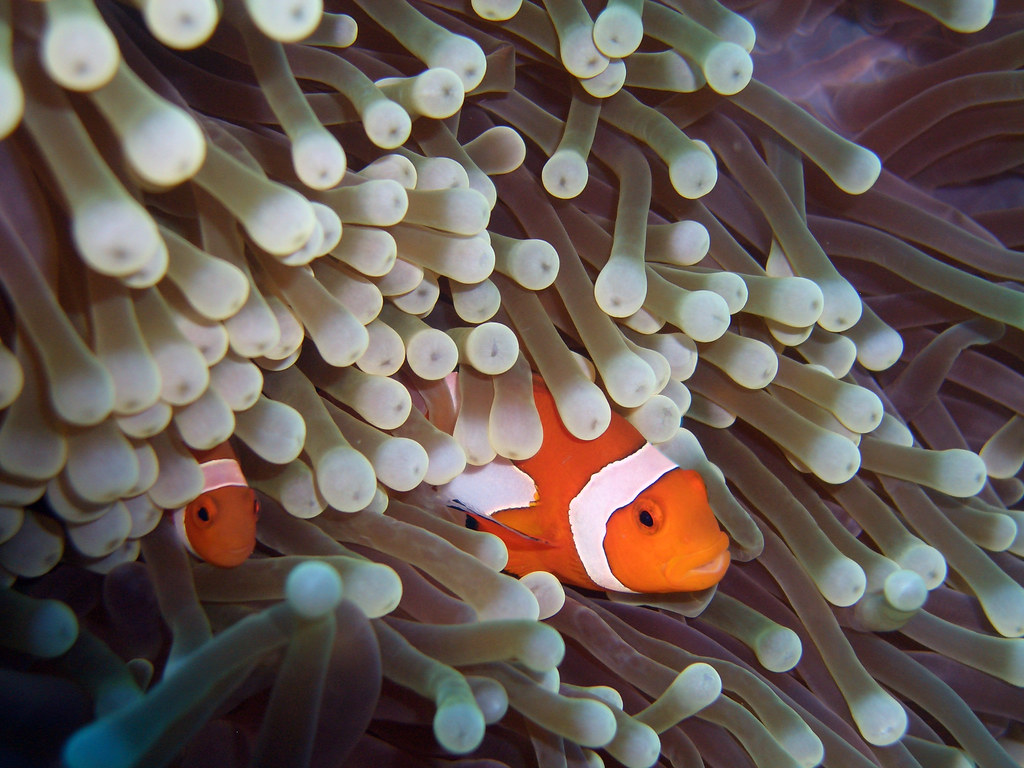
“Clownfish and Sea Anemone” by Samuel Chow under Flickr
Although there are many more mutualistic relationships between marine animals, the last one that I will talk about is the relationship between the Boxer Crab and anemones. In this relationship, the Boxer Crab carries around two anemones that sting and it uses them for protection. The anemones are benefited because since the crab carries them around, it allows them to be mobile which increases their options for finding food.

“BOXING (POM POM) CRAB” BY LIQUIDGURU UNDER VIMEO
PARASITISM
Parasitism is not a mutualistic relationship because only one of the species is benefited. The parasite gains from the relationship while the other species involved is harmed.
One example of a parasitic relationship is between fish lice and small fish hosts. The fish can be killed if there are too many fish lice attached to it. The lice benefits from the fish by feeding off of their bodily fluids.
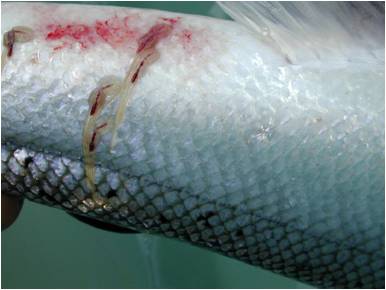
“SEA LICE ON SALMON” BY 7BARRYM0RE UNDER PUBLIC DOMAIN
Isopods can also cause a parasitic relationship. Some isopods will eat the fishes tongue and then live in the fishes mouth so it they can eat whatever the fish is attempting to eat.
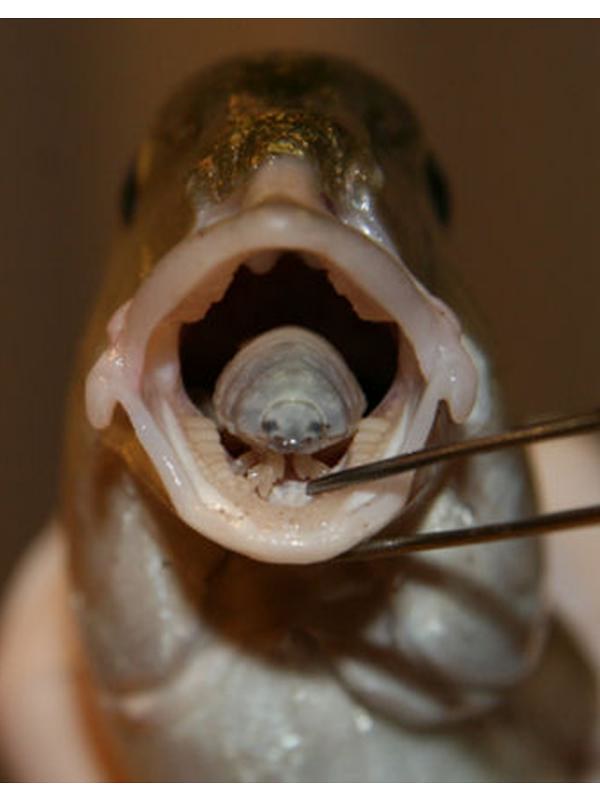
“BETTY IN MOUTH” BY UNIVERSITY OF SALFORD PRESS OFFICE UNDER FLICKR
COMMENSALISM
Commensalism is a relationship where one species benefits from another species. The other species is neither harmed nor helped in this relationship. There are many examples of commensalism in the ocean.
One example of commensalism among marine life are jellyfish and small fish. The small fish will typically hide inside of the jellyfish’s stinging tentacles if the stinging does not effect them. The tentacles provide protection for the fish from larger predators. This relationship has no effect on the jellyfish.

“BABY FISH TAKE SHELTER IN JELLYFISH” BY EARTH TOUCH NEWS NETWORK
Another relationship is between shrimp and a featherstar. The shrimp will blend in with the featherstar and use it for protection. As you can see in the picture below, it is very difficult to find the shrimp hiding in there.
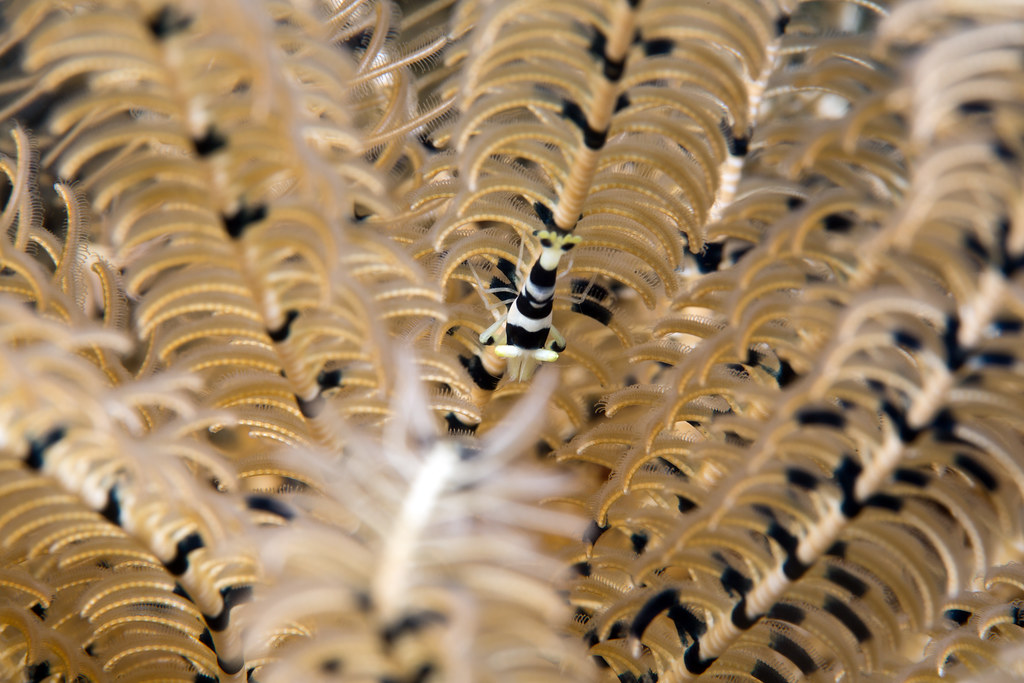
“Shrimp in Featherstar” by prilfish under Flickr
MIMICRY
The last kind of symbiotic relationship is mimicry. Mimicry is when one organism that is harmless evolves to look similar to another organism that is poisonous. This stops predators from eating them because they think they are the poisonous species. They can also use mimicry to appear larger than they really are.
The four-eye butterflyfish uses a large eye spot in order to appear larger to predators.
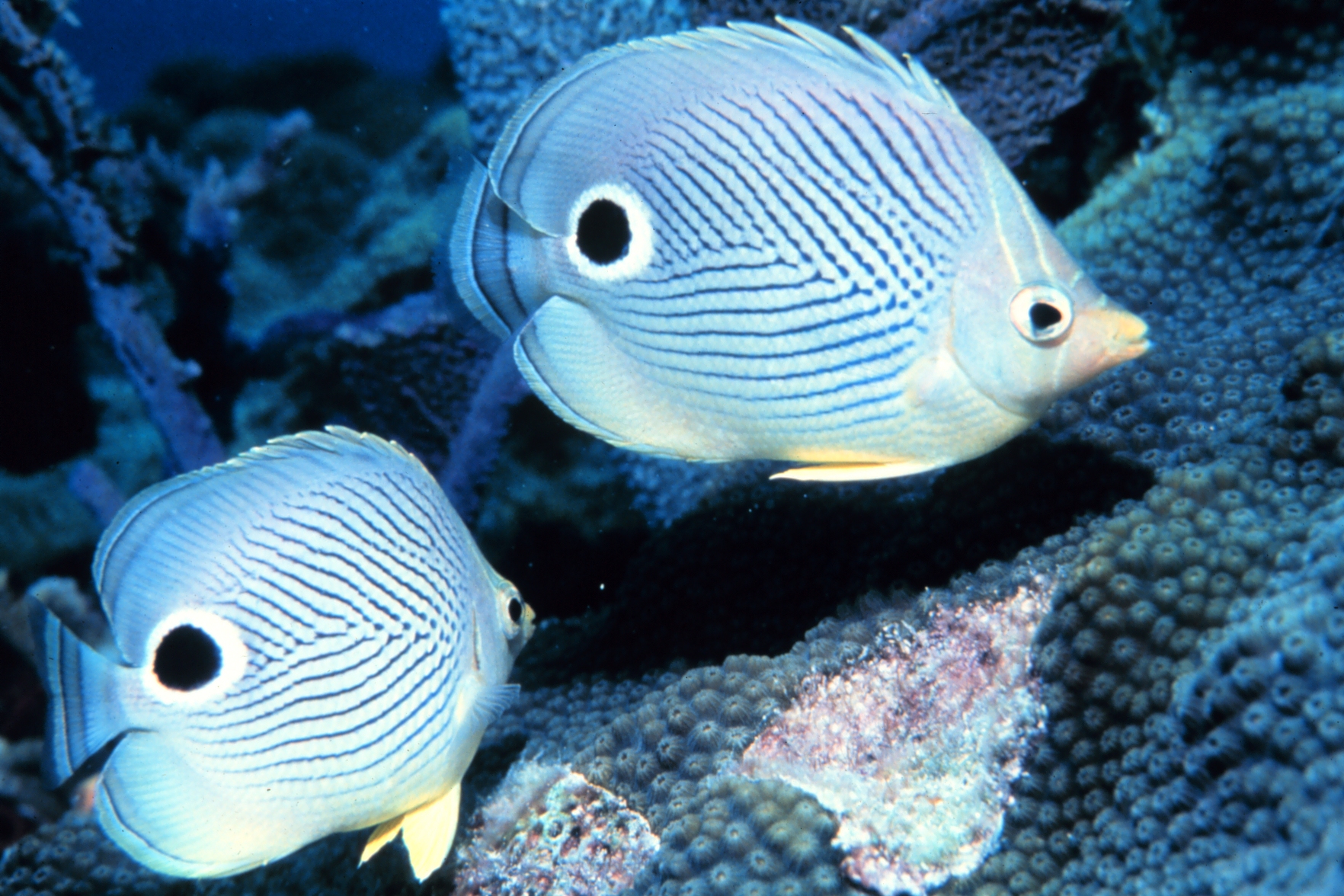
“CHAETODON CAPISTRATUS1” BY CHRIS HUSS UNDER PUBLIC DOMAIN
Another example of mimicry is between the Sabre-tooth Blenny and Cleaner Wrasses. The Cleaner Wrasse have a mutualistic relationship with larger fish so they don’t get eaten, and the Sabre-tooth Blenny takes advantage of this relationship by evolving to look very similar to the Cleaner Wrasse. Instead of cleaning the larger fish, the Sabre-tooth Blenny will take a bite out the the large fish’s flesh and swim away.
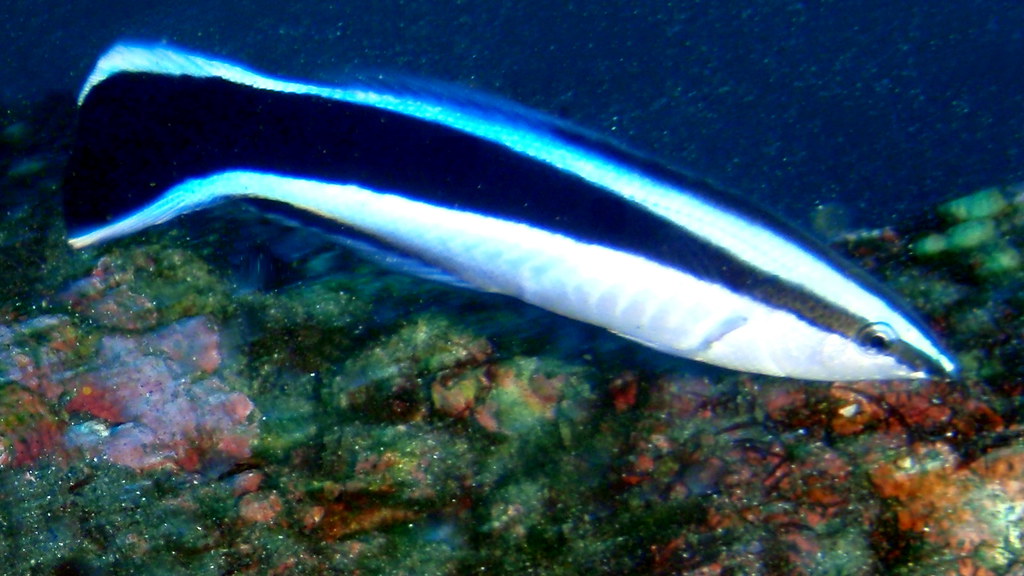

“BLUESTREAK CLEANER WRASSE” BY NEMO’S GREAT UNCLE UNDER FLICKR
“SABRE-TOOTH BLENNY” BY FISH INDEX
On the top there is a bluestreak cleaner wrasse and on the bottom is a sabre-tooth blenny. You can see how similar they look and how fish could mistake them.
SHARE THIS:
RELATED
Christmas Tree WormsWith 6 comments
The Importance of BioluminescenceWith 4 comments3 Comments
3 THOUGHTS ON “SYMBIOTIC RELATIONSHIPS IN THE OCEAN”
KCANGIALBeautiful examples and images of mutualisms here! The sabre-tooth blenny is apparently an ectoparasite, so interesting! And a very cool example of aggressive mimicry! I love the gif of the crab with anemone pom-poms!LikeReply
AOLENDORFEPORTThanks! I also thought that the sabre-tooth blenny was interesting. The gif is my favorite part of this post!Liked by 1 personReply
HALEYZANGAI loved the images in this post! It really showed the affects of the different symbiotic relationships around. Easy to follow and easy to read.Liked by 1 personReply
LEAVE A REPLY
Logged in as Janhvi Singh. Log out?
Comment
Notify me of new comments via email.
Notify me of new posts via email.
POST NAVIGATION
← Screencast 1: Coral ReefsScreencast 2: Overfishing- identifying the problem →
Create a free website or blog at WordPress.com.Privacy & Cookies: This site uses cookies. By continuing to use this website, you agree to their use.
To find out more, including how to control cookies, see here: Cookie Policy
 Track2Training

