
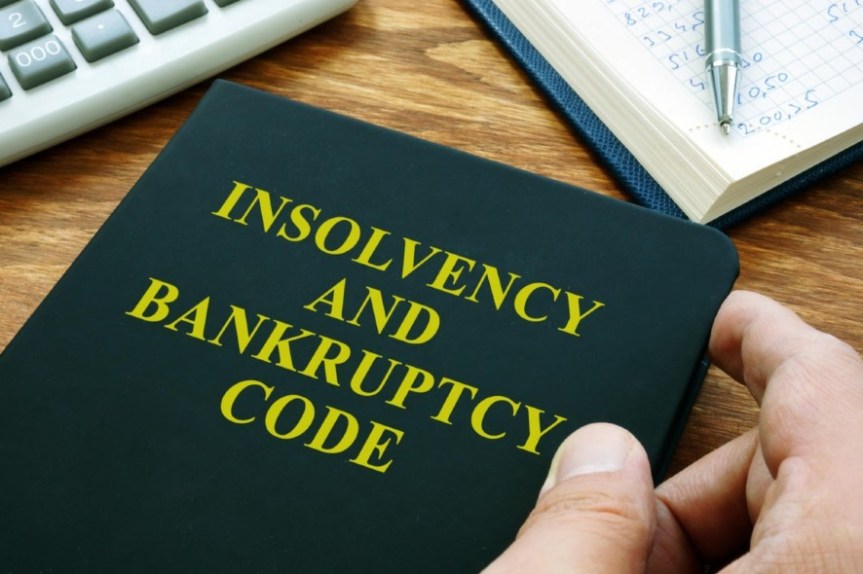
The Insolvency and Bankruptcy Code (IBC), has been enacted in India when the parliament passed the bill in the year 2016. Insolvency is a state of being unable to pay off your debts, it a state of economic distress, when the person, firm or company is no linger able to carry out its business. Bankruptcy is more of a legal term when one is declared as insolvent, and the legal process which is followed a person who could not fulfill their financial obligations, as they had due payments to their creditors. The legal process of bankruptcy relieves a person to some extent from some depts, and protects them so that no one could harm them for their money. The IBC is a single legislation for all the problems related to insolvency and bankruptcy by giving time-bound processes for resolving them , it is a combination of may other existing laws. It was implemented to bring one uniform law with respect to insolvency and bankruptcy. It took India and average of 4.3 years to come up with such a resolution, it took a lot of time as compared to other nations. However this bill has brought a tremendous change in the policies related to insolvency and bankruptcy. The Insolvency and Bankruptcy Board of India (IBBI) was established under the code which aims to fulfill the objectives of the code, by making sure insolvency resolution are happening in a legal and transparent way. The IBBI contains a total of ten members from law ministry, finance ministry and the Reserve Bank of India. This act applies to and individual person, companies, partnership and other firms which have been established under any particular statute. This gives all round solutions to creditors, debtors, companies, shareholders and anyones who has an insolvency problem.
The main reason behind the legislation was to provide clear and timely processes for resolving insolvency, it provided a speedy solution. The code gives an opportunity to the creditor to assess the position of the debtor, and can make plans for the liquidation of debt. The code has provisions for a special agency which only deals with insolvency proceeding and matters of a party. This provides protection to the debtor by giving them immunity against the shareholders, creditors and other party involved. Several insolvency professionals will be appointed to take care of the communication between the creditor and debtor, they manage all the information related to the assets of the debtor, and they make sure the entire process of insolvency resolution happens correctly. The proceedings of the resolution process are adjudicated by the National Companies Law Tribunal (NCLT), for companies and the Debt Recovery Tribunal (DRT) for individuals, and through this process the insolvency professionals will be guiding the part through it. The resolution process can either be initiated by the debtor or creditor. Then a committees which consists of all the creditors if formed and they decide upon the action of plan that has to be taken for recovery of their debt. They might either take a decision to give the debtor more time, otherwise the assets of the debtor will be sold for recovering the debt, all the function should happen before the time limit prescribed in the code. As soon as the decision is taken the process of liquidation happens where the assets are sold under the guidance o the insolvency professionally, and fee has to be paid for the whole process and other necessary costs. The insolvency resolution process for the company is a total of 180 days with a 90 day extension, and for small firms it is 90 days with a 45 day extension, these were the changes brought through the bill. The above process is termed as the Insolvency Resolution Process (IRP). Therefore, the IRP consists of three major steps, they are Initiation, the resolution of insolvency and then finally the liquidation process. IBC has been amended thrice in the past few years, making it a better legislation by changing according to the situation in the society.
We can come to conclusion, that this act has brought a good change in the areas of insolvency and bankruptcy, as the system which existed before this act was proved to br inadequate or ineffective. This code has introduced a time bound process for insolvency resolution. It has provisions relating to IBBI, Insolvency professionals, adjudicating mechanisms like NCLT and DRT, and for Information utilities, which has all information regarding the process and decision taken. This code enabled the protection of debtors, and gives an efficient insolvency resolution process. In spite of the efforts India is still way backward in the World Index of Ease of resolving Insolvencies, and this will be changed in the future due to the IBC. If it is implemented in a strict manner, we can look forward to seeing a day where India may top the index, and it will be appreciated world widely for its efforts in this area. We as responsible citizens should make sure that we follow the laws of the nation which will lead to the welfare of people inturn developing the nation. Many such more effective and efficient legislations should be enacted to solve the problems in the society.
 Track2Training