
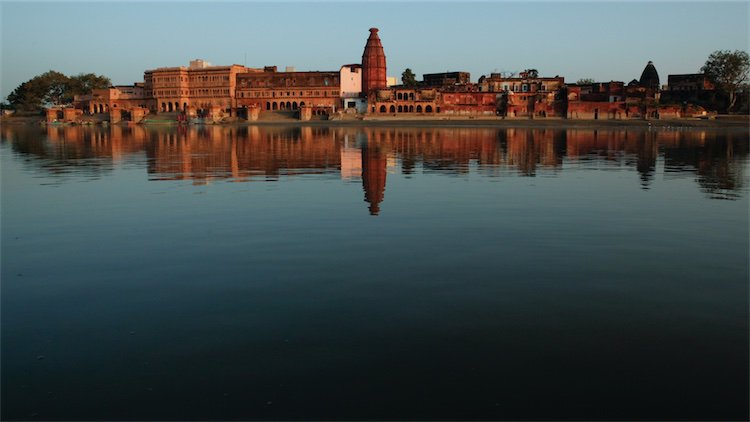
Delhi’s ancient past is heavily dependant on River Yamuna. It is worth noting that Delhi’s history starts from the 11th century when Anangpala Tomara is credited to have populated the city. However, the 11th century or the early-medieval period is still considered to be a proto-historic phase that is characterized by bereft of enough archaeological evidence to prove its existence. However, the literary traditions point to settlements as old as 5000BC i.e. Indraprastha. Some scholars also argue that the present-day Purana Qila is the site of Indraprastha. Whatever be the settlements, either epic, palaeolithic or Harappan; the river Yamuna is of utmost significance to the study of Delhi’s ancient past.
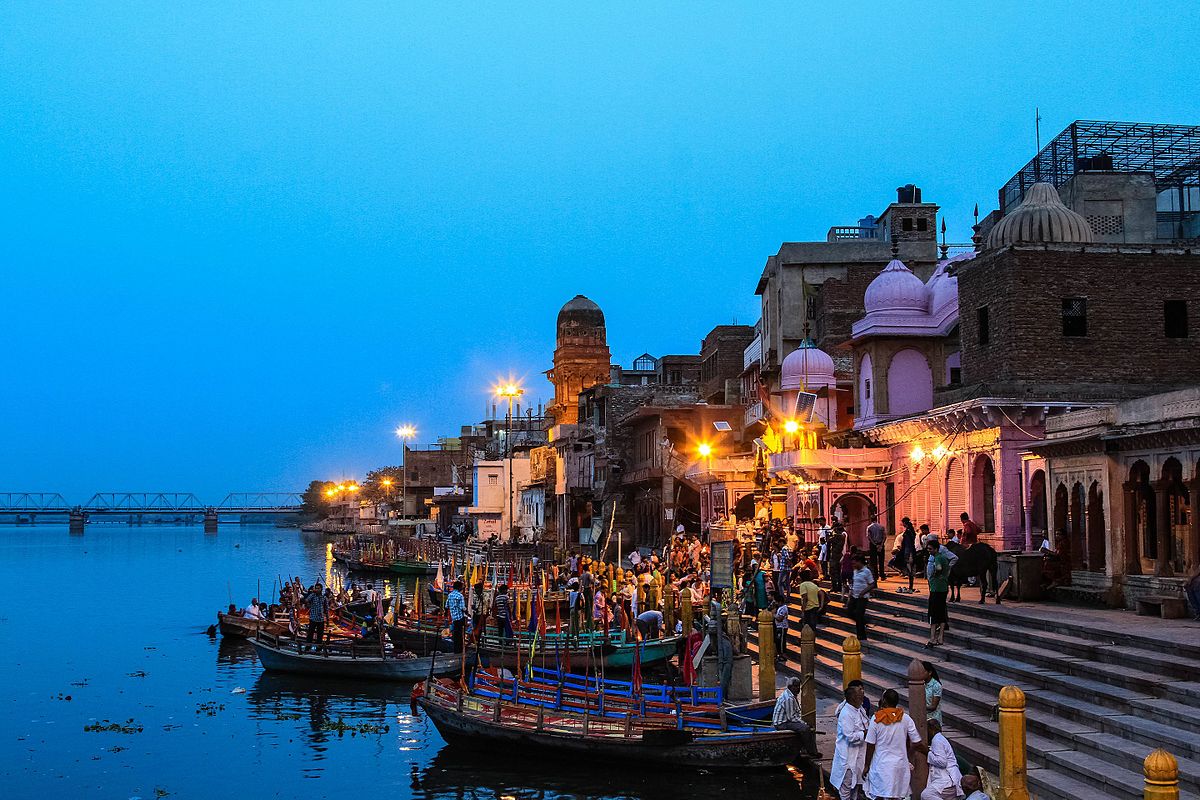
On extensive excavations by the Archaeological Survey of India, remains of six palaeochannels of the river Yamuna were found. The river Yamuna is further known as a migrating river or temperamental river. The river changed its course owing to the tectonic movements and it’s believed that the river once flew into Saraswati that is mentioned in the Rigveda as the foremost of all rivers. Further, it abandoned Saraswati and started its eastward course and joined Ganga. Flowing through the hillocks to the South of Delhi, Yamuna started an eastward movement around 4,000 years ago.
Many ancient mounds located in the vicinity of the old and new channels of the river Yamuna mark the ancient settlements located there. Explorations on the IV and V palaeochannels of the river Yamuna has revealed thousands of stone tools. Further excavations also revealed finished artefacts, waste materials and some materials at various stages of production dating to the Harappan era.
The river Yamuna is known as Kalindi in a plethora of ancient texts and she is considered to be a goddess. The Samhita 10.10 of the Rigveda refers to Yami and Yama being twin children of the Sun God. Whereas Yama is recognized as the God of death, Yami is considered to be the river Yamuna.

In the Mahabharata, sage Lomaksha asks Yudhistira to take a dip in the river to be cleansed of all sins. Also, places along the river are described in the Mahabharata as sacred sites for performing various sacrifices.
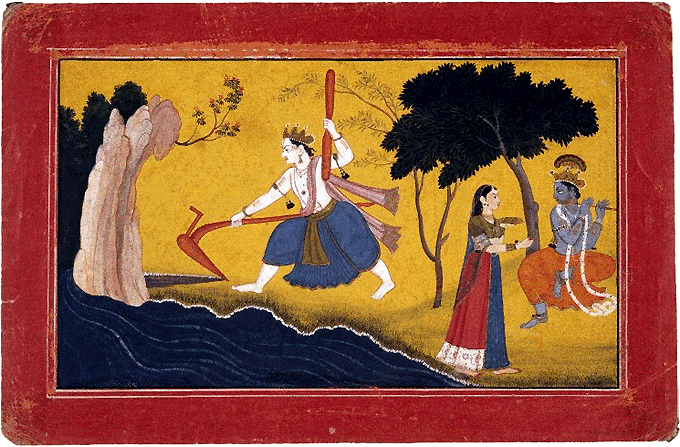
The Vishnu Purana narrates the story of Balram, Krishna’s brother, commanding the river Yamuna to accompany him and she refused to and the infuriated Balram dragged the river closer to him with his ploughshare.
Various Puranas refer to Lord Shiva, in the form of Bhairava, being grief-stricken on the demise of Devi Sati, plunges on to the river Yamuna, making it black in complexion.
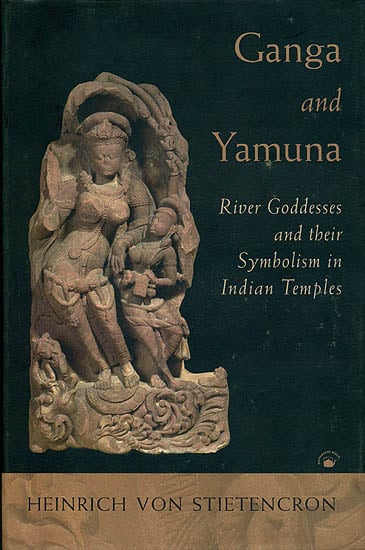
The entrances of many Hindu temples are sculpted with the images of Yamuna and Ganga where Ganga, considered to be white in complexion, stands on a fish or a crocodile while Yamuna, black in complexion, stands on a tortoise or a sea turtle.

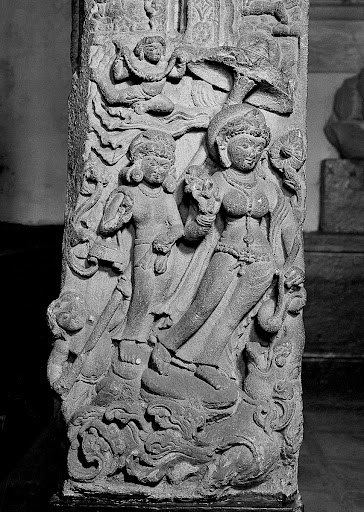
In toto, the archaeological shreds of evidence mustered from the palaeochannels of the river Yamuna point to the early palaeolithic and Harappan settlements in the Delhi ridge. Also, the literary evidence from the Mahabharata, Vishnu Purana and the Rigveda, inter alia suggest the mythical significance of the river.
 Track2Training