
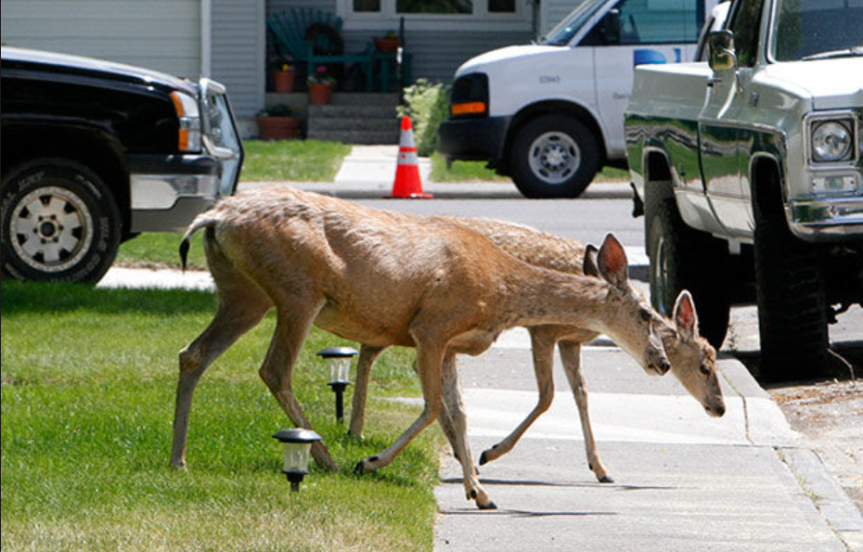
Urbanization is simply the expansion of urban areas onto rural areas, is now a growing issue faced by wildlife managers, city planners, and environmentalists. Urban expansion has led to some of the most significant local extinction rates as it has caused a huge alteration in the habitat of various animals to land that continues to be transformed by anthropogenic infrastructures, roadways, energy use, and activity.
Today we see various architectural and infrastructural built-ups being made every day for human use. Urbanization has surged at a global level and this rapid growth of urbanization has severe effects on the wildlife. The ecological consequences have now reached far beyond the boundaries of cities and have led to biodiversity loss and decline in species richness.
Urbanization has caused a significant decrement in the transmission of wildlife parasites, in some cases, an increase among urban-adapted hosts which affects the rarer wildlife or those living beyond city limits. Continued rapid urbanization poses a risk of multi-host pathogens against humans and vulnerable wildlife populations. Therefore, the need of the hour is for research on wildlife diseases in urban landscapes.
Studies show that continuous urbanization taking place all around the world will lead to two-thirds of the human population residing in cities within 30 years. The latest research depicts that ecologists have started to find the mechanisms by which urbanization affects biodiversity and causes a decline in species richness, including processes related to resource competition, altered trophic interactions, and the spreading of different diseases caused by parasites. Studies also show that during the process of urbanization some animal species will disappear from the newly urbanized habitat. For example, birds that feed on specific food sources which are naturally available to them will fly to other areas in search of food. Species that cannot reproduce at a rate at which urbanization is expanding will eventually disappear.
Fox squirrels are an ideal species for studying the impacts of urbanization on anti-predator responses. Fox squirrels are one of the common species found in urban areas and it seems that they are comfortable with the disturbances caused by anthropogenic settings. It is observed that squirrels found in urban areas have a lower giving-up density when it comes to foraging, which means a lower limit of food density in which they will dismiss efforts to forage. This means they spend more energy obtaining food, and potentially less energy expended toward anti-predator behaviours.
Urban fox squirrels allow humans to come within closer proximity than rural squirrels will allow. This response and boldness of fox squirrels toward humans indicate that at least to some degree they have lost some of their innate anti-predator response.
Several differences can be observed in the behaviour of wildlife seen in urban and rural areas, and it is clear that anti-predator responses are among those changes. However, exploring the surrounding responses to different types of predators is required.
As human populations continue to migrate into cities and urban areas increase, future research becomes very essential to manage disease threats against humans and animals at the interface of two rapidly growing disciplines: urban ecosystem studies and infectious disease ecology. Therefore, we aim to control forest fragmentation or agricultural intensification so that animals are not left behind without a habitat to grow and reproduce.
References
https://www.ncbi.nlm.nih.gov/pmc/articles/PMC7114918/
https://digitalcommons.unl.edu/cgi/viewcontent.cgi?article=1162&context=envstudtheses
 Track2Training