There have been events throughout history that contradict explanations, challenges our understanding of the human mind and body. One such mystery was the Dancing Fever in 1518, a strange and mysterious phenomenon which occurred in Strasbourg during that period when it is nowadays France’s Modern Day. This unprovoked outbreak of mad dancing lasted for several months, leaving a mark on history that continues to be defied today by scientists, historians and scholars. In this blog, we will delve into the details of this strange episode, exploring its causes, consequences, and the various theories that have been proposed to explain it.
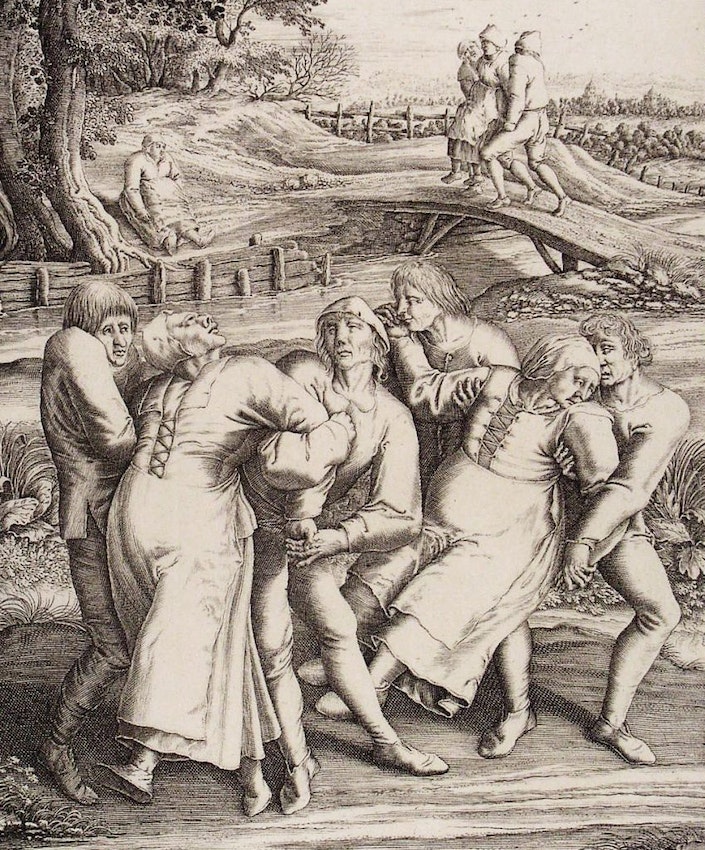
• The Outbreak Begins: The summer of 1518 was a time of uncertainty in Strasbourg. The town was grappling with social and economic challenges, and the people were living in a state of perpetual anxiety. Against this backdrop of stress and turmoil, a peculiar incident occurred that would soon capture the attention of the entire town. It all started with one woman, Frau Troffea. On a hot July day, she stepped into the streets of Strasbourg and began to dance. This, in itself, may not have been particularly unusual, as dancing was a common form of entertainment in the 16th century. However, Frau Troffea’s dancing was far from ordinary. She danced with a fervor and intensity that bordered on the frenzied, and she showed no signs of stopping. She danced for hours, and when she finally collapsed from exhaustion, it was only a temporary respite. The next day, she was back on her feet, dancing once more. The dancing plague of 1518 is one of the most bizarre and fascinating mass hysteria events in history. It is also one of the most mysterious. To this day, no one knows for sure what caused it.
• Contagious Hysteria: What made Frau Troffea’s dancing even more peculiar was that she was not alone for long. Within days, more and more people joined her in this strange dance, and the numbers grew rapidly. By the end of the week, there were around 34 people dancing uncontrollably in the streets of Strasbourg. And as the days turned into weeks, the numbers swelled to nearly 400. This bizarre spectacle attracted the attention of local authorities, who initially believed that the afflicted individuals were suffering from some form of demonic possession or divine punishment. In an attempt to exorcise the supposed demons, they organized mass exorcisms and encouraged even more dancing. Unsurprisingly, this only exacerbated the situation, and more people joined in the frenetic dance.
• The Consequences: The consequences of the Dancing Plague were both bizarre and tragic. Many of those afflicted suffered from exhaustion, dehydration, and physical injuries as a result of their unrelenting dance. Some even danced themselves to death. It is estimated that as many as 15 people perished during the outbreak, their bodies were simply unable to endure the relentless physical strain. As the epidemic raged on, it began to take a toll on the town’s economy and social fabric. With hundreds of people incapacitated by dancing, the workforce was severely depleted, leading to a decline in productivity. Families were torn apart as members were caught up in the mania, and the fabric of society began to unravel.
• Theories and Explanations: To this day, the Dancing Plague of 1518 remains one of the most perplexing events in history, and numerous theories have been proposed to explain it. While none can provide a definitive answer, they shed light on the complexity of human behavior and the mysterious workings of the human mind.
• Possible causes of the dancing plague: There are many theories about what caused the dancing plague of 1518. Some of the most popular theories include:
(a) Mass Hysteria: One of the prevailing theories suggests that dancing was a manifestation of mass hysteria. Mass hysteria is a phenomenon in which a group of people, often under stress, experiences collective symptoms without any organic cause. The stress and anxiety prevalent in Strasbourg at the time may have triggered this mass psychogenic illness, causing people to dance uncontrollably.
(b) Ergot Poisoning: Another hypothesis points to ergot poisoning as a possible cause. Ergot is a fungus that can grow on rye and other cereal crops, and it produces alkaloids similar to LSD. Consumption of ergot-contaminated grain can lead to hallucinations, muscle spasms, and other symptoms. Some researchers believe that the townspeople unknowingly ingested ergot-contaminated bread, leading to their bizarre behavior.
(c) Social and Cultural Factors: The 16th century was a time of social and cultural upheaval. Strasbourg was plagued by economic hardship, famine, and political instability. Some historians argue that the dancing may have been a form of protest or a reaction to the prevailing conditions, with individuals engaging in this extreme behavior as a means of expressing their frustration and discontent.
(d) Religious and Superstitious Beliefs: The religious and superstitious beliefs of the time may have played a role in amplifying the outbreak. Some individuals may have genuinely believed that they were possessed by demons or that dancing was a form of penance, leading them to continue dancing despite the physical toll it took on their bodies.
• Symptoms of the dancing plague: The people who were affected by the dancing plague of 1518 experienced a variety of symptoms, including: ∆ Uncontrollable dancing ∆ Trance-like states ∆ Hallucinations ∆ Convulsions ∆ Muscle spasms ∆ Exhaustion ∆ Death Some people danced for days or even weeks without stopping. Others collapsed from exhaustion or died from heart attacks or strokes.
• Treatment for the dancing plague:
At the time, there was no known cure for the dancing plague. People who were affected by it were often treated with religious rituals, such as exorcisms and pilgrimages. Some people were also taken to the mountains, where they were forced to dance until they collapsed.
• The end of the dancing plague:
The dancing plague of 1518 ended as mysteriously as it began. In September 1518, the dancers suddenly stopped dancing. Some historians believe that the dancers may have been cured by a local priest, who led them on a pilgrimage to a mountain shrine.
The Dancing Plague of 1518 is a historical enigma that continues to captivate our imagination and challenge our understanding of human behavior. While we may never have a definitive explanation for why hundreds of people danced uncontrollably in the streets of Strasbourg, it serves as a reminder of the complexity of the human mind and the profound impact of social and environmental factors on our behavior. This strange episode from the past reminds us that history is replete with mysteries that defy easy categorization or explanation. The Dancing Plague of 1518 stands as a testament to the enduring capacity of human beings to surprise, bewilder, and mystify, even in the most trying of circumstances. It remains a historical puzzle that invites further exploration and contemplation, offering a window into the depths of the human psyche and the boundless possibilities of the human experience.
1*Fawziah Zayed Eid Almutairi,2Nasier Abdullah Nasier Al-Degashiem,3Zainah Turki Alqahtani,4Sarah Shouib Alrashedi,5Mariam Saud Awadhah Almoteri, 6Laila Mashawi Hawas Ghazwani, 7Abdulrahman Meshal Dakhelallah Almutairi, 8Fathia Ahmed Saad Alshehri.
1*Nursing Technician, RN, Nurse at school health Kingdom of Saudi Arabia, (KSA) (e-mail: fof0-2030@hotmail.com ).
2Nursing Technician, RN, Nurse at school health Kingdom of Saudi Arabia, (KSA), e-mail: nad1425@hotmail.com .
3Nursing Technician, RN, Nurse at school health Kingdom of Saudi Arabia, (KSA), e-mail: (zalghtani@moh.gov.sa )
4Nursing Technicians RN, King Faisal Primary Health Care Centre Kingdom of Saudi Arabia, (KSA), Email: sashalrashedi@moh.gov.sa
5Nursing Technician, RN, Nurse at school health Kingdom of Saudi Arabia, (KSA), e-mail:Umshaher1440@hotmail.com
6Technician-Nursing, RN, Nurse at Alsadah primary health care center Kingdom of Saudi Arabia, (KSA), Email: rorooo201395@gmail.com
7Nurse Specialist, Eradah, Complex for Mental Health-Riyah Kingdom of Saudi Arabia, (KSA), (e-mail: aalmutairi356@moh.gov.sa).
8Nursing Specialist RN, Nurse at school health, Kingdom of Saudi Arabia (KSA) (e-mail: fatooo1111@hotmail.com .
Abstract
Background: Non psychiatric nurses care for hospital patients with behavioral health conditions..
Objectives: The current study aimed to assess practice towards Psychiatric, Patients with Aggressive Behaviors at Khartoum Psychiatric Hospitals.
Materials and methods:
Descriptive cross sectional hospital based design was used to conduct this study at a Psychiatric Hospital in Khartoum. The target population consisted of 60 nurses employed at the Khartoum Psychiatric Hospital. Structured questionnaires were distributed to the participants for data collection. Data analysis was done using a Statistical Package for Social Science, version 24, and nominal as well as ordinal data was analyzed using descriptive analysis.
Results: The study showed that the overall practice of nurses towards psychiatric patients with an aggressive behavior was found good among 71.5% and poor among 28.5%. There was association between overall practice of nurses towards psychiatric patients with an aggressive behavior and age group<0.05.
Conclusion: Nurses has overall adequate practice towards psychiatric patients with an aggressive behavior. While the age was significantly influence the practice of nurse towards psychiatric patients with an aggressive behavior. Future studies with large sample size will be recommends.
Keywords: practice , Psychiatric, Khartoum psychotic hospital
Introduction:
Aggression is a serious problem on psychiatric wards and has large consequences for patients as well as staff working in mental healthcare: aggressive behavior is an important reason to seclude or restrain a patient (Kaltiala-Heino et al., 2003), but, according to patients, this feels as being controlled and punished with no therapeutic value (Meehan et al., 2004). Health care workers experience feelings of anger, anxiety and guilt after an aggressive incident (Needham et al.,2005) and higher levels of burn-out (de Looff et al., 2019). Development and expression of aggression is generally explained as multifactorial: being environment-related (design of the ward, privacy, locked doors, ambiance, noise level, overstimulation), mental health care-system related (regional policy, hospital policy, ward rules, attitude towards patients, cultural factors), patient-related (demographics, cognitive and emotional state, malevolence, pathology) and clinician-related (degree of communication, de-escalation skills, attitudes towards aggression, clinicians’ stress level) (Cutcliffe et al., 2013). Previous reviews on aggression on psychiatric wards were mainly focused on patient-related factors e.g. isolation of high-risk patients who were prone to develop aggression (Cornaggia et al., 2011). From a prevention perspective, ward and staff factors provide an interesting avenue for prevention of aggression, while treatment of the psychiatric illness is the only patient factor that reduces the risk of aggression development (Hamrin et al., 2009). Nevertheless it remains unclear how the various factors that explain aggression development interact with each other. The term aggression is ambiguous: multiple interpretations have been found, and it is often used interchangeably with agitation and violence. Agitation is defined in the DSM-5 as “a state of excessive psychomotor activity accompanied by increased tension and irritability” resulting in non-productive and repetitious behaviour” (Garriga et al., 2016). Generally it is seen as the precursor of aggression (Merriam Webster Dictionary, 2008). The WHO defines aggression and violence as the same principal: “the intentional use of physical force or power, threatened or actual, against oneself, another person, or against a group or community that either results in or has a high likelihood of resulting in injury, death, psychological harm, maldevelopment, or deprivation” (Krug et al., 2002). The British National Institute for Health and Care Excellence (NICE) guidelines define aggression as: “a range of behaviours or actions that can result in harm, hurt or injury to another person, regardless of whether the violence or aggression is physically or verbally expressed, physical harm is sustained or the intention is clear” (National Collaborating Centre for Mental Health, 2015). In these definitions agitation, aggression and violence can be understood as a continuum of severity, where agitation evolves into aggression and ultimately into violence. Violence differs from aggression by the severity and intentionality of the behaviour. The vast amount of literature on aggression may reflect that the topic is important and of interest. Reviews on violence on the emergency ward (Stowell et al., 2016) , aggression in forensic settings (Gadon et al., 2006) and on interventions to reduce seclusion and restraint (Steinert et al., 2010) have been published earlier. Reviews on the development of aggression in psychiatric hospitals have also been performed before, but they focussed on a single part of aggression development, such as patient factors (Cornaggia et al., 2011) and staff and ward factors that may contribute to aggression development were left out. The present study aimed to assess practice towards Psychiatric Patients with an Aggressive Behaviors at Khartoum Psychiatric Hospitals.
This study was conducted in Khartoum psychotic hospital.
The population chosen for this study includes registered nurses as well as nursing unit managers working in Khartoum psychiatric hospital.
SELECTION CRITERIA
1.2.4.1. Inclusion criteria:
The inclusion criteria for those eligible for the study was include male and female registered nurses and nursing unit managers who have worked in Khartoum psychiatric hospital. .
1.2.4.2. Exclusion criteria:
Those who were not agree to participate in the study and those who are not found at the time of data collection.
Data collection is the precise, systematic gathering of information relevant to the research purpose or the specific objectives (Polit and Beck ,2008). According to Polit and Beck (2008), a data collection plan for quantitative studies should yield accurate, valid and meaningful data that are maximally effective in answering research questions. The researcher used a self-designed, structured questionnaire, consisting of 30 closed ended questions, to collect data. Brink et al. (2012) define questionnaires as a self-report instrument where the participants respond to given questions. The questionnaire was developed by the researcher.
1.2.5.8. Data analysis:
Descriptive statistics are used to describe and synthesize data. This helps to set the stage for the understanding of quantitative research evidence (Polit and Beck, 2012). The data was arranged into frequency distribution that is described by Polit and Beck (2012) as a systematic arrangement of values from the lowest to the highest value, together with the number of times each value was obtained.
Study findings:
Fig.1: Distribution of nurses according to gender (n=60)
Fig.2: Distribution of nurses according to age group (n=60)
Fig.3: Distribution of nurses according to years of experience (n=60)
Fig.4: Distribution of nurses by education level (n=60)
Fig.5: Distribution of nurses by type of aggression (n=60)
Table 1: Overall practice of nurses towards psychiatric patients with an aggressive behavior at Khartoum Psychiatric Hospitals
Practice
Good
Poor
No.
%
No.
%
I can communicate effectively with clients with a mental health problem
35
58.3
25
41.7
I can carry out a comprehensive psychosocial assessment of clients
49
81.7
11
18.3
I can conduct a mental status examination
50
83.3
10
16.7
I can develop a nursing care plan on the basis of my assessment
42
70.0
18
30.0
I can assist clients with a mental illness to clarify treatment goals
51
85.0
9
15.0
I am able to provide basic counseling for clients with a mental illness
36
60.0
24
40.0
I am able to be empathic with clients with a mental illness
50
83.3
10
16.7
I can provide information and education for clients regarding their diagnosis
43
71.7
17
28.3
I am able to assist clients to develop living skills
45
75.0
15
25.0
I have a basic knowledge of antipsychotic medications and their side effects
34
56.7
26
43.3
I am able to provide client education regarding the effects and side effects of medications
45
75.0
15
25.0
I can conduct a suicide risk assessment
35
58.3
25
41.7
Overall practice
515
71.5
205
28.5
Mean score = Mean± SE= 19.2 ± (.3)
Table 2: Association between overall practice of nurses towards psychiatric patients with an aggressive behavior and age group
Age
Mean
Std. Error of Mean
<35
17.5882
.51492
36-40
19.5000
.65192
41-55
20.2857
.70655
>55
19.6923
.77942
Total
19.1833
.34648
F
3.385
P-value
.024*
*P-value considered significant at less than 0.05 levels
Table 3: Association between overall practice of nurses towards psychiatric patients with an aggressive behavior and gender
Gender
Mean
Std. Error of Mean
Male
19.6316
.65877
Female
18.9756
.40648
Total
19.1833
.34648
F
.773
P-value
.383
*P-value considered significant at less than 0.05 levels
Table 4: Association between overall practice of nurses towards psychiatric patients with an aggressive behavior and years of nursing experience
Years of nursing experience
Mean
Std. Error of Mean
1-5
19.8750
.70637
6-10
19.3333
.62234
11-15
18.8125
.66595
<15
18.0000
.61721
Total
19.1833
.34648
F
.928
P-value
.433
*P-value considered significant at less than 0.05 levels
Table 5: Association between overall practice of nurses towards psychiatric patients with an aggressive behavior and education level
Education
Mean
Std. Error of Mean
Registered nurse
19.7647
.67807
Bachelor of Science in
19.3889
.67223
Diploma
18.1538
.71474
Master of Science in nursing
19.1000
.73711
PhD in nursing Science
19.5000
2.50000
Total
19.1833
.34648
F
.699
P-value
.0051*
*P-value considered significant at less than 0.05 levels
DISCUSSION:
This study aimed to assess practice towards psychiatric patients with an Aggressive Behaviors at Khartoum Psychiatric Hospitals. The study showed that the overall practice of nurses towards psychiatric patients with an aggressive behavior was found good among 71.5% and poor among 28.5%. Comparable findings i.e. research by Menzies (1959, Republished in 1988) on nurses in general hospitals with physically ill patients, indicated that these nurses were in the presence of patients who were in pain, dying, frightened and scarred by operations. The nursing practice developed as such that the nurses avoided close relationships with patients and to make decisions. They practiced functional nursing. In such practice, nurses related to only a part of each patient. Minor decisions were passed on to be taken at the top of the nursing hierarchy. This also happened in psychiatric hospitals. In psychiatric wards, nurses also avoided personal contact with patients (Donati, 1989). The medical model the nurses adhered to, focused on medical diagnosis and led to a process of emotional distancing which is not recognized, but becomes standard practice. It assisted the mental health professionals to cope with the impact of mental illness. It did not assist the patients who suffered from mental illness. It rather increased the patients’ suffering. On the contrary, the suffering of mental health professionals were not recognized by themselves nor was it recognized by the management who were suppose to provide support.
Bilgin (2009) studied the interpersonal skills of nurses and found that nurses are more likely to feel that their rights are ignored, while the rights of patients are maintained and protected. According to Lin, Probst and Hsu (2010), research had identified nursing as a high-stress profession. Nurses cope daily with extreme physical and psychological demands inherent in providing care to acute and chronic populations. The demands of caring for others can be extremely stressful on the psychiatric nurse (Van Rhyn & Gostsana ,2004).
According to Van Rhyn and Gostsana (2004), most studies on stress, experienced in a psychiatric setting, focused on staffing levels: overworking and administrative duties. In addition, they face unique challenges in their day-to-day work that reflect in their interaction with a particular patient group. Working with shortages of staff in an inadequate physical working environment and under hierarchical pressure with regard to colleagues, co-workers or medical staff as well as being victims of interpersonal violence, are all indicators of a stressful work environment (Bilgin 2009).
Various studies have been done on aggression in the work environment. Yildirim (2009) states that nurses are at a high risk of being exposed to violence and aggression in the work environment. Both Yildirim (2009) and Bimenyimana et al. (2009) indicated that violence and aggression ultimately had an overt negative psychological effect on the nurses.
The study showed that there was association between overall practice of nurses towards psychiatric patients with an aggressive behavior and age group<0.05. While gender, years of experience and education significantly not associated with overall practice of nurses towards psychiatric patients with an aggressive behavior. The finding is similar to a group of studies showed that age was examined in association with aggression with an average OSQE score of 7.7 (SD = 1.8; range 4–12) (Cho et al., 2014 , Stewart et al.,2013 ). The number of patients included in these studies was 30,143. Age was not associated with the development of aggressive behavior in several studies (Calegaro et al., 2014). In the other studies, younger age was predominantly found to be a factor contributing to the appearance of aggression (Weltens et al., 2021).
Focussing on the age of staff members, younger nurses were more at risk to experience aggression against them (OR = 0.96; 95% CI = 0.94–0.98) (Pekurinen et al., 2019) ; an age under 30 years has an Adjusted Rate Ratio (ARR) = 1.70 (95% CI = 1.17–2.48) for physical aggression (Chen et al., 2009) and the age group 30–39 years has an OR = 1.04 (95% CI = 0.69–1.57) (Chen et al., 2009). Interestingly, staff with an age between 40–49 years and 50–63 years both experienced less aggression. Fourteen studies reported data on the gender of the nurse in relation to aggression development (Yang et al., 2018).
In other studies, no gender differences were found (Niu et al., 2019), whereas different studies reported that male nurses encountered more aggression, and no clear methodological difference was found on the OSQE. One study reported that female nurses met more aggression (Chen et al., 2009), but this study was of poor methodological quality with an OSQE score of 3. Earlier studies concluded that aggression was more frequent between patient and staff of the same gender (r = 0.32; p < .001), with medium methodological quality (OSQE score 5, 6 and 6). With limited evidence, it appears that male nurses were more often involved in aggressive incidents, which does not mean that they contribute to the occurrence of aggression because of their gender.
In previous studies, the years of professional experience or education level of nurses was studied as a potential factor associated with the occurrence of aggression on the ward (Niu et al., 2019). Five studies did not find any significant association (Chen et al., 2009) In the remaining studies, the results are contradictory; increased risk for aggression or assault was found with more years of experience (z = 3.05; p < .002) (Ezeobele et al., 2019) or OR = 0.95 (95% CI not provided; p = .001) (Al-Azzam et al., 2017) , as well as with fewer years of experience (ARR = 1.23; 95% CI = 1.32–1.18 (Chen et al., 2009) and ARR = 3.08; 95% CI = 1.47–6.44 (Yang et al., 2018). The contradictory results cannot be explained by methodological differences, while both high and low scores on the OSQE were present for the different outcomes. Staff members with academic education levels experienced more aggression in one study (OR = 3.0; 95% CI = 1.03–8.9) (Zeng et al., 2013), but not in another (Chen et al., 2009). Staff training in aggression management showed no effect on the number of aggressive incidents (Sjostrom et al., 2001) , but this study was of poor methodological quality (OSQE score of 4) and during the study period many other changes such as a reduction in beds were implemented, which made results difficult to interpret. No clear effect of work experience to the occurrence of aggression was found.
Conclusion:
It can be concluded that nurses has overall adequate practice towards psychiatric patients with an aggressive behavior. While the age was significantly influence the practice of nurse towards psychiatric patients with an aggressive behavior. Future studies with large sample size will be recommends.
REFERENCES
Al-Azzam M, Tawalbeh L, Sulaiman M, Al-Sagarat AY, Harb E. Prevalence and Risk Factors ofWorkplace Violence towardMental Health Staff Departments in Jordanian Hospitals. Issues in mental health nursing. 2017; 38(5):435–42.
Bilgin H., 2009, ‘An evaluation of nurses’ interpersonal styles and their experiences of violence’, Mental Health Nursing 30, 252–259.
Bimenyimana E., Poggenpoel M., Myburgh C. & Van Niekerk V., 2009, ‘The lived experience by psychiatric nurses of aggression and violence from patients in a Gauteng academic psychiatric hospital’, Curationis 32(3), 4–13.
Calegaro VC, Dotto AB, Freitas D, Brum AB, Valerio AG, Schetinger CC, et al. Aggressive behavior during the first 24 hours of psychiatric admission. Trends in psychiatry and psychotherapy. 2014;36(3):152–9.
Chen WC, Sun YH, Lan TH, Chiu HJ. Incidence and risk factors of workplace violence on nursing staffs caring for chronic psychiatric patients in taiwan. International journal of environmental research and public health. 2009; 6(11):2812–21.
Cho UJ, Lee J, Kim HW, Lee JS, Joo YH, Kim SY, et al. Age structure at diagnosis affects aggression in a psychiatric inpatient population: age structure affecting inpatient aggression. Psychiatry research. 2014; 220(3):1059–63.
Cornaggia CM, Beghi M, Pavone F, Barale F. Aggression in psychiatry wards: a systematic review. Psychiatry Res. 2011;189(1):10–20.
Cornaggia CM, Beghi M, Pavone F, Barale F. Aggression in psychiatry wards: a systematic review. Psychiatry Res. 2011;189(1):10–20.
Cutcliffe JR, Riahi S. Systemic perspective of violence and aggression in mental health care: towards a more comprehensive understanding and conceptualization: part 1. Int J Ment Health Nurs. 2013;22(6):558–67.
de Looff P, Didden R, Embregts P, Nijman H. Burnout symptoms in forensic mental health nurses: Results from a longitudinal study. Int J Ment Health Nurs. 2019;28(1):306–17.
Donati F., 1989, ‘A psychodynamic observer in a chronic ward’, British Journal of Psychotherapy 5, 317–329.
Ezeobele IE, McBride R, Engstrom A, Lane SD. Aggression in Acute Inpatient Psychiatric Care: A Survey of Staff Attitudes. The Canadian journal of nursing research = Revue canadienne de recherche en sciences infirmieres. 2019:844562118823591.
Gadon L, Johnstone L, Cooke D. Situational variables and institutional violence: a systematic review of the literature. Clin Psychol Rev. 2006;26(5):515–34.
Garriga M, Pacchiarotti I, Kasper S, Zeller SL, Allen MH, Vazquez G, et al. Assessment and management of agitation in psychiatry: Expert consensus. World J Biol Psychiatry. 2016;17(2):86–128.
Hamrin V, Iennaco J, Olsen D. A review of ecological factors affecting inpatient psychiatric unit violence: implications for relational and unit cultural improvements. Issues Ment Health Nurs. 2009;30(4):214–26.
Kaltiala-Heino R, Tuohimaki C, Korkeila J, Lehtinen V. Reasons for using seclusion and restraint in psychiatric inpatient care. Int J Law Psychiat. 2003; 26(2):139–49.
Krug EG, Mercy JA, Dahlberg LL, Zwi AB. The world report on violence and health. Lancet. 2002;360(9339):1083–8.
Lin H., Probst J.C. & Hsu Y., 2010, ‘Depression among female psychiatric nurses in Southern Taiwan: Main and moderating effects of job stress, coping behaviour and social support’, Journal of Clinical Nursing 19, 2342–2354.
Meehan T, Bergen H, Fjeldsoe K. Staff and patient perceptions of seclusion: has anything changed? J Adv Nurs. 2004; 47(1):33–8.
Menzies L.I., 1959, ‘The functioning of social systems as a defence against anxiety: A report on a study of the nursing service of a general hospital’, Human Relations 13, 95–121. Republished in Menzies L.I., 1988, Containing anxiety in institutions, Free Association Books, London.
National Collaborating Centre for Mental Health U. London2015.
Needham I, Abderhalden C, Halfens RJ, Fischer JE, Dassen T. Non-somatic effects of patient aggression on nurses: a systematic review. J Adv Nurs. 2005; 49(3):283–96.
Niu SF, Kuo SF, Tsai HT, Kao CC, Traynor V, Chou KR. Prevalence of workplace violent episodes experienced by nurses in acute psychiatric settings. PloS one. 2019; 14(1):e0211183.
Pekurinen V, Valimaki M, Virtanen M, Kivimaki M, Vahtera J. Work Stress and Satisfaction with Leadership Among Nurses Encountering Patient Aggression in Psychiatric Care: A Cross-Sectional Survey Study. Administration and policy in mental health. 2019.
Polit, D.F., & Beck, C.T. (2008). Nursing research: Generating and assessing evidence for nursing practice. 8th ed. Philadelphia: Lippicott William & Wilkins.
Sjostrom N, Eder DN, Malm U, Beskow J. Violence and its prediction at a psychiatric hospital. European psychiatry: the journal of the Association of European Psychiatrists. 2001; 16(8):459–65.
Steinert T, Lepping P, Bernhardsgrutter R, Conca A, Hatling T, Janssen W, et al. Incidence of seclusion and restraint in psychiatric hospitals: a literature review and survey of international trends. Soc Psychiatry Psychiatr Epidemiol. 2010;45(9):889–97.
Stewart D, Bowers L. Inpatient verbal aggression: content, targets and patient characteristics. Journal of psychiatric and mental health nursing. 2013; 20(3):236–43.
Stowell KR, Hughes NP, Rozel JS. Violence in the Emergency Department. Psychiatr Clin North Am. 2016;39(4):557–66.
Van Rhyn W.J.C. & Gotsana M., 2004, ‘Experiences by student nurses during clinical placement in psychiatric units in a hospital’, Curationis 27(4), 18–27.
Weltens I, Bak M, Verhagen S, Vandenberk E, Domen P, van Amelsvoort T, et al. (2021) Aggression on the psychiatric ward: Prevalence and risk factors. A systematic review of the literature. PLoS ONE 16(10): e0258346.
Yang BX, Stone TE, Petrini MA, Morris DL. Incidence, Type, Related Factors, and Effect of Workplace Violence on Mental Health Nurses: A Cross-sectional Survey. Archives of psychiatric nursing. 2018; 32(1):31–8.
Yang BX, Stone TE, Petrini MA, Morris DL. Incidence, Type, Related Factors, and Effect of Workplace Violence on Mental Health Nurses: A Cross-sectional Survey. Archives of psychiatric nursing. 2018; 32(1):31–8.
Yildirim D., 2009, ‘Bullying among nurses and its effects’, International Nursing Review 56(4), 504–511.
Zeng JY, An FR, Xiang YT, Qi YK, Ungvari GS, Newhouse R, et al. Frequency and risk factors of workplace violence on psychiatric nurses and its impact on their quality of life in China. Psychiatry research. 2013; 210(2):510–4.




 Track2Training
You must be logged in to post a comment.