


By Shashikant Nishant Sharma
1. Quantitative Tools and Techniques
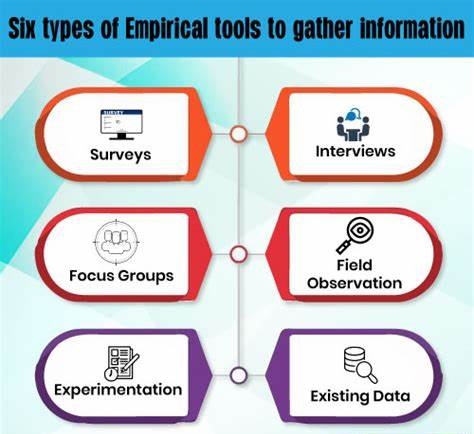
- Surveys and Questionnaires: Used to gather large amounts of data from a specific population.
- Statistical Software:
- SPSS (Statistical Package for the Social Sciences)
- R (for statistical computing and graphics)
- STATA (data analysis and statistical software)
- SAS (Statistical Analysis System)
- Sampling Methods: Random, stratified, cluster, and systematic sampling.
- Regression Analysis: Used to understand relationships between variables.
- Factor Analysis: Identifies underlying relationships between variables.
- ANOVA (Analysis of Variance): Compares means among groups.
- Structural Equation Modeling (SEM): Tests relationships between observed and latent variables.
2. Qualitative Tools and Techniques
- Interviews:
- Structured, semi-structured, and unstructured.
- Focus Groups: Facilitated group discussions to gather insights.
- Case Studies: In-depth exploration of a specific case or phenomenon.
- Ethnography: Fieldwork that involves immersion in a particular community or group.
- Content Analysis: Systematic analysis of communication and media content.
- Narrative Analysis: Interpreting personal stories or life histories.
- Discourse Analysis: Examining language, conversations, and texts.
3. Mixed Methods:
- Triangulation: Combining multiple research methods to cross-verify data.
- Convergent Parallel Design: Quantitative and qualitative data collected simultaneously but analyzed separately.
- Explanatory Sequential Design: Quantitative data collected first, followed by qualitative analysis for deeper insights.
4. Digital and Online Research Tools
- NVivo: Software for qualitative and mixed-methods data analysis.
- MAXQDA: Another qualitative data analysis tool.
- Google Scholar: Database for academic research and citation tracking.
- EndNote and Zotero: Reference management tools.
- Mendeley: Reference manager and academic social network.
- SurveyMonkey or Google Forms: Tools for creating and distributing surveys online.
- Atlas.ti: Qualitative research tool for coding and analyzing qualitative data.
- Dedoose: Web-based tool for mixed-methods research.
5. Other Techniques
- Comparative Analysis: Systematically comparing cases, phenomena, or groups.
- Grounded Theory: Developing a theory grounded in empirical data.
- Social Network Analysis (SNA): Analyzing social structures through networks and relationships.
- Participatory Action Research (PAR): Involving participants in the research process to foster change.
6. Experimental Methods
- Randomized Controlled Trials (RCTs): Used in social experiments to test interventions.
- Quasi-Experimental Designs: Non-randomized studies used when RCTs are not feasible.
These tools and techniques allow social science scholars to explore various social phenomena in both quantitative and qualitative dimensions.
References
Dehalwar, K., & Sharma, S. N. (2023). Fundamentals of Research Writing and Uses of Research Methodologies. Edupedia Publications Pvt Ltd.
Dehalwar, K. (Ed.). (2024). Basics of Research Methodology-Writing and Publication. EduPedia Publications Pvt Ltd.
Dehalwar, K., & Sharma, S. N. (2024). Exploring the Distinctions between Quantitative and Qualitative Research Methods. Think India Journal, 27(1), 7-15.
Foster, I., Ghani, R., Jarmin, R. S., Kreuter, F., & Lane, J. (2016). Big data and social science: A practical guide to methods and tools. Chapman and Hall/CRC.
Kuechler, M. (1998). The survey method: An indispensable tool for social science research everywhere?. American Behavioral Scientist, 42(2), 178-200.
Rose, J. (1997). Soft systems methodology as a social science research tool. Systems Research and Behavioral Science: The Official Journal of the International Federation for Systems Research, 14(4), 249-258.
Sharma, S. N. (2023). An Insight into the Book Titled Why Stories Work. Think India Journal, 26(4), 19-24.
Suleiman, R., Troitzsch, K. G., & Gilbert, N. (Eds.). (2012). Tools and techniques for social science simulation. Springer Science & Business Media.
 Track2Training
You must be logged in to post a comment.