


The Delhi Cycle Walkway represents an important step towards building a more sustainable, healthy, and inclusive urban transport system in Delhi. As one of the most populous and congested metropolitan regions in the world, Delhi faces severe challenges related to traffic congestion, air pollution, road safety, and declining quality of life. In this context, the development of dedicated cycle walkways—often integrated with pedestrian paths—has emerged as a critical intervention to encourage non-motorised transport (NMT), reduce dependency on private vehicles, and create people-centric streets.
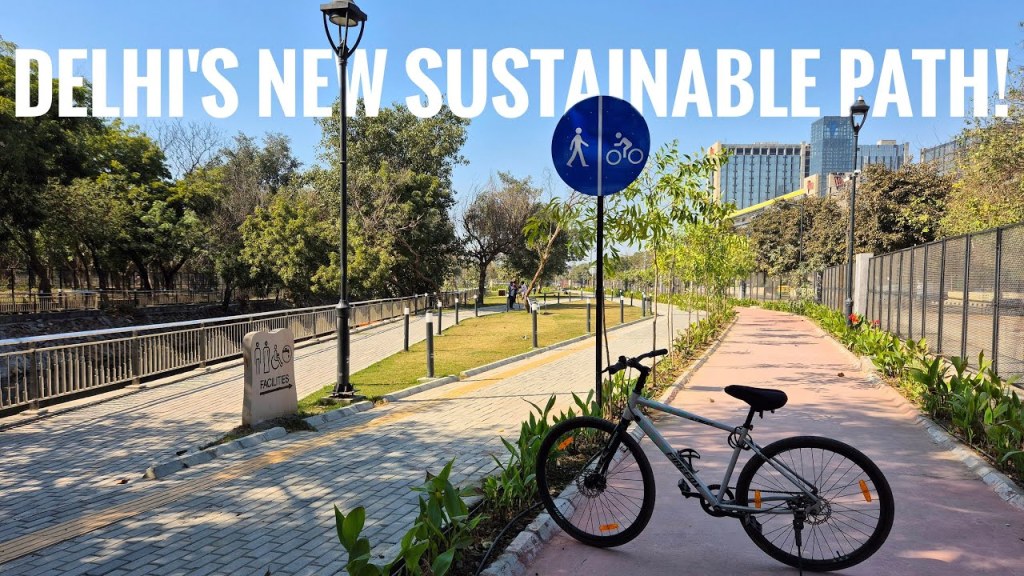
Concept of the Delhi Cycle Walkway
A cycle walkway in Delhi refers to a dedicated, clearly demarcated corridor designed primarily for cyclists and often combined with pedestrian infrastructure, ensuring safe and comfortable movement for non-motorised users. These facilities are typically separated from motorised traffic through physical barriers, level differences, landscaping, or markings. The concept aligns with global best practices in urban mobility, where cycling and walking are treated as essential modes of transport rather than residual activities.
In Delhi, cycle walkways are planned along arterial roads, sub-arterial corridors, transit-oriented development (TOD) zones, institutional areas, and recreational stretches. The aim is not only to provide infrastructure but also to reshape travel behaviour by making cycling and walking safer, more attractive, and socially acceptable.
Need for Cycle Walkways in Delhi
The need for cycle walkways in Delhi arises from multiple urban challenges:
- High traffic congestion: With rapid growth in private vehicle ownership, Delhi’s road space is heavily dominated by cars and two-wheelers.
- Air pollution: Vehicular emissions are a major contributor to poor air quality, making a strong case for zero-emission modes such as cycling and walking.
- Road safety concerns: Pedestrians and cyclists constitute a significant share of road accident victims due to the absence of safe infrastructure.
- First- and last-mile connectivity: Cycle walkways play a crucial role in connecting residential areas to metro stations, bus stops, and activity centres.
- Public health: Encouraging active travel helps address lifestyle diseases and improves overall well-being.
Design Features of Delhi Cycle Walkways
Delhi’s cycle walkways incorporate several important design elements:
- Dedicated cycle lanes with adequate width, typically ranging from 1.5 to 2.5 metres, depending on demand and right-of-way availability.
- Pedestrian footpaths alongside cycle tracks, ensuring conflict-free movement between walkers and cyclists.
- Physical segregation from motorised traffic using kerbs, bollards, railings, or green buffers.
- Universal accessibility features, such as ramps, tactile paving, and gentle gradients for persons with disabilities.
- Street furniture and amenities, including benches, lighting, signage, drinking water points, and shade trees.
- Safe crossings at intersections through raised tables, signals, and traffic calming measures.
These design components aim to create a comfortable and continuous network rather than isolated stretches of infrastructure.
Integration with Public Transport and TOD
One of the most significant roles of cycle walkways in Delhi is their integration with public transport systems. Many cycle tracks are planned within transit influence zones to support metro and bus ridership. Cyclists can access stations quickly, park their bicycles at designated facilities, or use shared mobility services for first- and last-mile travel.
Within transit-oriented development areas, cycle walkways contribute to compact, mixed-use, and walkable neighbourhoods. They help reduce short motorised trips, increase active travel, and support sustainable land-use patterns.
Social and Environmental Benefits
The Delhi Cycle Walkway offers a wide range of benefits:
- Environmental benefits: Reduced emissions, lower noise pollution, and improved urban microclimate.
- Social equity: Affordable mobility for low-income groups, students, and informal workers who rely on cycling and walking.
- Health benefits: Increased physical activity leads to better cardiovascular health and reduced stress.
- Economic efficiency: Cycling infrastructure is cost-effective compared to road widening or flyover construction.
- Urban livability: Streets with cycle walkways are often more vibrant, safer, and people-friendly.
Challenges in Implementation
Despite its potential, the Delhi Cycle Walkway initiative faces several challenges:
- Encroachment and misuse by parked vehicles, street vendors, or utility installations.
- Discontinuity of networks, where cycle tracks abruptly end or lack safe intersections.
- Public perception, as cycling is still viewed by many as a non-prestigious mode of transport.
- Maintenance issues, including damaged surfaces, poor lighting, and inadequate cleanliness.
- Institutional coordination, as multiple agencies are involved in planning and implementation.
Addressing these issues requires strong enforcement, continuous monitoring, and public awareness campaigns.
Conclusion
The Delhi Cycle Walkway is more than just a piece of transport infrastructure; it is a statement about the city’s vision for sustainable and inclusive mobility. By prioritising cyclists and pedestrians, Delhi can reduce its environmental footprint, enhance public health, and reclaim streets as shared public spaces. While challenges remain, consistent policy support, community participation, and integrated planning can transform cycle walkways into a backbone of everyday urban mobility. In the long run, a well-connected and well-maintained cycle walkway network has the potential to redefine how Delhi moves—cleaner, healthier, and more equitably.
 Track2Training
You must be logged in to post a comment.