
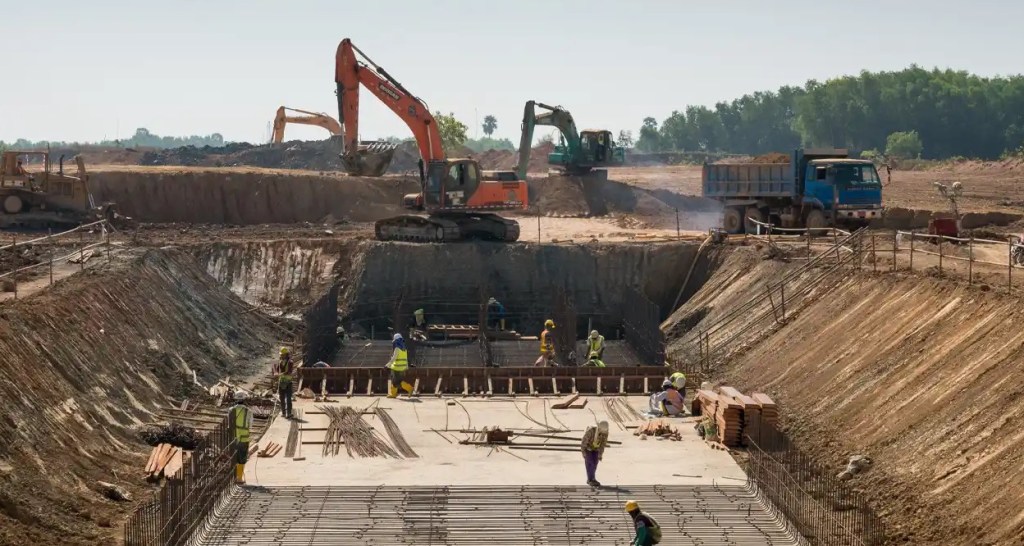
Site development and earth works are essential preliminary activities in construction and planning projects. Before the construction of buildings, roads, infrastructure facilities, or urban development projects can begin, the site must be properly prepared to ensure stability, safety, and efficient use of land. Site development includes various operations such as clearing the land, grading, drainage planning, access road preparation, and utility installation. Earth work involves the excavation, filling, compaction, and movement of soil required to achieve the desired ground levels and foundation conditions.
In urban planning, site development is a critical step because it directly affects land utilization, environmental sustainability, infrastructure connectivity, and the long-term performance of buildings and services. Proper earthwork ensures that structures are built on stable ground and that the site is protected from problems such as waterlogging, soil erosion, and settlement.
1. Site Development
Site development refers to the process of preparing land for construction activities. It includes all the necessary improvements made to a site before building construction begins. The main objective of site development is to transform raw land into a suitable area for development while ensuring safety, accessibility, and environmental sustainability.
Site development involves several activities that must be carefully planned and executed.
1.1 Site Investigation and Survey
The first step in site development is conducting a detailed site investigation and survey. This includes collecting information about the site’s physical, environmental, and geological conditions.
Important aspects of site investigation include:
- Topographic survey to determine ground levels and slopes
- Soil investigation to understand soil strength and bearing capacity
- Identification of existing natural features such as trees, water bodies, and drainage patterns
- Location of existing utilities such as water pipelines, electricity lines, and sewer systems
These investigations help planners and engineers design appropriate foundations, drainage systems, and infrastructure layouts.
1.2 Site Clearing
Site clearing involves removing unwanted materials and obstacles from the construction site. These materials may include vegetation, shrubs, trees, debris, old structures, and other obstructions.
The main activities involved in site clearing include:
- Cutting and removal of trees and bushes
- Removal of roots and stumps
- Demolition of old structures if present
- Disposal of debris and waste materials
Site clearing creates a clean and workable area for further construction activities.
1.3 Grading and Leveling
Grading is the process of adjusting the ground surface to achieve the desired slope and elevation. Leveling ensures that the site surface is suitable for construction and drainage.
Grading operations involve:
- Cutting high areas of land
- Filling low areas with soil
- Creating uniform slopes for drainage
- Preparing platforms for buildings and infrastructure
Proper grading helps prevent water accumulation and ensures effective surface drainage.
1.4 Site Drainage
Drainage planning is an important component of site development. Poor drainage can cause flooding, soil erosion, and damage to building foundations.
Site drainage systems include:
- Surface drains to carry rainwater away from buildings
- Stormwater drainage systems
- Proper slope design for runoff
- Rainwater harvesting structures
Effective drainage planning improves the environmental sustainability and durability of the development.
1.5 Access Roads and Pathways
Access roads are constructed to provide transportation routes within the development site. These roads allow movement of construction materials, equipment, and workers.
Site development may include:
- Temporary construction roads
- Permanent internal roads
- Pedestrian pathways
- Parking areas
Properly designed access roads improve site connectivity and safety during construction.
1.6 Utility Installation
Modern site development requires the installation of essential infrastructure services such as:
- Water supply pipelines
- Sewer and drainage systems
- Electricity distribution networks
- Telecommunication lines
- Gas pipelines (in some cases)
Planning the layout of these utilities at the early stage prevents future conflicts between infrastructure systems.
2. Earth Works
Earth work refers to the process of moving, excavating, and compacting soil to achieve the desired ground profile for construction projects. Earth work is one of the most significant activities in construction, especially for large infrastructure and urban development projects.
Earth work operations include excavation, filling, compaction, and transportation of soil materials.
2.1 Excavation
Excavation involves removing soil or rock from the ground to create space for foundations, basements, pipelines, and other underground structures.
Common types of excavation include:
- Foundation excavation
- Trench excavation for pipelines and drainage systems
- Basement excavation for multi-story buildings
- Roadway excavation for highway construction
Excavation may be carried out manually or with the help of heavy machinery such as excavators and bulldozers.
Safety precautions must be taken during excavation to prevent accidents and collapse of trench sides.
2.2 Filling and Embankment
After excavation, certain areas of the site may require filling to achieve the desired ground level. Filling involves placing soil or other suitable materials in low areas.
Common filling materials include:
- Excavated soil
- Sand
- Gravel
- Selected earth materials
In infrastructure projects such as roads and railways, embankments are constructed by compacting layers of soil to create elevated ground levels.
Proper filling ensures stability and prevents settlement problems.
2.3 Compaction
Compaction is the process of increasing soil density by reducing air voids in the soil. It is an essential step in earthwork operations because it improves the strength and stability of the soil.
Compaction is carried out using equipment such as:
- Rollers
- Vibratory compactors
- Plate compactors
- Rammers
Compacted soil provides a stable base for foundations, roads, and pavements.
2.4 Soil Transportation and Disposal
During earthwork operations, excavated soil may need to be transported to other parts of the site or disposed of outside the site.
Transportation of soil may involve:
- Dump trucks
- Conveyor systems
- Earthmoving equipment
In some cases, excess soil may be reused for filling or landscaping purposes.
3. Importance of Site Development and Earth Works
Site development and earthworks are crucial for the success of construction and planning projects. Their importance can be understood through several key benefits.
3.1 Structural Stability
Proper earthwork ensures that buildings and infrastructure are constructed on stable ground. Compacted soil improves load-bearing capacity and prevents settlement.
3.2 Improved Drainage
Site grading and drainage planning help prevent water accumulation and flooding, which could damage buildings and infrastructure.
3.3 Efficient Land Utilization
Site development allows planners to organize land for buildings, roads, utilities, and open spaces efficiently.
3.4 Safety and Accessibility
Access roads and proper site layout improve safety for workers and facilitate movement of materials during construction.
3.5 Environmental Sustainability
Modern site development practices aim to minimize environmental damage by preserving natural features, managing stormwater, and reducing soil erosion.
4. Site Development in Urban Planning Projects
In urban planning projects such as residential townships, industrial estates, and transit-oriented developments, site development involves additional considerations.
These may include:
- Integration with transportation networks
- Provision of green spaces and public facilities
- Sustainable drainage systems
- Pedestrian and cycling infrastructure
- Smart infrastructure and utilities
Proper site development ensures that urban spaces are functional, efficient, and environmentally sustainable.
Conclusion
Site development and earthworks form the foundation of all construction and planning projects. Site development includes activities such as site investigation, clearing, grading, drainage planning, access road construction, and utility installation. These activities prepare the land for safe and efficient development.
Earthwork operations involve excavation, filling, compaction, and transportation of soil to achieve the desired ground profile. Proper execution of earthwork ensures structural stability, effective drainage, and long-term durability of buildings and infrastructure.
In modern urban planning and infrastructure development, site development must also consider environmental sustainability, efficient land use, and integration with transportation and utility networks. Therefore, careful planning and execution of site development and earthworks are essential for the successful implementation of construction and urban development projects.


 Track2Training