
1. Introduction
Planning approaches determine how decisions are made and implemented in the development process. In development planning, particularly in urban and rural planning, two major approaches are commonly discussed: the Top-Down approach and the Bottom-Up approach. These approaches differ mainly in terms of decision-making authority, participation of stakeholders, and implementation methods.
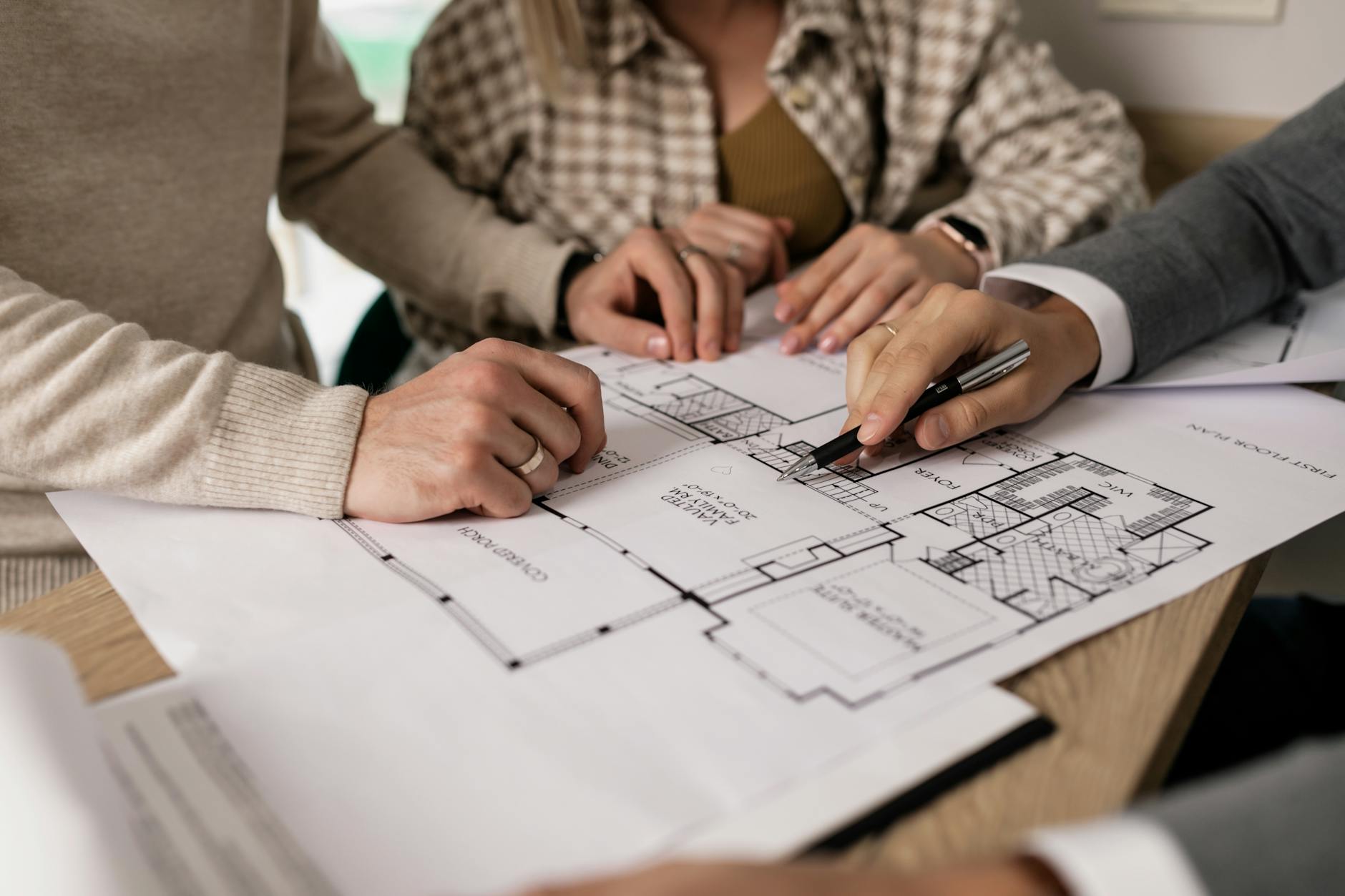
The top-down approach focuses on centralized decision-making by higher authorities, whereas the bottom-up approach emphasizes participation and involvement of local communities in planning processes. Both approaches have advantages and limitations, and modern planning practices often try to combine elements of both to achieve effective and inclusive development.
2. Top-Down Approach
Definition
The Top-Down approach refers to a planning method where decisions are made by higher authorities such as national governments, central planning agencies, or senior administrators, and then implemented at lower levels such as states, districts, cities, or villages.
In this approach, policies, strategies, and development programs are designed at the top level and passed down to lower administrative levels for execution.
Characteristics of the Top-Down Approach
- Decision-making is centralized.
- Planning policies are developed by higher authorities or experts.
- Local communities have limited participation in decision-making.
- Implementation occurs through government institutions and administrative systems.
- Emphasis is placed on large-scale national or regional development goals.
Examples
Examples of top-down planning include:
- National development policies formulated by central governments.
- Large infrastructure projects such as highways, dams, and industrial corridors planned at national or state levels.
- Early Five-Year Plans in India where development priorities were determined by central planning authorities.
Advantages of the Top-Down Approach
- Efficient Decision-Making
Centralized planning allows faster decision-making and implementation of large-scale projects. - Availability of Expertise
Experts and planners with specialized knowledge can design comprehensive policies. - Coordination Across Regions
It helps coordinate development across multiple regions and sectors. - Strategic National Planning
Important for national development strategies such as infrastructure expansion and economic policies.
Limitations of the Top-Down Approach
- Limited involvement of local communities.
- Plans may not reflect local needs and priorities.
- Risk of bureaucratic delays.
- Implementation challenges at local levels due to lack of community participation.
3. Bottom-Up Approach
Definition
The Bottom-Up approach is a planning method where local communities, grassroots organizations, and local governments actively participate in the planning process. In this approach, development ideas originate from the local level and are gradually integrated into higher-level planning frameworks.
The bottom-up approach emphasizes community participation and local knowledge.
Characteristics of the Bottom-Up Approach
- Planning begins at the grassroots level.
- Local communities identify their needs and priorities.
- Decision-making is decentralized.
- Strong participation of stakeholders.
- Plans reflect local social, economic, and environmental conditions.
Examples
Examples of bottom-up planning include:
- Village development plans prepared by local communities.
- Participatory rural development programs.
- Local area planning initiatives in urban neighborhoods.
In India, the Panchayati Raj system encourages bottom-up planning through village-level governance.
Advantages of the Bottom-Up Approach
- Community Participation
Local residents participate in decision-making and planning processes. - Better Understanding of Local Needs
Local communities have better knowledge of their problems and priorities. - Greater Accountability
Community involvement increases transparency and accountability in development projects. - Sustainable Development
Local ownership of projects improves long-term sustainability.
Limitations of the Bottom-Up Approach
- Lack of technical expertise at local levels.
- Limited financial and administrative resources.
- Coordination challenges between local and higher-level planning institutions.
- Possible conflicts between different community interests.
4. Comparison Between Top-Down and Bottom-Up Approaches
| Aspect | Top-Down Approach | Bottom-Up Approach |
|---|---|---|
| Decision-making | Centralized | Decentralized |
| Participation | Limited community involvement | Strong community participation |
| Planning level | National or regional level | Local or grassroots level |
| Implementation | Government-driven | Community-driven |
| Flexibility | Less flexible | More adaptable to local needs |
5. Integrated Planning Approach
Modern planning practices increasingly recognize the importance of combining both approaches.
An integrated planning approach allows:
- Strategic direction from higher authorities.
- Active participation from local communities.
- Coordination between different levels of governance.
This combination ensures that development policies are both technically sound and socially inclusive.
6. Conclusion
The top-down and bottom-up approaches represent two different methods of planning and development. The top-down approach relies on centralized decision-making and expert-driven policies, while the bottom-up approach emphasizes community participation and decentralized planning.
Both approaches have their advantages and limitations. While top-down planning is useful for large-scale national development projects, bottom-up planning ensures that local needs and priorities are considered. In modern planning systems, integrating both approaches helps achieve more effective, inclusive, and sustainable development outcomes.


You must be logged in to post a comment.