
Electrical and telecommunication (telephone/data) networks are fundamental components of urban infrastructure, ensuring reliable power supply and seamless communication. Their planning, design, installation, and maintenance require adherence to technical standards, safety regulations, and future scalability—especially in rapidly urbanizing and Transit-Oriented Development (TOD) contexts such as Delhi.
PART A: ELECTRICAL NETWORKS
1. Overview of Electrical Distribution System
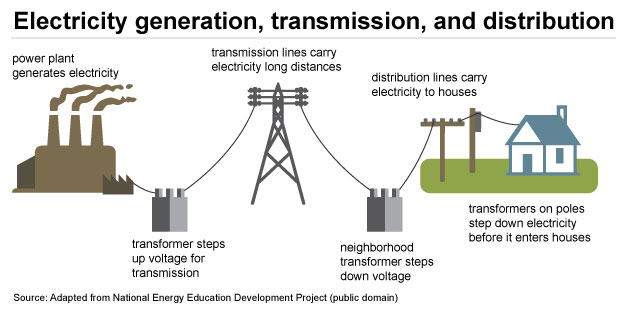
An electrical network comprises systems for generation, transmission, and distribution of electricity. At the urban level, the focus is primarily on distribution systems, which deliver power from substations to consumers.
1.1 Types of Distribution Systems
- Radial System
- Simplest and most economical.
- Power flows in one direction.
- Common in small towns.
- Ring Main System
- Closed-loop system.
- Provides better reliability.
- Used in urban areas.
- Interconnected System
- Multiple substations interconnected.
- High reliability and flexibility.
2. Components of Electrical Networks
2.1 Substations
- Step-down voltage from transmission to distribution levels.
- Types:
- Primary (132/66 kV to 33 kV)
- Secondary (33 kV to 11 kV)
- Distribution (11 kV to 415/230 V)
2.2 Feeders
- Carry power from substations to distribution points.
- Designed based on current-carrying capacity.
2.3 Distributors
- Supply electricity to consumers.
- Voltage drop is a key design criterion.
2.4 Service Mains
- Final connection to consumers.
- Usually low voltage (230/415 V).
3. Types of Electrical Installations
3.1 Overhead Systems
- Conductors supported on poles.
- Advantages:
- Low cost
- Easy maintenance
- Disadvantages:
- Affected by weather
- Visual intrusion
3.2 Underground Systems
- Cables laid below ground.
- Advantages:
- Safer and aesthetically pleasing
- Reliable in dense urban areas
- Disadvantages:
- High installation cost
- Difficult maintenance
4. Materials and Equipment Specifications
4.1 Conductors
- Materials:
- Copper (high conductivity)
- Aluminium (lightweight and economical)
- Types:
- AAC (All Aluminium Conductor)
- ACSR (Aluminium Conductor Steel Reinforced)
4.2 Cables
- Types:
- PVC insulated cables
- XLPE cables (cross-linked polyethylene)
- Voltage ratings:
- Low Voltage (LT): up to 1 kV
- Medium Voltage (MV): 1–33 kV
4.3 Poles
- Types:
- Wooden (obsolete)
- Steel tubular
- Reinforced Cement Concrete (RCC)
- Spacing: 30–50 m depending on terrain
4.4 Transformers
- Oil-filled or dry-type transformers.
- Installed on poles or in substations.
4.5 Switchgear
- Circuit breakers, isolators, fuses.
- Protect system from faults.
5. Design Considerations
5.1 Load Estimation
- Based on:
- Population
- Land use (residential, commercial, industrial)
- Demand factor and diversity factor
5.2 Voltage Drop
- Should not exceed:
- 2–3% for feeders
- 5% overall
5.3 Diversity Factor
- Ratio of sum of individual maximum demands to system maximum demand.
- Helps in economic design.
5.4 Power Factor
- Should be close to unity.
- Use of capacitors to improve efficiency.
6. Installation Specifications
6.1 Overhead Lines
- Minimum clearance:
- 5.8 m above roads
- 3.7 m above ground (rural)
- Proper earthing required.
6.2 Underground Cables
- Depth:
- 0.75–1.2 m depending on voltage
- Protective layers:
- Sand bedding
- Brick covering
- Route markers provided.
7. Earthing and Safety
- Essential for protection against electric shocks.
- Types:
- Plate earthing
- Pipe earthing
- Earth resistance:
- Should be less than 1–5 ohms.
8. Street Lighting Systems
- Types:
- LED street lights (energy-efficient)
- High-pressure sodium lamps (older systems)
- Pole spacing:
- 25–40 m depending on road width
- Automatic control:
- Timers or photocells
9. Testing and Maintenance
- Insulation resistance testing
- Load testing
- Regular inspection of poles and cables
- Preventive maintenance schedules
10. Standards and Codes (India)
- National Electrical Code (NEC)
- IS 732: Electrical Wiring Installations
- Central Electricity Authority (CEA) Regulations
- Delhi Electricity Regulatory Commission (DERC) guidelines
11. Modern Trends
- Smart grids
- Renewable energy integration (solar rooftop)
- Underground cabling in TOD corridors
- EV charging infrastructure integration
PART B: TELEPHONE (TELECOMMUNICATION) NETWORKS
1. Overview
Telecommunication networks facilitate voice, data, and internet communication. Modern systems are largely digital and integrated with fiber-optic technology.
2. Components of Telephone Networks
2.1 Exchange
- Central node connecting subscribers.
- Types:
- Local exchange
- Trunk exchange
- Mobile switching center
2.2 Transmission Media
- Twisted pair cables (traditional)
- Coaxial cables
- Optical fiber cables (OFC)
2.3 Distribution Network
- Primary cables (exchange to distribution point)
- Secondary cables (distribution to subscribers)
2.4 Subscriber Equipment
- Telephone instruments
- Modems and routers
3. Types of Telecommunication Systems
3.1 Wired Communication
- Landline telephone systems
- Broadband via DSL or fiber
3.2 Wireless Communication
- Mobile networks (4G, 5G)
- Wi-Fi systems
4. Cable Specifications
4.1 Twisted Pair Cables
- Copper wires twisted to reduce interference.
- Used in traditional telephony.
4.2 Optical Fiber Cables
- High-speed data transmission.
- Types:
- Single-mode fiber
- Multi-mode fiber
4.3 Coaxial Cables
- Used in cable TV and internet.
5. Installation Specifications
5.1 Underground Cabling
- Depth: 0.6–1 m
- Protection:
- HDPE ducts
- Warning tapes
- Jointing chambers at intervals
5.2 Overhead Lines
- Mounted on poles.
- Used in rural areas.
5.3 Ducting System
- Multiple ducts for future expansion.
- Used in urban corridors.
6. Design Considerations
6.1 Network Capacity
- Based on:
- Population density
- Internet usage patterns
- Future demand
6.2 Signal Quality
- Minimize attenuation and interference.
- Use of repeaters and amplifiers.
6.3 Redundancy
- Backup routes to ensure reliability.
7. Switching Systems
- Digital switching systems
- Packet switching (internet-based communication)
- VoIP (Voice over Internet Protocol)
8. Testing and Maintenance
- Cable fault detection
- Signal strength testing
- Optical Time Domain Reflectometer (OTDR) for fiber
9. Safety and Standards
- Proper insulation and grounding
- Protection against electromagnetic interference
- Standards:
- Telecommunication Engineering Centre (TEC)
- ITU (International Telecommunication Union)
10. Modern Trends in Telecommunication
10.1 Fiber-to-the-Home (FTTH)
- High-speed broadband connectivity.
10.2 5G Networks
- Low latency and high data speeds.
10.3 Smart City Integration
- IoT-based communication systems
- Integration with traffic, surveillance, and utilities
10.4 TOD Context (Delhi Perspective)
- High-capacity fiber networks in metro corridors:
- Mukundpur
- Dwarka Sector-21
- Kashmere Gate
- Supports:
- Real-time transit information
- Digital ticketing
- Surveillance and safety systems
Conclusion
Electrical and telephone networks are essential for modern urban functioning, economic growth, and quality of life. Their detailed specifications ensure efficiency, safety, reliability, and scalability. In rapidly growing cities like Delhi, integrating these networks with TOD principles, smart technologies, and sustainable infrastructure is crucial for future-ready urban systems.


You must be logged in to post a comment.