
Water supply infrastructure is a vital urban service that ensures the provision of safe, adequate, and reliable water for domestic, commercial, industrial, and institutional uses. It includes components such as source development, treatment, transmission, storage, and distribution systems.
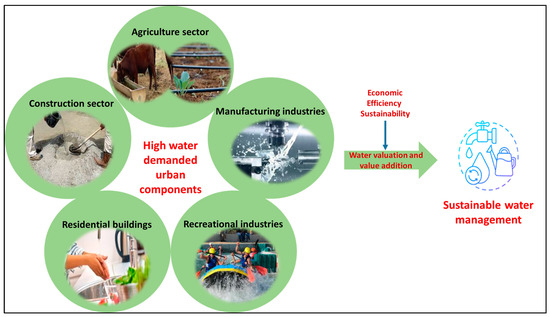
Cost estimation and rate determination for water supply works are essential for planning, budgeting, financial appraisal, and execution of projects. These processes help in evaluating project feasibility, preparing Detailed Project Reports (DPRs), and ensuring efficient allocation of resources.
2. Objectives of Cost Estimation
- To determine total project cost
- To prepare DPR and budget allocation
- To assist in tendering and contract management
- To ensure cost control and monitoring
- To evaluate alternative design options
- To support policy decisions in urban infrastructure
3. Components of Water Supply System
3.1 Source Development
- Surface water (rivers, lakes, reservoirs)
- Groundwater (tube wells, bore wells)
3.2 Intake Structures
- Pumping stations
- Intake wells
3.3 Water Treatment Plant (WTP)
- Sedimentation tanks
- Filtration units
- Chlorination systems
3.4 Transmission System
- Raw water mains
- Treated water pipelines
3.5 Storage Structures
- Overhead tanks (OHT)
- Ground-level reservoirs (GLR)
3.6 Distribution System
- Distribution pipelines
- Valves and fittings
- House service connections
3.7 Ancillary Works
- Pump houses
- Electrical systems
- SCADA systems (for smart monitoring)
4. Types of Cost Estimates
4.1 Preliminary Estimate
- Based on per capita cost or per km pipeline cost
- Used for feasibility stage
4.2 Detailed Estimate
- Based on item-wise quantities and rates
- Used for DPR and tendering
4.3 Revised Estimate
- Prepared when costs exceed initial estimates
4.4 Supplementary Estimate
- For additional works
5. Methods of Estimation
5.1 Per Capita Method
- Cost per person served
Example:
- ₹5,000–₹15,000 per capita (depending on infrastructure level)
5.2 Unit Rate Method
- Cost per km of pipeline
- Cost per ML (million liters) treatment capacity
5.3 Detailed Quantity Method
- Most accurate
- Based on drawings and specifications
6. Quantity Estimation
6.1 Pipeline Quantity
Length × Number of pipes
Example:
- Length = 1000 m
- Pipe diameter = 150 mm
6.2 Excavation Volume
Volume = Length × Width × Depth
6.3 Concrete Works
For structures like tanks and pump houses
6.4 Steel Reinforcement
Calculated based on structural design
7. Determination of Rates (Rate Analysis)
7.1 Components of Rate Analysis
(a) Material Cost
- Pipes (PVC, HDPE, DI)
- Cement, sand, aggregates
- Valves and fittings
(b) Labor Cost
- Skilled labor (fitters, masons)
- Unskilled labor
(c) Machinery Cost
- Excavators
- Pumps
- Welding equipment
(d) Transportation Cost
- Delivery of pipes and materials
(e) Overheads and Profit
- 10–15% added
8. Example Rate Analysis
8.1 Excavation for Pipeline (1 m³)
| Component | Cost (₹) |
|---|---|
| Labor | 150 |
| Equipment | 200 |
| Miscellaneous | 50 |
| Total | 400 |
| Profit (10%) | 40 |
| Final Rate | ₹440/m³ |
8.2 Laying of PVC Pipe (150 mm dia, per meter)
| Component | Cost (₹) |
|---|---|
| Pipe cost | 500 |
| Labor | 100 |
| Jointing | 50 |
| Transport | 80 |
| Total | 730 |
| Profit | 73 |
| Final Rate | ₹800/m |
8.3 RCC Overhead Tank (per m³)
| Component | Cost (₹) |
|---|---|
| Concrete | 6000 |
| Steel | 4000 |
| Labor | 2000 |
| Total | 12,000 |
| Profit | 1200 |
| Final Rate | ₹13,200/m³ |
9. Cost Estimation Example (Water Supply Project)
Given
- Pipeline length: 5 km
- Pipe cost: ₹800/m
Cost Calculation
| Component | Cost (₹) |
|---|---|
| Pipelines | 40,00,000 |
| Excavation | 10,00,000 |
| Pumping system | 15,00,000 |
| Storage tank | 20,00,000 |
| Treatment plant | 25,00,000 |
| Miscellaneous | 10,00,000 |
| Total | ₹1,20,00,000 |
10. Factors Affecting Cost
10.1 Source Location
- Distance from water source
- Elevation differences
10.2 Pipe Material
- PVC (low cost)
- DI (durable but expensive)
- HDPE (flexible and corrosion-resistant)
10.3 Terrain
- Rocky areas increase excavation cost
10.4 Population and Demand
- Higher demand → larger infrastructure
10.5 Energy Cost
- Pumping requirements
10.6 Water Quality
- Treatment complexity
11. Schedule of Rates (SOR)
- CPWD/PWD SOR used for:
- Standard rates
- Tender preparation
- Cost validation
12. Cost Optimization Techniques
- Gravity-based systems (reduce pumping cost)
- Use of HDPE pipes for flexibility
- Leak detection systems
- Smart metering
13. BOQ (Bill of Quantities)
Typical items:
- Excavation
- Pipe laying
- Valve installation
- Concrete works
- Pump installation
- Electrical works
14. Role in Urban Planning and TOD
In urban planning context:
- Ensures equitable water distribution
- Supports high-density TOD development
- Influences public health and quality of life
- Critical for sustainable urban infrastructure
15. Challenges in Estimation
- Fluctuating material prices
- Leakage and losses (NRW)
- Inaccurate demand forecasting
- High energy costs
16. Sustainability Considerations
- Rainwater harvesting integration
- Reuse of treated wastewater
- Energy-efficient pumps
- Smart monitoring systems
17. Conclusion
Cost estimation and rate determination for water supply infrastructure are essential for ensuring efficient, reliable, and sustainable service delivery. Accurate estimation supports financial planning, infrastructure development, and policy implementation. By integrating engineering principles with economic analysis, planners can design cost-effective and resilient water supply systems.


 Track2Training
You must be logged in to post a comment.