Natural Disaster Management

Disaster can be defined as an event which disrupts the functioning of the society wherein the event is of such magnitude that it cannot be coped up with the resources of the society on its own. During such times one requires a force which is specialized in rescuing, rehabilitating and bringing normalcy in the society after the natural disaster has struck. With disaster management force, they are trained, keeping in mind  three principles – how to prepare for future disasters, how to respond it when the society is in fear and what to learn from the shortcomings for future disaster management. The said disaster management force are tasked and deployed not only for naturally occurring disasters but also for disasters with man-made origins.

History

In 1999, the Government of India set up a High-powered committee while keeping in mind the need for a disaster management. Following this decision and the 2001 Gujarat earthquake, the Government of India introduced a national committee for the making and preparation of National Disaster Management plans. In December 2005, the Disaster Management act was enacted by the Government of India which lead to the creation of the Disaster management authority. The Disaster management authority was divided in three parts wherein the national disaster management authority was spearheaded by the Prime Minister, the state disaster management authority was headed by respective Chief Ministers of each state and the district disaster management authority would be headed by the district magistrate or Collector.

Functions

The National Disaster management authority is the apex body which lays down guidelines for disaster management. The guidelines which are laid down by the National disaster management authority have to be adopted and followed by the State disaster management authority under the supervision of Chief ministers of each state. For fulfilling the vision of building a safer and disaster resilient society, the national disaster management authority can recommend funds for mitigating. The national level disaster management authority helps in coordinating the enforcement as well as the implementation of policy for national as well as state level authority.

Disaster management authority

The National Disaster management authority has demonstrated excellent disaster planning during Cyclone Hudhud and Cyclone Fani. In both of these cyclones, the National disaster management authority evacuated thousands of people from the worst hit zone and moved them to cyclone shelters.  Due to this, the management authority helped in reducing the mortality rate due to Cyclones. Occasionally, the management authority runs intensive earthquake drills and mock exercises for crisis management. In order make everyone aware, the authority planned on implementing guidelines in schools regarding natural disaster management; prepared guidelines for hospital safety; provided the minimum standard which had to be maintained in shelters, etc.

Shortcomings and suggestion–

There are four phases in disaster management which go hand in hand and one cannot be removed or omitted in order to focus on one of the phases. Focus, funds and infrastructure has to be put in for all four phases or else it defeats the purpose for disaster management. The first phase is mitigation wherein the disaster management authority takes actions to eliminate or reduce the potential impact of a hazard. This phase helps in prepared for the hazard which would eliminate higher casualty rates. The second phase is preparedness which focuses on training the disaster management forces with exercises and drills which would lead to efficient evacuation and rehabilitation. Due to the drills and exercises, the forces would be well prepared and educated in terms of how to act and what to do in case a natural disaster strikes. The third phase is response wherein certain actions are taken by the authority towards responding to disaster emergencies. What needs to be done and how it will be done are a part of the third phase along with quick response in the disaster struck area. Once this is done, recovery of the area is the next step, which is the last phase as well. Once people have been evacuated from the danger area, then the authority can work upon recovering the services as well as bringing back the normalcy to the disaster struck area.

In the past decade, it has been observed that in times of a natural disaster, the national disaster management authority is quite late on the scene and in times when they are on time, the work provided is inefficient. Due to this, the Indian army is called for providing their services. During the Kedarnath cloud burst, Srinagar floods, roads collapsing in certain states – it was the Indian army who was called for the rescue and rehabilitation process as the National disaster management authority or the state disaster management authority seem to be inefficient. From this it can be concluded, that the national or state disaster management authority lacks in all four phases. Due to not being aware of what kind of impact a certain disaster can cause, there is lack in preparedness which results in inefficient evacuation and rehabilitation process.

The national disaster management authority should take some inspiration from the Japanese National disaster management who helps the affected area in recovering from the disaster effortlessly due to the knowledge that they possess regarding disasters, how to tackle them, what is needed to be done during the situation and after the storm has calmed down. The tsunami which had struck Japan had created a havoc in the affected areas, however, within a span of few weeks, the place was back to its original environment with people being rehabilitated to their houses. The National disaster management authority has to strive towards becoming more efficient then only will the forces be able to help out the victims of the disaster.
Gender Neutrality in Rape laws in India

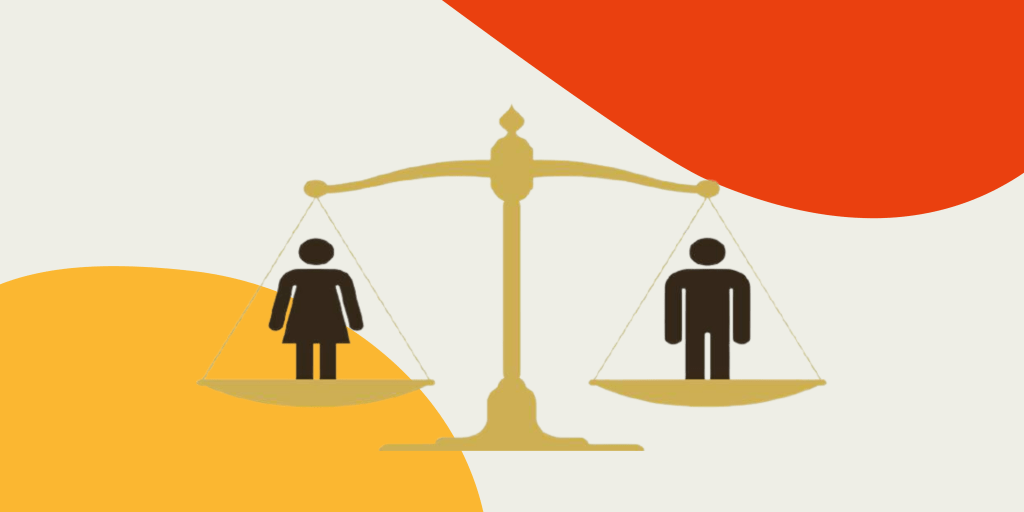
In a society where patriarchy rules, men and women are differentiated on all levels of life. Men are allowed to study, go out of house, move to different cities looking for job, coming late at night, wearing any kind of clothing and many more. However, the same privileges are not granted to women. Men in our society have been groomed as strong and emotionless cause showing emotions would make them a “woman”. There have been many instances in all of our lives where someone told a boy not to cry by saying “are you a girl that you are crying?” Our society focuses too much on keeping women safe by keeping them locked at home rather than improving their physical strength and the environment in which they live.

Due to women not being physically stronger, they were suppressed by the society. History is our witness and evidence which shows different ways our society suppressed women. Amongst the various restrictions put on women, one of them was to be careful in regards with their womanhood. Women were and are still told to safeguard their womanhood until they get married, yet the same is not said to the men in the society. This in itself disturbs the balance between men and women and can be said to be discriminatory. When men weren’t stopped from exploring and satisfying their manhood and pleasure, the evil amongst them took advantage of it. Sexual assault and misconduct became a part of the society and the solution for it was to keep girls inside and to ask them to wear “proper clothing.” However, this did not stop those evil men from creating havoc to the body and mind of the woman.

Over the years, laws were introduced for safeguarding the rights of the citizens and amongst the plethora of laws, there was the rape law. It was channel of justice for women to throw the rapists behind the bars. The law should have been enough to scare the evil men of the consequences which would be brought upon them if they committed such heinous crime of women. However, the law also could not stop them. According to a survey conducted by the NCRB i.e., National Crime Records Bureau, on an average 88 women were raped daily in 2019. Apart from the daily rape cases, the spectrum of women is quite wide in terms of being a victim to the hands of these evil men. From a three-month-old baby to orphan girls to young girls being raped in the crematory to Nirbhaya, Hathras and many more. These are just the cases the few cases which were reported and highlighted in the media. There are so many unreported rape cases where a woman or a man has been raped and they could not come up and speak. Yes, men are also a victim to the evil hands of the society. The very same society would mock a man on being raped. The society would question a man’s character and his manliness because he was raped or was sexually assaulted.

We all know the heinous crimes committed on women in India, but are we aware of the atrocities which happen to men? P Jayaraj and J Fenix, a father-son duo in Tamil Nadu died due to police brutality which also included being sodomized. There were friends and families who reported that both the father and son were excessively bleeding from their rectum. Now in such a case, where can the man go and seek justice for himself? The man cannot do so as the society we live in, will belittle him for something so horrible. There have been research conducted wherein it was pointed out that a woman in very rare cases could be the perpetrator in terms of penetrative rape. Few instances where the woman can be the perpetrator are – using her power of position and coercing the man into having sexual intercourse with her without his consent or intoxicate the man without his knowledge and have sexual intercourse with him without consent. In both the instances, the man is being sexually assaulted yet he has no legal remedy for himself. According to a survey conducted by Centre for Civil society, 18 percent of men were forced or coerced into having sexual intercourse, yet those victims of rape could not seek justice as they were not protected under the rape law.

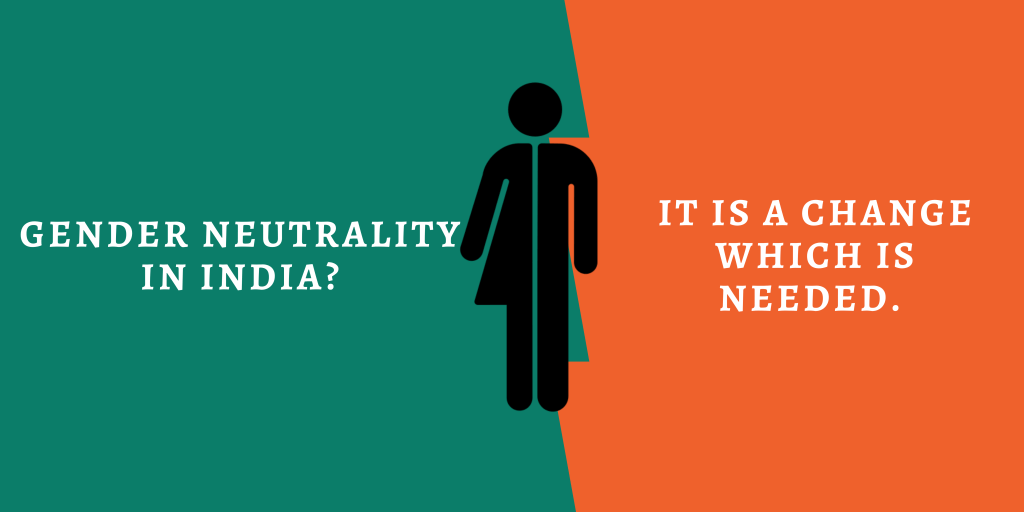
Countries such as Australia, United Kingdom and Denmark  have already accepted gender neutral laws. That’s a change which is required for our society to make it into a better living environment for all the citizens i.e., men, women, transgender, etc. The laws in India should be made gender neutral in order to preserve the true essence of Article 14 of Indian constitution i.e., Right to equality , Article 15 of Indian constitution I.e., prohibition discrimination on grounds of sex and Article 21 i.e., right to life where both the genders can live a life with dignity. The law is not the only thing which needs to be amended, but the mindset of the society also needs to be changed. The society should be made aware of the statistics of men being raped and sexually assaulted in India and why they also need to be protected by the law. Hence, the rape laws should be gender neutral.

References

  1. https://www.cambridge.org/core/journals/asian-journal-of-comparative-law/article/beyond-the-binary-rethinking-gender-neutrality-in-indian-rape-law/9BC983FB009B7BBDEB78CED0BC5144C0
  2. https://ccs.in/indias-law-should-recognise-men-can-be-raped-too
  3. https://blog.ipleaders.in/need-know-gender-inequality-rape-laws/

India and its relationship with neighboring countries.

A good neighbor – a found treasure.

Chinese Proverb

India has faced many ups and downs with the relationship with its neighboring countries. Sometimes, those neighboring countries turn out to be a treasure and sometimes, few relations are quite rocky.

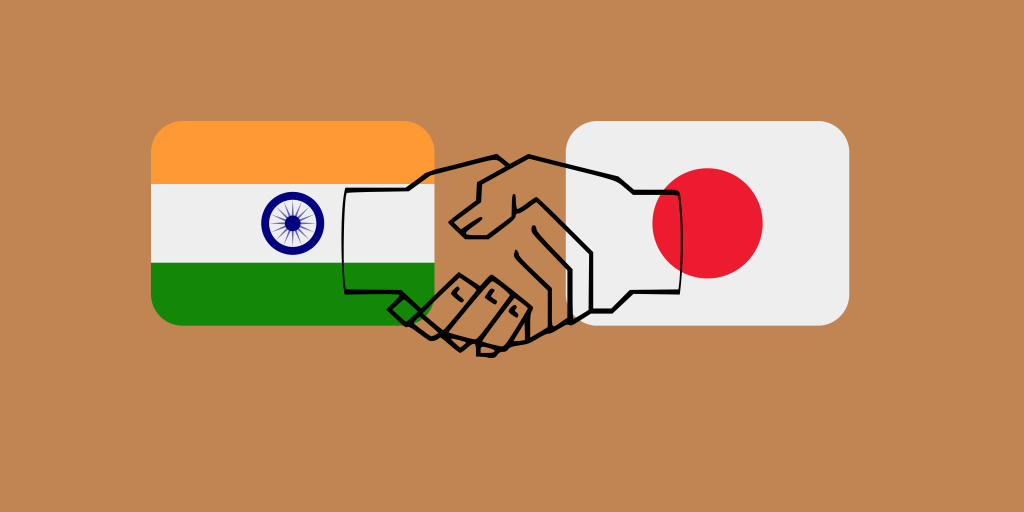
China –  From ancient to contemporary times, India and China have always had some history together. In the past, the silk road i.e., the route which went from China to Turkey while passing through Kashmir, served as a trade route. During the British India era, the first cut of own grown tea was sent from India to China. However, the peaceful times between India and China were short lived. Since 1962, the Sino-Indian relation consisted mainly of border disputes. The first war fought between the two countries was in 1962 followed by the Chola Incident in 1967 and finally the military standoff between both in Sumdorong Chu Valley in Tawang. Since then, numerous border disputes have cropped up, but since 2017 till date, India and China are clashing over and at Doklam. The ties between both the countries are strained due to the increasing affection of China towards Pakistan, dispute over eastern Ladak and China’s alleged claim over South China Sea.  Despite the border disputes and the never-ending tension between the two countries, they still conduct joint military exercise called Exercise Hand in Hand. There were total of 8 editions of Exercise Hand in Hand wherein the last edition was held in 2019 in India. The Joint Economic Group and Business Council helped in institutionalizing the economic relations between India and China. However, at a certain point of time, both the countries had cut off themselves with the other country. Following the severance of ties with India, China developed its cost-effective manufacturing skills and simultaneously, India developed its own cost-effective designing skills. One might even say that the strain on their ties might affect India, as China is one of the major exporters for resources for the country.

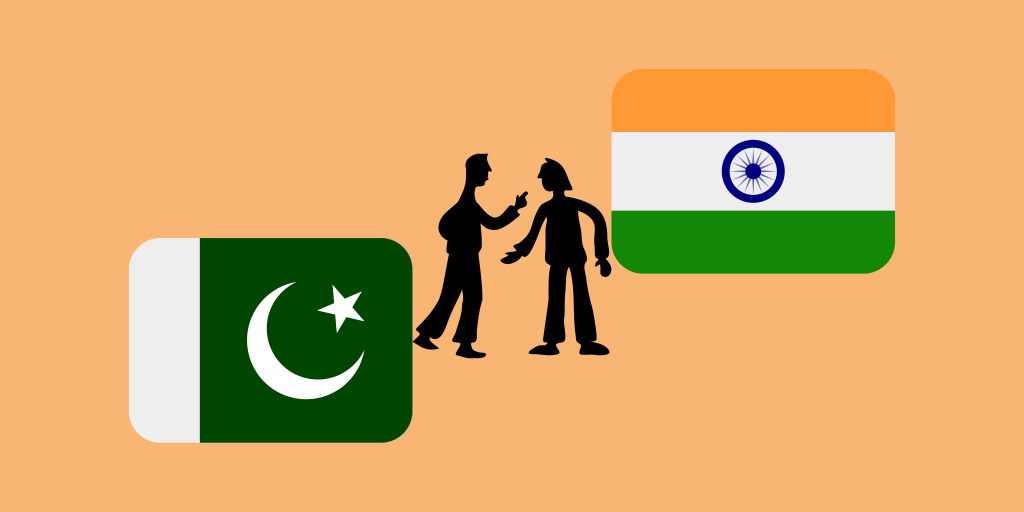
Pakistan – These two countries share a relationship so old as at once both of them were a part of British India. In the history, the post-independence migration was one of the largest human migrations ever seen. The relation between India and Pakistan have been complex and sour since post-independence.  Post- independence, India and Pakistan did form diplomatic relations and over the time, even started trade routes however, whatsoever relation both the country shared, it was overshadowed by the territorial claims, wars, cross border conflict between the armed forces and the multiple terrorist attacks. India fought wars with Pakistan, yet the issue of Kashmir was never solved. Despite of numerous talks, few agreements and conventions, Kashmir has always be the epicentre of various conflicts. From 2004 to 2008, four rounds between India and Pakistan were held in the Composite Dialogue but that was also halted with the 2008 Mumbai terrorist attack. India has lost many lives due to these terrorist attacks. At a point of time India and Pakistan had bilateral trade and commerce but after the 2019 Pulwama Attack, India increased the custom duties on exports from Pakistan which lead to Pakistan halting the trade with India. The relationship has worsened over the years with the involvement of China in constructing various projects under the China-Pakistan Economic Corridor.

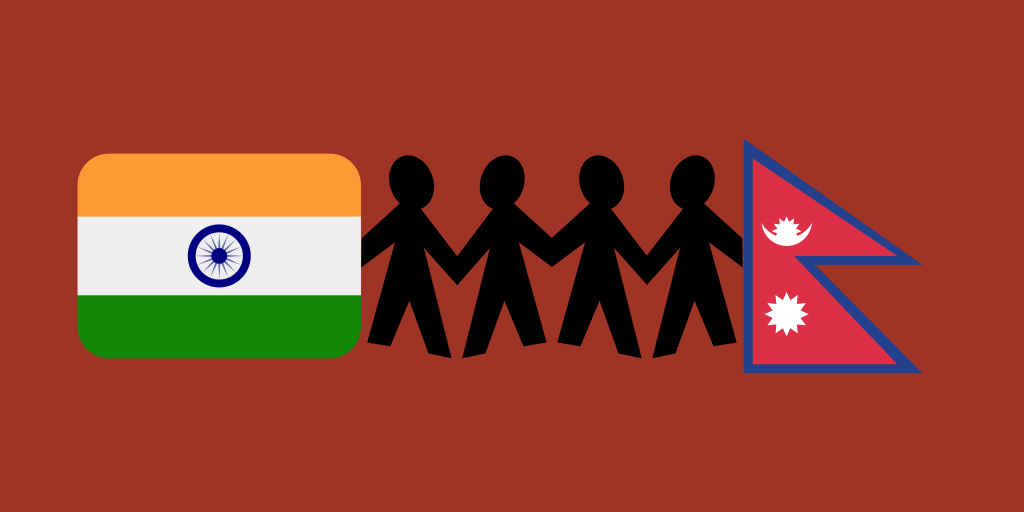
Nepal – Nepal and India share a very special relation as said during the Indo-Nepal Treaty of peace and friendship in 1950. Both the countries via the treaty stated that if in future due to any friction or misunderstanding with any of the neighbouring states, then they should be informed in order to prevent causing any breach in the relations between both of the said governments. The border shared by India and Nepal are open for both the respective citizens and are allowed to freely enter each other’s territory without the need of obtaining any passport or visa. Nepalese are allowed to work in certain government institutions such as the Indian army, but Indian citizens are not allowed to own land nor work in any government institutions in Nepal. The leaders of both the countries have frequently visited the land of the other which lead to the promotion of goodwill, trust and understanding of India and Nepal.  However, the friendly relation between the  two has seen some disharmony post 2015. There has some ethnic groups who are not fond of India as they think that India interferes with the political sovereignty of Nepal. India is wary of Nepal due to its new found diplomatic relations with China.

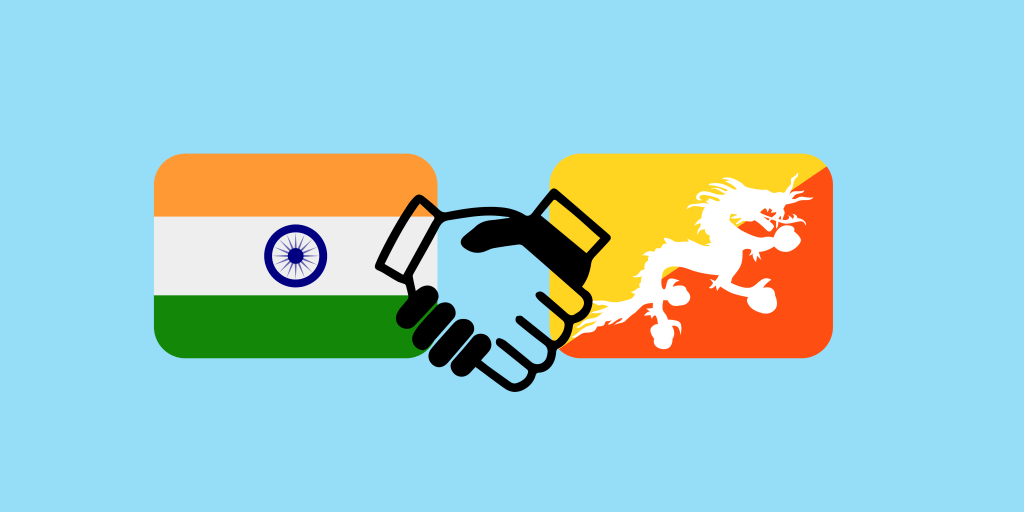
Bhutan – Bhutan also known as the Himalayan Kingdom of Bhutan shares a very special relationship with India. Bhutan is a protected state and India helps them out in times of need. India has a significant influence over the foreign policy and the defence of Bhutan. India also helps Bhutan by providing them foreign aid. India is Bhutan was one of the few who whole heartedly recognised India’s Independence, which lead to both countries sharing close relations. Both of the countries provide each other with lots of positive resources and establishment. Bhutan sharing border with four states in India along with the Himalayas, acts as a barrier between India and China. Bhutanese market is a flourishing market for Indian commodities and vice versa. Bhutan not only acts as a buffer from China but also is a source of hydropower for India.. India is one of the leading development partner for Bhutan and provided financial aid to them. The Indian Bhutan Trade Transit Agreement 1972 allows duty free transit of Bhutanese products which are to be exported to third party countries. India helps Bhutan by exporting machinery, mechanical appliances, mineral products and electrical equipment’s amongst the others,

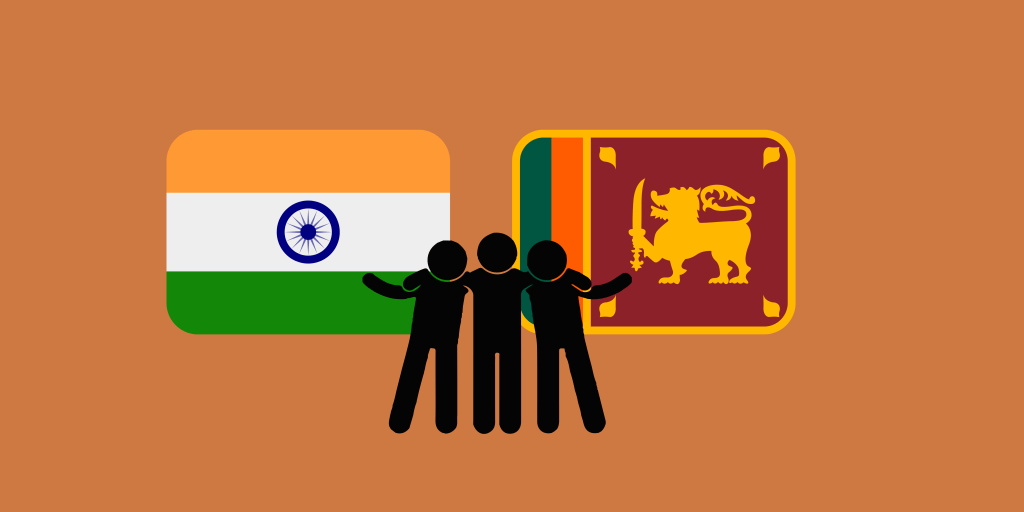
Sri Lanka – India and Sri Lanka having been sharing their relationship from more than 2000 years. They have intellectual, cultural, linguistic and religious relations between them. Both the countries recently have grown closer in terms of their relationship as their trade and investment together has grown. India and Sri Lanka share a high-level political relationship due to regular visits. Sri Lanka is a huge trading partner amongst the SAARC counties while India is a huge partner on global standing. Regularly there are cultural exchange programmes between India and Sri Lanka due to the Cultural Cooperation agreement signed between the two.  India and Sri Lanka on the defence footing share a healthy relationship as they conduct joint naval and military exercises. However, the relationship can be affected due to the China becoming close to Sri Lanka as the latter handed over an important port to the former.

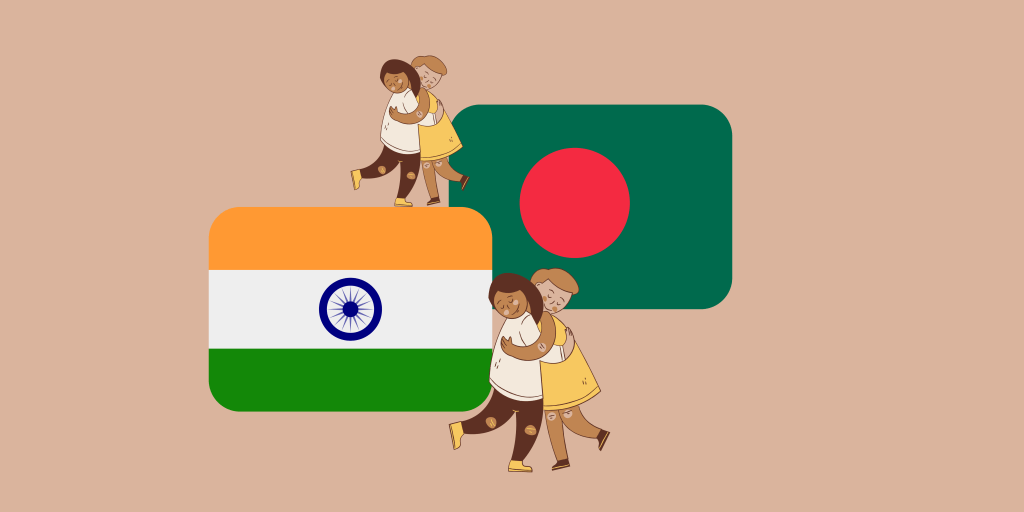
Bangladesh –  Recently India and Bhutan celebrated 50 years of their diplomatic relations in 2021. India shares the longest international border with Bangladesh. The relationship with Bangladesh has been a fruitful relationship for both the countries. With the pandemic going on, due to the healthy relationship between India and Bangladesh, India assured to make vaccines available to the latter. Bangladesh released a stamp in Honor of Mahatma Gandhi, showing their respect towards India and India did the same to commemorate Mujib Borsho stamps. India has agreed to give access to duty free exports of Bangladeshi products under the SAFTA. India and Bangladesh support the climate change convention, migrants’ rights protection and sustainable development.

Myanmar – The relationship shared between India and Myanmar is a relationship which has stood the test of time. India not only shares land border with Myanmar but also shares maritime border along Bay of Bengal. Both the countries share a cordial relationship which was put on paper via the Treaty of Friendship in 1951. Time and again the bilateral relationship has been strengthened via number of agreements. India helps Myanmar through infrastructural and non-infrastructural upgradation in the country such as renovating the 160 km long road, upgradation of hospitals, development of railway transportation system and many more. In return, Myanmar acts as a bridge between ASEAN and India. Both the countries share a healthy friendship which was seen during Cyclone Nargis, when India provided aid to the Burmese population.

References –

  1. https://www.civilserviceindia.com/subject/General-Studies/notes/india-and-its-neighbourhood-relations.html
  2. https://mea.gov.in/conflit-cooperation.htm
  3. https://byjus.com/free-ias-prep/india-myanmar-relations/
  4. https://en.wikipedia.org/wiki/China%E2%80%93India_relations#2010s
  5. https://www.drishtiias.com/to-the-points/Paper2/india-nepal-relations
  6. https://www.drishtiias.com/to-the-points/Paper2/indo-bhutan-relations
  7. https://www.drishtiias.com/to-the-points/Paper2/india-sri-lanka-relations
  8. https://byjus.com/free-ias-prep/india-bangladesh-relations/
  9. https://byjus.com/free-ias-prep/india-pakistan-relations/

Salient Features of Representation of People’s Act

The ballot is stronger than the bullet.”

Abraham Lincoln

With the same thoughts of providing certain provisions relating to elections, The Parliament of India on 17th July 1951 enacted an act called The Representation of People Act, 1951 which governs the election. The election which is governed is on two levels – on the central level it governs the election of House of Parliament and on the state level it governs the election of House of legislature of respective states. Under the ambit of the act various titles fall such as the qualification and disqualification of member, whether the members are using any corrupt practice or not, etc. With the aforementioned act, the election is governed on different levels in order to keep the elections fair and proper for the citizens of the country.

History

The constituent assemble which was set up for the formation of the constitution framed the constitution which came into force on 26 January 1950. The first general election was to be conducted on 25 October 1951, and right before the first election, the Representation of People’s Act was enacted under Article 327 of the Constitution. It was introduced in the Parliament by the father of the constitution – Dr B R Ambedkar.

Timeline of the Act

1950 – The government introduced Representation of People Act 1950 to regulate and govern the elections which would be held in the country. The act had provisions for the qualification of the voters, the seat allocation in Lok Sabha, whether one candidate be enrolled for more than one constituency, etc.  

1951 – In the same manner, the Act of 1951 governs the elections to be held in the country. The addition in the act was that it also had provisions for illegal activities relating to election, dispute redressal in any matter related to elections and what are the qualifications for the member of parliament and member of legislative assembly.

1988 – The year saw the first amendment for the Representation of People Act. The Amendment added the provision for revocation of polling because of electronic voting machines.

2002 – This particular Amendment added Section 33A which is the provision for the right to information. With this provision the voters have the right to be aware of the antecedents of the candidates.

2010 – The Amendment Bill of 2010 conferred voting rights to Indians who were non resident Indians. The right given was of voting rights and not of contesting elections for the NRIs.

2013 – The bill was passed by both the houses of the Parliament which stated that a person who is in police custody or jail can file for nomination in election provided their name should be entered in the electoral roll.

2017 – Lok Sabha passed this bill which provided for proxy voting of non-resident Indians.

Representation of People Act 1950 –

The Representation of People Act 1950 had 32 sections which were divided in 8 parts for ease of understanding. The four schedules of the act laid down the following things in the respective order – allocation of seats in Lok Sabha, the total number of seats in Legislative assembly, total number of seat in Legislative Council and the local authorities responsible for the election of legislative council. 

Salient Features of Representation of People Act 1950 –

  1. Qualification of the voters – the RPA 1950 provided that for a person to be qualified as a voter, the person would have to be a permanent resident of India and above the age of 18 years.
  2. Allocation of seat – allocation of seats for Lok Sabha and the state legislative assemblies and councils was necessary in order to maintain transparency as to how many elected members are needed. This is mentioned in Part II of the act.
  3. Preparation of electoral roll – this step helps in eliminating any duplicate voters from the voting list to ensure free and fair elections for all the citizens. Preparation of electoral roll for Parliamentary constituencies is mentioned in Part IIB, electoral roll for assembly constituencies is mentioned in Part III and electoral roll for council constituencies is mentioned in Part IV.
  4. Delimitation of constituencies – the provision for delimitation of constituencies help in drawing and redrawing the boundary for a certain constituencies for which they can be elected and can stand up for in the election. Along with drawing of boundary, the act also ensures the adjustment of seats according to the boundary.  The provision is mentioned in Part II of the Act.

Salient Features of Representation of People Act 1951

  1. Qualification of elected representatives – the qualification of elected representatives in the Parliament as well as respective state assembly and council helps in ensuring the citizens that the members which are being elected and qualified for standing up in the election. In the act, from Section 3 to 5 provides for the provisions relating to qualification.
  2. Disqualification of elected representatives for membership – the act lays down certain provisions for the disqualification of a member from the Parliament or the state legislature. Disqualification of a member can happen on multiple grounds such as under Section 8 a member can be disqualified for certain offences for which they can be convicted, Section 8A – member who opts to use corrupt practices to win an election or influence the voters by using corrupt practices can be disqualified, etc. There are various other grounds discussed in Section 9 to 11B.
  3. Administrative machinery – the act provides certain provisions pertaining to the administrative machinery relating to the conduct of elections. This was a much-needed step in order to establish a supervisory head for the elected members. Under the act, for the purpose of administrative machinery, the general duties of the Chief electoral officer and other concerned authorities has been laid down.
  4. Registration of Political party – for any political party to contest in an election or to avail any feature of the act need to register themselves with the election commission. The necessary information which needs to be mentioned by the political party while registering are provided under Section 29A of the act.
  5. Conduct of elections – the act has laid down numerous sections which fall under the ambit of conduct of elections. The act enumerates the duty of the election commission and its authorities, the publication of the list of contesting candidates, how can a candidate withdraw their candidature, etc.
  6. Right to information – with the amendment, the act introduced a new provision which gives the right to information to the voter where the candidate will be required to furnish necessary information and whether they have been convicted for any offence or not in their nomination paper. This is laid down in Section 33A of the act which lets the voter know who their candidate is with necessary information before casting their vote.
  7. Capping of expenditure – the act provides a ceiling in terms of expenditure for the elections. For the Lok Sabha elections the total amount of expenditure should not cross 70 lakhs and for the state assembly elections, the total amount of expenditure should be of maximum 28 lakhs. This helps in keeping a check of the money spent in conducting the elections.

References –

  1. Representation of People Act, 1951
  2. Samjhao.com
  3. Bjyus.com
  4. Drishtiias.com