Crypt-o-zoology

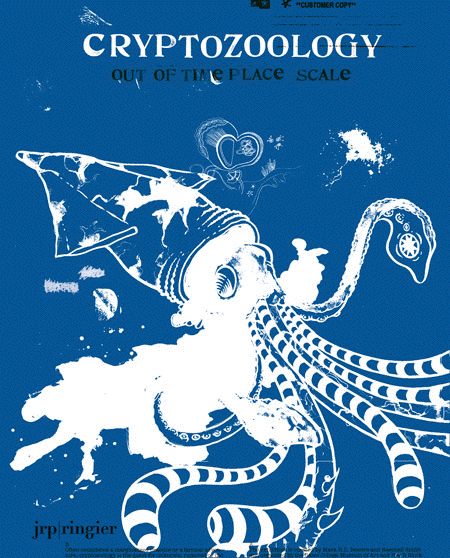
Cryptozoology is a pseudoscience and subculture that aims to prove the existence of entities from the folklore record, such as Bigfoot, the chupacabra, or Mokele-mbembe. Cryptozoologists refer to these entities as cryptids, a term coined by the subculture. Because it does not follow the scientific method, cryptozoology is considered a pseudoscience by the academic world: it is neither a branch of zoology nor folkloristics. It was originally founded in the 1950s by zoologists Bernard Heuvelmans and Ivan T. Sanderson.Scholars have noted that the pseudoscience rejected mainstream approaches from an early date, and that adherents often express hostility to mainstream science. Scholars have studied cryptozoologists and their influence (including the pseudoscience’s association with young Earth creationism), noted parallels in cryptozoology and other pseudosciences such as ghost hunting and ufology.

Generally cryptozoologists have a formal science education, and fewer still have a science background directly relevant to cryptozoology. Adherents often misrepresent the academic backgrounds of cryptozoologists. According to writer Daniel Loxton and paleontologist Donald Prothero, “Cryptozoologists have often promoted ‘Professor Roy Mackal, PhD.’ as one of their leading figures and one of the few with a legitimate doctorate in biology. What is rarely mentioned, however, is that he had no training that would qualify him to undertake competent research on exotic animals. This raises the specter of ‘credential mongering’, by which an individual or organization feints a person’s graduate degree as proof of expertise, even though his or her training is not specifically relevant to the field under consideration.” As a field, cryptozoology originates from the works of Bernard Heuvelmans, a Belgian zoologist, and Ivan T. Sanderson, a Scottish zoologist. Notably, Heuvelmans published On the Track of Unknown Animals in 1955, a landmark work among cryptozoologists that was followed by numerous other like works. Similarly, Sanderson published a series of books that assisted in developing hallmarks of cryptozoology, including Abominable Snowmen: Legend Come to Life (1961).

The term cryptozoology dates from 1959 or before – Heuvelmans attributes the coinage of the term cryptozoology (‘the study of hidden animals’) to Sanderson. Patterned after cryptozoology, the term cryptid was coined in 1983 by cryptozoologist J. E. Wall in the summer issue of the International Society of Cryptozoology newsletter. According to Wall “[It has been] suggested that new terms be coined to replace sensational and often misleading terms like ‘monster’. My suggestion is ‘cryptid’, meaning a living thing having the quality of being hidden or unknown … describing those creatures which are (or may be) subjects of cryptozoological investigation.”The Oxford English Dictionary defines the noun cryptid as “an animal whose existence or survival to the present day is disputed or unsubstantiated; any animal of interest to a cryptozoologist”. While used by most cryptozoologists, the term cryptid is not used by academic zoologists. In a textbook aimed at undergraduates, academics Caleb W. Lack and Jacques Rousseau note that the subculture’s focus on what it deems to be “cryptids” is a pseudoscientic extension of older belief in monsters and other similar entities from the folklore record, yet with a “new, more scientific-sounding name: cryptids”. Cryptozoology purports to be the study of previously unidentified animal species. At first glance, this would seem to differ little from zoology. New species are discovered by field and museum zoologists every year. Cryptozoologists cite these discoveries as justification of their search but often minimize or omit the fact that the discoverers do not identify as cryptozoologists and are academically trained zoologists working in an ecological paradigm rather than organizing expeditions to seek out supposed examples of unusual and large creatures.

The Living Fossils.

These are those few animals who have defeated the tides of time by staying alive through chains of thick and thins millions and millions of years without accepting any evolutionary change in their basic body structure and habitat and every thing and features concerned with them.

Horseshoe crab

These are marine and brackish water arthropods of the family Limulidae, suborder Xiphosurida, and order Xiphosura. Their popular name is a misnomer, as they are not true crabs, which are crustaceans.Horseshoe crabs live primarily in and around shallow coastal waters on soft sandy or muddy bottoms. They tend to spawn in the intertidal zone at spring high tides. They are commonly eaten in Asia, and used as fishing bait, in fertilizer and in science (especially Limulus amebocyte lysate). In recent years, population declines have occurred as a consequence of coastal habitat destruction and overharvesting. The entire body of the horseshoe crab is protected by a hard carapace. It has two compound lateral eyes, each composed of about 1,000 ommatidia, plus a pair of median eyes that are able to detect both visible light and ultraviolet light, a single endoparietal eye, and a pair of rudimentary lateral eyes on the top. The latter become functional just before the embryo hatches. Also, a pair of ventral eyes is located near the mouth, as well as a cluster of photoreceptors on the telson.

Coelacanth

The coelacanths constitute a now-rare order of fish that includes two extant species in the genus Latimeria: the West Indian Ocean coelacanth (Latimeria chalumnae) primarily found near the Comoro Islands off the east coast of Africa and the Indonesian coelacanth (Latimeria menadoensis). They follow the oldest-known living lineage of Sarcopterygii (lobe-finned fish and tetrapods), which means they are more closely related to lungfish and tetrapods than to ray-finned fish. They are found along the coastline of Indonesia and in the Indian Ocean. The West Indian Ocean coelacanth is a critically endangered species.

Coelacanths belong to the subclass Actinistia, a group of lobed-finned fish related to lungfish and certain extinct Devonian fish such as osteolepiforms, porolepiforms, rhizodonts, and Panderichthys. Coelacanths were thought to have become extinct in the Late Cretaceous, around 66 million years ago, but were rediscovered in 1938 off the coast of South Africa.The coelacanth was long considered a “living fossil” because scientists thought it was the sole remaining member of a taxon otherwise known only from fossils, with no close relations alive, and that it evolved into roughly its current form approximately 400 million years ago.However, several recent studies have shown that coelacanth body shapes are much more diverse than previously thought.

Nautilus

The nautilus is a pelagic marine mollusc of the cephalopod family Nautilidae, the sole extant family of the superfamily Nautilaceae and of its smaller but near equal suborder, Nautilina.It comprises six living species in two genera, the type of which is the genus Nautilus. Though it more specifically refers to species Nautilus pompilius, the name chambered nautilus is also used for any of the Nautilidae. All are protected under Nautilidae, both extant and extinct, are characterized by involute or more or less convolute shells that are generally smooth, with compressed or depressed whorl sections, straight to sinuous sutures, and a tubular, generally central siphuncle. Having survived relatively unchanged for hundreds of millions of years, nautiluses represent the only living members of the subclass nautiloidea, and are often considered “living fossils”.

The word nautilus is derived from the Greek ναυτίλος nautílos and originally referred to the paper nautiluses of the genus Argonauta, which are actually octopuses. The word nautílos literally means “sailor”, as paper nautiluses were thought to use two of their arms as sails.

Lessons from life of a Samurai

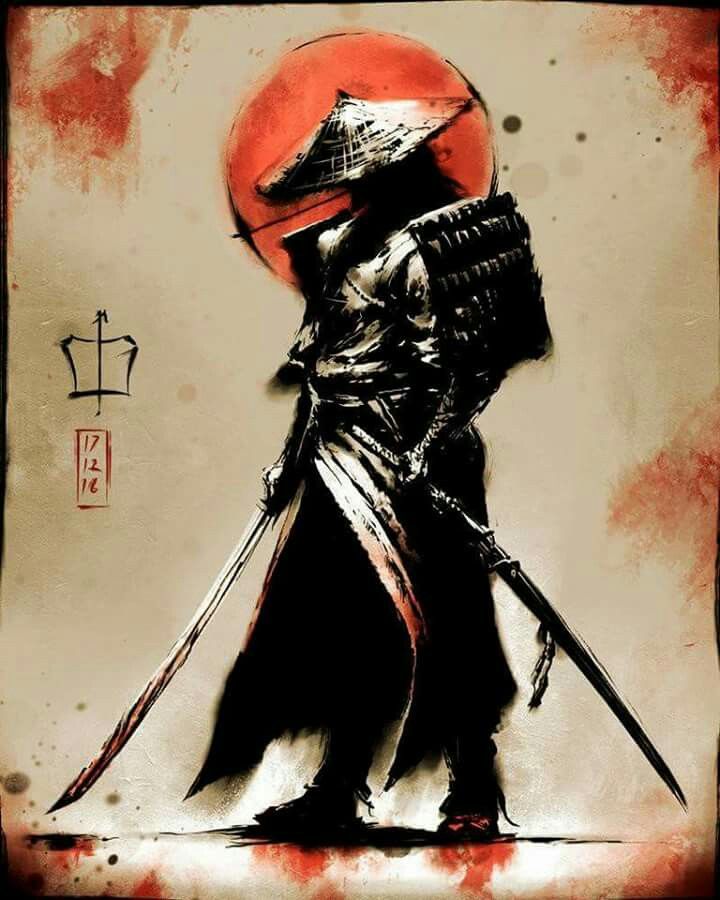
The world of martial arts is truly a thrilling one, isn’t it? Those movies with ninjas, mighty warriors and samurais give me an adrenaline rush. The swordfights are gripping ones. But above all , the Samurais for some inexplicable reason have always fascinated me. No they aren’t mere characters we see on the screen or hear tales of.

They are a jewel in Japan’s glorious history. The real warriors, whose lives had a deeper meaning beyond protection of the royalty. A life built upon the philosophy of Bushido. (Righteousness, couragebenevolence, respect, honesty, honour, and loyalty). Their lives hold the secrets of becoming a real warrior.

Here are major takeaways from the life of a Samurai. 

  • State of staying calm: The Samurais laid emphasis on cultivating a calm mind. A mind, wherein there is no room for anxieties and nor the fear of death.  In the words of samurai Miyamoto Mushashi, “Most important battle is to overcome yourself”. A calm mind is the ultimate weapon against all your enemies. When the Samurais can stay calm in the face of death, then why can’t we in midst of a challenging situation? Controlling your mind is the first step towards becoming a modern day Samurai.
  • Turning obstacles into opportunities: The story of Samurai Minamoto No Tametomo is an inspiring one. Born with a genetic deformity, his arm was 6 inches longer than others. But did that stop him from becoming a Samurai? Absolutely No!! He turned this “perceived” shortcoming into his strength and went on to become one of the finest Samurai archers. So the next time you feel like whining how unfair life is, just shift your focus. Today’s weakness might turn out to be your greatest strength tomorrow. So stop complaining when life hands you lemons, instead focus on the lemonade.
  • Dedication:  The Samurais had an unwavering dedication towards their duty. And mind you, unlike us their dedication wasn’t short lived. They committed their entire lives towards the single purpose of serving Japan.  The legendary Samurai tales are a testimony of how these warriors could pierce an arrow through large rocks with sheer devotion. They were so resolute in their purpose that upon facing defeat they chose to commit Seppuku(die with honour rather than fall into the hands of their enemies). Honour and purpose weighed far more for a Samurai than his own life. Do contemplate when was the last time you were so dedicated towards your life, relationships and self growth? If not, then find your calling and chase it like a Samurai.
  • Growth Mindset: Remember that scene in karate Kid wherein Jackie Chan tells Jaden Smith to pick up his jacket a thousand times over as a part of his martial arts training?

The above picture carries the essence of Kaizen (Japanese philosophy of change for the better” or “continuous improvement.”) The Samurais were masters of the art of repetition. Learning new techniques and practicing them until they attainted perfection. They trained relentlessly, preparing themselves for battles. Even the master Samurais instead of being consumed by pride, always strived for becoming better than the previous day.  And here we are, basking in the false glory of “knowing it all”. Remember, like desires there is no end to learning. So let’s learn, repeat and grow!

  • Comparison with self: Samurai Tshkara Bokuden quoted “My art is different from yours. It consists not so much in defeating others but not being defeated”. These words resonate deeply in the world today wherein we compare ourselves with colleagues, friends and random people on social media robbing our inner peace. We defeat the very meaning of our own existence in the process of comparison. So like Samurais let’s water the garden of our minds instead of letting the weeds of comparison to grow.
  • Acceptance towards life: The Samurais were mindful of their lives and actions. Unlike others, they weren’t caught in the quest for worldly success nor did they fear death. They accepted both happiness and sorrow with equal calm. They sought nothing outside themselves. The Samurais knew that there lies a powerful force inside us and it is the same force that drives our surroundings. Samurai Miyamoto Mushashi quotes “Get beyond love and grief. Exist for the good of humanity”.So instead of chasing material pursuits, let’s take a step towards becoming more accepting of our lives and the self.

As we come to an end, you must be wondering do samurais still exist? Honestly speaking, they don’t. The Meiji Emperor abolished the Samurai system. However, their cultural legacy is eternal and the lessons from the lives of Samurai still hold the same relevance as they did in the medieval times. But these Samurais weren’t born Samurais. They trained hard both physically and mentally to earn that honour.  I believe, we’re all warriors fighting our own battles and we don’t needs armours or swords for that. Let’s simply imbibe these valuable lessons from the Samurais into our lives.

You ,my friend, don’t just be any warrior. Strive to become a “modern day Samurai”.