
BODY DYSMORPHIC DISORDER

We all live in a judgmental society where our neighbourhood aunties tell us too eat more or eat less, maybe if we tried putting curd on our face as she told then well be fair or whiter or less brown to be precise, she always knows what’s best because she is older than all of us. All of these unwanted suggestions can lower our self-esteem when they point out your flaws you didn’t know existed. This just leads to us obsessing over our flaws. We all most of the times don’t like we see in the mirror but people who are suffering from body dysmorphic disorder obsess over their flaws on a specific body part which is usually exaggerated in their minds. This is body dysmorphia. Body dysmorphia or Body Dysmorphic Disorder [BDD] is a mental health disorder where you focus obsessively over your perceived flaws; the flaws might not be visible to others, this causes embarrassment, anxiety and leads to you being ashamed in public settings. Because the flaw is perceived its importance is exaggerated this leads to repetitive behaviour or people tend to avoid public settings or certain social engagements. It means repeatedly checking your appearance in the mirror, or seeking constant validation and repeated grooming oneself. Body Dysmorphic Disorder affects 0.7% to 2.4% of the population.

The disease was first reported in 1886 by Enrico Morselli, he named it Dysmorphophobia. It was first diagnosed as a somatoform but later reclassified as an obsessive-compulsive disorder. These people tend to indulge in behaviours which are directed towards fixing or masking their perceived flaw, they always compare their appearances with others, and they undergo cosmetic procedures with little to no satisfaction from the procedure. They also constantly think that others notice or make fun of their perceived flaw. Body Dysmorphic Disorder can be due to different factors, it develops during early adolescence, it might stem from social, cultural standards, psychological or trauma or abuse or bullying. It causes introversion and negative body image. Suicidal thoughts and depression are common in BDD. BDD also causes mood swings, depression, and the repetitive behaviour to mask their flaws causes’ obsessive-compulsive disorder to the patient, eating disorders to lose weight or to gain their perfect weight or to undergo multiple cosmetic surgeries.
BDD can be treated but most individuals tend to hide their obsessive disorders.

The conditions are hugely misdiagnosed because people are not open about it.
The common treatment for body dysmorphic disorder is Cognitive behavioural therapy is the most successful in treating BDD. Because BDD comes with an array of other disorders it’s a little difficult to treat but understandable. Cognitive-behavioural therapy provides a good mechanism where you can turn negative thoughts and irrational thoughts into positive thoughts. Responsive prevention in CBT teaches to resist the urge to mask their perceived flaw and how to seek validation from others and to grow confident. One of the ways to understand this disorder is that everyone is different and it’s no one’s business to tell others how to look or eat. Every person is beautiful in one or the other way and that not everyone is conventionally beautiful. So, be confident and find a niche for yourself.
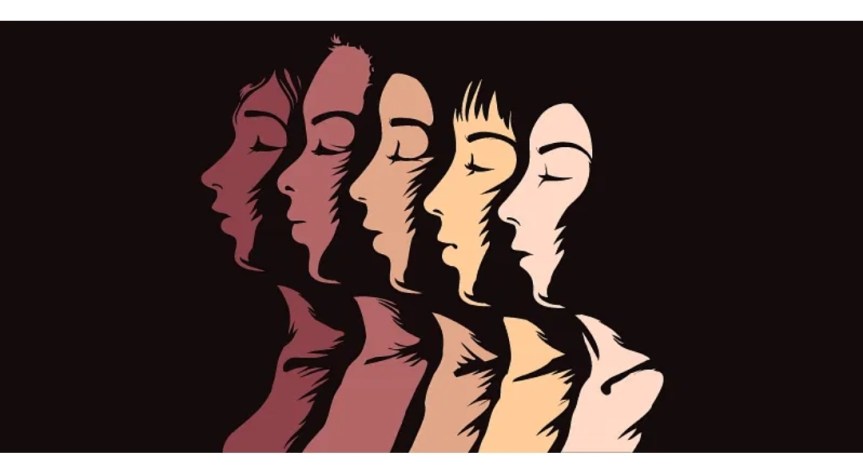
Fair, But Not So Lovely

Either as your grandmother’s favourite piece of advice or through the perpetual barrage of fairness cream advertisements on television, if you’re an Indian, it’s hard to miss the magical myths of fair skin is everywhere. One such myth that I came upon, that struck a cord with me was that ‘fair skinned persons don’t lie’, which, needless to say is enough to reveal the fair-skin obsession that plagues the young minds of our society.

Consumer brand Hindustan Unilever announced on June 25 that it’s dropping the word ‘Fair’ from its popular skin-whitening cream brand ‘Fair & Lovely’ to achieve a ‘more inclusive vision of beauty’. However, it’s still a change that only goes skin deep as the change, by all accounts, remains at the level of branding. It was also announced that announced, the emphasis would be shifted from “fairness” to “glow”. But words such as “glow” and skin “brightening” have long been used by cosmetic products as more acceptable alternatives for treatments that aim to lighten skin tone.

Banning anything that goes against the norm seems to be the pitch of the season. The barrage of criticism against the way fairness creams are being promoted in the advertisement is the ‘height of creative low’. Instead of projecting a healthy thought, these ads seem to be promoting stereotypes and problematic beliefs such as fairness being a resume-worthy quality. The ads play big on the connect people have with skin fairness and the job they do. It is blatantly projected though the numerous ads where the girl gets rejected from an interview for the role of a flight attendant-fashion model-teacher. Armed with fairness cream, the renewed zeal of the woman gets her the job she aspired to do. How convenient! These ads must be banned for glorifying skin complexion as part of the resume. It also seems to convey very ambiguous messages. Are dark-skinned individuals the only consumers who use fairness creams? Even those born with the ‘quality’ use dollops of cream and expect to retain their fairness for ever. Despite this fact, the ads continue to project the creams as a Messiah for dark-skinned people. It breeds contempt among users and potential customers. The advertisements also seem to portray that the wonder creams have the ability to get you married or turn you into a star overnight!

However, at the end of the day, they exist because people buy them, and since there is a market for them…like all products or services. But yes, they do feed into the existing prejudice and preference against a darker complexion.

Products like these, make people ashamed of their originality. It’s a shallow concept and its propaganda is ignominious. Some people make a fair skin tone as the yardstick of a person’s success. A woman once hinted me that I am excelling in a lot of places because I am fair skinned. Thank you, fairness creams ads. The question isn’t about the fact that whether or not dark is beautiful. The question is about an individual’s dignity. Let’s not stoop this low to believe in the authenticity of such a biased idea of beauty. So, should the skin-whitening products be allowed to take such a significant place in our society?

I guess, the answer is pretty simple. We don’t need products which make people diffident and which make people shallow in their perseverance of beauty. At the end of the day, they are just devouring off our backward mind-set, insecurities and inferiority complex.
Dropping of fair in the name of a face cream is, thus, only symbolic. It does not change the social bias towards fairness specially for women. They’re just as problematic. Such changes may lend these products a glow of wokeness. But it only whitewashes the in-built prejudices that are yet to be challenged in any meaningful way.

In a country obsessed with fairness creams, people should be educated to find beauty beyond skin colour.