
PM Gati Shakti Mission

Daily writing prompt
What could you do differently?

By Shashikant Nishant Sharma

The PM Gati Shakti mission, aimed at revolutionizing India’s infrastructure, faces critical challenges. Concerns include lack of transparency, inadequate financial planning, project delays, neglect of social and environmental impacts, and fragmented interagency coordination. Addressing these concerns is crucial for the scheme’s effectiveness and long-term sustainability.

The PM Gati Shakti mission, launched with much fanfare, aims to revolutionize India’s infrastructure landscape by integrating and streamlining various modes of transportation. The scheme’s overarching goal of reducing logistical costs, improving efficiency, and boosting economic growth is undeniably commendable. However, a critical analysis reveals several implementation concerns that cast doubt on the scheme’s effectiveness and long-term sustainability.

PM Gati Shakti is a recent initiative launched by the Indian government to boost the country’s infrastructure development and ensure faster and more efficient movement of goods and people. The genesis of this initiative can be traced back to the announcement made by Prime Minister Narendra Modi in his Independence Day speech on August 15, 2021.

In his speech, the Prime Minister highlighted the need for a comprehensive and integrated approach to infrastructure development that would enable the country to meet the demands of a rapidly growing economy. He emphasized the importance of creating a strong and modern infrastructure network that would connect the country’s far-flung regions and help in the efficient movement of goods and people.

To achieve this vision, the government launched the PM Gati Shakti initiative, which aims to integrate the country’s various modes of transportation, including roads, railways, waterways, and airways, into a unified and seamless network. The initiative also seeks to leverage the power of technology to create a digital infrastructure backbone that would enable better monitoring and management of the country’s infrastructure assets.

Under this initiative, the government is also working to create a National Master Plan (NMP) that would serve as a blueprint for infrastructure development in the country. The NMP would bring together various ministries and departments involved in infrastructure development and enable them to work in a coordinated and integrated manner.

In line with the Prime Minister’s vision of expanding the NMP platform for socio-economic development, Social Sector Ministries are being onboarded through a series of meetings. A recent meeting was held to review the adoption of PM Gati Shakti NMP by Social Sector Ministries/Departments, and it was emphasized that there is immeasurable potential for the adoption and augmentation of NMP in social sector planning. 14 Social Sector Ministries/Departments have been onboarded, and their individual portals have been integrated at the backend with the NMP. 61 data layers of Social Sector Ministries related to infrastructure assets have been mapped on NMP, and there is a focus on developing SOPs for data management. The meeting saw participation from all 14 Ministries/Departments, and some ministries showcased their use cases for the adoption of NMP. The Ministry of Women and Child Development has developed a mobile application for data collection regarding Anganwadi Centres, which has resulted in real-time data enrichment on the platform for infrastructure planning. The Department of School Education and Literacy is using the NMP platform to identify suitable sites for opening new schools. Other social sector Ministries are also in the process of identifying assets essential for social sector planning to be uploaded on NMP. Individual portals for 22 infrastructure and user economic ministries and all 36 States/UTs have been created and integrated with the NMP at the backend, with 1460 data layers currently integrated into NMP.

The genesis of PM Gati Shakti in India can be traced back to the Prime Minister’s vision of creating a modern and efficient infrastructure network that would serve as the backbone of the country’s economic growth. Through this initiative, the government aims to bring about a comprehensive and integrated approach to infrastructure development and create a National Master Plan that would serve as a blueprint for the country’s infrastructure development for years to come.

Lack of Clarity and Transparency:

One of the major issues with the PM Gati Shakti mission is the lack of clarity and transparency in its execution. Despite its ambitious objectives, there is a dearth of detailed information regarding the scheme’s operational framework, funding allocation, and implementation timeline. This opacity raises questions about the government’s commitment to transparency and accountability, leaving room for potential mismanagement and corruption.

Inadequate Financial Planning:

While the mission aims to bring about transformative changes, there are serious concerns about its financial viability and sustainability. The PM Gati Shakti Scheme demands substantial financial resources for the development and integration of multiple transport modes. However, the government’s allocation of funds and revenue-generation plans remain vague. Without a comprehensive and transparent financial plan, the scheme may struggle to attract investment and realize its ambitious goals.

Infrastructure Bottlenecks and Project Delays:

India’s infrastructure sector has long been plagued by bottlenecks and project delays. Unfortunately, the PM Gati Shakti Scheme does not appear to adequately address these concerns. The lack of a robust mechanism to tackle bureaucratic red tape, land acquisition challenges, and environmental clearances is a significant hurdle to the timely completion of infrastructure projects. Without addressing these issues, the scheme risks becoming yet another ambitious plan trapped in bureaucratic gridlock.

Neglecting Social and Environmental Impacts:

While the PM Gati Shakti mission emphasizes economic growth and infrastructure development, it seems to overlook the potential social and environmental impacts. The scheme’s focus on rapid expansion and integration may lead to the displacement of communities, destruction of ecosystems, and exacerbation of pollution and climate change. A comprehensive environmental and social impact assessment framework, along with community engagement, should be integral components of the scheme to ensure sustainable and inclusive development.

Fragmented Approach and Interagency Coordination:

Given the complexity and interdependence of India’s transportation systems, the PM Gati Shakti mission’s fragmented approach raises concerns about effective interagency coordination. The lack of a centralized authority responsible for integrating various modes of transport, coupled with the absence of a clear governance structure, may lead to conflicts, inefficiencies, and duplication of efforts. Without robust coordination mechanisms, the scheme’s potential benefits may remain unrealized.

Conclusion:

While the PM Gati Shakti Mission having the vision of transforming India’s transportation infrastructure is undoubtedly laudable, a critical review reveals several pressing concerns. The lack of transparency, inadequate financial planning, infrastructure bottlenecks, neglect of social and environmental impacts, and fragmented approach raise doubts about the scheme’s effectiveness and long-term sustainability. Addressing these issues is crucial for the successful implementation of the scheme and ensuring that it delivers the promised benefits to the nation and its citizens.

References

Govt. of India. (n.d.). PM Gati Shakti – national master plan for multi-modal connectivity. Govt. of India. Retrieved June 21, 2023, from https://www.india.gov.in/spotlight/pm-gati-shakti-national-master-plan-multi-modal-connectivity

Mishra, R. (2021, October 19). Gati Shakti Master Plan: All you need to know about it. Business Today. https://www.businesstoday.in/latest/economy/story/gati-shakti-master-plan-all-you-need-to-know-about-it-309810-2021-10-19

Press Bureau of India. (2021, October 13). PM launches Gati Shakti- National Master Plan for infrastructure development. Press Bureau of India. https://www.pib.gov.in/PressReleaseIframePage.aspx?PRID=1763638

PTI. (2021, October 13). PM Gati Shakti National Master Plan to enhance competitiveness, promote manufacturing. Thehindu.com. https://www.thehindu.com/news/national/pm-gati-shakti-national-master-plan-to-enhance-competitiveness-promote-manufacturing/article36983467.ece

Strategic Investment Research Unit. (2021, October 28). PM Gati Shakti Master Plan. Invest India Outlook. https://www.investindia.gov.in/team-india-blogs/pm-gati-shakti-master-plan

Tandon, T. (2021, October 13). PM Gati Shakti National Master Plan 2021: All you need to know. Jagran Josh. https://www.jagranjosh.com/general-knowledge/gati-shakti-master-plan-launched-by-pm-modi-all-you-need-to-know-1634106695-1
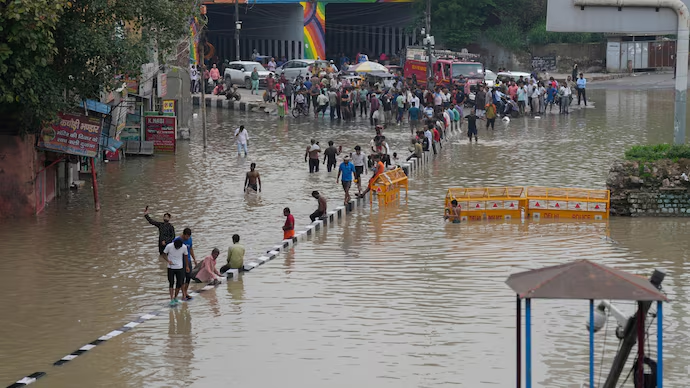
Flooding in the Yamuna Basin: An Urgent Call for Preventive Measures

Daily writing prompt
What could you do differently?

By Shashikant Nishant Sharma

The Yamuna Basin, particularly in Delhi, has been plagued by recurring floods caused by heavy rains. These floods have had devastating consequences on both human lives and the environment. To mitigate the impact of such natural disasters and safeguard the well-being of the populace, immediate and proactive measures must be taken to prevent future floods.

Critical Analysis:

Inadequate Infrastructure:

One of the primary causes of flooding in the Yamuna Basin is the inadequate infrastructure in Delhi. The city’s drainage system is ill-equipped to handle heavy rainfall, resulting in the water overflowing into residential areas. Insufficient stormwater drains and poorly maintained canals exacerbate the situation, leading to widespread inundation. The lack of investment and timely upgrades in infrastructure is a critical issue that must be addressed.

Encroachment and Enclosed River Channels:

Over the years, encroachments and unauthorized construction have obstructed the natural flow of the Yamuna River. Many of the river channels have been encased and converted into concrete structures, leaving no room for the river to expand during heavy rains. This not only disrupts the river’s ecological balance but also contributes to flood-related hazards. Strict enforcement of regulations to prevent encroachments and the revival of natural river channels are essential steps towards flood prevention.

Climate Change Impact:

The impact of climate change cannot be ignored when considering the causes of flooding in the Yamuna Basin. Increasingly unpredictable weather patterns and intense rainfall events have become more frequent due to climate change. Therefore, any long-term solution must acknowledge and account for the effects of climate change on the region’s hydrology. This necessitates the development and implementation of climate-resilient infrastructure and urban planning strategies.

Preventive Measures:

Improved Infrastructure:

Investments must be made to enhance the drainage system and build larger and efficient stormwater drains. These should be designed to accommodate heavy rainfall, reducing the risk of flooding in residential areas. Regular maintenance and periodic upgrades of existing infrastructure should also be prioritized.

River Channel Restoration:

Efforts should be directed towards restoring the natural flow of the Yamuna River by removing encroachments and revitalizing river channels. This can help create additional space for floodwaters to dissipate and reduce the pressure on residential areas during heavy rains. Adequate buffer zones should be maintained along the riverbanks to allow for natural expansion during flood events.

Climate-Resilient Urban Planning:

Long-term solutions should focus on incorporating climate-resilient urban planning strategies. This may include building sustainable and green infrastructure, promoting water harvesting and retention systems, and encouraging the use of permeable surfaces to facilitate groundwater recharge. Integrating climate change projections into urban planning frameworks can aid in creating flood-resistant cities.

Public Awareness and Emergency Preparedness:

Public awareness campaigns about flood risks and preparedness measures should be initiated to educate residents about safety protocols and evacuation procedures. Establishing early warning systems and emergency response mechanisms can significantly reduce the impact of floods and save lives.

Conclusion:

The recurring floods in the Yamuna Basin of Delhi demand immediate attention and action. Addressing the issues of inadequate infrastructure, encroachments, and climate change impact are crucial steps in flood prevention. By investing in improved infrastructure, restoring natural river channels, incorporating climate-resilient urban planning, and promoting public awareness, we can pave the way for a more resilient future, safeguarding lives and property from the devastating effects of flooding.

References

Kumar, M., Sharif, M., & Ahmed, S. (2019). Flood risk management strategies for national capital territory of Delhi, India. ISH Journal of Hydraulic Engineering25(3), 248-259.

Mazumder, S. K., Dhillon, M. S., & Kanwal, A. (2018). River Action Plan, Flood Management & Basin Development. Lead paper in a Souvenir “River Action Plan, Flood Management & Basin Development” published by Consulting Engineers Association of India, 27-28.

Patel, R. S., Taneja, S., Singh, J., & Sharma, S. N. (2024). Modelling of Surface Runoff using SWMM and GIS for Efficient Storm Water Management. CURRENT SCIENCE126(4), 463.

Sharma, M., Rawat, S., Kumar, D., Awasthi, A., Sarkar, A., Sidola, A., … & Kotecha, K. (2024). The state of the Yamuna River: a detailed review of water quality assessment across the entire course in India. Applied Water Science14(8), 175.

Tomar, P., Singh, S. K., Kanga, S., Meraj, G., Kranjčić, N., Đurin, B., & Pattanaik, A. (2021). GIS-based urban flood risk assessment and management—a case study of Delhi National Capital Territory (NCT), India. Sustainability13(22), 12850.

Urban Database for Better Economic Decision Making

Daily writing prompt
What could you do differently?

By Shashikant Nishant Sharma

With reference to podcast on ‘Understanding Urban Digitalisation Projects in India: Platformisation, Infrastructuring, and Datafication’

Urban databases play a crucial role in shaping economic decision-making in urban environments. They serve as valuable repositories of information related to demographics, infrastructure, and various socio-economic factors. The availability and effective use of urban data can significantly enhance the understanding of urban dynamics, enabling policymakers and businesses to make more informed decisions. The discourse surrounding the use of urban databases for enhancing economic decision-making is a topic of increasing significance in the realm of urban planning and governance. This critical review aims to analyze the strengths and limitations of the concept, drawing upon the broader implications and challenges discussed in relevant literature.

One of the key strengths emphasized in the discourse is the potential for urban databases to provide a comprehensive understanding of the intricate dynamics within urban environments. By amalgamating data on demographics, infrastructure, and socio-economic factors, these databases promise to offer policymakers and businesses invaluable insights for more informed decision-making processes. This multifaceted approach is particularly laudable, given the complexity of urban ecosystems. However, a critical lens reveals certain limitations in the implementation and utilization of urban databases. One notable concern is the inherent challenge of data accuracy and reliability. The quality of decisions made based on urban databases is contingent on the accuracy of the data input. Inaccuracies, biases, or outdated information may lead to flawed analyses and misguided decisions. Additionally, issues of data privacy and security loom large, raising questions about the ethical considerations in the collection and storage of sensitive urban information.

Furthermore, the article under scrutiny may touch upon the potential pitfalls of over-reliance on quantitative data at the expense of qualitative insights. While databases provide a wealth of statistical information, they may fall short in capturing the nuanced, context-specific intricacies of certain urban phenomena. A comprehensive understanding of an urban environment requires a balanced integration of both quantitative and qualitative data. The review should also consider the contextual relevance of urban databases. The effectiveness of these databases may vary across different urban settings, influenced by factors such as governance structures, technological infrastructure, and socio-cultural contexts. The universal applicability of urban databases for economic decision-making should be critically evaluated, and efforts should be made to tailor these tools to specific urban landscapes.

In conclusion, while the concept of utilizing urban databases for better economic decision-making is promising, a critical review reveals a nuanced landscape of opportunities and challenges. The strength lies in the potential for comprehensive insights, but caution is warranted regarding issues of data accuracy, privacy, and contextual relevance. As the discourse continues to evolve, addressing these concerns will be paramount to harnessing the full potential of urban databases for effective economic decision-making in urban contexts.

References

Parkar, K., Zérah, M.-H., & Mittal, G. (2023). Understanding Urban Digitalisation Projects in India: Platformisation, Infrastructuring, and Datafication. Economic and Political Weekly, 58(14), 53–60.

Planner or Big Data Scientist

Daily writing prompt
What could you do differently?

By Shashikant Nishant Sharma

The debate over whether to refer to oneself as a “Planner” or a “Big Data Scientist” touches on the evolving nature of roles in data management, analytics, and decision-making. Each title implies a different focus, skill set, and approach to handling data and planning activities. To critically discuss this, let’s consider the distinctions and overlaps between the two roles.

1. Definitions and Roles

Planner: Traditionally, a planner is someone who devises strategies, coordinates activities, and allocates resources to achieve specific goals. This role is often seen in urban planning, business strategy, project management, and logistics. Planners focus on creating structured approaches to meet objectives, often relying on historical data, projections, and various planning tools.

Big Data Scientist: A Big Data Scientist, on the other hand, is someone specialized in handling, analyzing, and deriving insights from large volumes of complex data. This role involves using statistical methods, machine learning, and data mining to extract patterns, trends, and actionable insights from data. Big Data Scientists work extensively with structured and unstructured data, often using advanced computational techniques and software.

2. Skill Sets

Planners typically possess skills in project management, strategic thinking, resource allocation, and risk management. They may use data, but their focus is on the practical application of this data to achieve specific goals. Tools used by planners may include project management software, GIS (for urban planners), and various planning frameworks.

Big Data Scientists require strong analytical skills, proficiency in programming languages like Python or R, expertise in data analysis tools, and a deep understanding of statistical methods and machine learning algorithms. They must be able to work with large datasets, perform complex data manipulations, and create predictive models.

3. Approach to Data

Planners use data to support their planning processes but may not engage deeply with the data itself. Their focus is more on how to use available information to make strategic decisions. Data is one of many inputs into a broader decision-making process.

Big Data Scientists focus on the data itself. Their primary role is to uncover insights from data, which can then inform planning and decision-making processes. They are more concerned with the data’s quality, structure, and the methods used to analyze it.

4. Evolving Roles and Convergence

The line between planners and big data scientists is increasingly blurred. Modern planning often requires data-driven insights, and thus planners may need skills in data analysis. Conversely, Big Data Scientists might be involved in strategic planning based on the insights they generate. This convergence is seen in fields like smart city planning, where urban planners use big data analytics to understand traffic patterns, energy usage, and other urban dynamics.

5. Context and Industry Differences

In business contexts, a planner might focus on market strategies, supply chain logistics, or operational efficiency. A Big Data Scientist in the same company might analyze customer data, optimize product recommendations, or predict market trends. While both roles contribute to the company’s success, they do so in different ways.

In public policy or urban planning, a traditional planner might focus on land use, zoning, and community development. A Big Data Scientist could analyze social media data, census information, or transportation data to provide insights that shape these planning decisions.

6. Implications for Identity and Title

Choosing to call oneself a “Planner” or a “Big Data Scientist” reflects not only the skills one possesses but also the role one plays in the organization.

A Planner might emphasize their strategic, big-picture thinking, and their ability to integrate various inputs into a coherent plan. They may see their role as guiding an organization or community toward specific goals.

A Big Data Scientist might emphasize their technical skills, their ability to manage and analyze large datasets, and their role in uncovering hidden insights. They may see their role as providing the data-driven evidence needed to make informed decisions.

Conclusion

The choice between calling oneself a “Planner” or a “Big Data Scientist” ultimately depends on one’s primary focus and approach to their work. While there is overlap, the distinction lies in whether the individual is more focused on the strategic application of insights (Planner) or on the technical generation of those insights from data (Big Data Scientist). As roles continue to evolve with the integration of data science into various fields, professionals might increasingly identify with both roles, or new titles might emerge to capture this convergence.

References

Batty, M. (2013). Big data, smart cities and city planning. Dialogues in human geography3(3), 274-279.

Hazen, B. T., Boone, C. A., Ezell, J. D., & Jones-Farmer, L. A. (2014). Data quality for data science, predictive analytics, and big data in supply chain management: An introduction to the problem and suggestions for research and applications. International Journal of Production Economics154, 72-80.

Kayabay, K., Kılınç, A., Gökalp, M. O., Gökalp, E., & Daim, T. U. (2024). Technology Roadmapping: Data Science Roadmapping of Networked Organizations’ Strategic Planning for Artificial Intelligence. Future‐Oriented Technology Assessment: A Manager’s Guide with Case Applications, 273-300.

Sharma, S. N., Singh, D., & Dehalwar, K. Surrogate Safety Analysis-Leveraging Advanced Technologies for Safer Roads.

Shen, Z., & Li, M. (Eds.). (2017). Big Data Support of Urban Planning and Management: The Experience in China. Springer.

Steif, K. (2021). Public policy analytics: code and context for data science in government. CRC Press.

Van Der Aalst, W., & van der Aalst, W. (2016). Data science in action (pp. 3-23). Springer Berlin Heidelberg.