


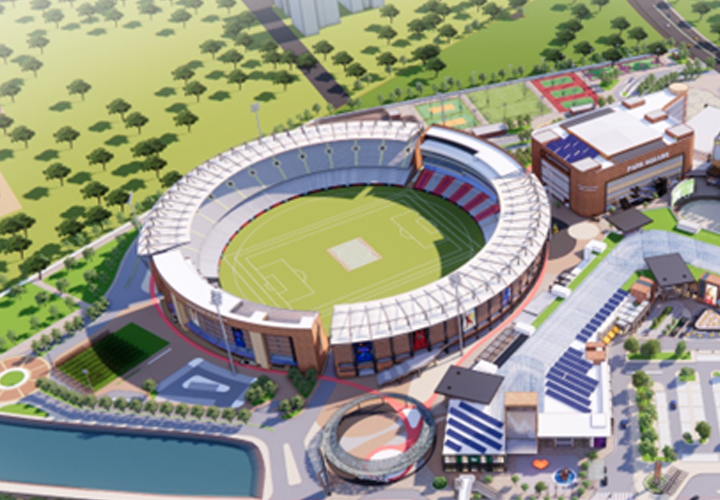
The Dwarka Sports Complex is one of the most prominent sports and recreational infrastructures in West Delhi, playing a crucial role in promoting physical fitness, community interaction, and organised sports activities. Developed primarily under the planning framework of sub-city Dwarka, the sports complex represents a well-integrated sports zone that caters to diverse age groups, skill levels, and sporting interests. It reflects the growing recognition of sports and recreation as essential components of urban life rather than optional amenities.
Concept of a Sports Zone in Urban Planning
In urban planning, a sports zone refers to a designated area within the city specifically planned for sports, physical activity, recreation, and wellness-related infrastructure. Such zones are vital for enhancing urban livability, improving public health, and fostering social cohesion. In high-density cities like Delhi, where open spaces are limited, planned sports complexes become critical public assets.
The Dwarka Sports Complex fits well within this concept, serving not only competitive athletes but also local residents seeking daily recreation, fitness training, and leisure activities. It aligns with planning principles that emphasise balanced land use, social infrastructure provision, and sustainable urban development.
Location and Urban Context
Dwarka, envisioned as a planned sub-city of Delhi, was designed with sector-based development, wide road networks, metro connectivity, and dedicated institutional and recreational areas. The sports complex is strategically located to ensure easy accessibility from surrounding residential sectors, schools, and institutions. Proximity to metro corridors and arterial roads enhances its reach, making it a regional-level recreational facility rather than a neighbourhood-level one.
The presence of the sports complex adds significant value to the urban fabric of Dwarka, contributing to land-use balance and improving the quality of life for residents.
Components and Facilities of the Dwarka Sports Complex
The Dwarka Sports Complex offers a wide range of indoor and outdoor sports facilities, making it a multi-functional sports zone. Key components typically include:
- Outdoor facilities such as football grounds, cricket pitches, athletics tracks, and multipurpose playfields.
- Indoor sports infrastructure, including badminton courts, table tennis halls, squash courts, and gymnasiums.
- Aquatic facilities, such as swimming pools for training, recreation, and competitions.
- Fitness and wellness amenities, including yoga halls, aerobics spaces, and modern gyms.
- Supporting infrastructure like changing rooms, spectator seating, lighting, parking areas, and landscaped open spaces.
These facilities are designed to accommodate both formal sporting events and informal recreational use, ensuring maximum utilisation throughout the day.
Role in Promoting Sports and Physical Fitness
One of the most significant contributions of the Dwarka Sports Complex is its role in encouraging sports participation and active lifestyles. It provides structured training opportunities for children and youth, helping identify and nurture sporting talent at an early stage. Coaching camps, sports academies, and regular practice sessions contribute to skill development across various disciplines.
For adults and senior citizens, the complex offers safe and accessible spaces for walking, fitness training, yoga, and recreational sports. This inclusive approach supports public health objectives by reducing sedentary behaviour and lifestyle-related diseases.
Social and Community Significance
Beyond physical activity, the sports complex functions as an important community space. It brings together people from different socio-economic backgrounds, fostering social interaction and a sense of belonging. Events such as local tournaments, sports meets, fitness drives, and cultural programmes transform the complex into a vibrant social hub.
In a city where public open spaces are often under pressure, the Dwarka Sports Complex provides a structured yet open environment where residents can engage positively with each other, strengthening community ties.
Planning and Design Considerations
From a planning perspective, the sports complex demonstrates several good practices:
- Zoning and land-use efficiency, with clear demarcation of activity areas and support facilities.
- Safety and accessibility, through controlled entry points, lighting, and pedestrian-friendly internal circulation.
- Environmental considerations, including landscaped areas, tree cover, and potential for water-efficient practices.
- Scalability and adaptability, allowing facilities to be upgraded or expanded based on demand.
However, like many large public facilities, continuous maintenance and periodic upgrades are essential to retain functional efficiency and user satisfaction.
Challenges and Scope for Improvement
Despite its strengths, the Dwarka Sports Complex faces some challenges:
- High user demand, leading to overcrowding during peak hours.
- Maintenance issues, particularly for outdoor fields and older infrastructure.
- Limited access for economically weaker groups, if user fees are perceived as high.
- Need for better integration with schools and local sports programmes, to enhance outreach.
Addressing these challenges through improved management, inclusive pricing strategies, and community partnerships can significantly enhance the complex’s impact.
Conclusion
The Dwarka Sports Complex stands as a successful example of a planned sports zone within an urban context, contributing to physical fitness, social well-being, and overall urban livability. It demonstrates how dedicated sports infrastructure can go beyond competitive athletics to serve as a cornerstone of community life. As Delhi continues to grow and densify, such sports complexes will become increasingly important in ensuring that urban development remains people-centric, healthy, and socially inclusive. With sustained investment, effective management, and inclusive policies, the Dwarka Sports Complex can continue to inspire active living and sporting excellence for generations to come.
 Track2Training
You must be logged in to post a comment.