Annual Net Cash Flow = ₹40,00,000 Project Life = 8 years
Using financial approximation:
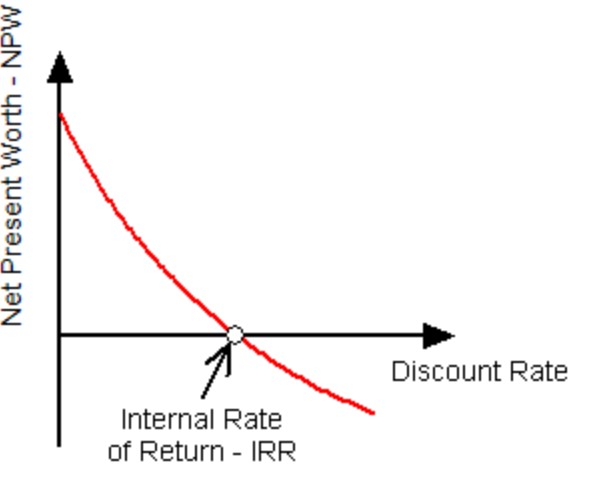
IRR ≈ 14–16%
If the required return is 12%, the project is financially viable.
✅ Example 3: Solar Panel Investment in Office Building
Installation Cost = ₹5,00,000
Annual Savings = ₹1,20,000 Life = 5 years
Using trial method or Excel:
IRR ≈ 18–20%
This supports sustainable investment decision-making.
5️⃣ Applications of IRR in Architecture & Urban Planning
🔹 1. Real Estate Feasibility Studies
Apartment development
Commercial complex
Mixed-use buildings
Helps developers decide project scale and phasing.
🔹 2. Transit-Oriented Development (TOD)
IRR helps evaluate:
Increased land value
Higher rental income near transit
Mixed-use density benefits
🔹 3. Public-Private Partnership (PPP)
IRR determines:
Concession period
Revenue sharing ratio
Private investor attractiveness
🔹 4. Infrastructure Projects
Used for:
Metro stations
Bus terminals
Multi-level parking
Smart city infrastructure
🔹 5. Sustainable Building Investments
IRR justifies:
Green roof systems
Solar panels
Energy-efficient façade
Water recycling systems
6️⃣ Advantages of IRR
✔ Considers time value of money ✔ Useful for long-term projects ✔ Easy comparison between alternatives ✔ Widely accepted in financial markets ✔ Useful for PPP and infrastructure projects
7️⃣ Limitations of IRR
❌ Complex to calculate manually ❌ May give multiple IRRs in unusual cash flow patterns ❌ Does not show absolute profit amount ❌ Can mislead if project sizes differ
Therefore, IRR should be used along with:
NPV
ROI
Payback Period
Cost-Benefit Analysis
8️⃣ Difference Between ROI and IRR
ROI
IRR
Simple profitability ratio
Time-adjusted return
Ignores time value
Considers time value
Easy to calculate
Requires iteration
Short-term focus
Long-term focus
9️⃣ Practical Use in DPR Preparation
When preparing a Detailed Project Report:
Estimate yearly cash flows
Apply discounting
Calculate IRR
Compare with cost of capital
Recommend project acceptance or rejection
🔟 Conclusion
Internal Rate of Return (IRR) is one of the most powerful financial tools in architecture and urban planning. It helps evaluate:
Real estate viability
Infrastructure feasibility
TOD development returns
Sustainable design investments
PPP financial attractiveness
For architects and planners, understanding IRR ensures that projects are not only technically sound and aesthetically strong but also financially sustainable.
As critical transitional zones between terrestrial and marine environments, estuarine ecosystems provide unique biodiversity and indispensable ecosystem services. These sensitive habitats are constantly threatened by human activities such as pollution and land-use change. This study was carried out to investigate the variations in some physicochemical parameters and heavy metal concentration levels in three coastal estuaries along the Ratnagiri coast. Water samples were collected from Bhatye, Kalbadevi and Sakhartar estuaries during monsoon (2022), winter (2022), and summer (2023). Air temperature ranged from 24.8°C to 33.5°C, water temperature varied between 24.2°C and 31.1°C – both showing distinct seasonal patterns. The pH values were in the range of 7.0 to 8.3 and the salinity values between 12.8-33.2 ppt, which reflected the freshwater-marine gradient influenced by monsoonal dynamics. The dissolved oxygen content of water was in the range 4.5 to 7.4 mg/L with higher values during monsoon due to increased turbulence and freshwater inflow. The heavy metals in water were Lead (1.39-3.90 μg/L), Cadmium (0.110-0.341 μg/L), Chromium (2.56-7.98 μg/L), Nickel (1.92-5.10 μg/L) and Zinc (6.21-15.36 μg/L), all within WHO permissible limits but with areas of localized increase at Kalbadevi estuary near industrial discharge points. In space, the pattern of pollutions is reflected with Sakhartar estuary still enjoying almost pristine conditions; Bhatye shows some (but not serious) contamination; while Kalbadevi estuary clearly suffered from man’s activities. These results furnish baseline data essential for long-term observation and sustainable development of the marine environment in Ratnagiri region.
Keywords: Ratnagiri coast, dissolved oxygen, physicochemical parameters, heavy metals, and seasonal variation.
1. INTRODUCTION
Estuarine ecosystems are characterized by unique hydrological, chemical, and biological features (Pritchard, 1967; 2004). These transitional zones are extremely productive biologically, act as breeding and nursery grounds for commercially important fish and shellfish, and perform essential ecological services such as nutrient recycling, sediment trapping and pollution filtration (Day et al). In India’s Maharashtra state, Ratnagiri’s lush Konkan coastline harbors a number brief. lasting river systems that are of high ecological value and has. The physico-chemical parameters of estuarine water are fundamental measures of ecosystem health and water quality (Chapman & Wang, 2001). Temperature controls the metabolic rates of aquatic organisms and the solubility of dissolved oxygen, while pH and salinity are critical determinants of species distribution and biological productivity. Dissolved oxygen (DO) is essential for aerobic respiration, and it provides an important yardstick of water quality (Wetzel, 2001). The discharge of heavy metals from industrial, agricultural and urban sources has become a major global concern in recent years in estuarine systems (Rainbow, 1995; Zhang et al.). Metals such as lead (Pb), cadmium (Cd), chromium (Cr), nickel (Ni) and zinc (Zn) have high toxicity, are bioavailable, and persist in the aquatic ecosystem (Förstner & Wittmann, 2012).
Development for the Ratnagiri coast has taken place mainly in three sectors: urban expansion, development of ports and industrial estates (Zingde et al., 1999; Achary et al., 2015). The three estuaries of this study represent varying degrees anthropogenic impact. Bhatye Estuary, a moderate site near human activities serves as the control threshold; Kalbadevi Estuary is located near sources of heavy metal pollution, such as industrial zones; Sakhartar Estuary, meanwhile, is virgin territory.The current investigation seeks to: (1) assess air and water temperatures, pH, salinity concentrations in estuarine water both spatially and temporally; (2) determine the levels of heavy metals in estuarine waters (Pb, Cd, Cr, Ni, Zn); 3) evaluate the situation relative to national and international standards regarding water quality; and (4) investigate sources of potential environmental pollution through metal contamination. This research is core data for any extensive monitoring program lasting decades or centuries in the Ratangiri area.
2. MATERIALS AND METHODS
2.1 Study Area
The geographic setting of the study is the Ratnagiri coast along 16°59–17°30′ North latitude and 73°10–73°30′ East longitude in India’s Maharashtra state. Three sampling stations were chosen according to their strategic positions and varying estuarine characteristics: Bhatye estuary, where there is only moderate human influence; Kalbadevi estuary near an industrial belt with higher pollution levels due to the proximity of surrounding industries; and Sakhartar estuary now relatively unaffected by human activity as its former industry-first policy has been reversed completely. The climate is typical for a tropical zone with three distinct seasons: the monsoon period (June to September); winter-post monsoon (October – February); and pre-summer (March – May). Precipitation falls most heavily during this time, an annual total of between 3000-4000mm occurring mainly from the southwest monsoon wind.
2.2 Sample Collection
In 2022 water samples are taken at three different points in time: monsoon season (June to September 2022), winter season (November 2022 – Mid January 2023) and summer months of 2023 late spring period (March-May 2003). Samples were taken during high tide to reduce differences among sites. Surface water samples (> 0.5m depth) can be collected in pre-cleaned polyethylene bottles according to the standard method of procedure (APHA, 2017). But mineral maxi scope testing should not take place immediately so as not to bring water from one place to another and wash out all of its mineral contents before examination can take place. Acid-washed (10% HNO3) polyethylene bottles are used to collect all samples in. For heavy metal analysis, the pH of the HNO3 was always less than 2 when it went off in containers back at sea. Uptake tubes as well as the lead container were accompanied by two sample blanks filled with deionized water. All samples were taken to the laboratory in ice cooled containers and processed within 6 h of collection.
2.3 Physico-Chemical Analysis
We measured air temperature with a mercury thermometer (accuracy ± 0.1 C) but water temperature was taken on-location by a calibrated digital thermometer. pH was measured using a digital pH meter (Eutech Instruments, accuracy ± 0.01) and salinity determined using a refractometer (± 0.1 ppt). Dissolved oxygen was determined by Winkler’s azide modification method with an analytical accuracy of ± 0.05 mg/L (APHA 2017).
2.4 Heavy Metal Analysis
Samples were filtered through 0.45 μm membrane filters and digested with concentrated HNO₃ and H₂O₂ by US EPA Method 3015A. Heavy metal Contents (Pb, Cd, Cr, Ni, Zn) were determined using Inductively Coupled Plasma Mass Spectrometry (ICP-MS, Perkin Elmer NexION 2000). Quality control consisted of analysis of certified reference materials (NIST 1643f), method blanks, and duplicate samples. Detection limits were: Pb (0.05 μg/L), Cd (0.01 μg/L), Cr (0.1 μg/L), Ni (0.1 μg/L), and Zn (0.5 μg/L). Values c (Recoveries) ranged between 92% and 108%, with a relative standard deviation<5%.
2.5 Statistical Analysis
The data were processed by SPSS Statistics 26.0. For all variables, figures demonstrate the mean variance as mentioned previously in this section as this subsection illustrates.For seasonal and spatial variations, we used one-way ANOVA. After each of the seasons is tested in turn for the mean of all other seasons combined, we applied post-hoc Tuckey’s HSD test.They used Pearson correlation analysis to study the relationship between these parameters. The standard for choosing p-values is 0.05 or less, rather than to four digits than in previous sentences.
3. RESULTS
3.1 Physico-Chemical Parameters
These eco-environmental conditions will be explored in detail in the following 12 chapters. The physico-chemical parameters ranging from 140 to 1,800 umol/liter-1 showed distinct seasonal and spatial variabilities across the three estuaries Air temperature ranged from 24.8°C(Sakhartar, Winter 2022) to 33.5°C(Bhatye, Summer 2023), with seasonal means of 32.0°C(summer), 27.2°C(Monsoon) and 26.1°C(Winter) Water temperature showed similar patterns, ranging from 24.2°C to 31.1°C, with highest values in summer and lowest during winter. There was a strong positive correlation between air and water temperatures (r = 0.91, p <0.001).
pH values ranged from 7.0 to 8.3 across all stations and seasons, with monsoon samples showing lower pH values(7.2-7.6) due to freshwater influx and organic acid inputs. Winter and summer pH values were relatively higher(7.5-8.3), reflecting increased marine influence and reduced freshwater dilution. Salinity exhibited pronounced seasonal variation, ranging from 12.8 ppt(Kalbadevi, Monsoon 2022) to 33.2 ppt(Sakhartar, Summer 2023). Monsoon salinity (13-20 ppt) was significantly lower than winter (20-28 ppt) and summer (26-33 ppt), due to increased river discharge and freshwater influx.
Dissolved oxygen concentrations ranged from 4.5 mg/L(Kalbadevi, Summer 2023) to 7.4 mg/L(Sakhartar, Monsoon 2022). Seasonal variability was significant (F = 42.3, p < 0.001), with highest values during monsoon (6.5-7.4 mg/L) and lowest in summer (4.5-5.8 mg/L). Kalbadevi estuary showed consistently lower levels of DO (4.5-6.8 mg/L) than Bhatye (5.4-7.1 mg/L) and Sakhartar(5.8-7.4 mg/L), indicating stronger organic pollutant load from industrial activities. Negative correlation was found between water temperature and DO (r = -0.78, p < 0.001), indicating reduced oxygen solubility in high temperatures.
Table 1: Physico-chemical parameters in Bhatye, Kalbadevi, and Sakhartar estuaries
Estuary
Season
Air Temp (°C)
Water Temp (°C)
pH
Salinity (ppt)
DO (mg/L)
Bhatye
Monsoon 2022
28.9
27.1
7.43
19.2
7.1
Winter 2022
26.2
26.1
7.89
26.3
6.2
Summer 2023
33.5
31.1
8.11
30.8
5.4
Kalbadevi
Monsoon 2022
26.8
26.5
7.21
12.8
6.8
Winter 2022
25.8
25.3
7.52
22.7
5.8
Summer 2023
31.6
29.9
7.98
31.2
4.5
Sakhartar
Monsoon 2022
25.7
25.1
7.56
17.8
7.4
Winter 2022
24.8
24.2
7.71
20.8
6.5
Summer 2023
30.8
28.6
8.28
33.2
5.8
Table 2: Heavy metal concentrations in Bhatye, Kalbadevi, and Sakhartar estuaries
Estuary
Season
Pb (μg/L)
Cd (μg/L)
Cr (μg/L)
Ni (μg/L)
Zn (μg/L)
Bhatye
Monsoon 2022
1.63
0.129
3.01
2.26
7.30
Winter 2022
1.90
0.161
3.72
2.98
8.76
Summer 2023
3.39
0.296
6.94
4.44
13.35
Kalbadevi
Monsoon 2022
1.88
0.149
3.46
2.60
8.40
Winter 2022
2.19
0.185
4.28
3.43
10.08
Summer 2023
3.90
0.341
7.98
5.10
15.36
Sakhartar
Monsoon 2022
1.39
0.110
2.56
1.92
6.21
Winter 2022
1.61
0.137
3.16
2.53
7.44
Summer 2023
2.88
0.252
5.90
3.77
11.35
3.2 Heavy Metal Concentrations
According to data from a heavy metal analysis, concentrations detected across the three estuaries and seasons were different (Table 2). Lead concentrations varied from 1.39 μg/L (Sakhartar, Monsoon 2022) to 3.90 μg/L (Kalbadevi, Summer 2023), Kalbadevi estuary showing constantly higher levels of lead due to industrial wastewater discharge. Cadmium concentrations were relatively low (0.110-0.341 μg/L), all sites well below the WHO Drinking Water Quality Guidelines 3 μg/L.Chromium levels varied from 2.56 μg/L to 7.98 μg/L, the Kalbadevi estuary having the most for this metal during summer (7.98 μg/L), probably due to effluents from tanneries and electroplating factories nearby.Incidentally Nickel concentrations were from 1.92 to 5.10 μg/L and zinc levels varied between 6.21-15.36 μg/L. None of these were in excess of WHO allowable limits (Pb 10 μg/L, Cd 3 μg/L, Cr 50 μg/L, Ni 70 μg/L, Zn 5000 μg/L), so in general water quality was considered acceptable, despite local peaks.Due to less dilution and greater evaporation, metal concentrations were higher in summer. When the monsoonal rains came and brought a large amount of fresh water into the sea, levels then dropped appreciably. The three sites studied, Kalbadevi had the highest metal pollution index (calculated by adding the concentrations of each metal divided by the standard) at 0.42, while Bhatye measured 0.36 and Sakhartar 0.31.
3.3 Spatial and Seasonal Variations
The data show that significant differences among estuaries exist in most parameters (p> 0.05). However, Kalbadevi estuary carried a heavy load of industrial pollution. Concentrations of heavy metals there were high; ditto for demineralized oxygen levels (DO). Sakhartar estuary, clean and untarnished by human contact, still maintained that status with the highest values of DO and lowest entanglement in waste discards. Bhatye estuary had a little virgin goodness to it as well. The water was pure in springs and there wasn’t just an industrial spot. Cluster analysis classified the three estuaries into three clear groups of pristine (Sakhartar), moderately impacted (Bhatye) and anthropogenically influenced (Kalbadevi).
4. DISCUSSION
The Bhatye, Sakhartar and Kalbadevi estuaries may be geographically remote from each other but we are frequently associated with flood relief work in one or more of these areas. The harpical coastal ecosystem on the whole is a variable entity, as its appearance and the native forms of life it supports depend not only on natural factors but also upon human activity. The strong correlation between air and water temperatures (r = 0.91) suggests efficient heat transfer and little or no stratification. During the monsoon season, temperature decreases are attributed to increased cloud cover, reduced solar radiation, and cooler freshwater inputs from upstream catchments. The pH and salinity vary quite obviously according to monsoon dynamics. Water between pH values of 7.0 to 7.6) during the monsoon season (June-August) result from increased terrestrial organic acids and humic substances and the lackof marine water to counteract this acidic hydrogen. Chemical salinity levels, meanwhile, shift from monsoon [12.8-20.0 ppt] to summer [26.2-33.2 ppt], reflect the passage the transitionof brackish water towards the tome ecological conditions characteristic of the tropical estuary’s seasonal water cycle (Vijayakumar et al., 2000).Not only are multi-faceted factors such as temperature, salinity, photosynthesis and respiration, as well as anthropogenic inputs all at work on the dissolved oxygen and yet at exactly this moment in human history we have the unprecedented ability to solve those problems. This study recorded the negative correlation between temperature and DO (r = -0.78), which accords with basics of gas solubility: as temperature increases, so does the decrease in solubility of oxygen (Weiss, 1970). But during the monsoon season, river water drainage increased turbulence leads to higher levels of atmospheric oxygen and less biological oxygen demand due to dilution of organic matter. In contrast, DO concentrations are relatively low in Kalbadevi estuary (4.5-6.8 mg/L) to Bhatye (5.4-7.1 mg/L) and Sakhartar (5.8-7.4 mg/L) prompting concerns about organic pollution from industrial effluents and urban run-off. Still within the current range above hypoxic thresholds (< 2 mg/L), the minimum water temperature in summer is approaching critical lower limits (4.5 mg/L). Attention must be paid to this, as hypoxia can have ecological consequences: fish will die; trophic structures will alter and other habitats degrade (Vaquer-Sunyer& Duarte, 2008). Stricter controls on industrial effluent discharges should be imposed at Kalbadevi.
Heavy metal concentrations within WHO permissible limits meant the good water quality for estuaries was relatively well maintained. But local spatial variability suggests there are anthrogenic sites at some of these districts (Chen et al., 1995). For example, industrial discharge releases at electroplating plants, tanneries and steel factories probably account for the higher levels of lead and chromium in Kalbadevi estuary. In this water, chromium concentrations reach up to 7.98 μg/L, an indication that global environmental fate may be slowly settling (Chowdhury et al., 2016). As a result, metal concentrations decrease by 40-60% during the rainy season across three estuaries, a phenomenon observed in other Indian coastal systems (Mohiuddin et al., 2010; Srichandan et al., 2016). However, this seasonal dilution may transmit contamination downstream into coastal ecosystems for marine life. Long-term sediment and biotic bioacumulation studies are essential to understand the risks of chronic exposure, since heavy metals are biomagnified by food chains even at low water column concentrations (Luoma & Rainbow, 2008). The spatial distribution of zinc remained similar to these other metals. Yet so far concentrations have been well below WHO limits (from 6.21-15.36 μg/L) and showed little seasonal change at Kalbadevi estuary. Nickel levels stayed stable (1.92-5.10 μg/L), suggesting there was a limited impact from the nickel-related factories. Such substances will most likely all come from the city’s industrial waste waters or from the garbage that year in and out (the strong correlation between zinc and lead r=0.84, p<0.001).
In comparison with west coast estuaries have water that is similar or worse in quality in areas such as heavily industrialized Thane Creek and the Ratnagiri three estuaryare Furthermore, therefore, for its treatment situation to deteriorate is an inevitable outcome if We must respond immediately as an intermediate monitoring site.The Sakhartar estuary, which has little impact on humans and a high ecological value, should be established for long-term reference. The limitations of this study its scope in time (three seasonal periods over one year) and lack of sediment or biological analysis combine to leave comprehensive ecological health assessment out of reach Future research projects need to incorporate biological indicators like phytoplankton diversity, communities in benthic macroinvertebrates and population structure As Ratnagiri’s coastline urbanizes more and more, monitoring should also include emergent contaminants such as pharmaceuticals, personal care products and microplastics.
5. CONCLUSIONS
This research provides a wealth of baseline data on physicochemical parameters and heavy metal content in three estuarine waters (Bhatye, Kalbadevi and Sakhartar) along the Ratnagiri coast.
The main findings include: Temperatures were distinctly seasonal, with air temperature ranging from 24.8 °C to 33.5 °C and water temperature from 24.2°C up to∼ 31.1°C as a result of monsoonal dynamics or radiation from the sun.The pH (7.0–8.3) and salinity (12.8–33.2 ppt) also exhibited pronounced periodic variation; this reflects a shift between freshwater-dominated (monsoon season) to marine-dominated (summer season) conditions.All stations measured oxygen concentrations above the critical threshold (4 mg/L), except for the Kalbadevi estuary area during summer (4.5 mg/L) which trends towards an elevated organic pollution level due to industrial effluents.As for heavy metal levels, Pb (1.39 – 3.90 μg/L), Cd (0.110 – 0.341 μg/L), Cr (2.56 – 7.98μg/L), Ni (1.92 – 5.10μg/L) and Zn (6.21 – 15.36 μg/L) are all within WHO standard lower limit lines. Over all, water quality is considered acceptable. However, in local areas like Kalbadevi estuary near industrialized zones there exist peaks. Kalbadevi and its surroundings show a clear pattern of spatial heterogeneity, with varying degrees of anthropogenic influence: Sakhartar (pristine but with some local pollution now) <Bhatye (moderate) <Kalbadevi (heavily industrialized).
Monsoonal dynamics regulate the water quality, with 40- 60% seasonal reduction in contaminants compared with summer. These finds demonstrate the need for sustained and constant monitoring, strict control of industrial discharges and integrated management of Ratnagiri estuary ecological health. Specific recommendations include: (1) Establishment of continuous water quality monitoring stations at all three estuaries. (2) Industries located near Kalbadevi estuary should be made to limit their effluent discharge standards even more meticulously, in (3). Sakhartar becomes a marine reserve area and serves as a long-term reference for future evaluation of estuarine conditions, and (4). Sediment quality and bioaccumulation studies of commercial fish species in these vital but now polluted estuaries should be made at least every two years to ensure that the seas can continue to feed us well. It is imperative to work out early warning systems and adaptive management strategies for maintaining ecosystem health in the face of ongoing coastal development and climate change.
ACKNOWLEDGMENTS
The authors acknowledge the Principal, Head and Director of the Research Centre in Department of Zoology, Padmashri Vikhe Patil College of Arts, Science and Commerce, Pravaranagar, for providing the necessary laboratory facilities and valuable support. The authors also thank Savitribai Phule Pune University, Pune, for giving permission to carry out this study.
REFERENCES
Achary, M.S., Satpathy, K.K., Panigrahi, S., Mohanty, A.K., Padhi, R.K., Biswas, S., Prabhu, R.K., Vijayalakshmi, S., &Panigrahy, R.C. (2015). Concentration of trace metals in seawater, sediments and biota of Kalpakkam coast, southeast coast of India. Marine Pollution Bulletin, 97(1-2), 104-115.
APHA (2017). Standard Methods for the Examination of Water and Wastewater (23rd ed.). American Public Health Association, Washington, DC.
Chapman, P.M., & Wang, F. (2001). Assessing sediment contamination in estuaries. Environmental Toxicology and Chemistry, 20(1), 3-22.
Chowdhury, S., Mazumder, M.A.J., Al-Attas, O., & Husain, T. (2016). Heavy metals in drinking water: Occurrences, implications, and future needs in developing countries. Science of the Total Environment, 569-570, 476-488.
Day, J.W., Christian, R.R., Boesch, D.M., Yáñez-Arancibia, A., Morris, J., Twilley, R.R., Naylor, L., Schaffner, L., & Stevenson, C. (2012). Consequences of climate change on the ecogeomorphology of coastal wetlands. Estuaries and Coasts, 31(3), 477-491.
Diaz, R.J., & Rosenberg, R. (2008). Spreading dead zones and consequences for marine ecosystems. Science, 321(5891), 926-929.
Förstner, U., & Wittmann, G.T.W. (2012). Metal Pollution in the Aquatic Environment (2nd ed.). Springer Science & Business Media.
Luoma, S.N., & Rainbow, P.S. (2008). Metal Contamination in Aquatic Environments: Science and Lateral Management. Cambridge University Press.
McLusky, D.S., & Elliott, M. (2004). The Estuarine Ecosystem: Ecology, Threats and Management (3rd ed.). Oxford University Press.
Mohiuddin, K.M., Ogawa, Y., Zakir, H.M., Otomo, K., &Shikazono, N. (2010). Geochemical distribution of trace metal pollutants in water and sediments of downstream of an urban river. International Journal of Environmental Science & Technology, 7(1), 17-28.
Pritchard, D.W. (1967). What is an estuary: Physical viewpoint. In G.H. Lauff (Ed.), Estuaries (pp. 3-5). American Association for the Advancement of Science.
Rainbow, P.S. (1995). Biomonitoring of heavy metal availability in the marine environment. Marine Pollution Bulletin, 31(4-12), 183-192.
Srichandan, S., Kim, J.Y., Kumar, A., Mishra, D.R., Bhadury, P., Muduli, P.R., Pattnaik, A.K., & Rastogi, G. (2016). Interannual and cyclone-driven variability in phytoplankton communities of a tropical coastal lagoon. Marine Pollution Bulletin, 101(1), 39-52.
Vaquer-Sunyer, R., & Duarte, C.M. (2008). Thresholds of hypoxia for marine biodiversity. Proceedings of the National Academy of Sciences, 105(40), 15452-15457.
Vijayakumar, S., Menon, N.R., &Harkantra, S.N. (2000). Seasonal variations in benthic conditions in Zuari estuary, west coast of India. Indian Journal of Marine Sciences, 29(3), 222-228.
Weiss, R.F. (1970). The solubility of nitrogen, oxygen and argon in water and seawater. Deep-Sea Research, 17(4), 721-735.
Wetzel, R.G. (2001). Limnology: Lake and River Ecosystems (3rd ed.). Academic Press.
Zhang, C., Yu, Z.G., Zeng, G.M., Jiang, M., Yang, Z.Z., Cui, F., Zhu, M.Y., Shen, L.Q., & Hu, L. (2014). Effects of sediment geochemical properties on heavy metal bioavailability. Environment International, 73, 270-281.
Zingde, M.D., Singbal, S.Y.S., Moraes, C.F., & Reddy, C.V.G. (1999). Arsenic, copper, zinc and manganese in the marine flora and fauna of coastal and estuarine waters around Goa. Indian Journal of Marine Sciences, 5(3), 212-217.



 Track2Training
You must be logged in to post a comment.