Site Development and Earth Works

Site development and earth works are essential preliminary activities in construction and planning projects. Before the construction of buildings, roads, infrastructure facilities, or urban development projects can begin, the site must be properly prepared to ensure stability, safety, and efficient use of land. Site development includes various operations such as clearing the land, grading, drainage planning, access road preparation, and utility installation. Earth work involves the excavation, filling, compaction, and movement of soil required to achieve the desired ground levels and foundation conditions.

In urban planning, site development is a critical step because it directly affects land utilization, environmental sustainability, infrastructure connectivity, and the long-term performance of buildings and services. Proper earthwork ensures that structures are built on stable ground and that the site is protected from problems such as waterlogging, soil erosion, and settlement.

1. Site Development

Site development refers to the process of preparing land for construction activities. It includes all the necessary improvements made to a site before building construction begins. The main objective of site development is to transform raw land into a suitable area for development while ensuring safety, accessibility, and environmental sustainability.

Site development involves several activities that must be carefully planned and executed.


1.1 Site Investigation and Survey

The first step in site development is conducting a detailed site investigation and survey. This includes collecting information about the siteโ€™s physical, environmental, and geological conditions.

Important aspects of site investigation include:

  • Topographic survey to determine ground levels and slopes
  • Soil investigation to understand soil strength and bearing capacity
  • Identification of existing natural features such as trees, water bodies, and drainage patterns
  • Location of existing utilities such as water pipelines, electricity lines, and sewer systems

These investigations help planners and engineers design appropriate foundations, drainage systems, and infrastructure layouts.


1.2 Site Clearing

Site clearing involves removing unwanted materials and obstacles from the construction site. These materials may include vegetation, shrubs, trees, debris, old structures, and other obstructions.

The main activities involved in site clearing include:

  • Cutting and removal of trees and bushes
  • Removal of roots and stumps
  • Demolition of old structures if present
  • Disposal of debris and waste materials

Site clearing creates a clean and workable area for further construction activities.


1.3 Grading and Leveling

Grading is the process of adjusting the ground surface to achieve the desired slope and elevation. Leveling ensures that the site surface is suitable for construction and drainage.

Grading operations involve:

  • Cutting high areas of land
  • Filling low areas with soil
  • Creating uniform slopes for drainage
  • Preparing platforms for buildings and infrastructure

Proper grading helps prevent water accumulation and ensures effective surface drainage.


1.4 Site Drainage

Drainage planning is an important component of site development. Poor drainage can cause flooding, soil erosion, and damage to building foundations.

Site drainage systems include:

  • Surface drains to carry rainwater away from buildings
  • Stormwater drainage systems
  • Proper slope design for runoff
  • Rainwater harvesting structures

Effective drainage planning improves the environmental sustainability and durability of the development.


1.5 Access Roads and Pathways

Access roads are constructed to provide transportation routes within the development site. These roads allow movement of construction materials, equipment, and workers.

Site development may include:

  • Temporary construction roads
  • Permanent internal roads
  • Pedestrian pathways
  • Parking areas

Properly designed access roads improve site connectivity and safety during construction.


1.6 Utility Installation

Modern site development requires the installation of essential infrastructure services such as:

  • Water supply pipelines
  • Sewer and drainage systems
  • Electricity distribution networks
  • Telecommunication lines
  • Gas pipelines (in some cases)

Planning the layout of these utilities at the early stage prevents future conflicts between infrastructure systems.


2. Earth Works

Earth work refers to the process of moving, excavating, and compacting soil to achieve the desired ground profile for construction projects. Earth work is one of the most significant activities in construction, especially for large infrastructure and urban development projects.

Earth work operations include excavation, filling, compaction, and transportation of soil materials.


2.1 Excavation

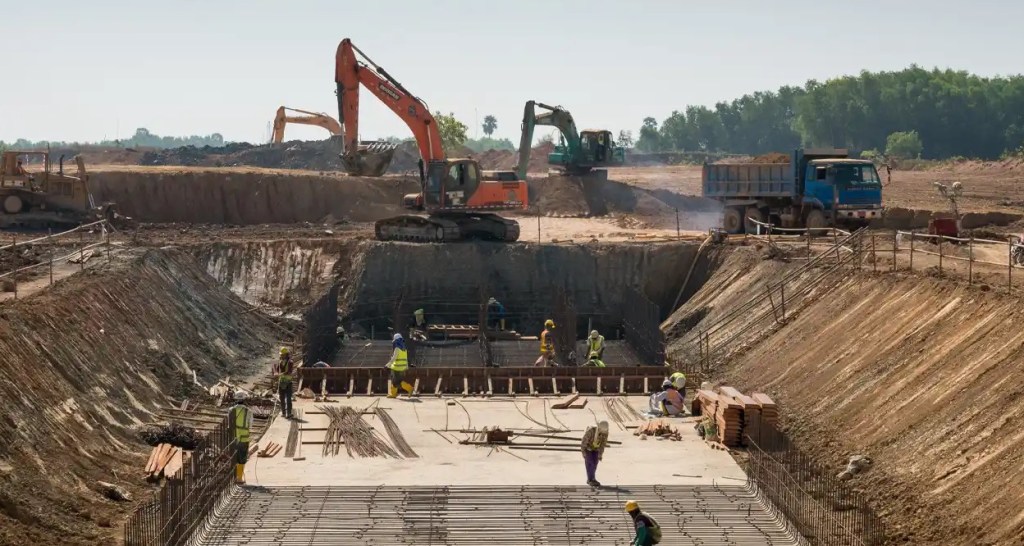
Excavation involves removing soil or rock from the ground to create space for foundations, basements, pipelines, and other underground structures.

Common types of excavation include:

  • Foundation excavation
  • Trench excavation for pipelines and drainage systems
  • Basement excavation for multi-story buildings
  • Roadway excavation for highway construction

Excavation may be carried out manually or with the help of heavy machinery such as excavators and bulldozers.

Safety precautions must be taken during excavation to prevent accidents and collapse of trench sides.


2.2 Filling and Embankment

After excavation, certain areas of the site may require filling to achieve the desired ground level. Filling involves placing soil or other suitable materials in low areas.

Common filling materials include:

  • Excavated soil
  • Sand
  • Gravel
  • Selected earth materials

In infrastructure projects such as roads and railways, embankments are constructed by compacting layers of soil to create elevated ground levels.

Proper filling ensures stability and prevents settlement problems.


2.3 Compaction

Compaction is the process of increasing soil density by reducing air voids in the soil. It is an essential step in earthwork operations because it improves the strength and stability of the soil.

Compaction is carried out using equipment such as:

  • Rollers
  • Vibratory compactors
  • Plate compactors
  • Rammers

Compacted soil provides a stable base for foundations, roads, and pavements.


2.4 Soil Transportation and Disposal

During earthwork operations, excavated soil may need to be transported to other parts of the site or disposed of outside the site.

Transportation of soil may involve:

  • Dump trucks
  • Conveyor systems
  • Earthmoving equipment

In some cases, excess soil may be reused for filling or landscaping purposes.


3. Importance of Site Development and Earth Works

Site development and earthworks are crucial for the success of construction and planning projects. Their importance can be understood through several key benefits.

3.1 Structural Stability

Proper earthwork ensures that buildings and infrastructure are constructed on stable ground. Compacted soil improves load-bearing capacity and prevents settlement.

3.2 Improved Drainage

Site grading and drainage planning help prevent water accumulation and flooding, which could damage buildings and infrastructure.

3.3 Efficient Land Utilization

Site development allows planners to organize land for buildings, roads, utilities, and open spaces efficiently.

3.4 Safety and Accessibility

Access roads and proper site layout improve safety for workers and facilitate movement of materials during construction.

3.5 Environmental Sustainability

Modern site development practices aim to minimize environmental damage by preserving natural features, managing stormwater, and reducing soil erosion.


4. Site Development in Urban Planning Projects

In urban planning projects such as residential townships, industrial estates, and transit-oriented developments, site development involves additional considerations.

These may include:

  • Integration with transportation networks
  • Provision of green spaces and public facilities
  • Sustainable drainage systems
  • Pedestrian and cycling infrastructure
  • Smart infrastructure and utilities

Proper site development ensures that urban spaces are functional, efficient, and environmentally sustainable.


Conclusion

Site development and earthworks form the foundation of all construction and planning projects. Site development includes activities such as site investigation, clearing, grading, drainage planning, access road construction, and utility installation. These activities prepare the land for safe and efficient development.

Earthwork operations involve excavation, filling, compaction, and transportation of soil to achieve the desired ground profile. Proper execution of earthwork ensures structural stability, effective drainage, and long-term durability of buildings and infrastructure.

In modern urban planning and infrastructure development, site development must also consider environmental sustainability, efficient land use, and integration with transportation and utility networks. Therefore, careful planning and execution of site development and earthworks are essential for the successful implementation of construction and urban development projects.

Daily writing prompt
Who is the most confident person you know?

General Specifications for Common Building Materials and Building Items

General specifications are brief descriptions that indicate the nature, quality, and class of materials and workmanship required in construction. They provide an overview of the materials and construction methods to be used in a building project without giving detailed instructions about proportions, measurements, or exact procedures. General specifications are often used during the early stages of planning and cost estimation to indicate the standard of construction.

In building construction, general specifications are prepared for common building materials such as cement, sand, aggregates, bricks, steel, timber, and for building items such as foundations, masonry, concrete work, plastering, flooring, roofing, and painting. These specifications ensure that the quality of materials and workmanship meets acceptable standards and that construction work follows established engineering practices.


1. General Specifications for Common Building Materials

1.1 Cement

Cement is one of the most important binding materials used in construction. The cement used in building work should be of good quality and should conform to relevant standard specifications such as those prescribed by national standards.

General specifications for cement include the following:

  • Cement should be fresh and free from lumps or moisture.
  • It should be stored in dry and well-ventilated godowns to prevent deterioration.
  • Cement bags should be stacked on wooden platforms and kept away from walls and moisture.
  • The cement used in construction should be of approved grade such as Ordinary Portland Cement or other specified types.
  • Cement should be used within a reasonable time after delivery to ensure strength and durability.

Proper storage and handling of cement are essential to maintain its quality and effectiveness in construction work.


1.2 Sand (Fine Aggregate)

Sand is used as a fine aggregate in mortar, plaster, and concrete work. Good quality sand should meet the following general requirements:

  • Sand should be clean, hard, and free from organic impurities such as clay, silt, and salts.
  • It should consist of well-graded particles of suitable size.
  • Sand should not contain excessive moisture or harmful substances.
  • River sand or approved quarry sand is generally preferred for construction work.

The quality of sand significantly affects the strength and durability of mortar and concrete.


1.3 Coarse Aggregates

Coarse aggregates such as gravel or crushed stone are used in concrete construction. These aggregates should satisfy the following general specifications:

  • Aggregates should be hard, durable, and free from dust and organic matter.
  • They should be properly graded and of suitable size depending on the type of concrete work.
  • Aggregates should not contain flaky or elongated particles in excessive amounts.
  • They should be washed if necessary to remove dust and impurities.

Good quality aggregates improve the strength and stability of concrete structures.


1.4 Bricks

Bricks are widely used for masonry construction in buildings. The general specifications for bricks include:

  • Bricks should be well burnt, sound, and uniform in shape and size.
  • They should have sharp edges and smooth surfaces.
  • Bricks should be free from cracks, stones, and lime nodules.
  • They should produce a clear ringing sound when struck together.
  • Bricks should have adequate compressive strength and low water absorption.

Bricks meeting these requirements ensure strong and durable masonry construction.


1.5 Steel Reinforcement

Steel reinforcement is used in reinforced concrete structures to resist tensile stresses. General specifications for reinforcement steel include:

  • Steel bars should conform to standard quality requirements.
  • They should be free from rust, oil, paint, or other harmful coatings.
  • Steel bars should be stored properly to prevent corrosion.
  • Bending and cutting of reinforcement should follow approved design drawings.
  • Proper spacing and placement of reinforcement should be maintained during construction.

Reinforcement steel provides structural strength and improves the load-carrying capacity of concrete elements.


1.6 Timber

Timber is used in construction for doors, windows, formwork, and interior finishes. Good construction timber should satisfy the following general specifications:

  • Timber should be well seasoned to reduce shrinkage and cracking.
  • It should be free from defects such as knots, decay, or insect attack.
  • Timber should be treated with preservatives if required.
  • It should be straight, strong, and durable.

Proper selection and treatment of timber ensure long service life in building applications.


2. General Specifications for Common Building Items

In addition to building materials, general specifications are also prepared for different construction activities or building items.


2.1 Excavation for Foundations

Excavation is the process of removing soil to prepare the foundation for a building. The general specifications for excavation include:

  • Excavation should be carried out according to the required depth and dimensions shown in the drawings.
  • Excavated soil should be removed or stacked at suitable locations away from the foundation trenches.
  • The bottom of the excavation should be properly leveled and compacted.
  • Loose soil and debris should be removed before starting foundation work.
  • Necessary precautions should be taken to prevent collapse of trench sides.

Proper excavation ensures a stable base for the building foundation.


2.2 Cement Concrete Work

Concrete is used in foundations, columns, beams, slabs, and other structural elements. The general specifications for cement concrete include:

  • Concrete should be made using cement, sand, coarse aggregates, and water in appropriate proportions.
  • Materials should be properly mixed to obtain uniform concrete.
  • Concrete should be placed immediately after mixing and properly compacted.
  • Adequate curing should be carried out to ensure proper strength development.
  • Formwork should be strong and properly aligned before placing concrete.

Concrete work should be executed carefully to achieve the desired strength and durability.


2.3 Brick Masonry

Brick masonry involves constructing walls using bricks and mortar. The general specifications include:

  • Bricks should be soaked in water before use.
  • Masonry should be laid in proper bond using cement mortar of suitable proportion.
  • Joints between bricks should be properly filled with mortar.
  • Vertical joints should not be continuous in successive courses.
  • Masonry should be kept wet for adequate curing.

Proper bonding and curing of brick masonry ensure strong and stable walls.


2.4 Plastering

Plastering is applied to walls and ceilings to provide a smooth surface and protect masonry from weather effects.

General specifications for plastering include:

  • The surface to be plastered should be cleaned and wetted before application.
  • Plaster should be prepared using cement mortar of appropriate proportion.
  • Plaster should be applied evenly and finished smoothly.
  • Corners and edges should be properly aligned.
  • Plastered surfaces should be cured for several days.

Good plastering improves both the durability and appearance of building surfaces.


2.5 Flooring

Flooring provides a durable and attractive surface for building interiors. General specifications include:

  • The base surface should be properly leveled and compacted before laying flooring.
  • Flooring materials such as tiles, stone slabs, or cement concrete should be laid evenly.
  • Joints should be properly filled and finished.
  • The finished floor should be level and free from cracks or uneven surfaces.

Proper flooring enhances the functionality and aesthetic appeal of buildings.


2.6 Roofing

Roofing protects the building from weather conditions such as rain, sun, and wind.

General specifications for roofing include:

  • Roofing materials should be strong, durable, and weather resistant.
  • Roof slopes should be provided for proper drainage of rainwater.
  • Waterproofing measures should be applied where necessary.
  • Roof surfaces should be properly finished to prevent leakage.

Good roofing construction ensures long-term protection of the building.


2.7 Painting and Finishing

Painting is applied to protect surfaces and improve the appearance of buildings.

General specifications include:

  • Surfaces should be cleaned and prepared before painting.
  • Suitable primer coats should be applied before finishing coats.
  • Paint should be applied evenly using brushes or rollers.
  • The number of coats should be as required to achieve uniform finish.

Painting also protects surfaces from moisture, corrosion, and environmental damage.


Conclusion

General specifications play an important role in construction and planning projects by defining the quality of materials and standard of workmanship required for building work. They provide basic guidelines regarding materials such as cement, sand, aggregates, bricks, steel, and timber, ensuring that only suitable materials are used in construction.

Similarly, general specifications for building items such as excavation, concrete work, brick masonry, plastering, flooring, roofing, and painting establish the standard procedures for executing construction activities. Although general specifications do not provide detailed technical instructions, they serve as a framework for maintaining quality and uniformity in construction projects.

By following proper general specifications, engineers, planners, and contractors can ensure that buildings are constructed safely, efficiently, and in accordance with accepted engineering standards.

Daily writing prompt
Who is the most confident person you know?

Urbanisation in India and Urban Problems

1. Introduction

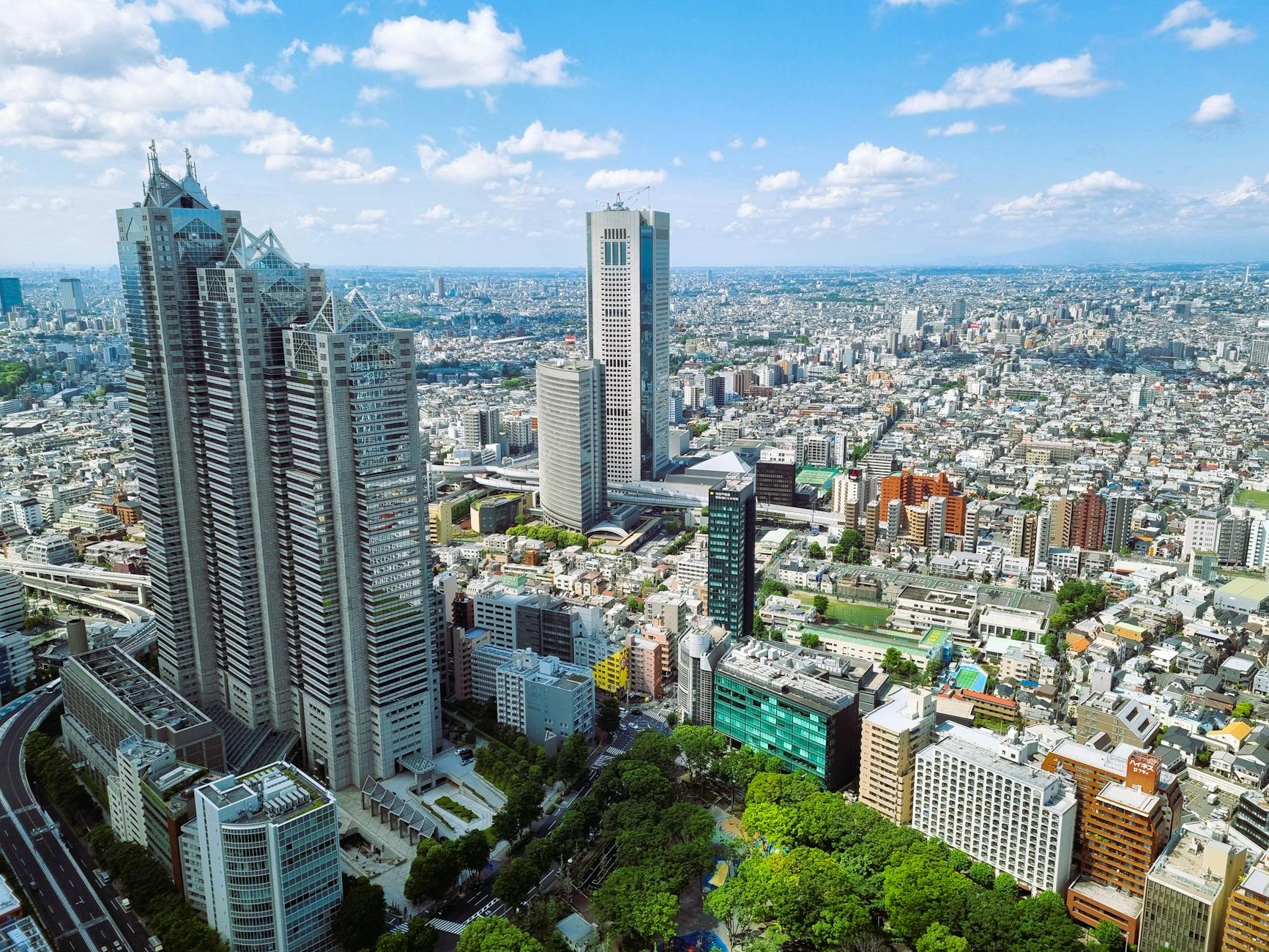
Urbanisation refers to the process by which an increasing proportion of a country’s population lives in urban areas such as cities and towns. It is closely associated with economic development, industrialisation, and modernization. Urbanisation leads to the growth and expansion of cities as people migrate from rural areas in search of better employment opportunities, education, healthcare, and improved living conditions.

In India, urbanisation has accelerated significantly since independence due to industrial growth, expansion of service sectors, and improved transportation and communication networks. Although India is still considered a predominantly rural country, the urban population has been steadily increasing over the decades. According to recent census trends, a significant proportion of India’s population now lives in urban areas, and this number is expected to continue rising in the coming years.

Urbanisation has brought many benefits such as economic growth, improved infrastructure, and increased access to services. However, rapid and unplanned urbanisation has also created numerous challenges and problems related to housing, infrastructure, transportation, environment, and social inequality. Understanding the process of urbanisation and the problems associated with it is therefore essential for effective urban planning and sustainable development.

Photo by Francesco Albanese on Pexels.com

2. Meaning and Characteristics of Urbanisation

Urbanisation can be defined as the increase in the proportion of people living in urban areas and the expansion of urban settlements. It involves not only population growth in cities but also changes in economic activities, social structures, and spatial patterns.

Some key characteristics of urbanisation include:

  • Growth of cities and towns
  • Migration from rural to urban areas
  • Expansion of urban boundaries
  • Increase in industrial and service sector activities
  • Transformation of rural settlements into urban areas
  • Development of infrastructure and transportation networks

Urbanisation often leads to the emergence of metropolitan cities, megacities, and urban corridors.


3. Trends of Urbanisation in India

Urbanisation in India has evolved gradually over the past century. At the time of independence in 1947, only a small percentage of the population lived in urban areas. However, industrialization, economic reforms, and globalization have accelerated the pace of urban growth.

Major Trends

  1. Rapid Urban Population Growth The urban population in India has increased significantly over the decades due to natural population growth and ruralโ€“urban migration.
  2. Growth of Metropolitan Cities Major cities such as Delhi, Mumbai, Kolkata, Chennai, Bengaluru, and Hyderabad have experienced rapid expansion and have become large metropolitan regions.
  3. Emergence of Mega Cities Several Indian cities now have populations exceeding ten million, creating large metropolitan clusters.
  4. Urban Expansion and Urban Sprawl Cities are expanding beyond their traditional boundaries into surrounding rural areas, resulting in suburbanization and peri-urban development.
  5. Growth of Small and Medium Towns Apart from large metropolitan cities, smaller towns are also growing due to improved connectivity and economic opportunities.

Urbanisation in India is expected to continue increasing as economic activities become more concentrated in urban areas.


4. Causes of Urbanisation in India

Urbanisation in India is influenced by several economic, social, and technological factors.

4.1 Industrialization

The growth of industries in cities attracts workers from rural areas seeking employment opportunities. Industrial development has historically been one of the major drivers of urbanisation.

4.2 Economic Opportunities

Urban areas offer diverse employment opportunities in sectors such as manufacturing, services, information technology, trade, and finance.

4.3 Ruralโ€“Urban Migration

Many people migrate from rural areas to cities in search of better livelihoods, education, healthcare, and improved living standards.

4.4 Educational and Healthcare Facilities

Cities provide better access to educational institutions, hospitals, and specialized services that are often not available in rural areas.

4.5 Infrastructure and Connectivity

Improved transportation, communication, and infrastructure systems have facilitated the growth of cities and increased mobility of people.

4.6 Government Policies and Urban Development Programs

Government initiatives promoting industrial corridors, smart cities, and urban infrastructure have also contributed to urban expansion.


5. Urban Problems in India

While urbanisation has contributed to economic growth and modernization, rapid and unplanned urban growth has created several urban problems. These problems arise mainly due to inadequate planning, limited resources, and high population pressures.

5.1 Housing Shortage and Slums

One of the most serious urban problems in India is the shortage of affordable housing. Rapid population growth in cities has led to the development of informal settlements and slums where people live in overcrowded and unhealthy conditions.

Slums often lack basic services such as clean water, sanitation, drainage, and electricity.

5.2 Traffic Congestion and Transportation Problems

Rapid growth in the number of vehicles and inadequate public transportation systems have resulted in severe traffic congestion in many cities.

Long travel times, road accidents, and air pollution are common consequences of transportation problems.

5.3 Inadequate Urban Infrastructure

Urban infrastructure such as water supply, sewage systems, drainage networks, and waste management facilities often fail to keep pace with population growth.

This results in frequent water shortages, flooding during heavy rains, and poor sanitation conditions.

5.4 Environmental Pollution

Urbanisation has significantly increased environmental pollution in cities.

Major environmental issues include:

  • Air pollution from vehicles and industries
  • Water pollution due to untreated sewage
  • Solid waste accumulation
  • Noise pollution

These environmental problems have serious impacts on public health and urban ecosystems.

5.5 Urban Poverty and Social Inequality

Despite economic growth, many urban residents live in poverty and lack access to basic services.

Urban poverty is characterized by:

  • Informal employment
  • Low wages
  • Inadequate housing
  • Limited access to education and healthcare

Social inequality is often visible in the contrast between well-developed urban areas and informal settlements.

5.6 Unplanned Urban Growth

In many cities, development occurs without proper planning or regulation. This results in chaotic land use patterns, encroachment on public land, and loss of open spaces.

Urban sprawl also increases infrastructure costs and reduces environmental sustainability.

5.7 Waste Management Issues

Rapid population growth leads to large volumes of solid waste. Many cities face challenges in collecting, processing, and disposing of waste efficiently.

Improper waste management contributes to environmental pollution and health hazards.

5.8 Urban Flooding

Poor drainage systems and encroachment on natural water bodies often lead to urban flooding during heavy rainfall. Flooding disrupts transportation, damages property, and affects livelihoods.


6. Role of Urban Planning in Addressing Urban Problems

Urban planning plays a critical role in addressing the challenges associated with urbanisation. Effective planning strategies can help manage urban growth and improve living conditions.

Key planning approaches include:

  • Preparation of master plans and development plans
  • Promotion of affordable housing programs
  • Development of efficient public transportation systems
  • Implementation of sustainable land-use planning
  • Protection of green spaces and water bodies
  • Improvement of waste management and sanitation systems

Planning policies such as Transit-Oriented Development (TOD), smart city initiatives, and sustainable urban mobility plans are increasingly being used to address urban challenges.


7. Conclusion

Urbanisation in India has been driven by economic development, industrialization, and migration from rural areas. While urbanisation has contributed to economic growth and improved access to services, rapid and unplanned urban expansion has created numerous challenges such as housing shortages, traffic congestion, environmental pollution, and inadequate infrastructure.

Addressing these urban problems requires effective planning, strong governance, and sustainable development strategies. Urban planners must focus on integrated approaches that balance economic growth, social equity, and environmental sustainability. By adopting well-planned urban development policies and improving infrastructure systems, cities can become more livable, resilient, and inclusive for future generations.

Daily writing prompt
Who is the most confident person you know?

Top 10 Researchers of the Social Sciences

Daily writing prompt
Who is the most confident person you know?

It’s important to note that determining the “top ten” researchers in social sciences can be subjective and may vary depending on the criteria used (e.g., citations, impact, contributions to the field). However, here’s a list of ten influential researchers in the field of social sciences as of my last update:

  1. Daniel Kahneman: A Nobel laureate in Economics, Kahneman is renowned for his work in behavioral economics and cognitive psychology. His research on decision-making processes and heuristics has had a profound impact on understanding human behavior in various social contexts.
  2. Amartya Sen: An Indian economist and philosopher, Sen has made significant contributions to welfare economics, social choice theory, and development economics. His work on poverty, inequality, and capability approach has influenced policy-making globally.
  3. Noam Chomsky: A prominent linguist, philosopher, and social critic, Chomsky’s theories on language acquisition, cognitive science, and political analysis have shaped fields ranging from linguistics to political science. His critique of media and advocacy for human rights have had a lasting impact.
  4. Michel Foucault: A French philosopher and social theorist, Foucault’s work on power, discourse, and the relationship between knowledge and power has been highly influential in sociology, anthropology, and cultural studies. His ideas continue to be debated and applied across various disciplines.
  5. Judith Butler: An American philosopher and gender theorist, Butler is known for her work on gender performativity and queer theory. Her writings on identity, power, and subversion have reshaped feminist discourse and influenced fields such as cultural studies and sociology.
  6. Robert Putnam: An American political scientist, Putnam’s research on social capital and its implications for democracy and civic engagement has been widely cited. His book “Bowling Alone” highlighted the decline of social connectedness in modern societies, sparking discussions on community and social cohesion.
  7. Pierre Bourdieu: A French sociologist, Bourdieu’s theories on cultural capital, habitus, and social reproduction have had a profound impact on sociology, anthropology, and cultural studies. His empirical research on education, cultural practices, and social stratification remains influential.
  8. Susan Fiske: An American social psychologist, Fiske has made significant contributions to understanding social cognition, stereotypes, and intergroup relations. Her work on the stereotype content model and the fundamental dimensions of social perception has advanced the field of social psychology.
  9. Richard Thaler: An economist and behavioral scientist, Thaler is known for his contributions to behavioral economics and the theory of nudges. His research on bounded rationality and decision-making biases has influenced policy-making, particularly in the areas of finance and public policy.
  10. Carol S. Dweck: An American psychologist, Dweck is renowned for her research on mindset theory and the concept of growth mindset. Her work on the psychology of motivation and achievement has had implications for education, organizational behavior, and personal development.

These researchers have made significant contributions to understanding human behavior, society, and culture, shaping the landscape of social sciences and influencing various fields within it.