
Norman Foster –

Norman Foster: A Detailed Overview

Full Name: Norman Robert Foster

Title: Lord Foster of Thames Bank

Born: June 1, 1935, Stockport, England

Nationality: British

Profession: Architect, Designer, Urban Planner
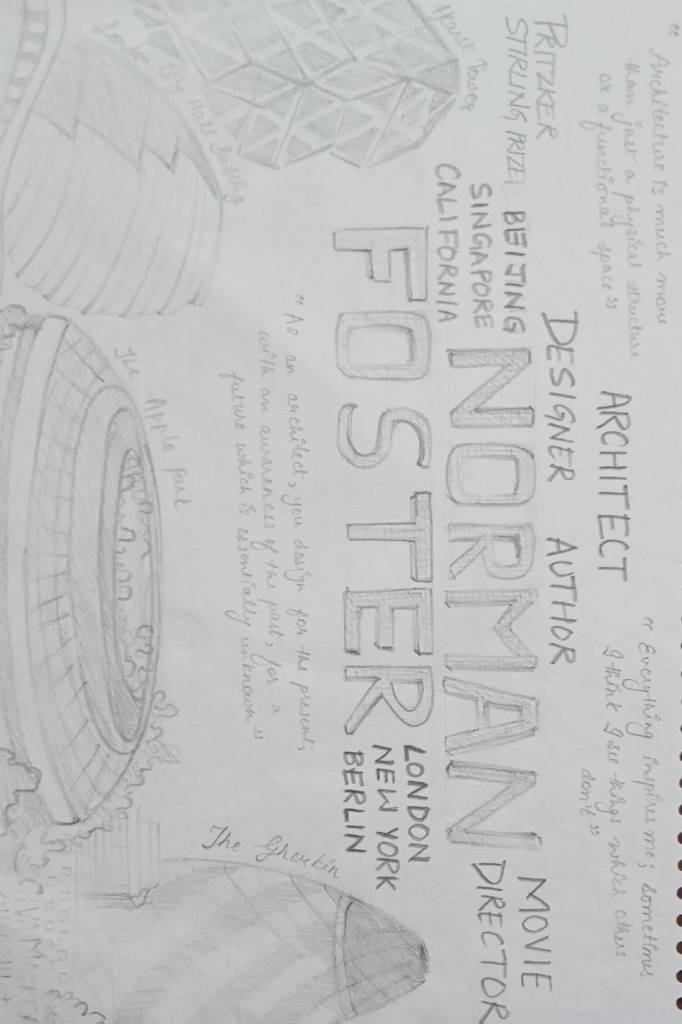

Early Life and Education

Norman Foster was born into a working-class family in Stockport, near Manchester, England. His father worked in a machine shop and his mother in a bakery. From an early age, Foster showed a fascination with engineering, airplanes, and design.

He studied architecture at the University of Manchester School of Architecture and City Planning, graduating in 1961. With a scholarship, he went on to pursue a Masterโ€™s degree at Yale University, where he studied under influential modernists such as Paul Rudolph and met Richard Rogers, who would later become a lifelong friend and colleague.


Career and Practice

Team 4 (1963โ€“1967)

Foster co-founded Team 4 with Richard Rogers, Su Brumwell, and Wendy Cheesman (his future wife). The group became known for its high-tech, modernist approach to architecture.

Foster Associates / Foster + Partners (1967โ€“Present)

After Team 4 dissolved, Foster founded his own practice, Foster Associates, which later became Foster + Partners. The firm grew into one of the most prestigious and globally recognized architecture firms, with projects on every continent.


Architectural Style and Philosophy

Norman Foster is known for a style that is:

  • High-tech and modernist
  • Focused on lightweight structures, transparency, and open space
  • Deeply rooted in sustainability and environmental responsibility
  • Highly influenced by aeronautical and industrial design

Fosterโ€™s work emphasizes technology, innovation, and efficiency, with a strong focus on integrating architecture with the surrounding environment.


Key Works and Projects

Here are some of Norman Fosterโ€™s most important and iconic buildings:

1. Willis Faber & Dumas Headquarters (Ipswich, UK, 1975)

One of his first major successes, this office building was innovative in its open-plan design, green roof, and energy-conscious features.

2. HSBC Building (Hong Kong, 1985)

A breakthrough high-tech building featuring a modular design, steel skeleton, and services (like escalators and lifts) placed on the exterior for flexibility.

3. 30 St Mary Axe (The Gherkin) (London, UK, 2003)

One of Londonโ€™s most recognizable buildings, known for its aerodynamic, eco-friendly design. It uses natural ventilation and passive solar heating.

4. Reichstag Renovation (Berlin, Germany, 1999)

Foster redesigned the German parliament building with a striking glass dome, symbolizing transparency in government. Itโ€™s one of the most admired adaptive reuse projects in history.

5. Millau Viaduct (Southern France, 2004)

The tallest bridge in the world at the time of completion. A marvel of engineering, built with elegance and structural clarity.

6. Apple Park (Cupertino, California, 2017)

Foster + Partners designed Appleโ€™s corporate headquarters, a circular glass-clad building that integrates cutting-edge technology with sustainability and landscape design.

7. London Stansted Airport (UK, 1991)

An airport terminal designed with an open layout and natural light in mind. Revolutionized how airport spaces could be conceived.


Awards and Honors

Foster has received numerous international awards, including:

  • Pritzker Architecture Prize (1999)
  • RIBA Gold Medal (1983)
  • AIA Gold Medal (1994)
  • Stirling Prize (1998, 2004)
  • Knighted in 1990 and made a Life Peer in 1999 (Lord Foster of Thames Bank)
  • Order of Merit (OM) by Queen Elizabeth II in 2002

Contributions Beyond Buildings

Urban Planning and Sustainability

Foster is also deeply engaged in urban planning, smart cities, and sustainable infrastructure. His firm has proposed visionary projects such as:

  • Masdar City (UAE): A planned eco-city powered entirely by renewable energy
  • SkyCycle (London): Elevated cycling paths over railways to promote safe commuting

Foster Foundation

Founded in 1999, the Norman Foster Foundation in Madrid promotes interdisciplinary thinking in architecture, design, and sustainability. It holds archives of Foster’s work and supports education and research.


Personal Life

Foster has been married twice and has five children. He is an aviation enthusiast and a trained pilot. He overcame a serious bout of cancer in the 2000s, returning to work with renewed focus and vigor.


Legacy

Norman Foster is widely regarded as one of the most important architects of the modern age. His designs have reshaped skylines around the world, blending technology, aesthetics, and environmental consciousness in ways that continue to influence generations of architects.

His firm, Foster + Partners, remains a global leader in architecture, urbanism, and industrial design, with over 1,500 staff working on landmark projects globally.


Conclusion

Norman Fosterโ€™s architecture is a celebration of innovation, clarity, and progress. He has redefined what is possible in architectureโ€”not just in terms of design and materials, but in how buildings can reflect and shape society. With a legacy that spans continents and decades, he is both a master builder and a visionary thinker.

Ludwig Mies van der Rohe (1886โ€“1969)

Ludwig Mies van der Rohe (1886โ€“1969) was a pioneering German-American architect and one of the most influential figures in modern architecture. Known for his minimalist approach, Mies is celebrated for his famous dictum “Less is more” and his commitment to clarity, simplicity, and modern materials like steel and glass. His designs emphasized open space, rational structures, and functionalism, and his work laid the foundation for what is now called the International Style in architecture.


๐Ÿง’ Early Life and Background

  • Full Name: Maria Ludwig Michael Mies
  • Born: March 27, 1886, Aachen, Germany
  • Died: August 17, 1969, Chicago, USA

Mies was born into a family of stone masons, which exposed him early on to construction and craftsmanship. Though he had no formal architectural education, he gained experience working in his fatherโ€™s workshop and later under established architects in Berlin, including Peter Behrens, a major figure in early modernism. At Behrensโ€™ office, Mies worked alongside Walter Gropius and Le Corbusier โ€” all of whom would later define modernist architecture.


๐Ÿ› Architectural Philosophy

๐Ÿ”น โ€œLess is Moreโ€

Mies championed minimalism, where every element has a clear function and unnecessary ornamentation is eliminated. His famous motto, “Less is more,” became a core principle of modernist design.

๐Ÿ”น Universal Space

He introduced the idea of universal spaceโ€”open, flexible floor plans made possible by modern structural techniques using steel frames and glass walls.

๐Ÿ”น Truth to Materials

Mies believed in expressing the true nature of materialsโ€”steel should look like steel, glass like glass. He did not try to disguise the materials but celebrated their essence.

๐Ÿ”น Architecture as Order

He viewed architecture as a disciplined expression of form and order, influenced by classical proportions and a rationalist approach.


๐Ÿ— Key Projects

1. Barcelona Pavilion (1929)

  • Location: Barcelona, Spain
  • Built for: German Pavilion at the 1929 International Exposition
  • Style: Minimalist, open-plan space using glass, steel, and marble
  • Features: Floating roof, free-flowing space, elegant materials
  • Famous Furniture: The Barcelona Chair, designed with Lilly Reich

This iconic structure is a symbol of modernism and spatial purity. Though demolished after the exhibition, it was reconstructed in 1986 and is widely studied today.


2. Villa Tugendhat (1930)

  • Location: Brno, Czech Republic
  • A luxury private home that employed open-plan living and modern materials.
  • One of the first residential buildings to use a steel frame structure.
  • Famous for its large curved glass windows, onyx wall, and custom furniture.

3. Seagram Building (1958) (with Philip Johnson)

  • Location: New York City, USA
  • A landmark skyscraper that defines the International Style: sleek, rectilinear, and monumental.
  • Use of bronze-toned I-beams as decorative (but honest) elements on the facade.
  • Pioneered the idea of a public plaza in front of the building, influencing urban skyscraper design in America.

4. Farnsworth House (1951)

  • Location: Plano, Illinois, USA
  • A weekend retreat for Dr. Edith Farnsworth, a single-room glass house elevated on stilts.
  • Radical for its complete transparency and openness to nature.
  • Considered a masterpiece of modernist residential design.

5. Illinois Institute of Technology (IIT) Campus (1938โ€“58)

  • Mies was the head of the architecture department and designed many of the buildings on the campus.
  • The Crown Hall (1956), the architecture building, is especially famous for its steel and glass box design.
  • His work at IIT became a model for educational campuses worldwide.

๐Ÿซ Role as Educator

Mies was a passionate teacher and a profound influence on architectural education:

  • Director of the Bauhaus (1930โ€“1933), Germanyโ€™s most avant-garde design school, until it was closed by the Nazis.
  • Fled to the United States in 1937 and became head of the architecture school at Illinois Institute of Technology (IIT) in Chicago.
  • At IIT, he reformed the curriculum around modernist principles and trained a generation of influential architects.

โœˆ๏ธ Move to the United States

Mies emigrated to the United States in 1937 due to increasing Nazi hostility toward modernist art and architecture, which they viewed as “degenerate.” In America, he found a new platform to experiment with skyscrapers, free plans, and industrial materials.


๐Ÿ† Awards and Recognition

  • AIA Gold Medal (1960)
  • Royal Gold Medal by RIBA (1959)
  • Numerous buildings listed as historic landmarks
  • Widely recognized as one of the โ€œBig Threeโ€ of modernism (with Le Corbusier and Gropius)

๐Ÿ“š Notable Contributions to Furniture Design

Mies also designed iconic modern furniture, often with his collaborator Lilly Reich, such as:

  • Barcelona Chair
  • Brno Chair
  • MR Lounge Chair

These pieces are celebrated for their elegance, simplicity, and use of modern materials like tubular steel and leather.


๐Ÿ•Š Death and Legacy

Ludwig Mies van der Rohe died on August 17, 1969, in Chicago. His ashes were buried near the graves of his architect students at Graceland Cemetery.

Legacy:

  • Mies van der Roheโ€™s International Style became the global language of corporate and institutional architecture from the 1950sโ€“1970s.
  • His designs inspired countless office buildings and skyscrapers around the world.
  • His clear, rational architectural grammar continues to influence architects today.
  • Museums, design schools, and architecture faculties continue to study his work and philosophy as foundational in modern architecture.

๐Ÿง  Conclusion

Ludwig Mies van der Rohe was a master of modernism โ€” a man who stripped architecture down to its essence and reshaped how we think about space, materials, and form. Whether through the clean lines of the Seagram Building or the transparent grace of the Farnsworth House, Mies created timeless works that emphasize order, openness, and honesty.

His legacy is immortalized not only in his buildings and furniture but also in his ideas, which remain a cornerstone of architectural thought across the globe. In every minimalist structure, in every glass-and-steel skyscraper, the influence of Mies can still be seen โ€” a testament to his enduring vision of โ€œless is more.โ€

Different Literature Review Techniques: An In-depth Overview

By Shashikant Nishant Sharma

A literature review is a critical component of any research study. It helps in understanding existing knowledge, identifying research gaps, and building a theoretical foundation for new investigations. Over time, various methods and frameworks have been developed to conduct literature reviews more systematically and transparently. Here are some of the key techniques:


1. Traditional Literature Survey (Narrative Review)

Overview:

  • Also called narrative review, this is the most conventional and flexible approach.
  • Involves summarizing and synthesizing existing literature based on the author’s subjective selection.

Key Features:

  • Broad overview of a topic.
  • Thematic or chronological organization.
  • Focuses on theoretical perspectives, concepts, and debates.

Strengths:

  • Useful for conceptual exploration or theoretical discussions.
  • Allows interpretation and critical thinking.

Limitations:

  • No formal methodology, making it prone to bias.
  • Less reproducible and transparent compared to systematic reviews.

2. Systematic Literature Review (SLR)

Overview:

  • A rigorous and structured method to review literature.
  • Seeks to identify, evaluate, and synthesize all relevant studies on a specific topic or question.

Steps Involved:

  1. Define a research question.
  2. Develop inclusion/exclusion criteria.
  3. Conduct systematic searches in databases.
  4. Screen titles, abstracts, and full texts.
  5. Extract data and analyze findings.

Strengths:

  • Reproducible and transparent.
  • Minimizes bias.
  • Suitable for evidence-based research.

Limitations:

  • Time-consuming and complex.
  • May exclude qualitative insights.

Use Cases:

  • Medicine, education, social sciences, and policy-making.

3. PRISMA (Preferred Reporting Items for Systematic Reviews and Meta-Analyses)

Overview:

  • PRISMA is a reporting framework, not a review method per se.
  • It provides a checklist and flow diagram to enhance the transparency and quality of systematic reviews and meta-analyses.

Key Components:

  • 27-item checklist covering title, abstract, introduction, methods, results, discussion, and funding.
  • Flowchart showing study selection: Identification โ†’ Screening โ†’ Eligibility โ†’ Included.

Strengths:

  • Ensures high-quality reporting.
  • Promotes clarity, transparency, and replicability.

Limitations:

  • Requires strict adherence to guidelines.
  • More suitable for systematic reviews and meta-analyses than general narrative reviews.

Use Cases:

  • Frequently used in health sciences, psychology, education, and social policy.

4. SALSA Framework (Search, Appraisal, Synthesis, Analysis)

Overview:

  • A structured model for literature reviews introduced by Booth et al.
  • Balances systematic rigor with flexibility.

Components:

  1. Search: Identify literature using keywords, databases, and grey literature.
  2. Appraisal: Evaluate the quality, relevance, and rigor of each study.
  3. Synthesis: Group, compare, and contrast findings.
  4. Analysis: Interpret results, identify gaps, and derive implications.

Strengths:

  • Allows a structured yet adaptable approach.
  • Suitable for both qualitative and quantitative studies.

Limitations:

  • Still requires researcher judgment for synthesis and analysis.

Use Cases:

  • Useful for interdisciplinary research, education, and social sciences.

5. Scoping Review

Overview:

  • Explores the extent, range, and nature of research on a topic.
  • Often used to map evidence and identify gaps.

Key Features:

  • Broad focus.
  • No detailed quality appraisal (unlike systematic reviews).
  • May include grey literature.

Strengths:

  • Great for exploratory purposes.
  • Helps formulate precise research questions.

Limitations:

  • May lack depth in synthesis.
  • Does not usually assess study quality.

Use Cases:

  • Preliminary stage of large projects or policy development.

6. Meta-Analysis

Overview:

  • A quantitative extension of a systematic review.
  • Combines statistical data from multiple studies to calculate a pooled effect size.

Key Features:

  • Requires studies with similar designs and measurable outcomes.
  • Provides numerical summary of evidence.

Strengths:

  • Increases statistical power.
  • Helps in confirming patterns.

Limitations:

  • Not suitable for qualitative data.
  • Requires statistical expertise.

7. Meta-Synthesis

Overview:

  • A technique to integrate and interpret qualitative research findings.
  • Focuses on themes and conceptual models.

Strengths:

  • Deepens understanding of human experiences and perceptions.
  • Useful in social sciences and humanities.

Limitations:

  • Subjective interpretation.
  • Cannot be generalized statistically.

8. Rapid Review

Overview:

  • A time-efficient alternative to systematic reviews.
  • Uses streamlined methods for quick evidence synthesis.

Strengths:

  • Faster and less resource-intensive.
  • Useful for policy or urgent decision-making.

Limitations:

  • May compromise rigor and comprehensiveness.

9. Integrative Review

Overview:

  • Integrates data from both experimental and non-experimental studies.
  • Synthesizes past empirical and theoretical literature.

Strengths:

  • Offers a comprehensive understanding of complex phenomena.
  • Flexible and inclusive.

Limitations:

  • Requires careful organization and strong justification.

๐Ÿ” Comparison of Major Review Techniques

TechniqueScopeRigorTime NeededSuitable For
Narrative ReviewBroadLowShortGeneral understanding
Systematic ReviewFocusedHighLongEvidence-based studies
PRISMAFocusedVery HighLongMedical/social science reviews
SALSAModerateMediumModerateThematic reviews, education
Scoping ReviewBroadMediumModerateMapping literature
Meta-AnalysisNarrowVery HighLongQuantitative studies
Meta-SynthesisNarrowMediumLongQualitative research
Rapid ReviewFocusedMediumShortTime-sensitive topics
Integrative ReviewModerateMediumModerateMixed-methods synthesis

โœ๏ธ Conclusion

Choosing the right literature review technique depends on your research objectives, available time, field of study, and type of data. For a basic understanding, a narrative review may suffice, while a systematic or PRISMA-guided review is essential for evidence-based disciplines. Methods like SALSA, scoping reviews, and meta-syntheses offer flexible and in-depth alternatives for complex or interdisciplinary topics.

Each technique, when used properly, strengthens the foundation of your research and enhances the quality and credibility of your academic work.

References

  • Dehalwar, K., & Sharma, S. N. (2023).ย Fundamentals of research writing and uses of research methodologies. Edupedia Publications Pvt Ltd.
  • Sharma, S. N., & Dehalwar, K. (2025). A Systematic Literature Review of Transit-Oriented Development to Assess Its Role in Economic Development of City.ย Transportation in Developing Economies,ย 11(2), 23.
  • Sharma, S. N., & Dehalwar, K. (2024). Review of Evergreen ILS: Highly-Scalable Open Source Library Management Solution.ย Available at SSRN 4853757.
  • Sharma, S. N., & Dehalwar, K. (2025). Assessing the Transit-Oriented Development and Travel Behavior of the Residents in Developing Countries: A Case of Delhi, India.ย Journal of Urban Planning and Development,ย 151(3), 05025018.
  • Sharma, S. N. (2024). Understanding Scientometric Analysis: Applications and Implications.Track2Training
  • Sharma, S. N. (2018). Review of National Urban Policy Framework 2018.ย Think India Journal,ย 21(3), 74-81.
  • Sharma, S. N., Singh, D., & Dehalwar, K. (2024). Surrogate safety analysis-leveraging advanced technologies for safer roads.ย Suranaree Journal of Science and Technology,ย 31(4), 010320.
  • Dehalwar, K., & Sharma, S. N. (2024). Social Injustice Inflicted by Spatial Changes in Vernacular Settings: An Analysis of Published Literature.