Discussion on writing article for journal publication

Writing an article for journal publication is a highly structured process that requires clarity, originality, and adherence to academic standards. A well-written article not only shares research findings but also contributes to the wider body of knowledge in a discipline. Below is a detailed discussion:


1. Purpose of Journal Articles

  • To communicate new research findings to the academic community.
  • To review existing literature and highlight gaps.
  • To propose new theories, models, or methods.
  • To inform policy makers, practitioners, and industries with evidence-based conclusions.

2. Steps in Writing an Article for Journal Publication

a. Choosing a Topic

  • Select a research area relevant to the journalโ€™s scope.
  • Ensure the topic is original, timely, and significant.

b. Conducting Literature Review

  • Use libraries, indexing databases (Scopus, Web of Science, Google Scholar).
  • Summarize what is known, unknown, and needs exploration.

c. Structuring the Article

Most journals follow the IMRaD structure:

  1. Title โ€“ Concise, informative, includes keywords.
  2. Abstract โ€“ A summary (150โ€“300 words) covering purpose, methods, results, and conclusions.
  3. Introduction โ€“ Provides context, problem statement, objectives, and significance.
  4. Methodology โ€“ Explains research design, data collection, sampling, tools, and analysis methods.
  5. Results โ€“ Presents findings using tables, graphs, charts (objective presentation).
  6. Discussion โ€“ Interprets findings, compares with existing studies, highlights implications.
  7. Conclusion โ€“ Summarizes key results, limitations, and future research directions.
  8. References โ€“ Cited according to the journalโ€™s style (APA, MLA, Chicago, IEEE, etc.).

d. Following Journal Guidelines

  • Each journal has author guidelines (word count, format, referencing style, figure/table style).
  • Submissions outside the guidelines are often rejected outright.

e. Ethical Considerations

  • Avoid plagiarism (check similarity index).
  • Disclose conflicts of interest.
  • Follow proper citation and acknowledgment practices.

f. Proofreading and Editing

  • Revise for clarity, grammar, and flow.
  • Use peer review (ask colleagues to provide feedback).
  • Ensure figures and tables are properly labeled.

g. Submission and Peer Review

  • Submit via the journalโ€™s online portal.
  • Respond to reviewer comments carefully and professionally.

3. Key Features of a Publishable Journal Article

  • Novelty: Adds new insights.
  • Relevance: Fits the journalโ€™s readership.
  • Clarity: Written in precise and accessible language.
  • Evidence-based: Supported by data and credible references.
  • Objectivity: Free from personal bias.

4. Common Mistakes to Avoid

  • Submitting without aligning to the journalโ€™s scope.
  • Weak literature review.
  • Overly descriptive results without analysis.
  • Poor English or formatting issues.
  • Ignoring reviewer feedback.

โœ… In summary: Writing for journals requires discipline, strong research methodology, adherence to format, and careful revision. The goal is not just to write but to communicate research clearly, ethically, and effectively so it contributes meaningfully to the academic community.

Business Communication in Professional Contexts

1. Requests for Specifications and Business Enquiries

A business enquiry is a formal request for information about products, services, or processes. It is often the first step in establishing business relations.

Key Features of an Enquiry Letter

  • Clear subject line (e.g., Request for Technical Specifications of XYZ Equipment)
  • Polite introduction and purpose
  • Detailed request (product details, prices, delivery terms, quality standards)
  • Professional closing

Example (Request for Specifications):

Subject: Request for Technical Specifications of Solar Panels  

Dear Sir/Madam,  

We are planning to install solar energy solutions in our upcoming housing project. Kindly provide us with the detailed technical specifications, warranty details, and pricing structure of your solar panels (Model: SPX-200).  

We would also appreciate receiving information regarding bulk order discounts and delivery timelines.  

Looking forward to your prompt response.  

Yours faithfully,  
[Name]  
[Designation]  
[Company Name]


2. Replies to Business Enquiries

A reply to an enquiry should be:

  • Prompt and professional
  • Clear in answering all requested details
  • Courteous, even if the request cannot be fulfilled

Example (Reply to Enquiry):

Subject: Specifications of Solar Panels (Model: SPX-200)  

Dear Mr. Sharma,  

Thank you for your enquiry regarding our Solar Panels, Model SPX-200. Please find attached the detailed technical specifications and price list.  

We are pleased to inform you that bulk orders above 100 units are eligible for a 10% discount. Delivery can be made within 30 days of confirmation.  

We look forward to serving your requirements and building a long-term business relationship.  

Yours sincerely,  
[Name]  
Sales Manager  
[Company Name]


3. Replies to Bidding for Tenders

Tenders are formal offers to supply goods or services under specified conditions. Replying to tenders involves submission of quotations, compliance with terms, and confirmation of eligibility.

Structure of a Tender Reply:

  1. Acknowledgement of tender invitation
  2. Confirmation of participation
  3. Submission of quotation/specifications
  4. Compliance statement (meeting eligibility & requirements)
  5. Closing with commitment

Example (Reply to Tender Bid):

Subject: Submission of Tender for Supply of Office Furniture  

Dear Tender Committee,  

With reference to your Tender No. OF-2025 dated 25 August 2025, we are pleased to submit our bid for the supply of office furniture.  

Enclosed are:  
1. Technical specifications of proposed furniture  
2. Quotation with detailed pricing  
3. Compliance certificate with eligibility criteria  

We assure you of timely delivery and adherence to quality standards. Kindly consider our bid favorably.  

Yours faithfully,  
[Name]  
Authorized Signatory  
[Company Name]


4. Conduct of Meetings (Business/Official)

Meetings are an important part of formal communication in organizations, especially for decision-making, tender evaluation, or business negotiations.

Steps in Conducting a Meeting:

  1. Notice of Meeting โ€“ sent in advance with agenda, date, time, and venue.
  2. Agenda Preparation โ€“ list of topics/issues to be discussed.
  3. Minutes of Meeting (MoM) โ€“ official written record of discussions and decisions.
  4. Follow-up Actions โ€“ assigning responsibilities and ensuring implementation.

Example (Notice of Meeting):

Notice of Meeting  

Date: 02 September 2025  
To: All Department Heads  

A meeting of the Tender Evaluation Committee will be held on 05 September 2025 at 11:00 AM in the Conference Hall.  

Agenda:  
1. Opening of tender bids  
2. Review of technical specifications  
3. Shortlisting of eligible suppliers  
4. Any other matter  

All concerned are requested to attend.  

By Order,  
[Name]  
Secretary, Tender Committee


โœ… In summary:

  • Enquiries = Requests for info/specifications
  • Replies to Enquiries = Providing clear, prompt responses
  • Tender Replies = Formal bids with compliance & quotations
  • Meetings = Conducted with notices, agendas, and minutes

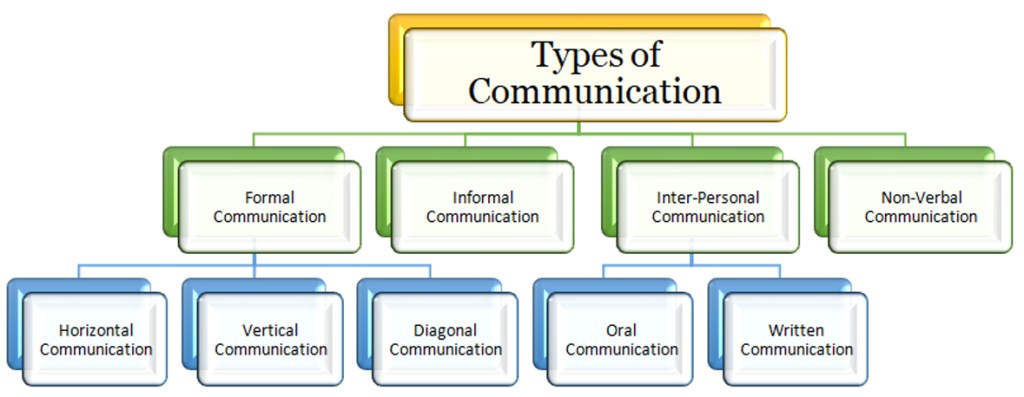
Business / Formal Communication Methods

Business and formal communication methods are essential in professional, academic, and organizational contexts. They ensure the accurate, clear, and courteous transfer of information between individuals or institutions. Unlike informal communication, which may be conversational, business communication emphasizes professionalism, precision, and adherence to standardized formats.


1. Business and Official Letters

  • Definition: Written communication exchanged between organizations, departments, or individuals for official purposes.
  • Purpose: To request, inform, confirm, complain, or respond to issues in a professional setting.
  • Characteristics:
    • Clear and concise
    • Polite and respectful tone
    • Objective and factual
    • Well-structured format

Examples:

  • Letter to suppliers about product specifications
  • Official communication between government departments
  • Appointment or resignation letters

2. Formal Letters

Formal letters follow a standard structure and tone, used in both business and academic communication.

Types:

  1. Application Letters โ€“ for jobs, scholarships, admissions
  2. Cover Letters โ€“ attached with CV or proposals
  3. Complaint Letters โ€“ addressing grievances
  4. Enquiry Letters โ€“ seeking information
  5. Response Letters โ€“ replying to enquiries/complaints

Essential Elements of a Formal Letter:

  • Senderโ€™s address and date
  • Recipientโ€™s address
  • Subject line
  • Formal salutation (e.g., Dear Sir/Madam)
  • Body (introduction, purpose, conclusion)
  • Closing (e.g., Yours faithfully/sincerely)
  • Signature and designation

3. Specifications in Formal Communication

  • Specifications are detailed, precise descriptions of requirements, standards, or conditions in business communication.
  • Common in contracts, tenders, technical documents, and procurement letters.
  • Examples:
    • Product specifications in purchase orders
    • Technical specifications in project proposals
    • Legal specifications in agreements

4. Styles of Business Communication

Business communication can follow two major styles:

  1. Block Style
    • All content aligned to the left margin.
    • No indentations, single-spaced within paragraphs, double space between sections.
    • Common in modern business letters.
  2. Semi-block Style
    • Similar to block style but first line of each paragraph is indented.
    • Appears slightly more formal and traditional.

5. Formats of Business Letters

a. Full Block Format (Most Common)

  • All text aligned left.
  • Clear, professional, and easy to read.

b. Modified Block Format

  • Date, closing, and signature aligned to the right, body remains left-aligned.

c. Semi-block Format

  • Indented paragraphs, slightly more formal and traditional.

Conclusion

Business and formal communication methodsโ€”whether through letters, specifications, or structured documentsโ€”play a crucial role in maintaining professionalism and clarity. Mastery of letter-writing styles and formats ensures effective communication across academic, business, and official domains.

Tutorials on Different Modes of Presentation

1. PowerPoint Presentation (PPT)

A PowerPoint Presentation is the most common digital presentation technique used in academic, corporate, and professional settings.

Steps to Prepare:

  1. Plan content โ€“ Outline objectives, key points, and supporting data.
  2. Create slides โ€“ Use MS PowerPoint, Google Slides, or Keynote.
  3. Design principles:
    • Limit text (use bullet points).
    • Add visuals (charts, graphs, images).
    • Use consistent font and color scheme.
  4. Practice delivery โ€“ Rehearse with a time limit.

Tips:

  • Keep slides clear (6ร—6 rule: max 6 points per slide, 6 words per point).
  • Use animations only where necessary.
  • Support slides with verbal explanation, not just reading text.

Applications: Classroom teaching, project defense, business meetings, conferences.


2. Technical Notice / Circular / Memo

A Technical Notice (or Circular/Memo) is a written form of presentation used to inform, instruct, or alert individuals within an organization.

Structure:

  1. Heading โ€“ NOTICE / CIRCULAR
  2. Date โ€“ At the top right/left corner.
  3. Subject line โ€“ Clear and precise (e.g., “System Maintenance Scheduled”).
  4. Body โ€“ Concise information: What, When, Where, Why.
  5. Signature/Authority โ€“ Issued by the responsible person.

Features:

  • Short and formal.
  • Direct, clear, and factual.
  • Uses simple, technical, or official language.

Applications: Announcing a seminar, informing staff about safety rules, new technical procedures, exam schedules, or lab instructions.


3. Poster Presentation

A Poster Presentation is a visual summary of research/project displayed on a board.

Steps to Prepare:

  1. Title (bold, clear, visible).
  2. Abstract / Objective.
  3. Methodology (figures, flowcharts).
  4. Results (graphs, tables).
  5. Conclusion & References.

Tips:

  • Use more visuals, less text.
  • Design with large fonts for readability.
  • Arrange sections in a logical flow (left โ†’ right, top โ†’ bottom).

Applications: Academic conferences, science exhibitions, research fairs.


4. Oral / Seminar Presentation

This is a spoken presentation supported by notes or slides.

Steps to Prepare:

  1. Research the topic thoroughly.
  2. Prepare an outline (Introduction โ€“ Main Content โ€“ Conclusion).
  3. Use PPT/notes as visual aid.
  4. Rehearse speech (tone, speed, clarity).

Tips:

  • Maintain eye contact with audience.
  • Use gestures and voice modulation.
  • Anticipate possible questions.

Applications: Academic seminars, project defense, guest lectures, conference talks.


5. Report-based Presentation

Here, the written report is the main mode of communication, supported by executive summaries, charts, or infographics.

Structure:

  • Title Page
  • Executive Summary
  • Introduction
  • Data/Findings (with tables, figures)
  • Conclusion & Recommendations

Applications: Technical/Business reports, project documentation, annual reports.


โœ… Summary:

  • PowerPoint โ†’ Visual + verbal, effective for lectures.
  • Technical Notice โ†’ Written, short, formal, for instructions/announcements.
  • Poster โ†’ Visual-heavy, research highlights, for conferences.
  • Oral/Seminar โ†’ Direct spoken communication.
  • Report โ†’ Detailed written communication with structured data.

Appendices and References in a Technical Report

A technical report is usually divided into three major sections:

  1. Front Matter (Preliminary section) โ†’ Title page, Preface, Acknowledgements, Contents, Indexing, Keywords.
  2. Body (Main section) โ†’ Introduction, Literature Survey, Methodology, Data/Results, Discussion, Conclusion.
  3. End Matter (Terminal section) โ†’ Appendices, References, Glossary, Index.

1. Appendices

The appendix (plural: appendices) contains supplementary material that supports the report but would make the main body too long or distracting.

  • Purpose: To provide additional data, detailed explanations, or raw information that is relevant but not essential for the main discussion.
  • Contents of Appendices:
    • Raw data, tables, graphs, or calculations.
    • Computer code, algorithms, or pseudo-code.
    • Questionnaires, survey forms, interview transcripts.
    • Maps, charts, technical drawings, or design layouts.
    • Derivations of formulas or detailed mathematical proofs.
    • Standards, specifications, or regulations referred to in the report.
  • Format Rules:
    • Each appendix is given a title and labeled Appendix A, Appendix B, Appendix C, โ€ฆ
    • Should be referred to in the main text (e.g., โ€œSee Appendix A for raw dataโ€).
    • Kept in the same font/format as the report but separated from the main body.

2. References

The reference section lists all the sources cited in the report.

  • Purpose:
    • To acknowledge the work of other authors.
    • To allow readers to trace the origin of ideas, methods, or data.
    • To maintain academic honesty and avoid plagiarism.
  • Types of References:
    • Books โ€“ Author(s), Title, Publisher, Year.
    • Journal Articles โ€“ Author(s), โ€œTitle of Paper,โ€ Journal Name, Volume(Issue), Pages, Year.
    • Conference Papers โ€“ Author(s), โ€œTitle of Paper,โ€ Conference Name, Location, Pages, Year.
    • Websites/Online Sources โ€“ Author/Organization, Title, URL, Date Accessed.
    • Reports/Standards/Patents โ€“ Author/Org, Title, Report Number/Patent Number, Year.
  • Citation Styles (depending on institution/discipline):
    • APA (Authorโ€“Date system)
    • IEEE (Numbered system, used in engineering)
    • Harvard, MLA, Chicago, Vancouver etc.
  • Format Rules:
    • Only sources cited in the report should appear in the reference list.
    • Listed in alphabetical order (APA/Harvard) or in the order of citation (IEEE).
    • Use a consistent referencing style throughout.

3. Placement in Report

  • Appendices โ†’ Placed before references (end of main body).
  • References โ†’ Always the last section of the report (before index if included).

โœ… Example (End Matter Layout):

Appendices

  • Appendix A: Survey Questionnaire
  • Appendix B: Raw Experimental Data
  • Appendix C: MATLAB Code

References

  1. C.S. Papacostas, Transportation Engineering and Planning, PHI Learning, 2009.
  2. E. Cascetta, Transportation Systems Engineering: Theory and Methods, Kluwer Academic, 2001.
  3. IEEE Xplore Digital Library, https://ieeexplore.ieee.org, Accessed: Aug. 2025.

Importance of Effective Technical Report Writing

Technical report writing is a crucial aspect of academic, professional, and research activities. Unlike general writing, a technical report aims to present factual, precise, and objective information about a process, experiment, project, or study in a structured format. It not only communicates findings but also provides the foundation for informed decision-making, policy formulation, problem-solving, and future research. Effective technical writing ensures that complex technical information is conveyed in a way that is accessible, accurate, and usable to its intended audience.

Photo by RDNE Stock project on Pexels.com

1. Clarity in Communication

Technical fields often deal with complex concepts, data, and procedures. An effectively written technical report simplifies these complexities into understandable terms without compromising accuracy. Clear communication prevents ambiguity, misinterpretation, and errors, making the report a reliable source of knowledge for both experts and non-experts.


2. Documentation of Work

Technical reports serve as a permanent record of work done, processes followed, and results obtained. In engineering, research, and industry, well-documented reports act as reference materials for future projects, audits, or replications of experiments. Without effective reporting, valuable information may be lost, leading to redundancy or inefficiency.


3. Decision-Making Tool

Decision-makers in organizations often rely on technical reports to evaluate project feasibility, risks, and outcomes. A well-prepared report with accurate data analysis, findings, and recommendations assists managers, policymakers, and stakeholders in making informed choices. Poorly written reports, on the other hand, can lead to flawed decisions and financial losses.


4. Professionalism and Credibility

An effective technical report reflects the professionalism and competence of its author(s). Precise presentation, logical structuring, and adherence to standards enhance credibility and build trust among readers. In contrast, poorly written reports may undermine confidence in the work, even if the technical content is valid.


5. Bridging the Gap Between Experts and Non-Experts

Technical reports are often read by people with different levels of technical expertise, including engineers, managers, policymakers, or clients. Effective writing ensures that essential findings and recommendations are communicated in a way that is understandable to all stakeholders, thus bridging the knowledge gap.


6. Time and Cost Efficiency

Well-organized reports save time for both writers and readers. Readers can quickly locate information through logical structuring, proper headings, figures, and summaries. This efficiency is crucial in industries where time-sensitive decisions and cost considerations are involved.


7. Educational and Research Value

In academia and research, technical reports contribute to knowledge sharing and learning. Students, researchers, and practitioners benefit from clear, detailed reports that explain methods, results, and interpretations. These documents form the basis for further innovation and academic discourse.


8. Legal and Compliance Requirements

In many industries, technical reports are not just informational but also legal requirements. For example, environmental impact assessments, safety evaluations, and compliance audits must be documented systematically. Poor documentation may result in legal complications, penalties, or reputational damage.


9. Facilitates Collaboration

Technical projects are often multidisciplinary, requiring input from professionals in different fields. Effective technical writing ensures that all team members understand project details, methodologies, and outcomes, thereby enhancing coordination and reducing misunderstandings.


10. Foundation for Future Improvements

Every project or experiment provides insights that can improve future practices. A well-prepared technical report serves as a knowledge repository, helping future teams build upon existing work rather than starting from scratch.


Conclusion

Effective technical report writing is not just about presenting information; it is about presenting it accurately, clearly, and purposefully. It improves communication, preserves knowledge, supports decision-making, and enhances professionalism. Whether in research, industry, or academia, technical report writing remains a cornerstone of progress, efficiency, and innovation. Investing time and effort in mastering this skill is, therefore, indispensable for students, professionals, and researchers alike.