Electric two-wheelers are getting the push for support

The electric two-wheeler market is one of the fastest-growing markets in our country. This segment is also gaining popularity among the public in a rapid manner. The large number of companies that are currently providing options in this segment are trying their level best to attract more customers to his segment.

But due to some glitches, the segment has been under the scanner for some time now. There have been cases recently that involved some two-wheelers burning up right after coming out of the showroom. So, to make the segment better in terms of quality, the government has released some new rules which need to be followed by the manufacturers. The new features can improve the user experience and can also ensure that the vehicles are safer for general users.

There have been rising concerns regarding the environmental damage that general vehicles are causing. This has caused the general public to steer away from fossil fuels. As a result, electric vehicles are getting more attention. The other reason has been the fewer emissions that electric two-wheelers have. They do not pollute the environment with smoke and keep the environment clean. 

As a plus point, there has been also an increase in the number of charging stations all over the country. There were 1000 charging stations all over the country. Currently, there are around 2000 charging stations. There have also been incentives from the government for EVs and all the other equipment related to it. The equipment includes chargers/ charging stations and the parts that are used in the manufacturing of an electric two-wheeler. 

https://unsplash.com/photos/LN8IwrFW_Ow

But some hurdles need some treatment. The hurdles are like involving the real-estate tycoons to enable the charging options in their skyscrapers. There is also a requirement for charging stations in the residential complexes as well as in the commercial complexes in the parking areas. This will enable more people to adopt electric vehicles in the future.

Now, after looking at all of the above points it is evident that electric vehicles are the future. But the hurdles are still there. There still needs to be some changes in the system that is controlling the entire electric vehicle field. For example, we will be able to see electric two-wheelers that will be fireproof.

There are also some recent efforts from the governments in different states and even the central government. The efforts have resulted in more use of electric public transport vehicles in different cities. The vehicles like electric buses and even the Indian Railways are now trying to promote more use of electric vehicles for transport. This will in turn help in improving the quality f the air that we breathe in. 

In the end, there are several other campaigns like Switch Delhi that are trying to attract people towards electric vehicles. This will ensure that the capital of our country remains clean and safe for living in the future.  So, the various efforts will surely help in reducing global warming which is creating several problems like untimely natural calamities and even the disruption of the natural season cycle in nature. Also, people need to support such initiatives and help the government in making more such efforts to allow electric vehicles to rule our roads. 
Are electric cars the future? The success story of Tesla

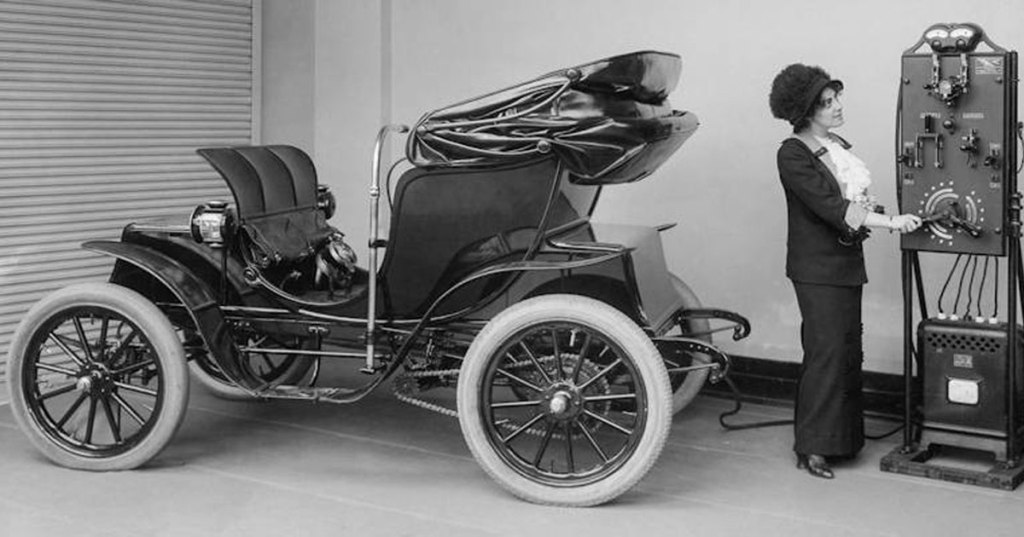
In 1834, Robert Anderson of Scotland created the first electric car carriage. The following year, a small electric car was built by the team of professor Stratingh of Groningen, Holland and his assistant, Christopher Becker. More practical electric vehicles were brought onto the road by both American Thomas davenport and Scotsman Robert Davidson in 1842. Both of these inventors introduced non rechargeable electric cells in the electric car. The Parisian engineer Charles Jentaud fitted a carriage with an electric motor in 1881. William Edward Ayrton and John Perry, professors at the London’s city and guilds institute, began road trails with an electrical tricycle in 1882; Three years later a battery-driven electric cab serviced Brighton.

Electric cars during 1890s in the United States

Around 1900, internal combustion engines were only one of three competing technologies for propelling cars. Steam engines were used, while electric vehicles were clean, quiet, and did not smell. In the United States, electric cabs dominated in major cities for several years. The electric vehicle did not fail because of the limited range of batteries or their weight. Historian Michel Schiffer and others maintain, rather, that failed business strategies were more important. Thus, most moor cars in the twentieth century relied on internal combustion, except for niche applications such as urban deliveries. At the end of the century, after several efforts from small manufactures, general motors’ made available on all electric vehicle called EV1 from 1996 to 2003. In the late 1990s, Toyota and Honda introduced hybrid vehicles combining internal combustion engines and batteries.

How Tesla was created?

Entrepreneur Elon Musk is the man behind many modern innovations. It includes the digital payment service PayPal, the independent space travel company SpaceX, and the electric car company Tesla motors. Tesla motors is named after Nikola Tesla, a Serbian American inventor who contributed to the development f alternating current electricity. In 2003 two Silicon Valley engineers, Martin Eberhard and Marc Tarpenning sold their eBook business for 187 million dollars and started Tesla to build a greener car. Elon musk joined as an early investor leading the series finance and taking on several other roles as well. Tesla’s plan was simple but potentially genius. They focused on lithium-ion batteries which they expected to get cheaper and more powerful for many years. They planned to start their journey with a high margin, high performance sports car. Tesla also planned to integrate energy generation and storage in the home and develop other emerging technologies like autonomous vehicles.

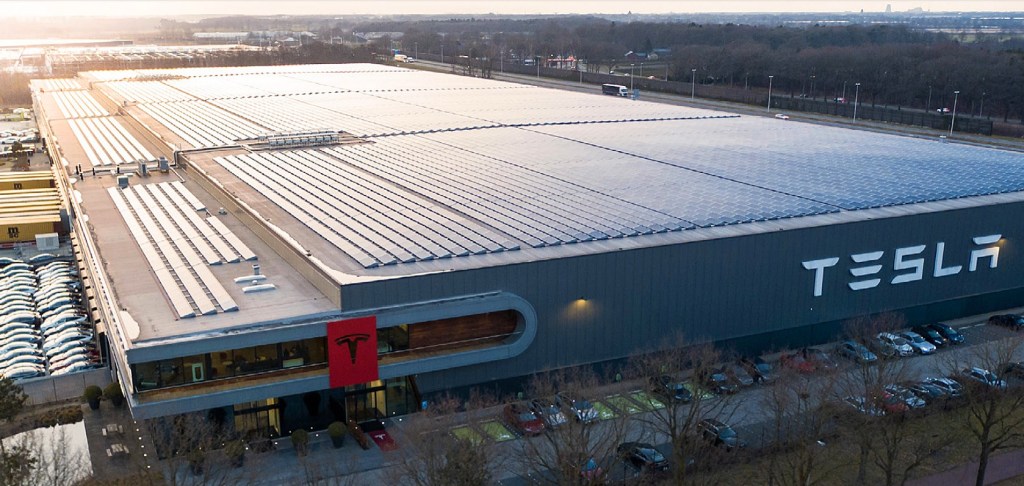
Tesla Gigafactory in Tilburg, Netherlands

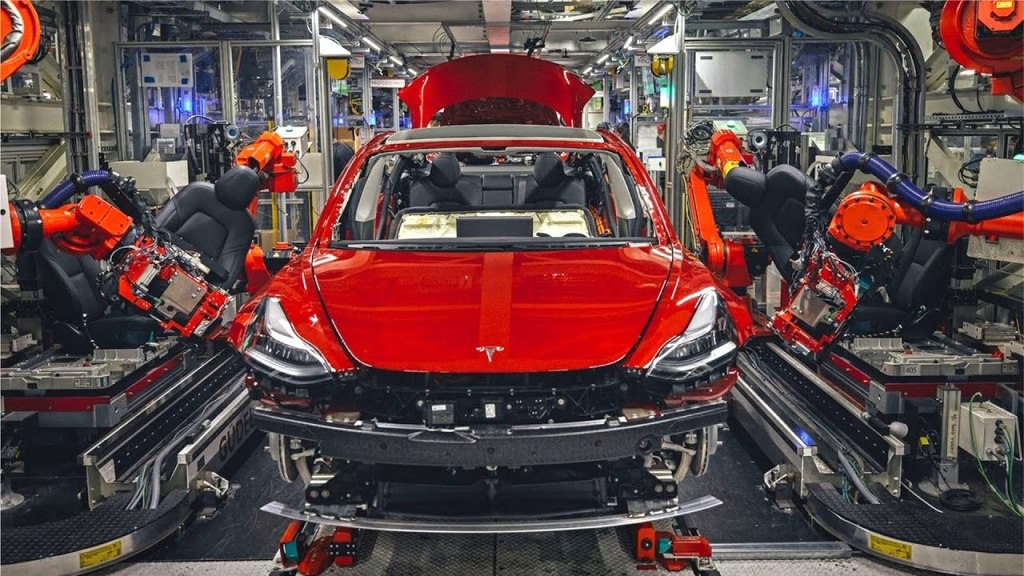
With this plan set, the company was ready to build a high performance low volume sports car, the roadster. Finally in 2008 Tesla motors released its first car, the completely electric roadster. In 2008, Martin and Marc left the company, and eventually Elon Musk took over as CEO. He made drastic changes, raising 40 million of debt financing and borrowed 465 million from the US government. In 2012 Tesla started focusing on two new cars, model S and model X. beginning in 2012, Tesla built stations called supercharges in the United States and Europe, designed for charging batteries quickly and at no extra cost to Tesla owners. These two models were poised for success but the high cost of lithium ion batteries made it a luxury item. To compensate this, in 2013, Tesla began building large factories called Gigafactories to produce lithium ion batteries and cars n large scale. It made Tesla cars ultimately cheaper than gas powered vehicles. Then Tesla gave autopilot system for its model S which gives semi autonomous capacities. By the end of 2017 Tesla passed ford in market value. Tesla released another crossover he model Y, in 2020. The model Y was smaller and less expensive than the model X and shared many parts with the model 3. Tesla announced several models to be released in the future, including a second version of the Roadster, a Semi trailer truck, a Pick-up truck and the Cybertruck.