
By Shreya Rajpoot
Abstract
Globalization refers to the process of increasing interconnection and integration among nations through flows of goods, capital, ideas, people, and technology. While it has produced significant economic benefits — such as increased productivity, access to foreign investment, and global market expansion — it has also raised challenges: disruption of local industries, growing inequality, cultural homogenization, and environmental stresses. This essay examines what globalization is, its driving factors, the positive and negative consequences, with particular focus on India’s experience since liberalization in 1991. The essay argues that while globalization has been a powerful engine of growth and modernization, its benefits must be managed with careful policy, and its costs mitigated through inclusive strategies.

Introduction
In the contemporary era, the notion of a “world without boundaries” is no longer purely metaphorical. Globalization has emerged as one of the defining forces that shape politics, economy, culture, and society. The concept implies that national borders and barriers become more porous to trade, investment, information, and migration. Globalization does not mean the absence of national sovereignty or diversity, but rather accentuates interdependence among nations. In India, the process gained momentum from the early 1990s, when liberalization, privatization, and opening to foreign investment were adopted as core policy shifts. As this essay will show, globalization has generated both opportunities and pitfalls. Understanding its mechanisms, outcomes, and the Indian case helps us discern how to harness its potential while minimizing its downsides.
Description / Discussion
What Is Globalization?
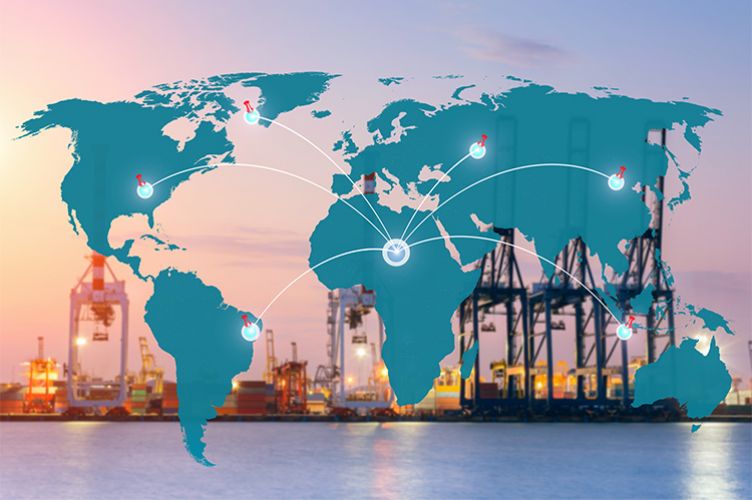
Globalization is the process by which countries, businesses, and people across the world become increasingly connected and interdependent. It involves the free flow of goods, services, information, ideas, technology, and people across national borders. This phenomenon has been accelerated by advancements in communication, transportation, and digital technology, which have made the world more integrated than ever before.
Economically, globalization promotes international trade and investment, allowing companies to operate in multiple countries and consumers to access products from around the world. Culturally, it leads to the exchange and blending of traditions, lifestyles, and values, creating a more interconnected global society. Politically, it encourages cooperation between nations through global institutions such as the United Nations and World Trade Organization.
However, globalization also presents challenges. It can widen the gap between rich and poor nations, threaten local cultures, and strain natural resources due to overproduction and consumption. Despite these drawbacks, globalization remains a powerful force shaping modern society. It influences how we work, communicate, and solve global issues, making the world more unified but also more complex. In essence, globalization represents both opportunity and responsibility for nations to collaborate and progress collectively.
Thus, globalization is not only about economics, but also about power structures, cultural exchange, and institutional alignment.
Types of Globalization
1. Economic: Countries that trade with many others and have few trade barriers are economically globalized.
2. Social: A measure of how easily information and ideas pass between people in their own country and between different countries (includes access to internet and social media networks).
3. Political: The amount of political co-operation there is between countries.
Driving Forces / Reasons for Globalization
Several forces propel the process of globalization:
- Technological advances: Improvements in communication (internet, mobile phones), transportation (air freight, containerization), and logistics have lowered the cost and time of moving goods, people, and ideas.
- Economies of scale & competitive pressures: Firms seeking larger markets push to expand across borders to remain efficient and competitive.
- Liberalization policies: Many countries have reduced trade barriers, deregulated capital flows, and encouraged foreign direct investment (FDI).
- Market saturation at home / resource seeking: Firms look outward when domestic markets mature or when natural resources, labor, or new markets lie abroad.
- Global institutions and rules: Multilateral trade agreements (WTO), regional trade blocs, and investment treaties provide a framework that fosters cross-border flows.
- Ideological shifts & political will: The dominance of neoliberal economic thinking in late 20th century encouraged freer markets, privatization, and global integration.
These factors, acting in reinforcement, have accelerated the pace and depth of globalization.
Effect of Globalization
Globalization has significantly transformed the world by increasing interconnectedness among countries. It promotes economic growth through trade, investment, and job opportunities, while also spreading technology, culture, and ideas across borders. However, it can lead to income inequality, exploitation of labor, and loss of local cultures. Politically, it fosters international cooperation but can reduce national sovereignty. Environmentally, globalization raises awareness about global issues like climate change but also contributes to resource depletion and pollution. Overall, globalization creates a more integrated world, offering vast opportunities for development while posing serious challenges that require balanced and sustainable management.
Advantages / Positive Impacts of Globalization
Globalization brings a number of potential benefits:
- Higher productivity and growth: Access to global capital, technology, and knowledge helps countries modernize industries and enhance growth.
- Access to foreign investment: FDI brings capital, management practices, technology transfer, and jobs.
- Expanded trade and market access: Producers can reach international markets; consumers get access to a wider variety of goods at lower cost.
- Competition and efficiency: Domestic firms face international competition, spurring innovation and efficiency gains.
- Spillovers in technology and human capital: Cross-border diffusion of research, skills, and ideas helps domestic firms catch up.
- Cultural exchange: Exposure to global cultures, ideas, and networks fosters innovation, diversity, and cosmopolitan outlooks.
- Global cooperation on shared challenges: Issues such as climate change, pandemics, and terrorism require cross-border collaboration, which is easier in a globally integrated world.
Disadvantages / Negative Impacts of Globalization
However, globalization also entails serious risks and costs:
- Displacement of local industries: Local firms, especially small and traditional ones, may be outcompeted by cheaper imports or multinationals.
- Increased inequality: Benefits often skew to skilled, connected, or capital-rich groups, exacerbating the gap between rich and poor.
- Vulnerability to external shocks: Economies become more susceptible to global financial crises, commodity price swings, or contagion.
- Cultural homogenization: The dominance of global (often Western) cultural products may erode local traditions and identities.
- Environmental degradation: Increased production, transportation, and resource use can strain ecosystems and accelerate climate change.
- Regulatory challenges: Global firms may exploit loopholes, tax havens, or weaker regulatory frameworks.
- Loss of policy space: Nations may feel constrained in imposing social protections, tariffs, or capital controls, lest they deter foreign capital.
Globalization in the Indian Context
Pre-1991 India
After independence, India adopted an inward-looking, controlled economy with licensing, high tariffs, and strict regulation of foreign investment. Economic growth was modest, and the “license Raj” limited private enterprise expansion.
The 1991 Reforms & Opening Up
Facing a severe balance of payments crisis in 1991, the Indian government embarked on sweeping reforms: liberalization, privatization, and global integration. Key measures included:
- Abolishing industrial licensing
- Reducing import tariffs and quotas
- Encouraging foreign direct investment
- Reforming fiscal and public sector policies
- Relaxing controls over capital flows
Indian policymakers increasingly viewed outward orientation and global linkages as essential to growth.
Positive Impacts in India
- Rapid growth: India’s GDP growth accelerated in the decades following liberalisation.
- Influx of foreign capital: The IT, pharmaceutical, telecom, and services sectors attracted large FDI and foreign partnerships.
- Export growth: India became more integrated into global supply chains in software, textiles, and services.
- Technology and knowledge transfer: Indian firms adopted global best practices and leveraged innovation.
- Job creation in new sectors: The services and software sectors provided new employment opportunities, especially for skilled youth.
- Rising global recognition: India’s presence in global forums, trade, and diplomacy expanded.
Negative and Challenging Impacts in India
- Unequal gains: Urban, educated, and connected groups benefited more; rural and unskilled populations saw fewer benefits.
- Agrarian distress: Small farmers faced price shocks, competition, and limited access to global markets.
- Displacement of small-scale industries: Traditional crafts and small enterprises struggled against cheaper imports.
- Employment concerns: While new jobs were created, many were in informal or contractual sectors with weak social security.
- Vulnerability to global crises: India’s economy was impacted by global downturns (e.g., 2008 financial crisis).
- Cultural stress: Exposure to global media and consumption patterns has created tensions over identity and cultural values.
In sum, globalization has transformed India in profound ways — structurally, economically, and socially — but its benefits have not been uniformly shared.
Conclusion
Globalization is a multifaceted force. It brings tremendous opportunities — economic growth, technology transfer, trade expansion, cultural exchange — but also imposes significant challenges: inequality, disruption, environmental stress, and policy constraints. The experience of India illustrates this dual nature: since the 1990s, the country has grown more dynamic, open, and globally engaged, yet many citizens, especially in rural and marginal sectors, continue to face the costs of adjustment.
Therefore, globalization should not be accepted or rejected uncritically; it must be managed. Policy measures like social safety nets, investment in education/skills, protecting nascent domestic industries, progressive taxation, environmental regulation, and trade policy that balances openness with welfare can help mitigate the downsides. In the end, the goal should be to harness global connectivity to foster inclusive, sustainable development.
Reference
Beck, U. (2018). What is globalization?. John Wiley & Sons.
Robertson, R., & White, K. E. (2007). What is globalization?. The Blackwell companion to globalization, 54-66.
Smith, K. E. I. (2018). What is globalization?. In Sociology of globalization (pp. 3-10). Routledge.
· Encyclopedia Britannica. (2024). Globalization. Retrieved from https://www.britannica.com/topic/globalization
· United Nations. (2024). Globalization and Interdependence. Retrieved from https://www.un.org/en/global-issues/globalization
· World Economic Forum. (2024). The Future of Globalization. Retrieved from https://www.weforum.org/agenda/archive/globalization
· Organisation for Economic Co-operation and Development (OECD). (2023). The Effects of Globalization on Culture and Society. Retrieved from https://www.oecd.org/cfe/leed/globalisation-and-culture.htm
· Investopedia. (2024). Globalization Definition, Pros and Cons. Retrieved from https://www.investopedia.com/terms/g/globalization.asp
· Harvard Business Review. (2023). The State of Globalization in 2023. Retrieved from https://hbr.org/2023/04/the-state-of-globalization-in-2023
· JSTOR. (2024). Globalization Studies – Scholarly Articles. Retrieved from https://www.jstor.org/subject/globalization
· BBC News. (2024). What Is Globalization and How Does It Affect the World? Retrieved from https://www.bbc.com/news/topics/cx2pk70323et/globalisation
https://www.slideshare.net/slideshow/globalisation-38779579/38779579
Globalization in Business: History, Advantages, and Challenges
https://www.britannica.com/money/globalization
 Track2Training
You must be logged in to post a comment.