
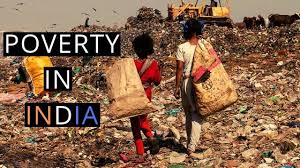
Poverty” is the worst form of violence”, said Mahatma Gandhi. Over the years, poverty has proved to be the biggest hurdle in the way of success of India’s development. Poverty is that condition in which a person fails to not only fulfil his basic physiological needs, but also fails to protect himself from diseases, get balanced nutrition, maintain good health etc.
In simple terms, a person in order to survive should have proper food, clothing, shelter, health care and education. Thus, poverty refers to a person failing to acquire these minimum levels of subsistence and in turn suffer from starvation, malnutrition, and diseases.
Poverty has been an inevitable problem since the time immemorial. From late 19th century through early 20th century, under British colonial rule, poverty in India intensified, peaking in 1920’s. Over this period, the colonial government, de-industrialised India by reducing garments and other finished products’ manufacturing by artisans in India.
They instead imported these from Britain. These colonial policies moved unemployed artisans into farming and transformed India as a region increasingly abundant in land, unskilled labour and low productivity, capital and knowledge. Moreover famines and diseases killed millions each time.
Recently, in 2013, the Indian Government stated 21.9% of its population is below official poverty limit. In other words, India with 17.5% of world’s total population, had 20.6% share of world’s poorest in 2013. A large proportion of poor people live in rural areas. Poverty is deepest among members of scheduled castes and tribes in the country’s rural areas.
On the map of India, the poorest areas are in parts of Rajasthan, Madhya Pradesh, Uttar Pradesh, Bihar, Jharkhand, Odisha, Chhattisgarh and West Bengal. In fact, the story of our prolonged poverty and tyranny attached has got so much fame that a , foreign director (Danny Boyle) produced a whole movie on the issue. This movie is Slumdog Millionaire which got worldwide acclamation through Oscar Awards.
Statistics reveals that economic prosperity has indeed been very impressive in India, but it is the distribution of wealth that has been uneven and has caused the grave problem of poverty. Other major causes of poverty are illiteracy along with uncontrolled population growth, unemployment and under-employment, dependence on agriculture, caste system and corruption. The causes of rural poverty are manifold including inadequate and ineffective implementation of anti-poverty programmes.
The over-dependence on monsoon with non-availability of irrigational facilities often results in crop-failure and low agricultural productivity forcing farmers in the debt-traps. The children of poor families are forced to take up jobs at a tender age to fend for their large families, thus are not only deprived of their childhood but education too adding to the illiterate bulk of the country.
Central grants for programmes like Indira Awas Yojana and others, which was aimed at providing housing to the poor, have been utter failures due to lack of proper implementation. Massive transfer of ‘Black Money’ overseas and under-utilisation of foreign aid have also contributed to the deepening of poverty in India. Nelson Mandela once quoted:
“Like Slavery and Apartheid, poverty is not natural. It is man-made and it can be overcome and eradicated by the actions of human beings”.
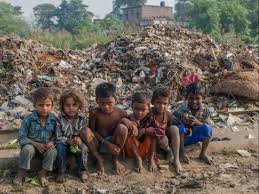
Interestingly, the incidence of rural poverty has declined somewhat in the past years as a result of rural to urban migration. In order to combat the grave problem of poverty, first and foremost, there should be a strict check on population increase. Creation of employment opportunities, spread of education, elimination of black money, decentralisation of planning, helping women and youth to become self-reliant are some other ways to combat this problem. Empowering the weaker and backward section of society is also expected to contribute to the alleviation of poverty. It is not due to lack of resources or technical assistance that we are failing in achieving our goals but more so due to lack of execution of these plans and programmes.
Who comes in the category of the poorest class in India?
Tribal people, Dalits and labour class including farmworkers in villages and casual workers in cities are still very poor and make the poorest class in India.
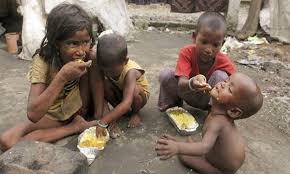
Where do the majority of poor live in India?
60% of the poor still reside in the states of Bihar, Jharkhand, Odisha, Madhya Pradesh, Chattisgarh, Uttar Pradesh and Uttarakhand. The reason for these states to be in the category of the poorest state is because 85% of tribal people live there. Also, most of these regions are either flood-prone or suffer from calamities. These conditions hamper agriculture to a great extent, on which the household income of these groups depends.
According to the Global Hunger Index Report 2018 by the International Food Research Institute, India ranks 103 in the Global Hunger Index (GHI). Though there is no shortage of food production in India, our nation still has 35.8% of children under five in the underweight category. India is working hard to become a superpower in 2020, but such statistics are worrisome, as our nation still lags behind in improving GHI. At the same time, India seems to have achieved commendable success towards poverty eradication, because it is no longer the country with the largest number of poor people.
In 2018, for the first time in decades, Nigeria pipped India to the top slot in terms of the total number of people living in extreme poverty. As per World Poverty Clock, India’s figure of 70.6 million was surpassed by Nigeria’s 87 million people living in extreme poverty.
Moreover, according to a Sustainable Development Goals Report of the United Nations Development Program released in 2018, India has made significant progress: “Between 2005-06 and 2015-16, the incidence of multidimensional poverty in India was almost halved, climbing down to 27.5 percent from 54.7 percent as per the 2018 global Multidimensional Poverty Index report. Within ten years, the number of poor people in India fell by more than 271 million (from 635 million to 364 million). This MPI index measures progress across 3 key dimensions of health, education and living standards, and uses 10 indicators – nutrition, child mortality, years of schooling, school attendance, sanitation, cooking fuel, drinking water, electricity, housing and assets. People who lag behind in at least a third of the MPI’s components are defined as multidimensionally poor.
Causes of Poverty in India
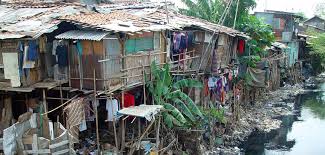
The high population growth rate is one of the major reasons of poverty in India. This further leads to a high level of illiteracy, poor health care facilities and lack of access to financial resources. Also, high population growth affects the per capita income and makes per capita income even lower. It is expected that the population in India will reach 1.5 billion by 2026 and then India will be the largest nation in the world. But India’s economy is not growing at the same pace. This means a shortage of jobs. For this much population, near about 20 million new jobs would be required. The number of poor will keep on increasing if such a big number of jobs won’t be created.
The ever-increasing prices of even basic commodities is another reason for poverty. A person below the poverty line finds it difficult to survive. The caste system and unequal distribution of income and resources is another reason for poverty in India.
Apart from all these, unskilled workers are paid very low in spite of the hard work they put in daily. The problem lies with the unorganized sector as owners do not bother with the way their workers live and the amount they earn. Their area of concern is just cost-cutting and more profit. Because of the number of workers looking for a job is higher than the jobs available, unskilled workers have no other option but to work for less money. The government should really find a way to impose minimum wage standards for these workers. At the same time, the government should ensure that this is implemented well.
Poverty must be eradicated from India as every person has the right to live a healthy life.
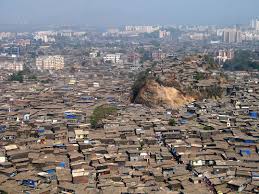
How You Can Improve or Solve Poverty in India?
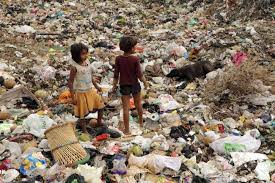
Poverty can be solved by improving food security by providing three meals a day and making them healthy and providing houses for those people at low cost and giving them proper education and facilities so that they can earn well and take care of their family and leave peaceful life. Awareness on population so that once the population is under control, the economy of the country will improve and move towards developed and decrease in the poverty line. Poverty is becoming a complex problem for the peoples and for the government, how to overcome out from this, in India the poverty is high comparing other countries because the growth rate of per capita income per person is very low. With lack of job opportunities many people move as a rickshaw puller, construction workers, domestic servants etc, with irregular small incomes hence they live in slum areas. Also, lack of land resources has been one of the major causes of poverty in India, even the small farmers of our country leads to poverty because they cultivate but do not get proper money in terms of profit and leads to poverty.

 Track2Training
You must be logged in to post a comment.