
“I was making more money than a MBA graduate.”
– Confessed a call-centre scammer
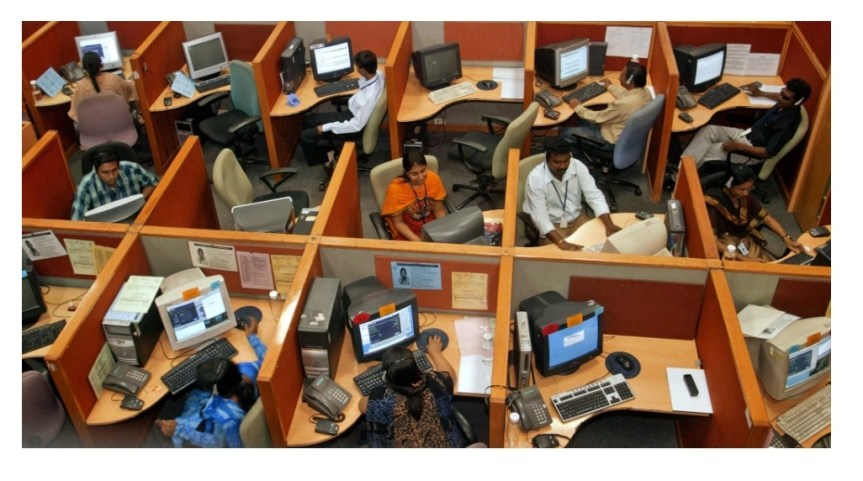
Recently BBC Panorama released a documentary called ‘Spying on the Scammers’ which features a hacker who gained access to the recorded scam phone calls as well as CCTV footage and exposed the scammers at work. The cyber vigilante, who uses the alias ‘Jim Browning’, went through hundreds of hours of video footage from the office in Gurugram, near Delhi, and listened to 70,000 phone calls. The documentary reveals that there are centres set up for the sole purpose of scamming, though I would imagine that they are small in size. It’s, thus, needless to say that such scams are thriving and flourishing businesses in India.
It makes one wonder why India has come to be a hub of call-centre scams.
There are several social aspects contributing to it. Technology is indeed a double edged sword & India is a country which ushered into the field of Information Technology in the past few years, and has large number of people with IT skills. However, due to huge population of approximately 1.3 billion people in this country, those who are qualified and skilled have to face cut-throat competition and, thus, despite having skills in IT, they fail to secure a job. Thus, there are too many people becoming educated and too few jobs to satisfy the supply of employment seekers. Owing to unemployment, some of them are led down the wrong path like scamming and using their technical skills to dupe people to earn easy money. Most of businesses hire low-level support staff who can be fired easily, and many a times they don’t even know they are scamming people. So, many people who desperately need money and jobs will join “tech companies” in search of employment. Some know it’s a scam before they start. Some don’t. But it’s putting food on the table, when many couldn’t even get lowly entry level jobs to begin with. And at the end of the day, money is the same, whether you earn it or scam it. Moreover, people in the country possess adequate fluency in English.
Apart from this, since there are many legit outsourcing and customer service businesses here, many parts of country offer good infrastructure for cheap. What’s interesting is that, many of these scammers are ex-employees of call centres and have good grasp over the standard procedures and working of tech support. Plus, they may still have the means to access the customer data somehow.
Now coming to the legal aspect of things, they’re quite untraceable by targets unless the target is experienced in something like hacking or tracing by other means. It’s also because the people they’re scamming are too far away to have them arrested or taken to the court. They are in a sense de facto immune from the law by location. Scammers may choose to operate out of countries that have weak law enforcement relations (or simply weak local law enforcement when it comes to having the resources necessary for locating them) with the target countries of their scams. Weak relations make it harder to track down the scammers, and even of they are found, it makes it difficult to prosecute them. Plus for scam purposes, it’s obviously easier to evade US’s and other target country’s law enforcement by being thousands of miles away and with a local police force that may be unable or unwilling to take action against them.
The lack of adequate fear among the scammers can also be a contributing reason as to why so many call-centre scams are mushrooming in India. They feel safe and confident enough that they cannot be caught and punished, thus, they continue to do this. Most of the times this kind of scams take birth from the loop holes of any business process. Scamming is an organized crime. In an organized crime, it is very hard to catch a criminal because they are already familiar with ways to avoid geting caught. But, one should understand that the stronger wins. If the law is stronger, it will improve itself to counter attack the new approaches by scammers. A failure to do so, will keep the crime alive.
Also, there’s no proper technology available in India to catch these criminals as Indian law enforcement is already burdened with huge amounts of unsolved cases more heinous than tech scamming, so LEA can’t give proper attention to frame these convicts even if they got caught. This inevitably leads to feeling of safety among tech criminals as there’s very little possibility of them getting caught and even lesser possibility of getting any punishment, if caught, due lack of stringent IT laws in India. Needless to say, law enforcement isn’t up to the point.
Thus, the risk vs. reward conundrum works out in their favour as the chances of getting caught are almost negligible, while the profit margins are high.
The biggest issue, however, is that scamming just happens to be so easy, owing to the mediocre security measures from the banks and the lack of technical knowledge on the part of the elderly and digitally challenged which make them easy targets to these scams. To top it off, Technical Support Companies pay a very great deal of money in the form of incentives, once the salesman achieves the allotted target. Although, it should be mentioned again that, some people working in such firms don’t even have the slightest of an idea that this no more than a scam.
People often forget ‘with power comes the responsibility’ and wrong use of technology leads to tech crimes like scamming which are cognizable offences under India Penal Code IPC – section 420 and IT Act 2000 (Amendment 2008) section 66, but then again, these laws are as good as a toothless tiger as they have repeatedly failed to be stringent towards the criminals .
The scammers not only give India a bad rap but also present a sorry manifestation of the failure of the government policies who cannot provide enough jobs and quality education for the youths, pushing them to adopt such fiendish ways of making money and risking their reputation by getting inevitably busted.
 Track2Training