Assess the contributions of Ishwarchandra Vidyasagar to the making of modern India

Ishwarchandra Vidyasagar was a prominent figure in the making of modern India. His contributions to education, women’s rights, social reforms, and literature were significant and far-reaching. His impact on Indian society can still be felt today, more than a century after his death. In this article, we will assess the contributions of Ishwarchandra Vidyasagar to the making of modern India.
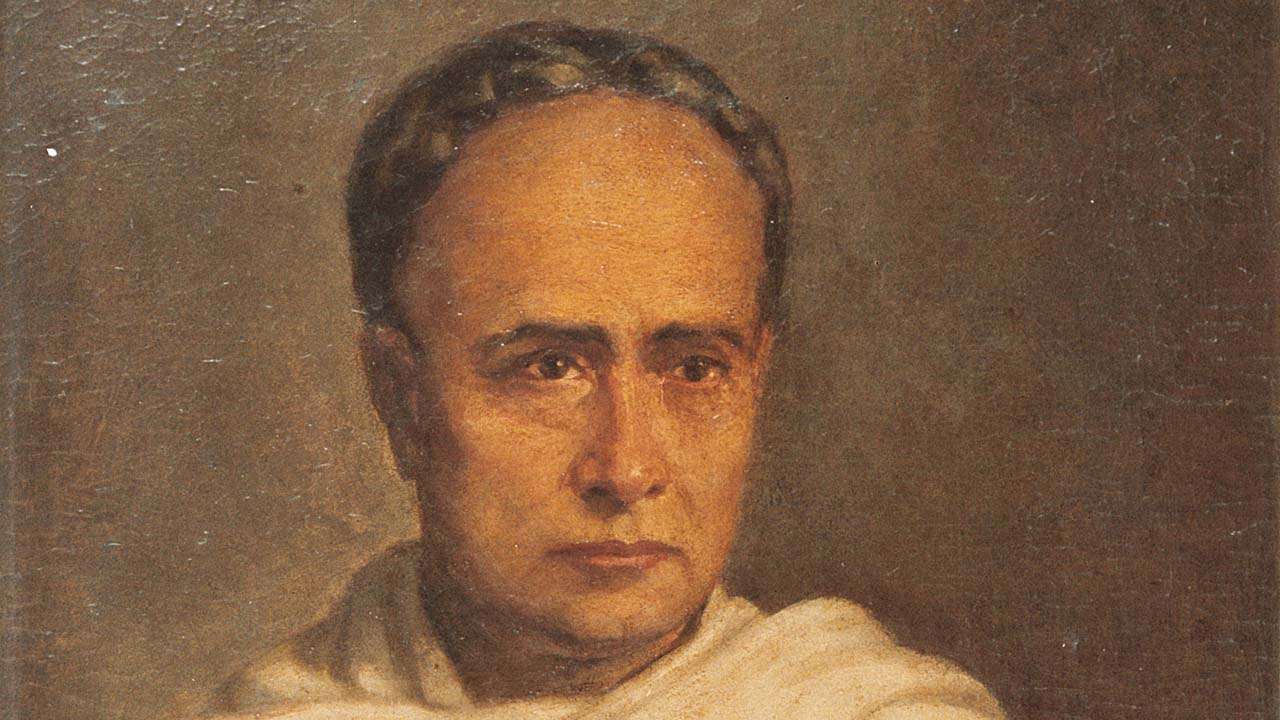
Iswarchandra Vidyasagar

Promotion of Education:

Vidyasagar was a firm believer in the power of education. He understood that education was the key to social and economic progress. He was an advocate for the education of girls, who were often excluded from formal education. Vidyasagar established several schools and colleges for girls in Bengal, which provided them with opportunities to learn and grow. He believed that education was the only way to eradicate poverty and empower the masses.

People along with Vidyasagar promoted girls’ education during British rule.

In addition to promoting education for girls, Vidyasagar also worked to reform the education system in Bengal. He believed that the education system was outdated and needed to be modernized. He introduced new teaching methods, textbooks, and curricula to make education more accessible and relevant to the needs of the time. His efforts in promoting education have had a lasting impact on Indian society.
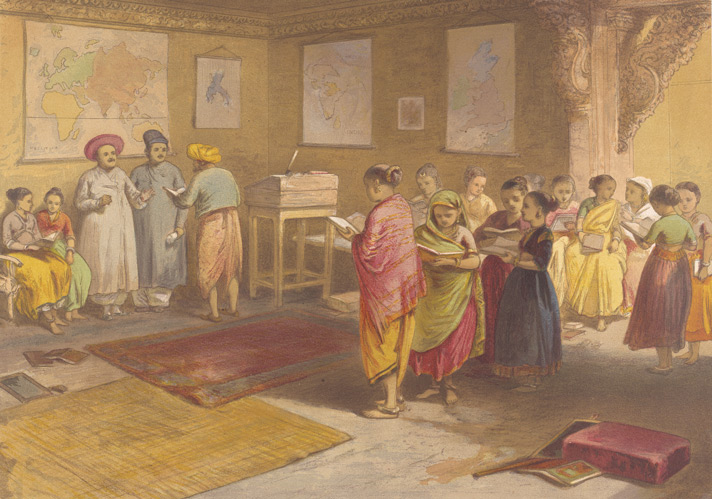
Women’s education in Bengal during Vidyasagar’s period

Reforms in the Bengali Language:

Vidyasagar was a linguist who believed that language was an essential tool for communication and expression. He worked to standardize the Bengali language by simplifying its grammar and introducing punctuation marks. His efforts made the language more accessible to the common people and helped to promote its use in literature and education.

“Exotic India Art” a book written by Vidyasagar in Bengali

Vidyasagar was also a prolific writer in Bengali. He wrote several textbooks, novels, and essays that helped to popularize the language. His works were widely read and admired, and they helped to establish Bengali as a literary language.
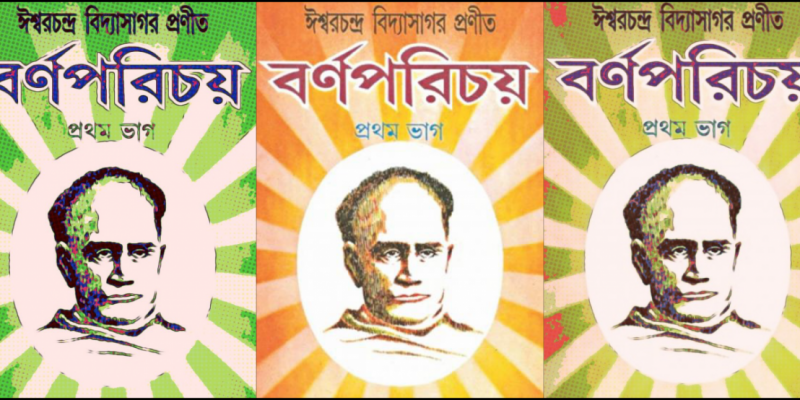
Vidyasagar’s contribution to Bengali Literature

Women’s Rights:

Vidyasagar was a champion of women’s rights. He understood that women were often marginalized and oppressed in Indian society and believed that they deserved equal rights and opportunities. He advocated for the education of girls and fought for their right to study. He believed that education was the key to empowering women and enabling them to participate fully in society.
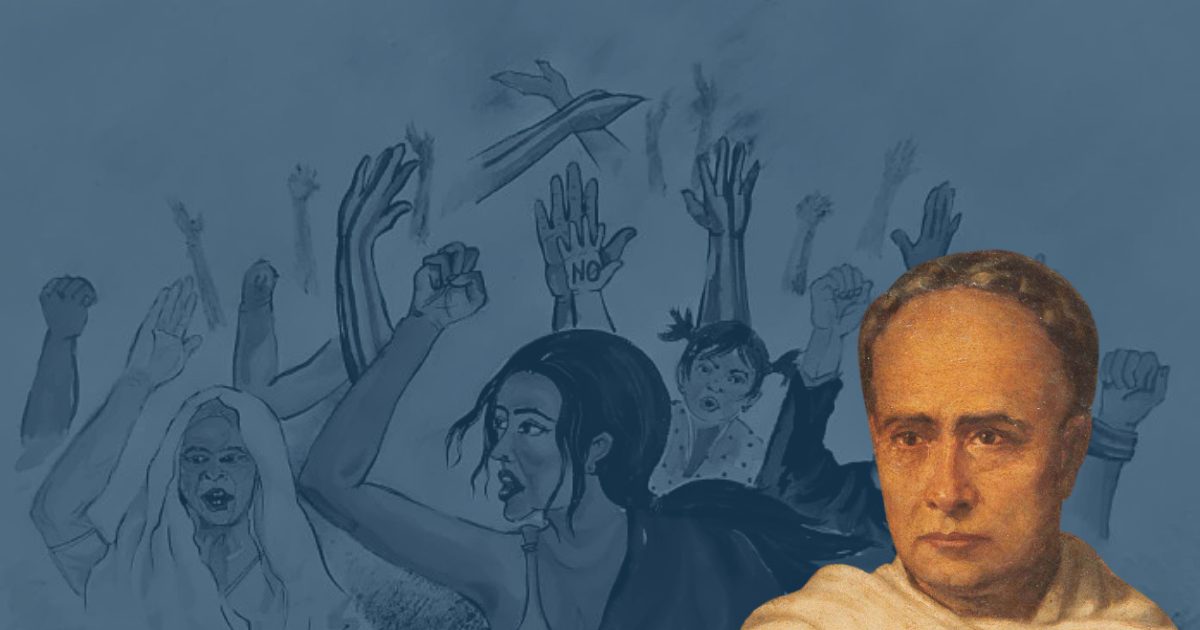
Vidyasagar also worked to reform laws that discriminated against women. He was a strong advocate of widow remarriage, which was taboo at the time. He believed that widows deserved a second chance at happiness and worked to change social attitudes towards remarriage. His efforts led to the passing of the Widow Remarriage Act of 1856, which legalized widow remarriage.
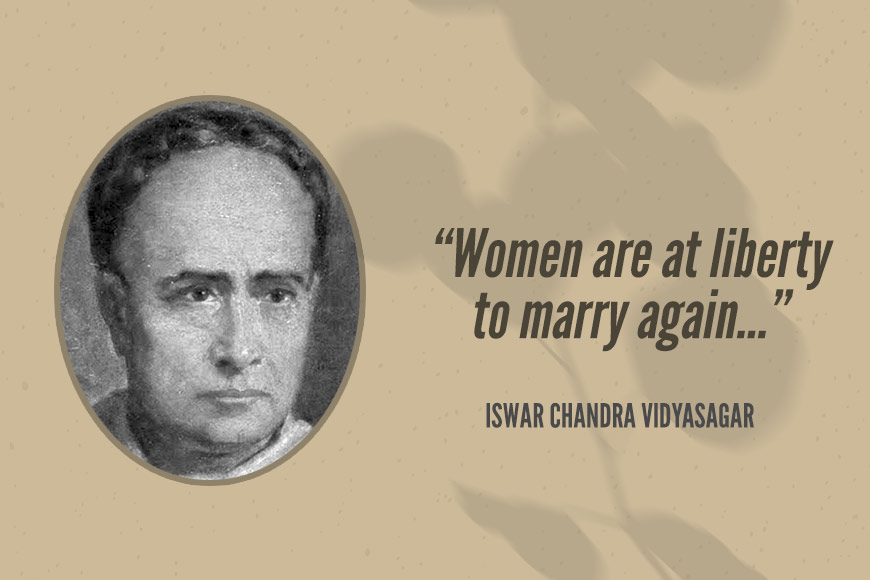
Social Reforms:

Vidyasagar was an ardent social reformer who believed that society needed to change to ensure the welfare of all its members. He worked to abolish social evils such as caste discrimination, polygamy, and the dowry system. He was a strong advocate of social equality and believed that all individuals were equal and deserving of respect.

Vidyasagar’s efforts to abolish caste discrimination were particularly significant. He believed that caste was a social construct that had no place in modern society. He worked to break down the barriers between castes and promote social equality. His efforts have had a lasting impact on Indian society, and today, caste discrimination is illegal in India.

Literature:

Vidyasagar was a prolific writer who made significant contributions to Bengali literature. He wrote several textbooks, novels, and essays that helped to popularize the language. His works were widely read and admired, and they helped to establish Bengali as a literary language.

Vidyasagar was also a translator who translated several works of English literature into Bengali. His translations helped to introduce English literature to a wider audience and made it more accessible to those who could not read English.

Conclusion:

Overall, Ishwarchandra Vidyasagar’s contributions to the making of modern India were significant. His advocacy for education, women’s rights, social reforms, and literature has had a lasting impact on Indian society. He was a visionary who foresaw the importance of education and social reform in building a modern and progressive India.
How did Communalism manifest in the Indian political scene? Explain the background of the passing of the momentous Pakistan Resolution.

Communalism is a phenomenon that has been prevalent in Indian politics for a long time. It is the belief that one’s religion or community is superior to others, leading to conflict between different communities. The partition of India in 1947 was the most significant consequence of communalism in the Indian political scene. This article will explore the background of the passing of the Pakistan Resolution and how communalism manifested in the Indian political scene.

Communalism in Indian politics:

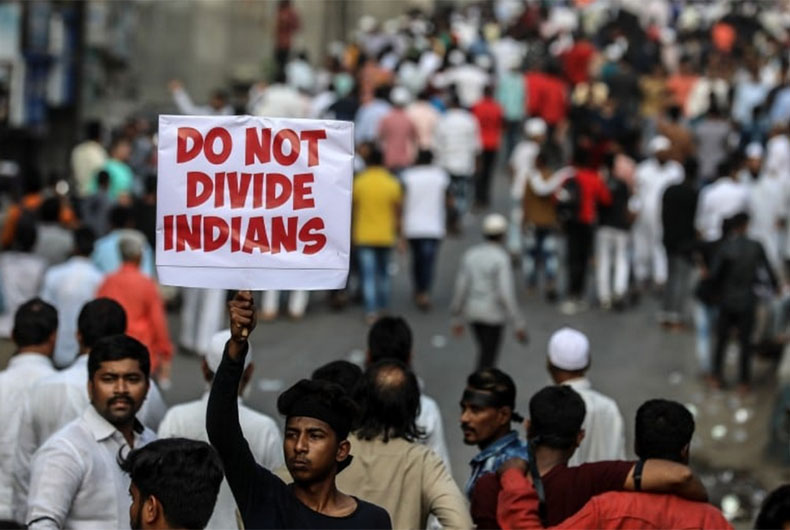
Communalism has been a persistent issue in Indian politics for centuries. It is rooted in the country’s diverse religious and cultural makeup, with different religious communities coexisting in the same territory. Communalism manifests in different ways, from religious extremism to caste politics. In recent years, communalism has been seen in the form of hate speech, violence, and discrimination against minority communities.

The Pakistan Resolution:

The Pakistan Resolution, also known as the Lahore Resolution, was a historic moment in the Indian political scene. It was passed on March 23, 1940, at the All India Muslim League’s annual session held in Lahore. The resolution demanded the creation of an independent Muslim state in the northwestern and northeastern regions of India.

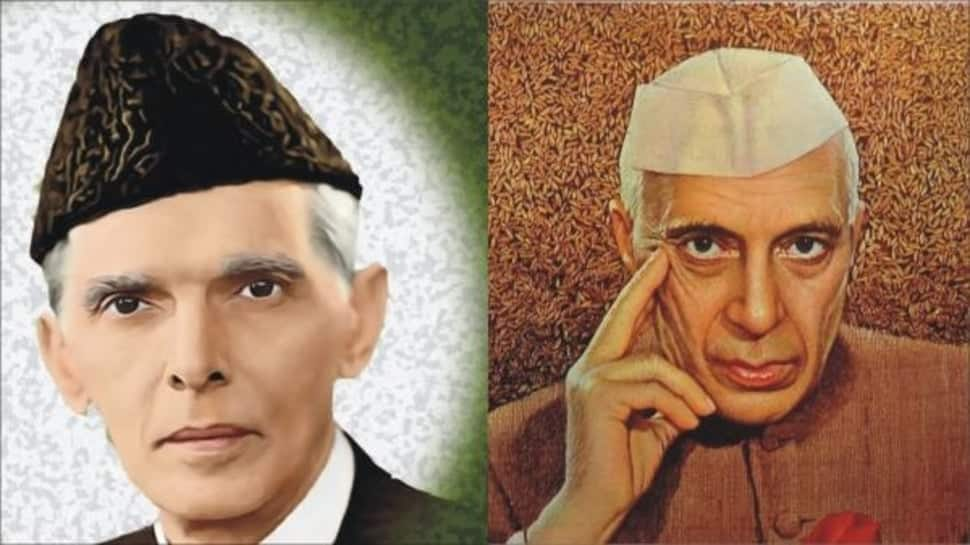
Left: M.A Jinnah; Right: Pt.Jawaharlal Nehru

The background to the Pakistan Resolution was the growing communal tensions between the Hindu and Muslim communities in India. The Muslim League, led by Mohammad Ali Jinnah, believed that Muslims needed a separate state to protect their political, social, and economic rights. They argued that a Hindu-dominated government would not safeguard the interests of the Muslim minority in India.

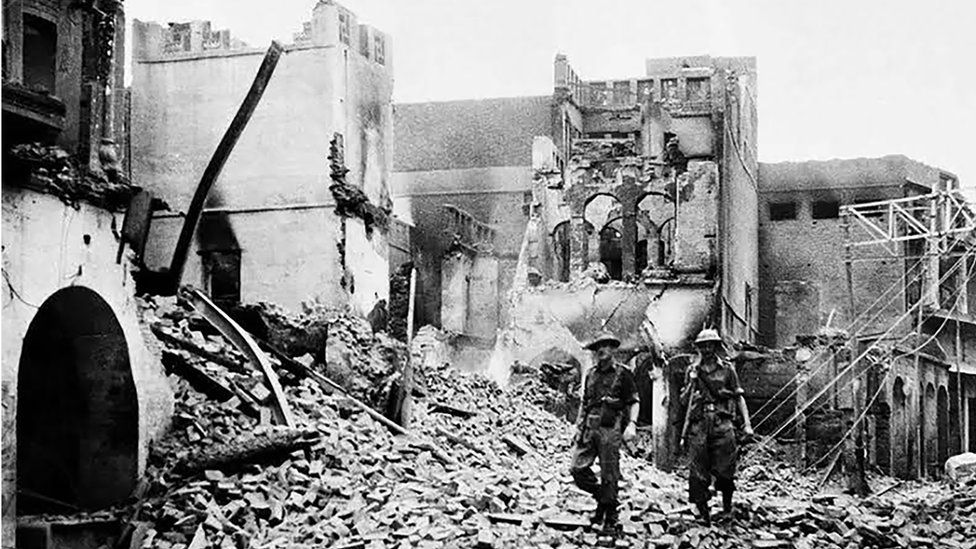
The mass exodus of Indians from Pakistan during the partition

The Pakistan Resolution was a turning point in Indian politics, leading to the eventual partition of India and the creation of Pakistan. The partition was marked by widespread violence, displacement, and loss of life, with estimates suggesting that up to two million people were killed in the aftermath.

Violence in the Pakistan-Punjab border

Manifestation of communalism in Indian politics:

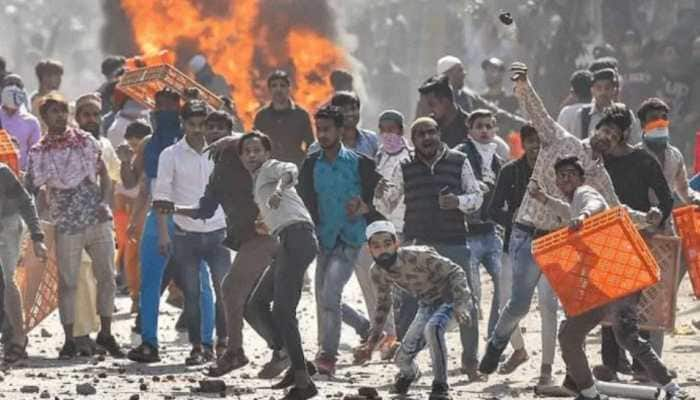
Communalism has manifested in different ways in the Indian political scene. One of the most significant manifestations is religious extremism, where extremist groups advocate for the supremacy of one religion over others. These groups use violence and hate speech to further their agenda, leading to communal tension and conflict.

Communal violence in Jammu-Kashmir

Caste politics is another manifestation of communalism in Indian politics. The caste system is a hierarchical social structure prevalent in India, with each caste having its own social and economic status. Caste-based politics involves using caste identities to mobilize voters, leading to division and tension between different castes.

Communalism also manifests in the form of discrimination against minority communities, particularly Muslims and Dalits. These communities face discrimination in employment, education, and social opportunities, leading to a sense of alienation and marginalization.

Conclusion:

Communalism has been a persistent issue in the Indian political scene, leading to conflict and division between different communities. The Pakistan Resolution was a significant moment in Indian history, leading to the eventual partition of India and the creation of Pakistan. Communalism has manifested in different ways in Indian politics, including religious extremism, caste politics, and discrimination against minority communities. It is essential for India’s political leaders and citizens to work towards creating a society that values tolerance, inclusivity, and diversity, and rejects the divisive forces of communalism. Only then can India truly realize its potential as a vibrant, pluralistic democracy.

The forces that influence ocean currents and their role in the fishing industry of the world

Introduction:

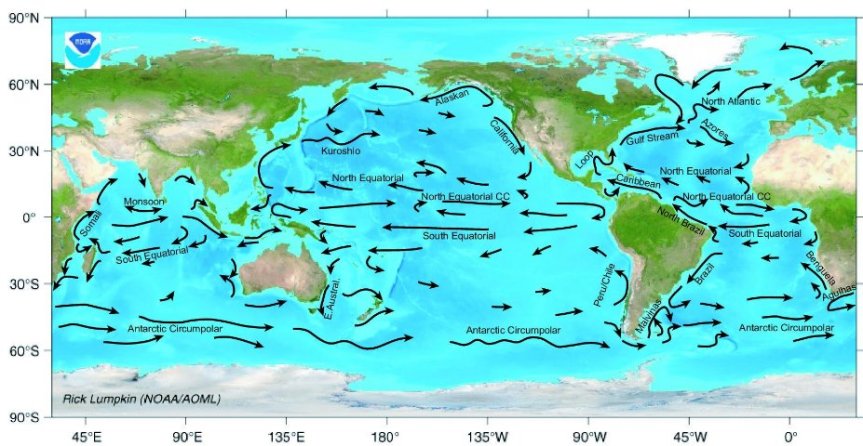
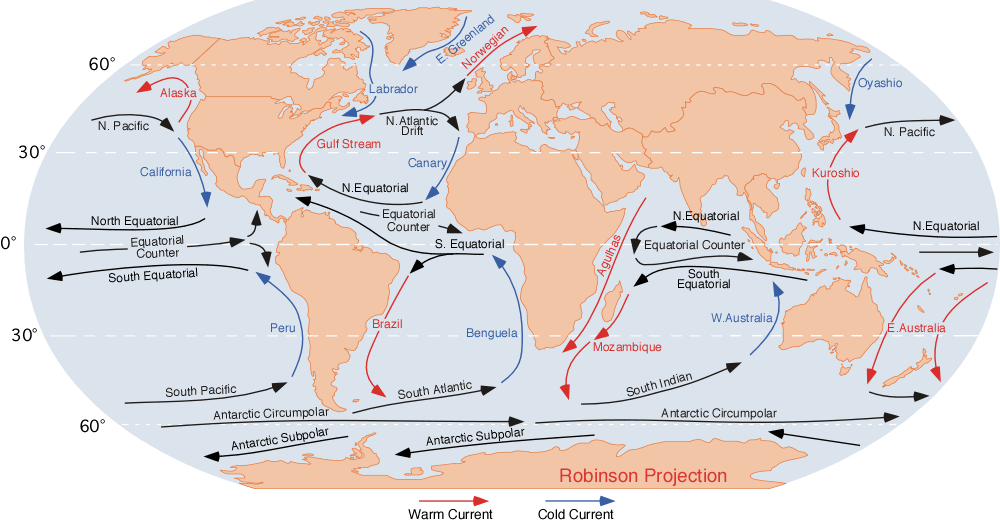
Ocean currents play a crucial role in the distribution of heat, nutrients, and marine life throughout the world’s oceans. These currents are driven by a variety of forces, including wind, temperature, and the Earth’s rotation. Understanding these forces and how they influence ocean currents is essential to many industries, including the fishing industry. In this article, we will explore the forces that influence ocean currents and their role in the fishing industry around the world.

Ocean Currents
Ocean Currents

Forces that influence ocean currents:

1. Wind:

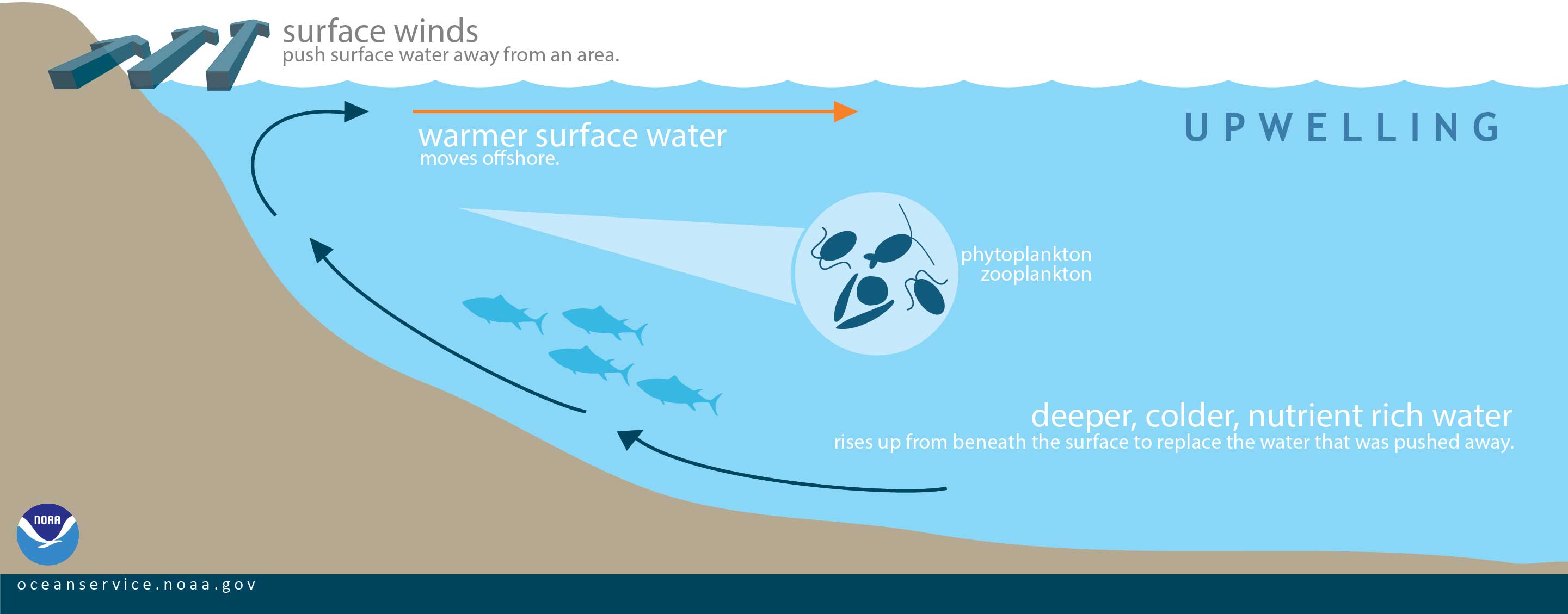
The wind is one of the primary forces that influence ocean currents. The wind creates surface currents, which are responsible for distributing heat and nutrients across the ocean. The wind also creates upwelling, which is the process by which deep, nutrient-rich water is brought to the surface. Upwelling is crucial to the fishing industry, as it provides an abundance of nutrients for marine life.

2. Temperature:

Temperature is another significant force that influences ocean currents. Warm water is less dense than cold water, so it tends to rise to the surface. This creates surface currents that move warm water away from the equator and towards the poles. Cold water, on the other hand, is dense than warm water and tends to sink. This creates deep ocean currents that move cold water toward the equator.

Temperature

3. Salinity:

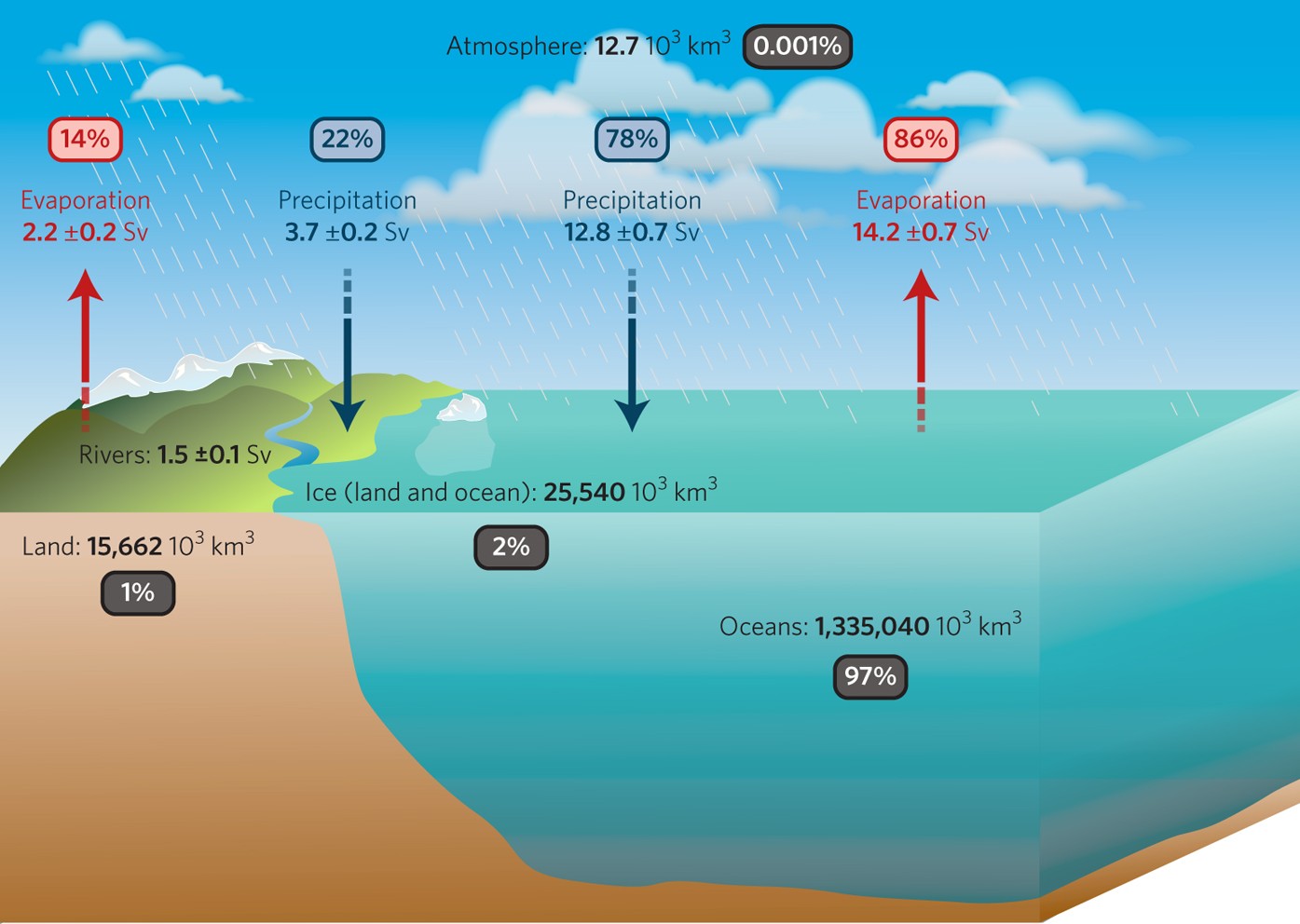
Salinity, or the concentration of salt in the water, is another important force that influences ocean currents. When water evaporates, it leaves behind salt, which increases the salinity of the water. This increases the water’s density, causing it to sink and creating deep ocean currents. Areas of high salinity, such as the Mediterranean Sea, can also create surface currents that move water toward areas of lower salinity.

Salinity

4. The Earth’s rotation:

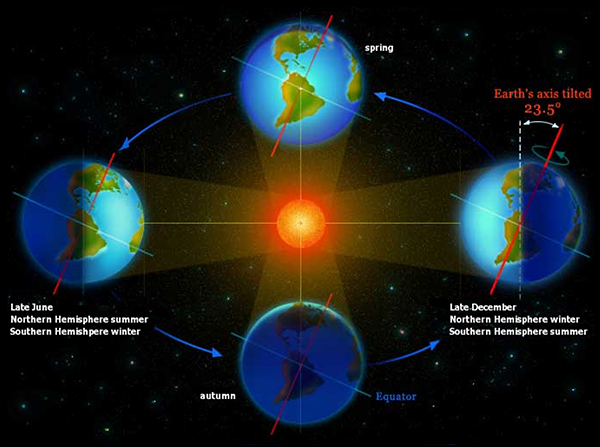
The Earth’s rotation also influences ocean currents. The Coriolis effect, which is caused by the rotation of the Earth, causes moving objects, including ocean currents, to appear to deflect to the right in the Northern Hemisphere and to the left in the Southern Hemisphere. This deflection causes ocean currents to move in a circular pattern, known as a gyre.

Earth's rotation

Role of ocean currents in the fishing industry:

Ocean currents play a crucial role in the fishing industry. The distribution of nutrients and marine life is influenced by ocean currents, which affect where fish are found and how abundant they are in different areas. Some of the most significant ways that ocean currents impact the fishing industry include:

1. Upwelling:

As mentioned earlier, upwelling is the process by which deep, nutrient-rich water is brought to the surface. This process is essential to the fishing industry, as it provides an abundance of nutrients for marine life. Areas of upwelling, such as the coasts of Peru and West Africa, are known for their rich fishing grounds.

Upwelling

2. Migration patterns:

Ocean currents also influence the migration patterns of fish. Some species of fish, such as salmon, are known to migrate long distances to reach their spawning grounds. Ocean currents can impact the timing and location of these migrations, which can affect the fishing industry’s ability to catch these fish.

Fish migration pattern

3. Fishing locations:

Ocean currents also influence where fish are found. Areas with high nutrient concentrations, such as upwelling zones, tend to have more abundant fish populations. The Gulf Stream, for example, is known for its rich fishing grounds, particularly for tuna and swordfish.

Fishing locations in oceans worldwide

4. Climate patterns:

Ocean currents also play a role in climate patterns. The movement of warm and cold water influences regional weather patterns, which can impact the fishing industry. Changes in ocean currents can also lead to changes in water temperature, which can affect the migration patterns and abundance of fish.

Climate patterns due to movement of earth

Conclusion:

In summary, the forces that influence ocean currents play a critical role in the fishing industry worldwide. Wind, temperature, salinity, and the Earth’s rotation all contribute to the distribution of nutrients and marine life in the world’s oceans. Upwelling, migration patterns, fishing locations, and climate patterns are all impacted by ocean currents and affect the fishing industry’s ability to catch fish. Understanding these forces and their role in ocean currents is essential to the fishing industry’s sustainability and success. As we continue to study and monitor these forces, we can better manage and protect our oceans’ resources for future generations.