
By-Aditi Chhetri
There have been events throughout history that contradict explanations, challenges our understanding of the human mind and body. One such mystery was the Dancing Fever in 1518, a strange and mysterious phenomenon which occurred in Strasbourg during that period when it is nowadays France’s Modern Day. This unprovoked outbreak of mad dancing lasted for several months, leaving a mark on history that continues to be defied today by scientists, historians and scholars. In this blog, we will delve into the details of this strange episode, exploring its causes, consequences, and the various theories that have been proposed to explain it.
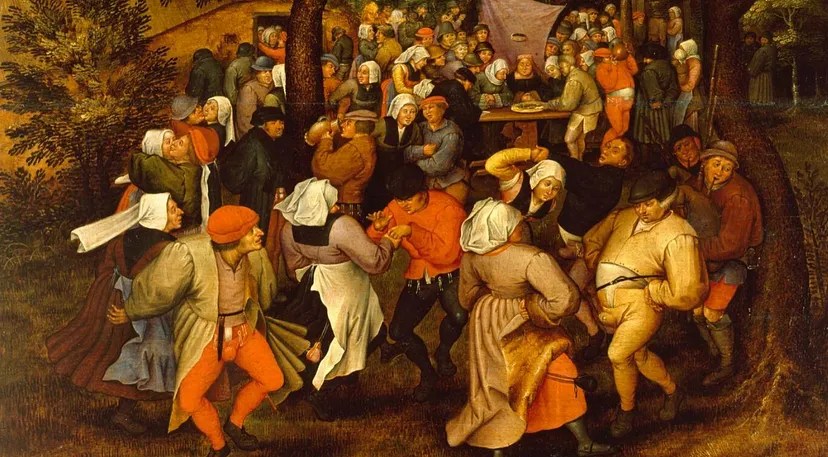
• The Outbreak Begins:
The summer of 1518 was a time of uncertainty in Strasbourg. The town was grappling with social and economic challenges, and the people were living in a state of perpetual anxiety. Against this backdrop of stress and turmoil, a peculiar incident occurred that would soon capture the attention of the entire town.
It all started with one woman, Frau Troffea. On a hot July day, she stepped into the streets of Strasbourg and began to dance. This, in itself, may not have been particularly unusual, as dancing was a common form of entertainment in the 16th century. However, Frau Troffea’s dancing was far from ordinary. She danced with a fervor and intensity that bordered on the frenzied, and she showed no signs of stopping. She danced for hours, and when she finally collapsed from exhaustion, it was only a temporary respite. The next day, she was back on her feet, dancing once more. The dancing plague of 1518 is one of the most bizarre and fascinating mass hysteria events in history. It is also one of the most mysterious. To this day, no one knows for sure what caused it.
• Contagious Hysteria:
What made Frau Troffea’s dancing even more peculiar was that she was not alone for long. Within days, more and more people joined her in this strange dance, and the numbers grew rapidly. By the end of the week, there were around 34 people dancing uncontrollably in the streets of Strasbourg. And as the days turned into weeks, the numbers swelled to nearly 400.
This bizarre spectacle attracted the attention of local authorities, who initially believed that the afflicted individuals were suffering from some form of demonic possession or divine punishment. In an attempt to exorcise the supposed demons, they organized mass exorcisms and encouraged even more dancing. Unsurprisingly, this only exacerbated the situation, and more people joined in the frenetic dance.
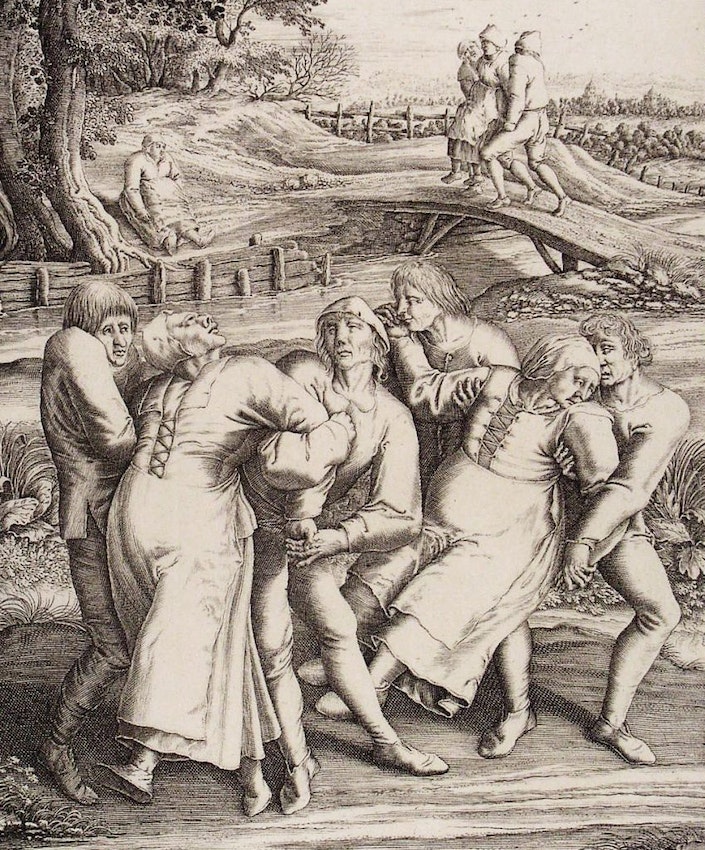
• The Consequences:
The consequences of the Dancing Plague were both bizarre and tragic. Many of those afflicted suffered from exhaustion, dehydration, and physical injuries as a result of their unrelenting dance. Some even danced themselves to death. It is estimated that as many as 15 people perished during the outbreak, their bodies were simply unable to endure the relentless physical strain.
As the epidemic raged on, it began to take a toll on the town’s economy and social fabric. With hundreds of people incapacitated by dancing, the workforce was severely depleted, leading to a decline in productivity. Families were torn apart as members were caught up in the mania, and the fabric of society began to unravel.
• Theories and Explanations:
To this day, the Dancing Plague of 1518 remains one of the most perplexing events in history, and numerous theories have been proposed to explain it. While none can provide a definitive answer, they shed light on the complexity of human behavior and the mysterious workings of the human mind.
• Possible causes of the dancing plague:
There are many theories about what caused the dancing plague of 1518. Some of the most popular theories include:

(a) Mass Hysteria:
One of the prevailing theories suggests that dancing was a manifestation of mass hysteria. Mass hysteria is a phenomenon in which a group of people, often under stress, experiences collective symptoms without any organic cause. The stress and anxiety prevalent in Strasbourg at the time may have triggered this mass psychogenic illness, causing people to dance uncontrollably.
(b) Ergot Poisoning:
Another hypothesis points to ergot poisoning as a possible cause. Ergot is a fungus that can grow on rye and other cereal crops, and it produces alkaloids similar to LSD. Consumption of ergot-contaminated grain can lead to hallucinations, muscle spasms, and other symptoms. Some researchers believe that the townspeople unknowingly ingested ergot-contaminated bread, leading to their bizarre behavior.
(c) Social and Cultural Factors:
The 16th century was a time of social and cultural upheaval. Strasbourg was plagued by economic hardship, famine, and political instability. Some historians argue that the dancing may have been a form of protest or a reaction to the prevailing conditions, with individuals engaging in this extreme behavior as a means of expressing their frustration and discontent.
(d) Religious and Superstitious Beliefs:
The religious and superstitious beliefs of the time may have played a role in amplifying the outbreak. Some individuals may have genuinely believed that they were possessed by demons or that dancing was a form of penance, leading them to continue dancing despite the physical toll it took on their bodies.

• Symptoms of the dancing plague:
The people who were affected by the dancing plague of 1518 experienced a variety of symptoms, including:
∆ Uncontrollable dancing
∆ Trance-like states
∆ Hallucinations
∆ Convulsions
∆ Muscle spasms
∆ Exhaustion
∆ Death
Some people danced for days or even weeks without stopping. Others collapsed from exhaustion or died from heart attacks or strokes.
• Treatment for the dancing plague:
At the time, there was no known cure for the dancing plague. People who were affected by it were often treated with religious rituals, such as exorcisms and pilgrimages. Some people were also taken to the mountains, where they were forced to dance until they collapsed.
• The end of the dancing plague:
The dancing plague of 1518 ended as mysteriously as it began. In September 1518, the dancers suddenly stopped dancing. Some historians believe that the dancers may have been cured by a local priest, who led them on a pilgrimage to a mountain shrine.

The Dancing Plague of 1518 is a historical enigma that continues to captivate our imagination and challenge our understanding of human behavior. While we may never have a definitive explanation for why hundreds of people danced uncontrollably in the streets of Strasbourg, it serves as a reminder of the complexity of the human mind and the profound impact of social and environmental factors on our behavior.
This strange episode from the past reminds us that history is replete with mysteries that defy easy categorization or explanation. The Dancing Plague of 1518 stands as a testament to the enduring capacity of human beings to surprise, bewilder, and mystify, even in the most trying of circumstances. It remains a historical puzzle that invites further exploration and contemplation, offering a window into the depths of the human psyche and the boundless possibilities of the human experience.
REFERENCES
• Bauer, P. (2023, September 7). Dancing plague of 1518 | Facts & Theories. Encyclopedia Britannica. https://www.britannica.com/event/dancing-plague-of-1518
• Davis, M. (2023). The bizarre story of the deadly “dancing plague” of 1518. Big Think. https://bigthink.com/the-past/dancing-plague-middle-ages/#:~:text=In%201518%2C%20hundreds%20of%20men,throughout%20history%2C%20some%20very%20recently.
• Andrews, E. (2023). What was the dancing Plague of 1518? HISTORY. https://www.history.com/news/what-was-the-dancing-plague-of-1518
• The Dancing Plague of 1518. (n.d.). The Public Domain Review. https://publicdomainreview.org/essay/the-dancing-plague-of-1518/
• Atwal, S. (2022, December 5). The unsolved mystery of the medieval dancing plague. Guinness World Records. https://www.guinnessworldrecords.com/news/2022/12/the-unsolved-mystery-of-the-medieval-dancing-plague-728701
• Jana, R. (2022, May 13). The people who ‘danced themselves.todeath’.BBC. https://www.bbc.com/culture/article/20220512-the-people-who-danced-themselves-to-death


You must be logged in to post a comment.