
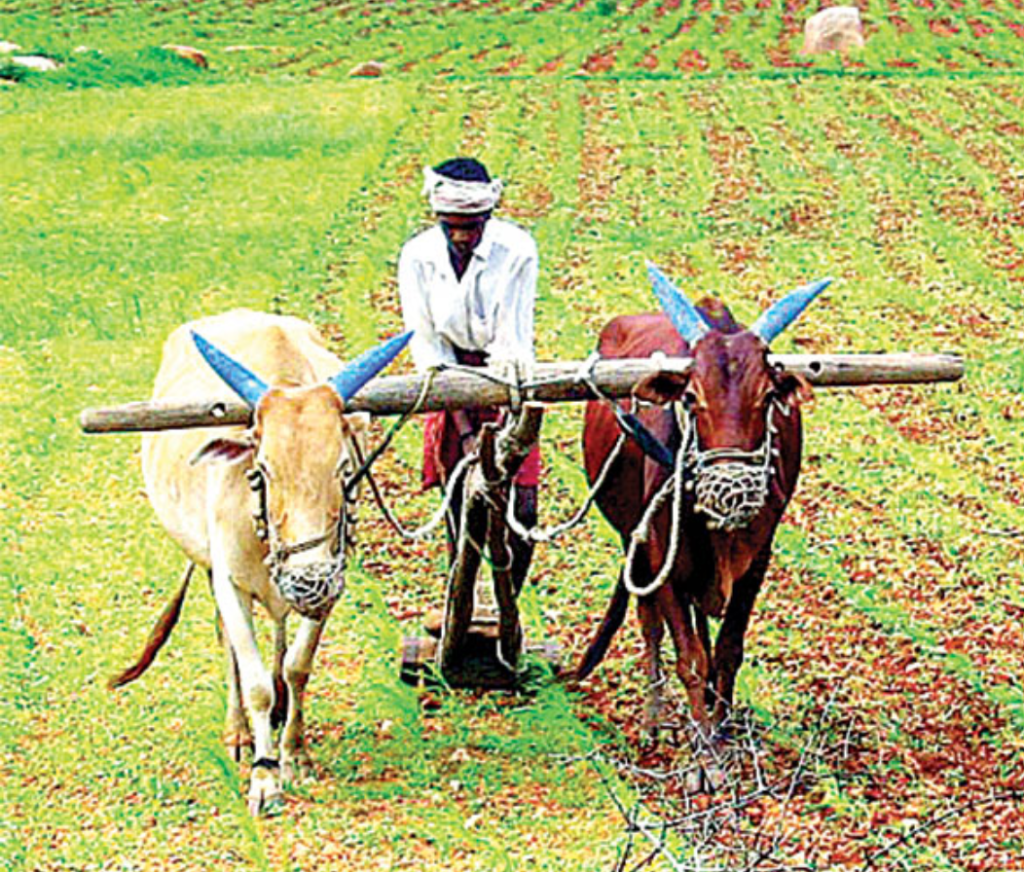
For a long time, the farmers have been distressed. From harsh nature to corrupted humans, they have to deal a lot in their lives. The Covid-19 pandemic destroyed the supply chains and thus devastated the business of many farmers who grew fruits and vegetables.
To provide some relief to farmers, the government came with three reforms
- Ammendment of Essential Commodities Act 1955.
- Enabling Contract farming.
- Relaxing Agriculture marketing rules.
Ammendment of Essential Commodities Act 1955
There are many products that are categorised as essential commodities and therefore their prices and quantities are regulated by government. The government has now ammended this act and deregulated cereals, edible oils, oil seeds, pulses, onions and potato.
Enabling Contract Farming
This reform was passed as ‘The Farmers (Empowerment and Protection) Agreement on Price Assurance and Farm Services Ordinance, 2020’. We are all aware of how businesses hedge their risks by entering into contracts. Now, this model of contract can be used in farming also. Farmers can now enter into contracts with the buyers and get an assured amount for their crops. This will enable them an assured income.
Relaxing Agriculture marketing rules
Out the the three reforms this reform is the most appealing one. The government passed this reform as ‘The Farmers’ Produce Trade and Commerce(Promotion and Facilitation) Ordinance,2020′. This ordinance not only frees farmers from many barriers but also gives them exemption from taxes and fees.
The existing system:
In the current system farmers had to sell their crops in mandis aka APMC (Agriculture Produce Marketing Companies). APMCs were formed by state government to ensure that farmers get fair price on their farm produce and these APMCs are governed by the APMC Act. The farm produce is brought to the market and sold through auction. Only licensed traders can operate within the market and private ones are not allowed to buy directly from the farmers. These licensed traders used to form a cartel and thus farmers had to sell them at very lower prices. Under this system, only those traders who registered with that market can purchase from the farmers of that market. So, a trader from Gujarat will not be able to purchase from a mandi in Delhi unless he is registered there. The recent ordinance removed this barrier and thus allows farmers to sell their crops to any buyer.
This open ups the opportunity for private players to enter the market. However, these private players will have to incur capital expenditure in form of establishing a system to procure farm produce. They will compete against the existing system of APMC and thus it is not going to be easy for the new entrants. They will have to setup a physical infrastructure (a private mandi) which enables them to weigh, sort and grade the farm produce. This mandi should also be near to the farm-gate.
Without any doubt these reforms are a step towards prosperity of farmers. However, the farmers may not get immediate benefits of these reforms. In these times, the farmers required actions that provides them with immediate benefits. This reforms will help them in long run but when it comes to fighting the current situation, the farmers are not equipped. They needed measures which could support their family in a short time. If government does not come with any measure to give farmers short term benefits than farmers have to look for themselves. In that situation, they can only hope of some good private players entering the market immediately and thus paying them to sustain themselves.
 Track2Training
You must be logged in to post a comment.