| Marketing generally creates interest in the product or services among the potential buyers. It helps the manufacturers to promote and sell their products. It is the digital era and technology is everywhere. Hence, there is a need for businesses to go online and have a web presence. Digital marketing can be simply explained as selling products or services online ( or offline) using digital channels such as social media, mobile applications, email, web applications, search engines, websites, etc. Offline marketing channels include TV Marketing, SMS Marketing, etc. The tools used for digital marketing are called the assets of it. They are Your website , Branded assets(logos,abbreviations,etc) , Video content(video ads,product demos, etc),Images (product shots),Written content (blog posts, eBooks, product descriptions etc) ,Social media pages etc. 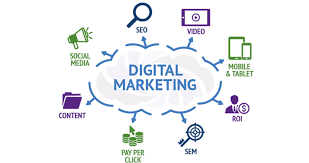 The businesses develop a plan and create a website with web-based payment software. It helps to create brand awareness. Brands and organizations use websites to create and upload the content (product information, images, etc) while using other mediums to distribute it. The successful digital marketing efforts convert a visitor of the website as a regular customer or client. Booking a movie ticket or purchasing a product in the website are some instances. Almost every e-commerce website these days wants a mobile version of it. Screen sizes are always changing, so it’s important that your site can adapt to any screen size. Compared to the desktop computers ,the Android smartphones, Apple iPhones, iPads etc have relatively small display size and require a different approach to how content is laid out on the screen. Responsive web design responds to the needs of the users and the screen size, platform, and orientation (Portrait or Auto-rotate) of the devices they’re using. The layout changes based on the screen size and capabilities of the device. For example, some of your visitors will be using a touchscreen. The modern responsive design considers all of these things to optimize the experience for everyone. The different digital marketing strategies are: i) Search engine optimization (SEO) , ii) Search engine marketing (SEM) , iii) Pay-per-click advertising (PPC) , iv) Email marketing , v) Social Media Marketing (SMM) , vi) Content marketing etc . Web analytic tools enable marketers to collect and analyze data. This is commonly tracked through Google Analytics. The data collected could be quantitative or qualitative. They help them to understand the sources of traffic on their website, what’s working and what’s not, their ROI ( Return on investment) and how they can enhance their digital marketing efforts. This facilitates them to make the right offer at the right time and in the right place. The customers are segmented based on their geographical location and served accordingly. There is a variation in the marketing style depending on the language, nativity, etc. Thus, businesses carry out Local & international operations online. Conclusion : Digital marketing costs considerably less and reaches a wider range of audiences. Using digital marketing to promote your small business will help you to have a much better chance of business success. In the forthcoming articles, we shall discuss about each digital marketing strategy in greater detail. | |

 Track2Training
You must be logged in to post a comment.