
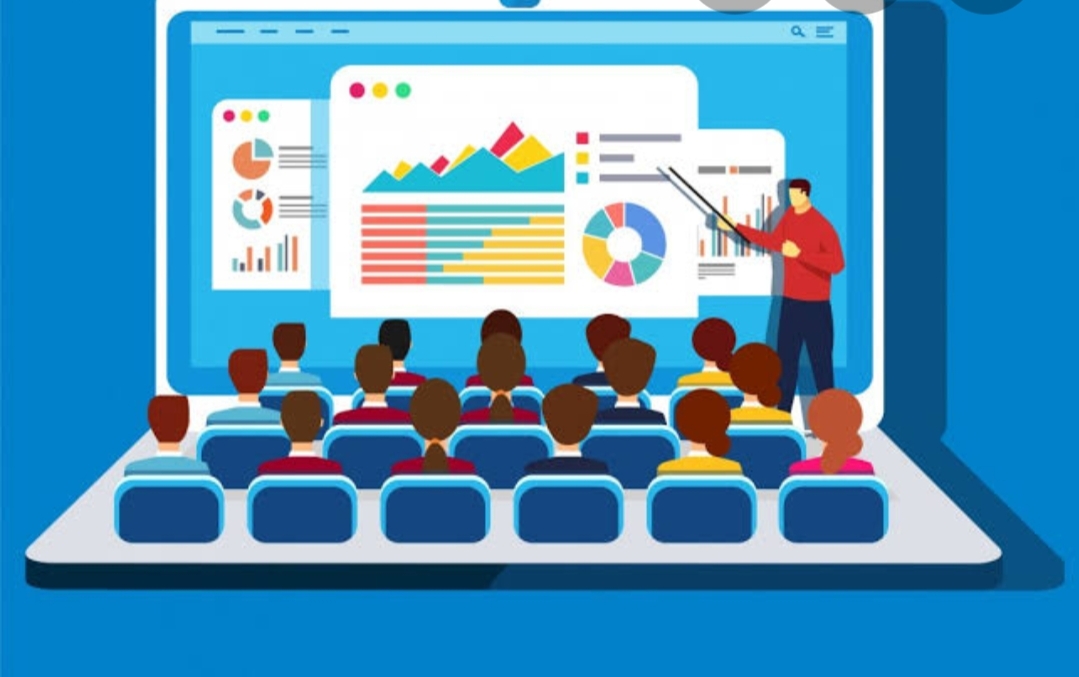
In the last 20 years, the Internet has grown from being nearly non-existent into the largest, most accessible database of information ever created. It has changed the way people communicate, shop, socialise, do business and think about knowledge and learning. Much more than just a new twist on distance learning, online schooling is changing the face of traditional classrooms and making education more accessible than ever before.
Online education is a form of education where students use their home computers through the internet. For many nontraditional students, among them all those who want to continue working full time or raising families, online graduations and courses have become popular in the past decade. Often online graduation and course programmes, some of which are conducted using digital technologies, are provided via the online learning portal of the host university.
An online education is preferred by individuals who may not be able to make it for classes in a traditional brick and mortar kind of college due to various reasons.
According to me and my observation online education is effective because: The concept of traditional education has changed radically within the last couple of years. Being physically present in a classroom isn’t the only learning option anymore — not with the rise of the internet and new technologies, at least. Nowadays, you have access to a quality education whenever and wherever you want, as long as you have access to a computer. We are now entering a new era — the revolution of online education.
There’s no need to discount the skepticism surrounding education through the internet. It’s hard to understand the notion of leaving behind the conventional classroom, especially if it’s to face this vast space called The Internet.
However, that’s not reason enough to shy away from this alternative, which has proven to be valid and useful for many students. According to the most recent survey from Babson Survey Research Group, over 30 percent of higher education students in the United States are taking at least one distance course. Online education is a sensible choice whether you’re a teenager or an adult. As a student, this can be a useful learning method for sharpening your skills in a difficult subject, or learning a new skill.
Keep on reading to learn five more reasons why you should get involved in online education!
1. It’s flexible.
Online education enables the teacher and the student to set their own learning pace, and there’s the added flexibility of setting a schedule that fits everyone’s agenda. As a result, using an online educational platform allows for a better balance of work and studies, so there’s no need to give anything up. Studying online teaches you vital time management skills, which makes finding a good work-study balance easier. Having a common agenda between the student and teacher can also prompt both parties to accept new responsibilities and have more autonomy.
2. It offers a wide selection of programs.
In a space as vast and wide as the internet, there are infinite skills and subjects to teach and learn. A growing number of universities and higher education schools are offering online versions of their programs for various levels and disciplines. From music composition to quantum physics, there are options for every type of student. Studying your program online is also a great option for getting an official certificate, diploma, or degree without physically setting foot on a university campus.
3. It allows for a customized learning experience.
We’ve mentioned before how flexibility can help you to set your own study pace. But online education is also flexible for each student’s individual requirements and level of ability.
Online classes tend to be smaller than conventional class size. Most of the time, online learning platforms only allow one student at a time, and in almost all cases, this allows for greater interaction and more feedback between you and your tutor.
There’s often access to very diverse material such as videos, photos, and eBooks online as well, and tutors can also integrate other formats like forums or discussions to improve their lessons. And this extra content is available at any moment from anywhere, which will offer you a more dynamic and tailor-made education.
4. It’s more cost-effective than traditional education.
Unlike in-person education methods, online education tends to be more affordable. There’s also often a wide range of payment options let you pay in installments or per class. This allows for better budget management. Many of you may also be subject to discounts or scholarships, so the price is rarely high. You can also save money from the commute and class materials, which are often available for free. In other words, the monetary investment is less, but the results can be better than other options.
As colleges and universities have shuttered their physical campuses in the face of the spread of COVID-19, they have moved their courses to remote and online formats in rapid fashion. And that’s prompted many to wonder what the ultimate impact this period of time may have on online learning in higher education.
Based on the present situation, where individuals come to stand on online learning will depend on where they sit currently. That is, there will be both positive and negative impacts on the state of online learning in higher education.
FUTURE OF ONLINE EDUCATION
Online teaching is here to stay. Many students prefer the online classroom since it offers flexibility in their busy schedules. With the proliferation of information and knowledge, students must become lifelong learners in today’s world, and online education plays an important role in helping individuals access the learner-centered and self-directed instruction.
With enhanced software, hardware, and Internet access, more options for online education will become available. With student enrollments increasing faster than classrooms can be built, students becoming more proficient with technology, and students pursuing an education that meets their needs, the future of online education will continue to grow. Online degree programs will become more widely accepted as they become a more common practice.
 Track2Training
Hi Nidhi, thanks for posting! I couldn’t agree more! I am a second grade teacher and we switched to remote learning in March. I was so impressed with how my students were able to handle learning online. It was also effective because they were continuing to make progress in reading, writing, and math!
LikeLiked by 1 person
It’s a great start…✌️
LikeLiked by 1 person