
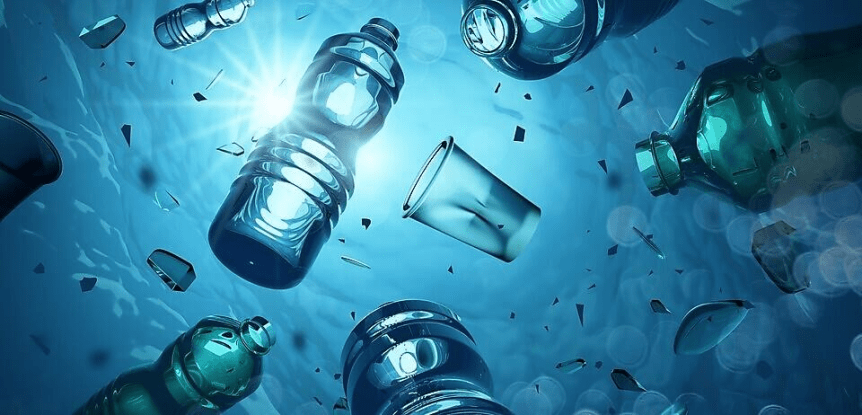
Plastic is a synthetic organic polymer made from petroleum, and has wide uses in packaging, building, construction and household materials. If you look around, you will easily be able to spot a plastic item, be it sports equipment or electrical devices. Yes, plastic is used everywhere and is very important because of its lightweight structure and malleable properties. But here is the flipside to it.
Nearly 300 million tons of plastic is produced every year, with half of it being used to make single-use items such as shopping bags, toothbrush and straws. Even a bag of chips is made of plastic and is discarded as soon as the chips are consumed. Now get this. About 8 million tons of plastic end up in our oceans every year. Water plastic makes up 80% of all marine debris.
Plastic can be present in surface waters as well as deep sea sediments. If you thought deep sea trenches could escape plastic, you are in for a surprise. A plastic bag, one that you give away in a grocery store, was found in the Mariana Trench at depths of 10,975 meters (36,000 feet).
Plastic poses a threat to marine life. Hundreds of marine species ingest the plastic debris which can cause lacerations and injuries. Entanglement and suffocation of fishes and other organisms are a major cause of death. Plastic, when incinerated leads to emissions of carbon dioxide, which increases the temperature of the atmosphere. This leads to global warming, a threat prevalent in all parts of the world, especially the Polar Regions, which are witnessing rapid melting of glaciers and increase in the water level in oceans. Plastic waste threatens food quality and health, and also affects coastal tourism.
In these times, governments of several different countries are taking steps to tackle this threat of marine plastic pollution. Equipped with research, technology and innovation, one can slowly but surely reduce the overall plastic consumption.
One interesting project which occurred recently was introduced by the World Bank. They invited youth all across India to take a deep dive into the problems of mismanaged plastic waste and come up with innovative ideas to counter the tide. Well, the response was overwhelming. Every team came up with brilliant ideas that were very realistic and could be implemented on a larger scale. Read ahead to find out about a few of the interesting projects.
Ecopod- a solution proposed by Team Iota, which won first place, talked about the use of plastic for packaging of personal toiletries and how much plastic waste it amounted to. The team presented a single use, plastic free shampoo, conditioner and body wash solution via disposable pellets. Ensuring a 37.5 percent reduction in bottled personal shampoos and toiletries and an 80% reduction in CO2 emissions, bottled toiletries might well be water under the bridge if Ecopods were to take off.
Second place winners-team INACTUS, developed a project about building sustainable toilets with plastic bottles stuffed with waste. Both these projects also focused on providing employment to women in rural areas, hence employing the women workforce towards a global cause.
This is a global problem, which can only be solved if all the countries come together, and address these issues. When companies, industries work towards minimum plastic usage as an achievable goal and people voice their opinions on this pressing issue. When people understand the importance of the oceans and reducing plastic consumption, only then will we be able to see a measurable outcome.
 Track2Training