
“Sustainable development is the pathway to the future we want for all. It offers a framework to generate economic growth, achieve social justice, exercise environmental stewardship and strengthen governance.” – Ban Ki-moon
Climate change is real. And the need of the hour is to conserve our renewable resources and switch to sustainable development to protect our environment. Green-building practices help us reduce our dependency on non-renewable resources and limited environmental pollution.
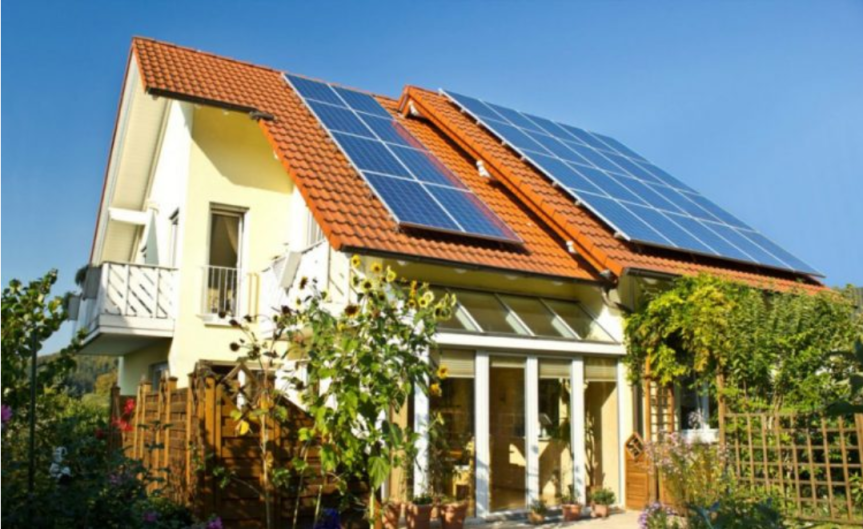
One of such green-building practices is sustainable housing or sustainable homes. Sustainable housing enables efficient use of resources and energy which helps in causing minimum impacts on the environment. Energy efficiency is one of the key features of this green-building practice. Some of the features of a sustainable house are: solar panels, foam insulation, low-emissivity windows, sealed attic spaces, advanced framing techniques, and energy-efficient heat pumps, etc. are some features which make a house sustainable.
What is a sustainable home?
A home that is energy efficient and is economical to run is called a sustainable home. It is build using raw- material which doesn’t harm the environment. This goes for the waste material, which is generated in the process of building such a house too.
The choice of material is very important. The materials should be durable so that the cost of replacing or renovating can be avoided. It should include sustainably sourced timber, low volatile organic compounds finishes, and other material which can be recycled. Thermal mass can also be one of the considerations for materials because of their ability to absorb and release heat.
Types of eco-friendly sustainable house designs
TINY HOMES
Tiny homes are economical and use less energy, materials, and space than the average-sized home and environmental solution to living simply and sustainably. These are usually between 100-400 square feet, although some can be a bit larger or smaller. These can even be mobile, fitting on a trailer, and can be moved to different places.
PREFABS
Prefabricated homes are known to be built off-site and ahead of time and these are made using fewer materials, energy, and space than the average-sized home parts shipped and assembled on the site. There are two kinds of prefab homes which are Panel build and Modular. The construction of both varies greatly. These create less waste than the regular site-built homes.
STRAW BALE
Straw bale homes are made using bales of straw as an actual structural component or for insulation. Straw is a natural material that releases no harmful chemicals. Building straw bale homes is quite sustainable. Also, turning straw into something useful rather than burning it into waste helps in reducing the environmental pollution.
ZERO-CARBON
The annual net carbon footprint of a zero-carbon home is zero. These are still tied to the grid but are so airtight, insulated, and need low energy, that these have become carbon-free. These homes balance out any energy costs by producing enough renewable energy.
EARTHSHIPS
An Earthship is completely self-sustaining which is constructed using both natural and recycled materials. Some of its features include heat and cool themselves naturally, collect wind and solar power, harvest water, etc.
References
https://elemental.green/what-are-the-different-types-of-sustainable-homes/
 Track2Training