
Is the dowry System still a part of India? Yes, although it is banned by the government but still in some places these practices are still going on. Dowry is a transfer of valuable property or a thing which is given to a bride by the groom or to a groom by a bride, or by the parents of bride and groom to each other. In India, the dowry system is transferring durable goods like cash, movable property, goods, jewelry, furniture, electrical appliances, along with the bride from the bride’s family to the groom’s family as a condition of marriage, to the newlyweds which help in setting up their household. Dowry is also called Dajeh.
The Dowry system can make major differences in a family in means of financial issues or a burden to the family. In some cases dowry system leads to crime against women like, emotional abuse, injury and can also lead to death in some cases. Dowry has been banned in India under a specific law, the Dowry Prohibition Act of 1961, sections 304B and 498A. Article 3 of the prohibition act of 1961 says that giving or taking presents at the time of marriage to the groom or bride without any demand doesn’t have to pay a penalty for it. In some places, dowries are still demanded and marriages are still finalized based on dowry. If the dowries aren’t fulfilled according to the groom’s side of the family, they end up sending the bride to her place or torturing the bride and her family.
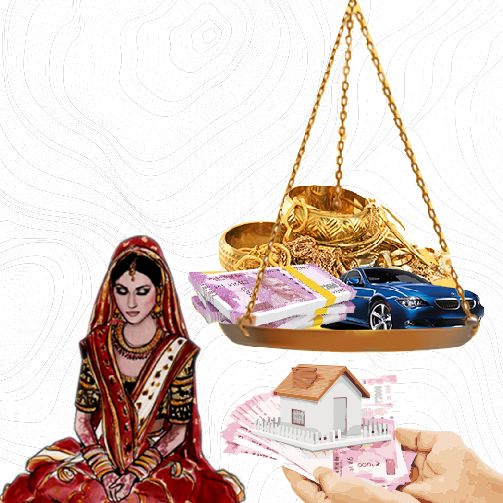
This dowry culture is so popular in some parts of India, but not only in rural areas. Even the educated families living in high-class societies and metropolitan cities are also part of these unethical practices and harassing women for not giving proper money and gold. In 2020, 17 cases of abuse and harassment of women for dowry and was mentioned in The New Indian Express.
In India, this system is still in go because of the patriarchal society and thinking, the values of men are high than women. In this society, boys are seen with the higher card, this is dependent on how much price the bride’s family is paying upon a marriage. Another reason for this system is deeply rooted in the Indian culture, but this mindset is unchangeable as this is normal. Even today people have been reminded about this system, though they ignore it and some of the families do practice it willingly or unwillingly in the fear of judgements and being criticized for not following the customs. It is known that women’s marriage is a big and important event. But if the marriage requires this kind of thing to secure her’s life after marriage or marriage is very unethical and abrupt. This is the major discrimination women are facing but it is never seen as a crime even though it is banned by the government.
The imprisonment of breaking the anti-dowry is 5 years and a fine up to Rs.15000 on the value of dowry given. Although Indian laws have been made against the dowries which are intact. But are ineffective in many states and cities in India, but deaths and murders continue to happen and the government isn’t taking a big step regarding it. This should be focused on the news so that a women can stay without any discrimination
and with safety.
 Track2Training
You must be logged in to post a comment.