
Avul Pakir Jainulabdeen Abdul Kalam (October 15, 1931 – July 27, 2015), known as Dr. A. P. J. Abdul Kalam, was an Indian scientist who served as the 11th President of India from July 25, 2002, to July 25, 2007. He was honored with several prestigious awards during the course of his carrier including India’s highest civilian honor “Bharat Ratna” in 1997.
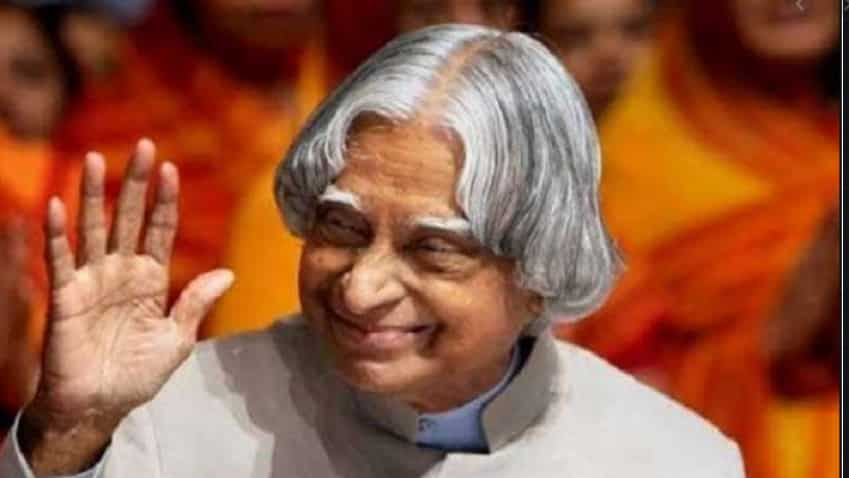
He was born in Dhanuskhodi, Rameswaram, Tamil Nadu, and studied physics and aerospace engineering.
Before becoming President of India, he worked with the Indian Space Research Organization (ISRO) and Defence Research and Development Organization (DRDO) as an aerospace engineer and was intimately involved in India’s civilian space programme and military missile development efforts. He thus came to be known as the Missile Man of India for his work on the development of ballistic missiles and launch vehicle technology.
If you fail, never give up because FAIL means “First Attempt In Learning”
– APJ Abdul Kalam
Some biggest achievements of India’s ‘Missile Man’
- Dr. APJ Abdul Kalam led India’s two major science research organizations – Defence Research and Development Organisation (DRDO) and Indian Space Research Organisation (ISRO).
- Dr. A. P. J. Abdul Kalam served as the Chief Scientific Adviser to the Prime Minister and Secretary of the Defence Research and Development Organisation (DRDO). The Pokhran-II nuclear tests were conducted during this period and Kalam played an intensive political and technological role in their success.
- He directed the project to develop India’s first Satellite Launch Vehicle (SVL). As a project director for the development of the indigenous Satellite Launch Vehicle at ISRO led to groundbreaking scientific development. It was in July 1980, that India’s SVL-III successfully deployed the Rohini satellite in the near-Earth orbit leading to the country becoming a member of the exclusive Space Club.
- He was responsible for the successful launch of Agni and Prithvi missiles.
- Dr. Kalam directed projects for the development of India’s ballistic missiles. He headed the projects Devil and Valiant, for the development of ballistic missiles using the technology behind the successful SLV programme.
- The Government of India honored him with Padma Bhushan in 1981, Padma Vibhbuhsan in 1990 for his work with ISRO and DRDO and his role as a scientific advisor to the Government. In 1997, Kalam received India’s highest civilian honor,the Bharat Ratna, for his contribution to the scientific research and modernization of defense technology in India. In 2013, he was the recipient of the Von Braun Award from the National Space Society “to recognize excellence in the management and leadership of space-related project”.
- Dr. Kalam had always encouraged the young population of India to develop a habit of reading and penned down many inspirational books. Some of his notable masterpieces are India 2020: A Vision for the New Millennium (1998); Wings of Fire: An Autobiography of A P J Abdul Kalam (1999); Ignited Minds: Unleashing the Power Within India (2002).
- APJ Abdul Kalam made huge contributions to the healthcare sector. Woking jointly with the cardiologist Soma Raja, the late President developed a cost-effective coronary stent ‘Kalam-Raju Stent’ which helped in making healthcare accessible to all.
Dr. Kalam died on July 27, 2015, while delivering a lecture at the Indian Institute of Management in Shillong.
Reference Link : https://www.britannica.com/biography/A-P-J-Abdul-Kalam
 Track2Training