


By Kavita Dehalwar
Life Cycle Assessment (LCA) is a systematic method for evaluating the environmental impacts of products, processes, or services from cradle to grave. In the context of road construction, the incorporation of recycled and secondary materials has gained significant attention due to its potential to reduce environmental impacts and promote sustainability. This article delves into the use of LCA for assessing recycled and secondary materials in road construction, highlighting its importance, methodologies, benefits, challenges, and case studies.
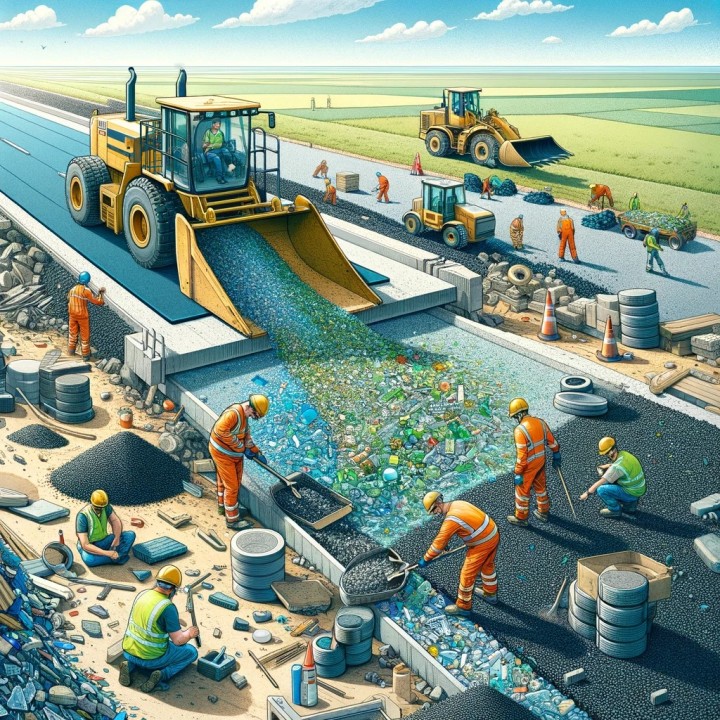
Importance of LCA in Road Construction
LCA is essential in road construction for several reasons:
- Environmental Impact Assessment: It provides a comprehensive analysis of the environmental impacts associated with different materials and construction processes.
- Resource Efficiency: It promotes the efficient use of resources by identifying opportunities to use recycled and secondary materials.
- Sustainability Goals: LCA supports sustainability goals by highlighting the potential for reducing greenhouse gas emissions, energy consumption, and waste generation.
- Policy and Decision Making: It aids policymakers and stakeholders in making informed decisions based on scientific data.
Methodologies of LCA in Road Construction
The LCA of recycled and secondary materials in road construction involves several key steps:
- Goal and Scope Definition: This initial phase involves defining the purpose of the study, the system boundaries, and the functional unit (e.g., one kilometer of road).
- Life Cycle Inventory (LCI): This phase involves data collection on all relevant inputs and outputs, such as raw material extraction, transportation, processing, construction, maintenance, and end-of-life disposal.
- Life Cycle Impact Assessment (LCIA): In this phase, the inventory data is analyzed to assess potential environmental impacts across various categories, such as global warming potential, resource depletion, and toxicity.
- Interpretation: The final phase involves interpreting the results to identify significant impacts, potential improvements, and recommendations for stakeholders.
Benefits of Using Recycled and Secondary Materials
- Reduced Environmental Impact: Utilizing recycled materials can significantly lower the carbon footprint, reduce energy consumption, and minimize landfill waste.
- Resource Conservation: It helps conserve natural resources by reducing the demand for virgin materials.
- Cost Savings: Recycled materials can be cost-effective, reducing the overall cost of road construction and maintenance.
- Improved Performance: In some cases, recycled materials can enhance the performance and durability of road surfaces.
Challenges in Implementing LCA for Recycled Materials
- Data Availability and Quality: Obtaining reliable and comprehensive data for all life cycle stages can be challenging.
- Standardization: The lack of standardized methods and guidelines for LCA in road construction can lead to inconsistent results.
- Technical Limitations: Some recycled materials may have limitations in terms of performance and suitability for specific applications.
- Regulatory and Market Barriers: Regulatory restrictions and market acceptance can hinder the widespread adoption of recycled materials.
Case Studies
- Recycled Asphalt Pavement (RAP): RAP is widely used in road construction. LCA studies have shown that using RAP can reduce greenhouse gas emissions by up to 25% compared to virgin asphalt.
- Crushed Concrete Aggregate (CCA): Recycled concrete is used as aggregate in road base layers. LCA indicates that CCA reduces the demand for natural aggregates and decreases energy consumption.
- Blast Furnace Slag: This by-product of steel production is used as a supplementary cementitious material. LCA demonstrates that it can lower the carbon footprint of road construction.
Conclusion
Life Cycle Assessment is a crucial tool for evaluating the environmental impacts of recycled and secondary materials in road construction. By providing a comprehensive analysis of these impacts, LCA helps promote sustainable practices, resource efficiency, and informed decision-making. Despite the challenges, the benefits of using recycled materials, such as reduced environmental impact, resource conservation, cost savings, and improved performance, make it a viable option for sustainable road construction. Continued research, data collection, and collaboration among stakeholders are essential to overcome the challenges and fully realize the potential of recycled materials in the construction industry.
References
Huang, Y., Bird, R. N., & Heidrich, O. (2007). A review of the use of recycled solid waste materials in asphalt pavements. Resources, conservation and recycling, 52(1), 58-73.
Marinković, M., Zavadskas, E. K., Matić, B., Jovanović, S., Das, D. K., & Sremac, S. (2022). Application of wasted and recycled materials for production of stabilized layers of road structures. Buildings, 12(5), 552.
Saride, S., Puppala, A. J., & Williammee, R. (2010). Assessing recycled/secondary materials as pavement bases. Proceedings of the Institution of Civil Engineers-Ground Improvement, 163(1), 3-12.
Sharma, S. N., Lodhi, A. S., Dehalwar, K., & Jaiswal, A. (2024, June). Life Cycle Assessment (LCA) of Recycled & Secondary Materials in the Construction of Roads. In IOP Conference Series: Earth and Environmental Science (Vol. 1326, No. 1, p. 012102). IOP Publishing.
Sharma, S. N., Prajapati, R., Jaiswal, A., & Dehalwar, K. (2024, June). A Comparative Study of the Applications and Prospects of Self-healing Concrete/Biocrete and Self-Sensing Concrete. In IOP Conference Series: Earth and Environmental Science (Vol. 1326, No. 1, p. 012090). IOP Publishing.
 Track2Training
You must be logged in to post a comment.