
1. Push and Pull Factors of Migration
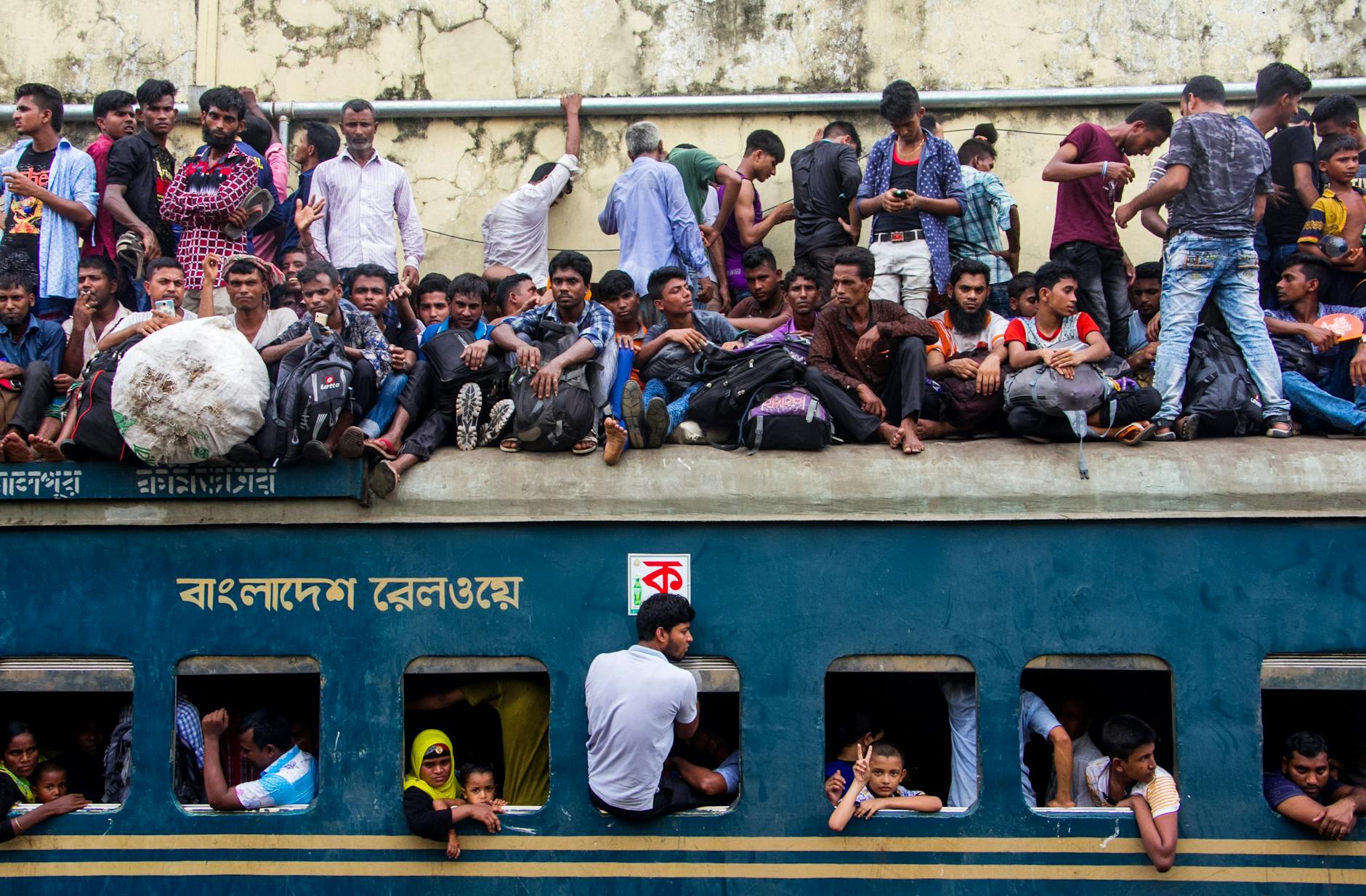
Migration is the movement of people from one place to another, often from rural to urban areas in India. It is driven by a combination of push factors (forces that drive people away from rural areas) and pull factors (attractions of urban areas).
(a) Push Factors (Rural “Repulsion”)
- Agricultural distress: Small landholdings, low productivity, monsoon dependency.
- Unemployment/underemployment: Lack of non-farm jobs in villages.
- Poverty and indebtedness: Inability to sustain livelihoods.
- Environmental stress: Floods, droughts, soil erosion, declining groundwater.
- Social factors: Caste discrimination, lack of education and healthcare facilities.
- Conflict/Displacement: Insurgencies, land acquisition for dams, mining, etc.
(b) Pull Factors (Urban “Attraction”)
- Employment opportunities: Industrial jobs, construction, services, IT, transport.
- Higher wages and better living standards (at least in perception).
- Educational facilities: Colleges, universities, coaching centers.
- Healthcare and services: Modern hospitals, access to markets, communication.
- Social mobility: Escape from traditional caste and community restrictions.
- Modern amenities and lifestyle: Electricity, transport, entertainment.
2. Migration Trends in India
Based on Census 2011 and NSSO surveys:
- Magnitude: 37% of India’s population (≈ 450 million people) are migrants.
- Direction: Predominantly rural → rural (about 55%), followed by rural → urban (≈ 22%), then urban → urban and urban → rural.
- Gender differences:
- Women migrate mostly due to marriage (≈ 70% of female migration).
- Men migrate mainly for work and employment.
- State-level trends:
- Out-migration states: Bihar, Uttar Pradesh, Jharkhand, Odisha, Rajasthan.
- In-migration states/cities: Delhi, Maharashtra (Mumbai, Pune), Gujarat (Surat, Ahmedabad), Karnataka (Bengaluru).
- Emerging trend: Increasing inter-state and international migration of skilled workers (IT, healthcare, education).
3. Impacts of Migration
Migration affects both source (rural) regions and destination (urban) areas in complex ways.
(a) Impacts on Urban Development
Positive:
- Supply of cheap labor for industries, construction, transport, domestic work.
- Contribution to economic growth and urban dynamism.
- Cultural diversity, exchange of traditions, cuisines, and ideas.
Negative:
- Overcrowding of cities → housing shortages, congestion.
- Growth of slums and informal settlements (e.g., Dharavi in Mumbai).
- Pressure on infrastructure: water, sanitation, transport, healthcare.
- Urban unemployment and informalization of jobs.
- Social tensions, sometimes conflicts between migrants and locals.
(b) Impacts on Rural Development
Positive:
- Remittances: Migrants send money back, improving household income, housing, and education.
- Skill transfer: Return migrants bring new skills, ideas, and technologies.
- Reduced pressure on land: Out-migration reduces pressure on scarce agricultural land.
Negative:
- Brain drain: Young and skilled population leaves, aging population remains.
- Gender imbalance: Male out-migration → feminization of agriculture (women left behind).
- Decline in traditional practices: Social cohesion weakens.
- Dependency on remittances: Can make villages vulnerable to economic shocks.
4. Migration, Urbanization, and Development Nexus
- Migration is a key driver of urbanization in India.
- It strengthens the rural–urban continuum:
- Villages depend on cities for markets, services, and remittances.
- Cities depend on villages for labor, food, and raw materials.
- Balanced regional development policies are needed to reduce distress migration and manage sustainable urban growth.
✅ In summary:
- Push factors (poverty, lack of jobs, distress) drive people out of villages.
- Pull factors (jobs, education, amenities) attract them to cities.
- Migration brings economic benefits but also creates social, environmental, and infrastructural challenges in both rural and urban areas.
 Track2Training
You must be logged in to post a comment.