


A brand refresh is not only a new logo, a new deck, or a new website. It is a shift in how you want clients and teammates to read you the moment they step into the space. Your office walls sit in that first glance. They can say “focused and confident,” “human and welcoming,” or “ready for what’s next”—without a single word from your team.
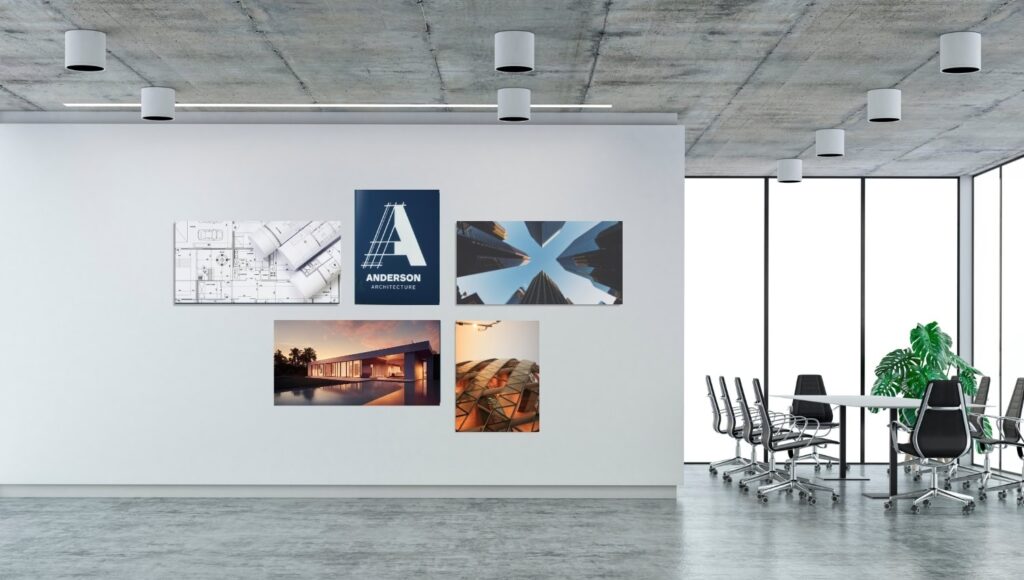
That is why office wall art is one of the fastest ways to communicate change. It is visible in the entry view, it stays in the background of meetings, and it becomes part of the daily routine. If you want your refresh to feel real, start with the surfaces people look at every day.
If you are planning a full update, start by saving a shortlist of pieces that match the new direction, then build one hero wall before you expand to other rooms.
Define the change before you choose office wall decor
Art works best when it supports a clear message. Before you pick a canvas print or an art print, write down what has changed in your business. Maybe you moved from service work to product work, introduced a new offer, changed leadership, or shifted the tone of your brand voice. The goal is to turn that change into a short set of visual cues you can repeat across the office.
Write your “brand cue” list
Choose three to five cues that describe how you want the space to feel. Keep them plain and actionable. Then match each cue to a visual direction: color range, subject matter, and layout.
- Clear direction: clean shapes, strong lines, simple layouts
- Team-first culture: warm tones, human themes, balanced sets
- Growth mindset: upward movement, energetic composition, bold scale
- Calm focus: open space, natural scenes, soft gradients
- Craft and detail: close-up textures, pattern, careful repetition
Why office artwork signals change so well
People notice what repeats. When the same visual language shows up in the reception wall, the meeting room, and the hallway, it reads as intentional. Office artwork also helps reduce mixed messages. If the new brand voice is clean and direct, a crowded wall filled with unrelated pieces will work against it. A planned wall tells the viewer, “We made a decision and we stand behind it.”
Three signals that feel immediate
First, color. A new palette is easy to read, even from a distance. Second, subject. Business themes, calm landscapes, or abstract forms each set a different tone. Third, scale. A larger hero piece says you are confident about the new direction.
Step-by-step: choose office wall art that fits the new brand
You do not need dozens of pieces to make the refresh visible. A small number of well-chosen prints can carry the message, especially when you plan the wall as one system.
Step 1: choose one main theme
Pick a theme you can repeat across the office. For a strategy-led refresh, business imagery can work well; for a culture-led refresh, abstract or nature themes can soften the room and support focus. If your brand story is about progress and clarity, explore the Business Concept Wall Art Collection for clean, goal-forward visuals.
Step 2: pick a style lane and stay consistent
Consistency is what makes a wall feel planned. Decide if you want photography, graphic forms, or abstract work, then stay close to that lane. If you want a flexible mix that still looks unified, a set of abstract art prints can help create structure across different rooms. Start with the Abstract Art Print Collection and save a short shortlist.
Step 3: match the palette to your brand colors
Use your brand colors as a guide, not a rule. You can match exactly, or you can echo them through a similar temperature. A brand that uses deep blues can pair well with cool neutrals; a warm brand can use clay, sand, and soft reds. Keep one repeating color visible across most walls, even if each room has a different hero piece.
Step 4: choose sizes for office walls and sightlines
People view office walls from farther away than they view small home nooks. That means your pieces need enough scale to read from the doorway and from the table. If your walls are large, consider one main canvas as the anchor and smaller supporting pieces nearby.
Step 5: decide on one hero piece or a set
A hero piece is a single strong print that becomes the room’s focal point. A set is better when you want rhythm and repeat. Multi-panel layouts also work well in long corridors and wide meeting walls because they create a clean path for the eye.
Placement plan for offices and home offices
Placement is strategy. Put the strongest message where the most people will see it, then support it with quieter pieces nearby.
Reception wall: the first impression
Choose one clear statement piece that matches your new brand language. If your refresh is about confidence and direction, keep the layout clean and the scale generous. Avoid clutter around the frame so the message reads quickly.
Conference room: shared focus
Meeting rooms work best with art that supports attention. Abstract work, calm landscapes, and simple compositions keep the room from feeling noisy. If you want a natural direction that still looks professional, browse the Nature Wall Art Collection and select pieces with open space and balanced tones.
Hallway and entry: guide the walk-through
A hallway is a perfect place for a short series. Use two or three pieces that share the same size and frame style. Keep equal spacing so the wall feels planned rather than improvised.
Home office: stay on-message on camera
If your team works hybrid, your wall becomes your video background. Choose one piece that reflects your new direction and sits at eye level behind you. Keep the wall calm so the art reads as intentional, not distracting.
Format and sizing basics for office canvas prints
Canvas prints and paper art prints each bring a different feel. Canvas offers texture and depth and can be displayed without extra framing. Art prints are a strong pick when you want a crisp finish or a gallery-style wall with matched frames.
Simple measuring rules you can follow
- Measure the wall width, then aim for art that fills about two-thirds of that span.
- Hang the center of the main piece near eye level when standing in the room.
- For sets, keep spacing consistent—small gaps read cleaner than large gaps.
- When placing art above furniture, leave a comfortable gap so the wall and furniture look connected.
Material and build notes
Artesty canvas prints are printed on natural canvas with quality ink, then hand-stretched on wood panels that are about 1.5 inches (3 cm) thick, and packaged for shipment. Orders are typically shipped within 1–3 business days. These details help you plan timing for a move-in, a launch week, or a refreshed client visit schedule.
Theme ideas that match common brand refresh goals
Most refresh projects fall into a few clear categories. Choose the category that matches your message, then select art that repeats the same cue across multiple walls.
Calm focus for busy teams
Choose open landscapes, soft color transitions, and quiet compositions. These pieces work well behind desks and in meeting rooms, helping the space feel steady during busy cycles.
Clear goals for growth and momentum
Go for structured shapes, clean lines, and purposeful imagery. This approach fits teams that want the office to feel disciplined and directed.
New energy for creative work
Pick bolder forms and sharper contrast, then keep the palette aligned so the rooms still feel connected. Use one strong piece in the reception area, then repeat smaller pieces in work zones.
Before you buy: a quick office wall art checklist
- Audience: Is the wall for clients, new hires, or the core team?
- Message: Can you describe the wall’s message in one sentence?
- Scale: Will the art read from the doorway and from the table?
- Palette: Does at least one color repeat across most rooms?
- Layout: Are you choosing one hero piece, or a planned set?
- Timing: Do you need the pieces before a launch, an event, or a big client week?
Common mistakes that make a refresh feel unfinished
Mixing too many messages. If every wall tells a different story, the refresh reads as confusion. Choose one direction, then repeat it.
Going too small. Small prints can disappear on large office walls. Use scale where it matters, then support with smaller pieces nearby.
Skipping a wall plan. Buying art without a simple layout sketch often leads to uneven spacing and mismatched sizes. A quick plan saves time.
Wrap-up: make the change visible
A brand refresh becomes real when people can see it and feel it. Office wall art helps you express the new direction in a way that is steady, consistent, and easy to maintain. Start with one hero wall, set the visual rules, then expand room by room. When you are ready to select the pieces that match your new message, return to the Office Wall Art Collection and build a short shortlist.
 Track2Training
You must be logged in to post a comment.