


By Kavita Dehalwar
Concrete is one of the most widely used construction materials globally, accounting for a significant portion of the built environment. However, its production is responsible for approximately 8% of global carbon dioxide emissions, mainly due to cement manufacturing. In response to this environmental challenge, scientists and engineers have developed biocrete, a cutting-edge material poised to revolutionize the construction industry.
What is Biocrete?
Biocrete, also known as bio-concrete or living concrete, is an innovative material infused with biological components, typically microorganisms, to enhance its properties and sustainability. Unlike traditional concrete, biocrete integrates living systems that provide self-healing, reduced carbon footprint, and improved durability.
Biocrete comes in various forms, tailored to specific applications:
- Self-healing biocrete: Incorporates bacteria that produce calcium carbonate to seal cracks.
- Biologically-derived cement replacements: Use microbial processes to generate bio-based binders.
- Algae-based biocrete: Employs algae for carbon sequestration during production.
The Science Behind Biocrete
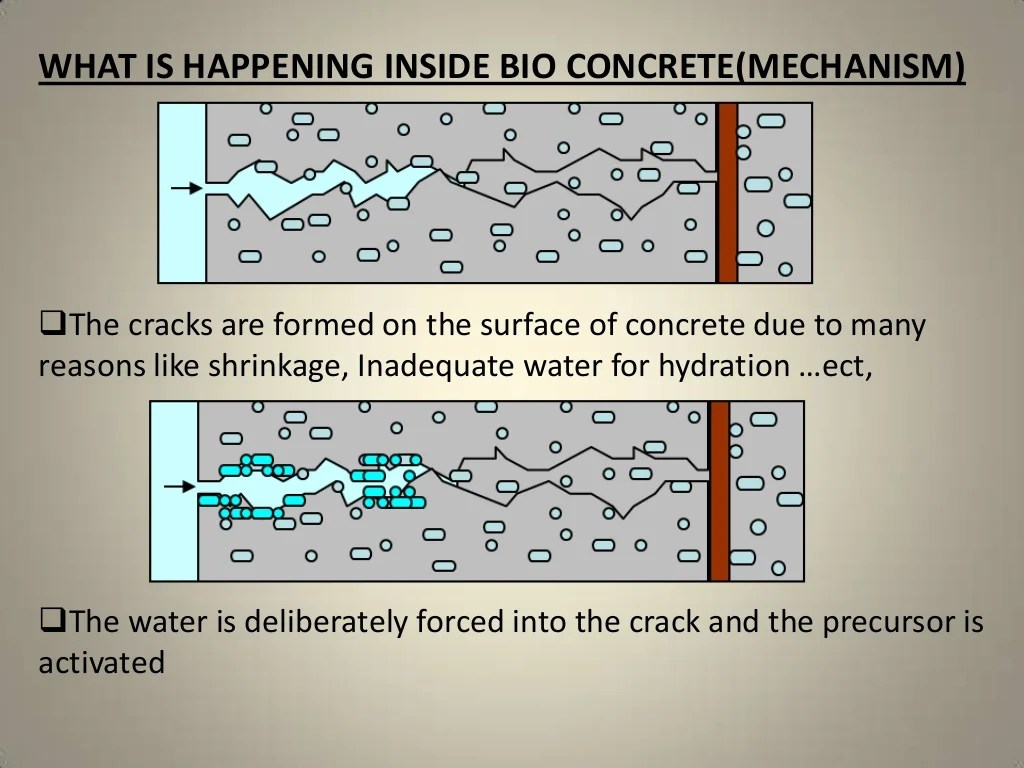
1. Self-Healing Mechanism
Biocrete’s self-healing properties leverage bacteria such as Bacillus species, which remain dormant within the material until a crack forms. When exposed to water and oxygen through the crack, these bacteria become active, consuming calcium lactate and producing calcium carbonate. This calcium carbonate fills and seals the cracks, restoring the material’s integrity.
2. Microbial Induced Calcium Carbonate Precipitation (MICP)
Microorganisms, such as Sporosarcina pasteurii, are utilized to precipitate calcium carbonate through metabolic processes. This biological method offers a sustainable alternative to conventional cement by reducing the need for high-temperature processes.
3. Algae-Based Solutions
Certain strains of algae, like Chlamydomonas reinhardtii, capture atmospheric CO₂ during photosynthesis and produce biomass and calcium carbonate. Integrating these algae into concrete production not only offsets carbon emissions but also creates a renewable cycle.
Advantages of Biocrete
- Environmental Benefits:
- Reduced Carbon Emissions: Biocrete eliminates or minimizes the use of traditional Portland cement, significantly lowering greenhouse gas emissions.
- Carbon Sequestration: Algae-based and microbial processes can actively sequester carbon during production.
- Durability:
- Self-healing properties extend the lifespan of structures by reducing maintenance and preventing water infiltration through cracks.
- Enhanced resistance to chemical attacks, especially in marine environments.
- Resource Efficiency:
- Utilizes biological and renewable inputs, reducing reliance on non-renewable resources.
- Potential for using waste products, such as agricultural residues, as feedstocks for microbial processes.
- Cost Savings:
- Lower long-term maintenance costs due to self-healing.
- Potential for reduced material costs as production scales up.
Applications of Biocrete
- Infrastructure Repair: Self-healing biocrete is particularly useful for repairing bridges, tunnels, and roadways, where traditional maintenance is challenging and costly.
- Green Building Projects: Architects and developers increasingly use biocrete in sustainable construction to meet environmental certifications.
- Marine Structures: Biocrete’s resistance to seawater makes it ideal for offshore platforms, seawalls, and docks.
- Customizable Design: Its properties can be tailored for specific applications, such as soundproofing or thermal insulation.
Challenges and Limitations
While biocrete holds immense promise, it faces several challenges:
- Production Costs: Currently, biocrete is more expensive to produce than traditional concrete due to limited scalability and the cost of biological components.
- Standardization: The construction industry lacks clear guidelines and standards for integrating biocrete into mainstream projects.
- Durability in Extreme Conditions: The long-term performance of biocrete under extreme environmental stress requires further testing.
- Public Perception: Adoption may be hindered by skepticism about the reliability of living materials in construction.
The Future of Biocrete
The growing emphasis on sustainable development and green technologies is likely to accelerate the adoption of biocrete. Researchers are exploring ways to:
- Scale up production while reducing costs.
- Improve the efficiency and resilience of biological processes.
- Integrate biocrete with other smart construction technologies, such as sensors and robotics.
Governments and private organizations can play a pivotal role by funding research, creating incentives, and establishing standards that encourage the adoption of biocrete in construction projects.
Conclusion
Biocrete represents a transformative innovation in the construction industry. By blending biology with traditional materials, it offers a sustainable solution to the environmental challenges posed by conventional concrete. While hurdles remain, ongoing advancements in material science and biotechnology are set to make biocrete a cornerstone of sustainable infrastructure. As the world strives to reduce its carbon footprint, biocrete stands out as a promising step toward a greener future.
References
Hayakawa, M., Matsuoka, Y., & Shindoh, T. (1993). Development and application of superworkable concrete. In Special Concretes-Workability and Mixing (pp. 185-192). CRC Press.
Kerley, M. (2004). Structural identification of phases constituting biocrete acid resistant mortar.
Sharma, S. N., Prajapati, R., Jaiswal, A., & Dehalwar, K. (2024, June). A Comparative Study of the Applications and Prospects of Self-healing Concrete/Biocrete and Self-Sensing Concrete. In IOP Conference Series: Earth and Environmental Science (Vol. 1326, No. 1, p. 012090). IOP Publishing.
 Track2Training
You must be logged in to post a comment.