


1️⃣ What is Cash Flow?
Cash Flow refers to the movement of money into and out of a project over a specific period of time.
In architecture and planning projects, cash flow helps determine:
- Project liquidity
- Financial sustainability
- Timing of expenditures and revenues
- Funding requirements
- Project feasibility
Unlike profit, cash flow focuses on actual money movement, not accounting estimates.
2️⃣ Types of Cash Flow in Planning Projects
1. Initial Cash Outflow
- Land purchase
- Construction cost
- Consultant fees
- Approval fees
- Infrastructure development
2. Operating Cash Inflows
- Sales revenue
- Rental income
- Parking fees
- Service charges
- Government grants
3. Operating Cash Outflows
- Maintenance
- Utility expenses
- Management cost
- Loan repayment
3️⃣ Basic Formula of Cash Flow
🔹 Single Period Cash Flow
Net Cash Flow=Cash Inflows−Cash Outflows
🔹 Multi-Year Cash Flow
Net Cash Flowt=Inflowt−Outflowt
Where:
- t = year or time period
🔹 Total Project Cash Flow
Total Net Cash Flow=∑(Cash Inflows)−∑(Cash Outflows)
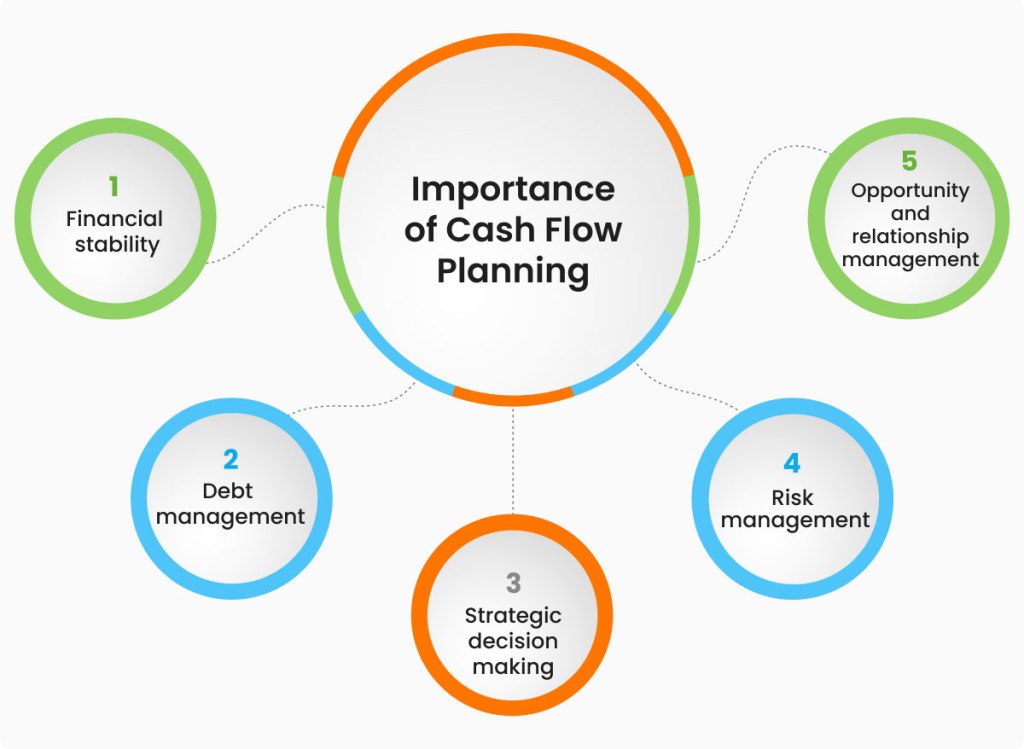
4️⃣ Importance of Cash Flow in Architecture & Planning
Cash flow analysis helps:
- Determine funding gaps
- Plan construction phases
- Decide project phasing
- Manage loans and EMIs
- Evaluate real estate feasibility
- Assess infrastructure viability
Without positive cash flow, even profitable projects can fail due to liquidity issues.
5️⃣ Detailed Examples in Architecture and Planning Context
✅ Example 1: Residential Apartment Project (3-Year Development)
Initial Investment (Year 0)
- Land = ₹40,00,000
- Construction = ₹50,00,000
- Other Costs = ₹10,00,000
Total Outflow (Year 0) = ₹1,00,00,000
Year 1
Sales Revenue = ₹30,00,000
Expenses = ₹5,00,000Net Cash Flow1=30,00,000−5,00,000 =₹25,00,000
Year 2
Sales Revenue = ₹50,00,000
Expenses = ₹10,00,000Net Cash Flow2=50,00,000−10,00,000 =₹40,00,000
Year 3
Sales Revenue = ₹45,00,000
Expenses = ₹5,00,000Net Cash Flow3=45,00,000−5,00,000 =₹40,00,000
Total Cash Flow Over Project
Total Inflows = ₹1,25,00,000
Total Outflows = ₹1,00,00,000 + ₹20,00,000
Total Outflows = ₹1,20,00,000Net Cash Flow=1,25,00,000−1,20,00,000 =₹5,00,000
✅ Example 2: Commercial Office Building (Rental Model)
Initial Construction Cost
₹5,00,00,000 (Year 0)
Annual Rental Income = ₹80,00,000
Annual Maintenance = ₹20,00,000
Net Cash FlowAnnual=80,00,000−20,00,000 =₹60,00,000
If calculated for 5 years:60,00,000×5=₹3,00,00,000
Remaining investment recovery after 5 years:5,00,00,000−3,00,00,000=₹2,00,00,000
This shows project still needs 2–3 more years to break even.
✅ Example 3: Urban Parking Facility
Initial Investment = ₹2,50,00,000
Annual Parking Revenue = ₹70,00,000
Annual Operating Cost = ₹30,00,000Net Cash FlowAnnual=70,00,000−30,00,000 =₹40,00,000
Payback Period:2,50,00,000÷40,00,000=6.25 years
👉 The project will recover its cost in approximately 6.25 years.
6️⃣ Cash Flow Statement Structure (Project-Based)
| Year | Inflows | Outflows | Net Cash Flow |
|---|---|---|---|
| 0 | 0 | 1,00,00,000 | -1,00,00,000 |
| 1 | 30,00,000 | 5,00,000 | 25,00,000 |
| 2 | 50,00,000 | 10,00,000 | 40,00,000 |
| 3 | 45,00,000 | 5,00,000 | 40,00,000 |
7️⃣ Applications of Cash Flow in Planning
✔ Phasing of Urban Projects
- Township development
- TOD corridor development
- Smart city implementation
✔ Infrastructure Planning
- Metro station development
- Bus terminals
- Multi-level parking
✔ Sustainability Investments
- Green building features
- Solar installations
- Water treatment systems
✔ Public-Private Partnerships (PPP)
Cash flow determines:
- Concession period
- Revenue sharing
- Viability gap funding
8️⃣ Advantages of Cash Flow Analysis
- Shows liquidity position
- Helps manage loans
- Identifies funding gaps
- Supports phased development
- Essential for DPR preparation
9️⃣ Limitations
- Does not consider time value of money (unless discounted)
- Future cash flow projections may be uncertain
- Ignores social and environmental benefits
For advanced analysis, planners combine cash flow with:
- Discounted Cash Flow (DCF)
- Net Present Value (NPV)
- Internal Rate of Return (IRR)
🔟 Conclusion
Cash Flow analysis is a fundamental financial tool in architecture and urban planning projects. It helps:
- Track money movement
- Plan project phasing
- Evaluate feasibility
- Assess infrastructure viability
- Ensure financial sustainability
For architects and planners, understanding cash flow is essential for preparing financially realistic and implementable projects.


You must be logged in to post a comment.