A End-of-Course Student Survey: The Use of Mobile Devices for Class Activities

Preface

As is true for many of us using educational technology in the classroom, we are experimenting with how technology can enhance the learning experiences of our students.  Sometimes we have failures, often times we have successes.  Yet, in this age of evidenced-based education, educators, administrators, and other decision-makers are depending on and using the data gleamed from large studies often completed by companies with vested interests, e.g. Gates Foundation, book publishers, and testing companies.

Educators can easily conduct action research about the practices they are using in their own classrooms especially given the ease of creating online surveys and data collection methods.  Yet, it seems that it is rarely done.

For example, I introduced Quest Atlantis into my gifted classes a few years ago and asked these 3rd through 5th graders to complete a survey to assess its efficacy from the student perspective.  The results I received were rich and informative.  The kids offered great feedback, ideas, and suggestions.  See Beyond the Game: Quest Atlantis as an Online Learning Experience for Gifted Elementary Students.

So if educators want to influence what occurs in not only their own classrooms, but in the classrooms of their co-teachers, then they need to invest the time and energy to demonstrate best practices.  In a related blog, I discuss Every Educator Has a Story . . . Just Tell It.

End-of-Course Survey

The Interpersonal Relations course was offered during Fall, 2011.  There were 12 students in the course – five were male, 7 were female; ten of the students were 18 to 20 years old, one was 25 years old, and the oldest student was a female in her 50s.

The first section of the survey listed all of the class activities that used the students’ cell phones.  I blogged about the individual activities.  The archive of these blog posts can be found at User-Generated Education tagged with mobile learning.
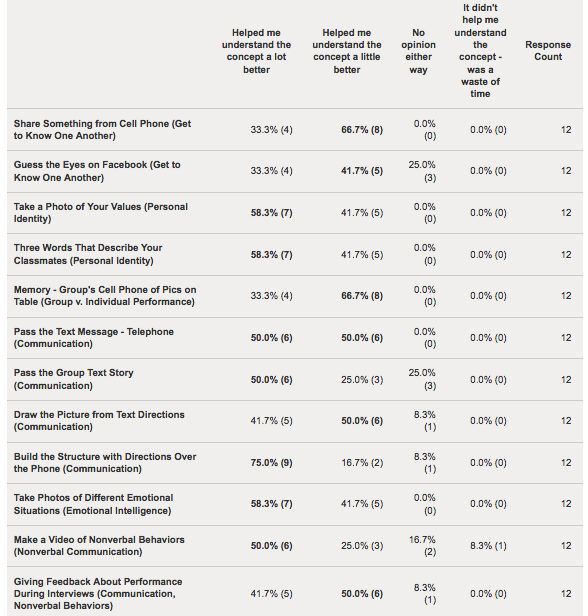
Obviously the sample size is small, but I was excited to find that most of the students found most of the activities of some value and that only one student found one of the activities a waste of time.

I also asked a series of open ended questions . . .

Favorite and Least Favorite Activities?

These were all over the map with no general consensus.

What was the greatest advantage of using students’ mobile phones to get to know one another and build a sense of community in the class?

The responses centered around being able to use the devices they used outside of the class,

It was something that we use everyday so it related back to us.

It was something they were familar with.

The students use their phones on a regular basis.

. . . and that their devices helped to create an environment of sharing, friendliness

It provided us with a common ground on which to get to know each other.

We got to talk to each other outside of class, not just when we were in class.

We were able to communicate outside of class and create friendships.

You got to know the people better though them.

To get a better experience from the class and enjoy coming to class.

What was the biggest problems in using students’ mobile devices during class time?

As was expected, most of the student responses centered around them being a distraction.

People would abuse it and text friends and do other things that the activity wasn’t for.

The students were tempted to use the phones for personal use.

Sometimes people weren’t always doing what they were supposed to be doing.

Students had more of a chance to get distracted.

Some people texted when they should have been participating.

(Note:  I had to implement a device away strategy, when I had to ask students, often several times, to put their devices away when we weren’t using them for class activities.)

A few mentioned service problems.

Some didn’t work.

The service was bad because i would send a text and it would show up ten minuets later.

What recommendations would you make to improve the use of students’ mobile devices for class activities and community-building?

Most of the students stated, “None.”

There are none everything is A Okay.

Interestingly, two mentioned having laptops available for all students.

Change the moblie devices into personal laptops provided by the school.

Have computers for each student.

Next week, I begin this course again with a new group of students.  I will continue to test out the mobile learning activities and get student feedback about them.

Thanks Fall, 2011, students!

Evaluating the Value of Apps for Educational Use

As of the writing of this post, there are approximately a million apps available.  On my daily Twitter feeds, I see list after list of apps for educational use.

Yesterday, I saw a post from TechCrunch The Top 20 iPhone and iPad Games Of 2011.  I downloaded and have been playing Cut the Rope for two days now.  It has been giving me hours of joy.  See Cut the Rope: Experiments Review. If I was still teaching my 3rd through 5th grade gifted students, I would definitely introduce them to this game.

I have been critical of the use of educational apps and games in the classroom in that many of them have been developed by adults in business ventures.  They are more like worksheets on steroids rather than games and apps for higher-order thinking.  I also wonder as I read through the lists of recommended apps if the kids, themselves, would find them educational and interesting . . . worth their personal time in using and playing with them.

As such, I test out technology tools and games from the standpoint of a user rather than an educator . . . asking if I’d like to use it if I were one of today’s young students.  Based on my own experiences as a gamer, educator and kid at heart (one of my 4th grade students gave me the compliment, “You haven’t forgotten what it is like to be a kid.”), I developed my own criteria for evaluating the potential of apps for educational use and engagement:

  • Does it have cool graphics and an interesting interface?
  • Is there a game-like and/or creative intent to the app?
  • Is it fun and entertaining?
  • Does it make the user laugh with joy?
  • Does it require creativity, ingenuity, imagination, and problem-solving in its use?
  • Do the tasks get more complicated, requiring more skills as the user works through the game-app?
  • Does the user have the opportunity to gain points and level-up?
  • Does it have an addictive quality (yes, I believe in this) in that it calls for continuous play?
  • Does using the app create a state of flow?
  • Are there opportunities to connect with other users for socializing? problem-solving?  strategizing?

As I said, I am currently spending my time playing Cut the Rope (physics and geometry).  Past personal addictions have included Scrabble (language arts) and building in Second Life (geometry and spatial reasoning).  Friends’ and colleagues’ game and app passions have included World of Warcraft (economics, social bargaining/cooperation) and Angry Birds (physics).

Excluded from the list is a question about educational value.  A good educator can extract learnings from any app that meets most of the criteria discussed above.  If educational value can be extracted from Angry Birds, then it is possible with almost any app 😀

It is important to note that one person’s app and game joys may not be another person’s, but most offer educational opportunities.  An educator can leverage what students are using and playing in their own lives and explore ways they can be integrated into the curriculum to learn different content area concepts.  The role of the educator is this era of learning of that of facilitator.  What a great way to facilitate learning – to leverage what the learners are using in their own lives to teach broader content-related concepts.

The bottom line becomes focusing on quality rather than quantity – to find those apps and games that have potential for long term use and engagement.  Following a constructivist model of education, an effective educator can assist students to extract their own meanings from an app of personal interest, helping them make larger world connections (which includes addressing those ever present content-related standards).

Tinkering and Technological Imagination in Educational Technology

Given the infusion of technology in almost every aspect of our lives, the education sector is struggling on how to integrate it into the classroom.  We have seen current trends and attempts for the use of educational technology with the Flipped Classroom ala Khan Academy, Interactive Whiteboards in every classroom, and lots of discussion about what are the 21st century skills and literacies.

Most educators would agree that a major purpose of education is to assist learners in gaining the skills, attitudes, and knowledge for having a better quality of life now and in their futures.  So any discussion about technology integration should include this purpose.

Qualitative evidence points to the ease by which kids pick up their computer devices and use them as if they were brain-wired to do so.

But even as some parents and educators express unease about students’ digital diets, they are intensifying efforts to use technology in the classroom, seeing it as a way to connect with students and give them essential skills. Across the country, schools are equipping themselves with computers, Internet access and mobile devices so they can teach on the students’ technological territory.

“If it weren’t for the Internet, I’d focus more on school and be doing better academically,”  says one youth. But thanks to the Internet, he says, he has discovered and pursued his passion: filmmaking. Without the Internet, “I also wouldn’t know what I want to do with my life.”   Growing Up Digital, Wired for Distraction

Hmm.  So in the big picture, do we want students to do better academically or find and pursue their passions?  I do understand that many educators would argue for both.  The current educational climate is so centered on academic achievement and standards-based curriculum, I believe we need to make proactive, concentrated attempts to get the pendulum to swing towards semi-structured, open-ended, process-oriented and student-driven learning environments.

Two recent and interconnected discussions have implications about how technology can be used in the classroom to ignite passion, innovation, and creativity . . . technological imagination and tinkering/maker education.

Technological Imagination

Anne Balsamo, author of the Designing Culture: The Technological Imagination at Work, defines technological imagination as . . .

a character of mind and creative practice of those who use, analyze, design and develop technologies. It is a quality of mind that grasps the doubled-nature of technology: as determining and determined, as both autonomous of and subservient to human intentions. This imagination embraces the fact that all technologies have multiple and contradictory effects. This is the quity of mind that enables people to think with technology, to transform what is known into a set of possibilities, and to evaluate the consequences of possibilities from multiple perspectives (http://dmlcentral.net/node/5109).

A course being offered at the University of Washington provides this description of technological imagination.

Humans have always been technical beings. We live in and through our technology: from stone tools and woven baskets to combustion engines and computers, our society is continually altered by the existence of these technical objects. Living in a highly industrialized, networked society such as ours, one need only try to imagine life (let alone college life) without computer or Internet technologies, or any number of everyday information technologies which seamlessly mediate our daily routines; yet this is precisely what it is so difficult to do: to “think” technology, and to see its peculiar agency in our individual experiences and in our social world.  For us, this situation seems magnified by globalization and the intricate layering and interconnectedness of technical systems, complex industrial machines, and vast networks. Our needs go beyond an immediate understanding of a given technology to the development of a more reflective technological imagination in which we consider the ways technologies enable us, and shape and reshape our experience and social realities. “Developing the Technological Imagination” (Winter 2011)

Tinkering and Making

In order for technological imagination to develop, tinkering needs to be encouraged within educational settings.  In his discussion about Learning for the Digital Age, John Seely Brown presented the following slides about tinkering.

If we want more young people to choose a profession in one of the group of crucial fields known as STEM — science, technology, engineering and math — we ought to start cultivating these interests and skills early. But the way to do so may not be the kind of highly structured and directed instruction that we usually associate with these subjects.  Time: In Praise of Tinkering

In a discussion with Howard Rheinhold, Mitch Resnick stated the following about tinkering.

One thing we’ve seen is that the best learning experiences come when people are actively engaged in designing things, creating things, and inventing things – expressing themselves. It’s not just a matter of giving people opportunities to interact with technologies or using technologies, but if we want people to really be fluent with new technologies and learn through their activities, it requires people to get involved as makers – to create things.

A lot of the best experiences come when you are making use of the materials in the world around you, tinkering with the things around you, and coming up with a prototype, getting feedback, and iteratively changing it, and making new ideas, over and over, and adapting to the current situation and the new situations that arise.

I think there are lessons for schools from the ways that kids learn outside of schools, and we want to be able to support that type of learning both inside and outside of schools. Over time, I do think we need to rethink educational institutions as a place that embraces playful experimentation. Mitch Resnick: The Role of Making, Tinkering, Remixing in Next-Generation Learning

The full interview can be viewed . . .

[embedded content]

As I’ve stated before, I believe that the educator is now “the tour guide of learning possibilities”.  Educators should expose learners to the potential types and uses of technologies and then get out of the way so that the learners can tinker and develop their own technological imaginations . . .  ones not driven by state standards, competencies, outcomes, nor products.

Each educator needs to decide how to implement tinkering into his or her educational setting.  When I taught gifted elementary students, the last 45 minutes at the end of the school day was dedicated to tinkering.  I’d introduce the learners to Web 2.0 tools and hands-on technology kits like WeDo and PicoCricket.  I’d then get out of the way so they could  play, tinker, experiment while sharing their findings with me and their peers.

A Technology-Enhanced Lesson on Conflict

This lesson was done with undergraduates, ages 18-20.  As you can see by the lesson, the driving pedagogical tenets are:

  • Experiential and authentic learning.
  • The use of technology to increase student engagement and motivation.
  • A focus on student-centric learning with the teacher only providing directions as to how to complete the experiential activities.
  • Students interacting with each other and the content much more than the teacher.

The Goals:

  • Define conflict.
  • Describe differences between destructive and constructive approaches to managing conflict.
  • Identify and describe win-lose and win-win negotiation strategies.
  • Identify and use conflict management skills to help manage emotions, information, goals, and problems when attempting to resolve interpersonal differences.

Define Conflict

Students are given the following directions:

Write the word conflict in the center of a blank piece of paper and draw a circle around it. Quickly jot down all the words and phrases you associate with the word conflict by arranging them around your circle.

Review your list of associations and categorize them as positive, negative, or neutral. Count the total number of positive, negative, and neutral associations, and calculate the percentages that are positive, negative, and neutral. Did you have more than 90% positive? Did you have more than 90% negative?

What do your associations with the word conflict indicate about your views about conflict and your approach to conflict?

Following a discussion of the positive and negative aspects, students are asked to complete the following tasks:

  • Reduce your list to four words.
  • Find a partner, reduce that list to four words.
  • Join another partner team – reduce the list to four words.
  • Go to Visual Thesaurus – http://www.visualthesaurus.com/  get definitions for each of the four words
  • Create a web on the white board that includes your group’s four words and key words associated with those main words.

Escalating and Deescalating Conflict Situations

Students are presented with the following scenarios and compose two responses for each, one that would escalate the conflict, and two, another that would deescalate the conflict.

They are invited to use their own laptops to compose their responses.  They find partners, who reads and finds the comments composed by their partner to share with the rest of the class.

Conflict Resolution Techniques

Through a brief Powerpoint presentation, students are introduced to the following conflict resolution techniques:

  • Abandoning
  • Getting Help
  • Humor
  • Postponing
  • Compromise
  • Integrating
  • Collaborate/Problem-Solve

To practice using these strategies, students write a Dear Abby letter that describes a conflict they are currently or have experienced in their lives.  These are composed on Primary Pad.   Their individual links are emailed to the teacher.  These links are shared with the entire class one at a time so the other students can make recommendations for resolving the conflict based on the strategies above.

Win As Much As You Can Negotiation Strategies

A separate blog post describes this activity – Win As Much As You Can Mobile Edition

Personal Goal Development – Motivational Posters

Finally, students make goals for improving their conflict resolution skills by creating a motivational poster using the Big Hub Motivational Posters.  These are uploaded to a Google Presentation to create a class aggregate of motivation posters.’

Win As Much As You Can Mobile Edition

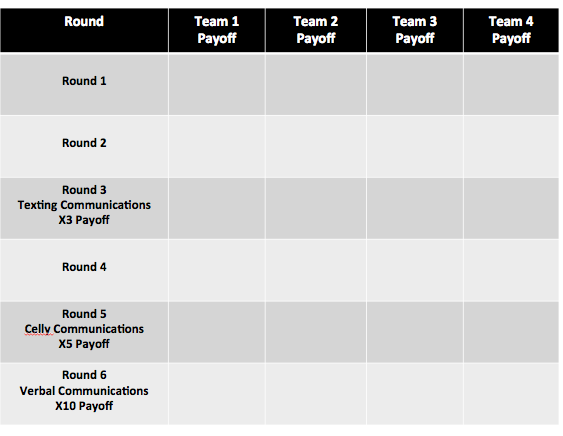
Win As Much As You Can is a popular negotiation game based on the Prisoner’s Dilemma problem (Axelrod 2006). In one version players are grouped into four teams and asked to play an X or Y over a series of rounds. The object is to score as many points as possible. If everyone in the group chooses X, then everyone loses points. If all choose Y, everyone scores points. If there is a mixture of X’s and Y’s, those that played X get more points and those that played Y get fewer points. Discussion is not allowed except during three bonus rounds, when players may discuss how they will play the next round.

Many assumptions are embedded in this deceptively simple and powerful game, developed to illustrate economic principles from game theory. The most obvious is the use of a “game” to introduce many of the fundamental themes and concepts of negotiation theory. These include the tension between creating and claiming value, individual versus joint gain, trust, concessions, attributions, ethics, and multi-round negotiations.

The sports or game metaphor and the “game,” with its title commanding the player to “win as much as you can” reflect the values of self-interest and personal aggrandizement. The title, score-sheet and rules of the game also suggest a “fixed pie,” leading to the assumption that there is no room for integrative bargaining. The game, however, is more complex than that, as players discover that single-minded pursuit of self-interest can backfire, and that a relationship between personal gain and joint welfare exists, particularly when there will be a continuing relationship. The title and rules suggest that conflict may lie ahead [and almost always does result].  Cultural Baggage When You “Win As Much As You Can” Julia Ann Gold

Mobile Edition

The mobile edition is appropriate for upper level High School students and college students.  In the mobile edition, students form in four subgroups as in the original game.  One member from each group becomes the designated voter using his or her mobile device to post his or her team’s response.  Votes are made through texting into Celly (a free group texting service) their X or Y vote along with the round number using a hashtag to denote the round.  The results of each round are projected to the entire group so they can view all teams’ votes.

The individual groups make their selections and votes with no communications with the other groups except in three of the rounds.  Three different forms of inter-group communications are permitted during rounds 3, 5, and 6 with payoff results increased during those rounds.

  • Round 3:  Groups are invited to text to any other group any message of their choice.  As such groups are asked to exchange phones numbers prior to the game.

  • Round 5:  During this round, the teams can text message any communications they want to make to the other groups through Celly which are projected to the entire group.

  • Round 6:  Groups can communicate directly with one another.

.

Reflection of Win As Much As You Can occurs through a VoiceThread set up for that purpose, and through group discussion.

Every Educator Has a Story . . . Just Tell It.

This is one of my favorite cartoons ever.

The “punch” line is that every person on the planet has a story to tell.  I also know that every teacher has a story to tell.

Educators are doing amazing things with their learners in spite (i.e., to show spite toward) of the standards-based and accountability-driven movements. I’ve learned about so many exciting learning activities from educators who are publicizing their great projects via Twitter, Facebook, and Blogs.  I’ve read about global collaborations, interesting ways technology is being integrated into the classroom, kids making a difference in their communities, and great project-based learning.

This is my own call to action for educators to tell their stories of those rich and amazing things they are doing in their classrooms.

  • Write a blog.
  • Tweet about it.
  • Make photo essays and upload to a photo sharing site like Flickr.
  • Take some video footage and share it on YouTube, TeacherTube, or Vimeo.
  • Ask learner to blog about it.
  • Share on Facebook.
  • Give virtual presentations at conferences such as Global Education and K12 Online.
  • Ask local reporters to come to your classroom
  • Others? (Please add to list.)

For example, I am incorporating students’ mobile devices into an undergraduate course on Interpersonal Relationships.  I take photos during each class and that day write a blog entry about mobile learning.  These entries take about an hour.

I now have a record/reflection about the class.  I get to share it with others via Facebook and Twitter.

If all educators publicized the accomplishments they had in their classrooms using technology, hands-on activities, global collaborations, project-based learning; then an informal qualitative research project would result.  When educators are asked to provide evidence of efficacy to administrators, parents, other educators, funding sources, they could share these success stories.  This aggregate would become the collective narrative – story of education of our times in the beginnings of the 21st century.

Flipped Classroom Full Picture: An Example Lesson

The flipped classroom, as it is currently being described and publicized, is simply recording the didactic content information via videos, having students view these as homework, and then using class time to further discuss these ideas.

Harvard Professor Chris Dede stated in his Global Education 2011 keynote in response to a question directed about the flipped classroom . . .

I think that the flipped classroom is an interesting idea if you want to do learning that is largely based on presentation. You use presentation outside of the classroom. Then you do your understanding of the presentation and further steps from the presentation inside the classroom. I think it is a step forward. It is still, in my mind, the old person.  It’s still starting with presentational learning and then trying to sprinkle some learning-by-doing on top of it.  I am interested more in moving beyond the flipped classroom to learning by doing at the center than a kind of the intermediate step that still centers on largely on tacit assimilation.

As I describe in The Flipped Classroom: The Full Picture, I believe, as Chris Dede does, that the problem with the flipped classroom is that the major focus is on the didactic presentation of information, that it is still at the center of the learning experience.  The flipped classroom, given that is currently getting so much press, provides an opportunity to change the paradigm of learning, whereby learning–by-doing, the experiences along with the understanding and application of those experiences become core to the learning process.

The following lesson describes a type of flipped classroom.  This lesson did not center around the content media, in this case the Slideshare, but on the students’ personal experiences, interactions with other students, and acquisition of tangible life skills.

Interpersonal Communications: Listening Skills

Experiential Engagement: The Activity

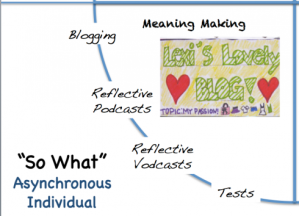
The cycle often begins with an experiential exercise.  This is an authentic, often hands-on learning activity that fully engages the student.   It is a concrete experience that calls for attention by most, if not all, the senses.   They become hooked through personal connection to the experience and desire to create meaning for and about that experience (ala constructivist learning).

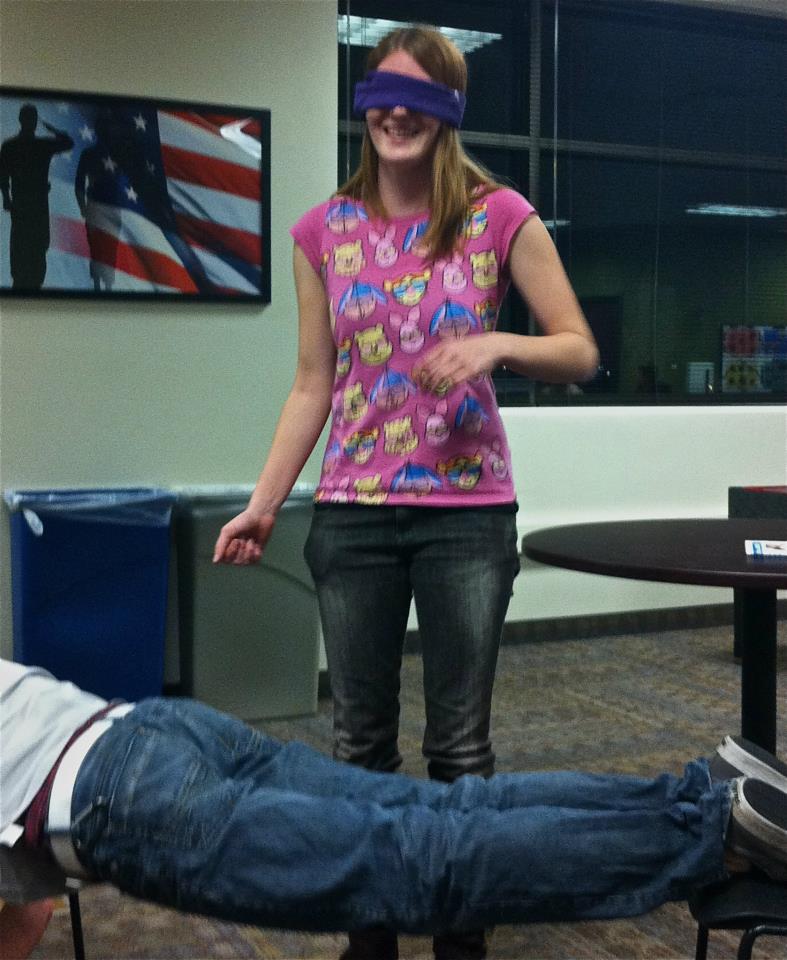
For this lesson, the learners started off with the Lighthouse activity, where in partner teams, the sited person led his or her blindfolded partner through a series of obstacles.  The goal of this part of the lesson was to provide an experience that overtly demonstrated the importance of listening – especially when the sense of sight is taken away.


Conceptual Connections: The What

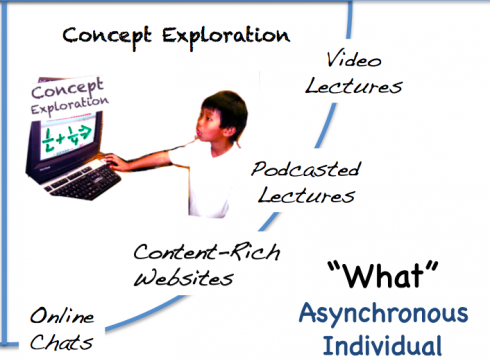
Learners are exposed to and learn concepts touched upon during Experiential Engagement.  They explore what the experts have to say about the topic.  Information is presented via video lecture, content-rich websites and simulations like PHET and/or online text/readings.  In the case of the flipped classroom as it is being currently discussed, this is the time in the learning cycle when the learners view content-rich videos.  The videos support the experiential learning rather than being at the center of the learning experience.

In this lesson, the learners were asked to view and review the following slideshare via their own computer terminals.

For this lesson, the learners made a personal connection with the content as they were asked to identify the 10 listening skills they believed they needed to further develop.  This also became a technology-enhanced lesson. Learners made a mind map of their identified 10 skills that included: (1) the skill, (2) normal and current behaviors associated with the skill, and (3) goals and steps for improvement.


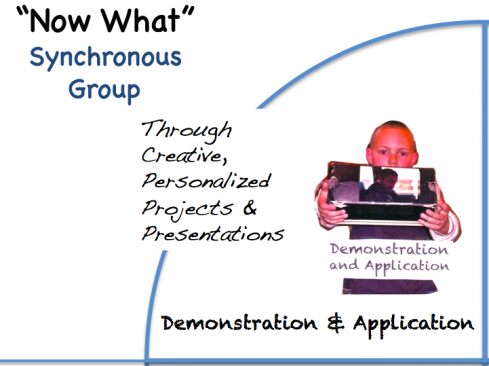
Demonstration and Application: The Now What

During this phase, learners get to demonstrate what they learned and apply the material in a way that makes sense to them. This goes beyond reflection and personal understanding in that learners have to create something that is individualized and extends beyond the lesson with applicability to the learners’ everyday lives.  This is in line with the highest level of learning within Bloom’s Revised Taxonomy of Learning – Creating – whereby the learner creates a new product or point of view. In essence, they become the storytellers of their learning (See Narratives in the 21st Century: Narratives in Search of Contexts).  A list of technology-enhanced ideas/options for the celebration of learning can be found at: https://usergeneratededucation.wordpress.com/2010/09/09/a-technology-enhanced-celebration-of-learning/

Part One

The learners practiced their active listening skills during class time.  Feedback was provided to the listener via their mobile devices using Celly.  See the full description at Students’ Own Mobile Devices and Celly Provide Peer Feedback.


Part Two

The learners located a professional in their area of study to interview.  Their interview questions focused on the communication skills expected of those in that profession.  Their homework was driven by real-life experiences going out to speak with a professional in their communities.  The professional was asked to complete an evaluation of the student’s performance during the interview. Homework was designed to further promote the applicability, transferability, and relevancy of this lesson.

Students’ Own Mobile Devices and Celly Provide Peer Feedback

This is part of my continuing series of blogs where I am reporting how I am integrating students’ own mobile devices into the classroom activities.

Using Celly

Celly was used for the learning activity that is described later in this blog.

Celly creates mini social networks called cells that connect you with people and topics. A cell can contain anybody with a cellphone. We let you define filters based on hashtags, location, time, and user identity. Celly lets you instantly group people and topics into cells.  Cells function as chatrooms where people communicate instantly via text-based messaging. Cells can also include messages from the web or other social networks to capture your interests.

Learn It in 5 provides the following tutorial about how to set up and use Celly.

Ways to use Celly at school can be found here.

Peer Feedback in an Interview Activity

Students in my undergraduate course on Interpersonal Relationships were asked to practice their active listening skills.  They conducted interviews with each pair of interviewers-interviewees being observed by their classmates.  Feedback to the interviewer was provided via Celly.

First they were provided with the following information to join the class cell.

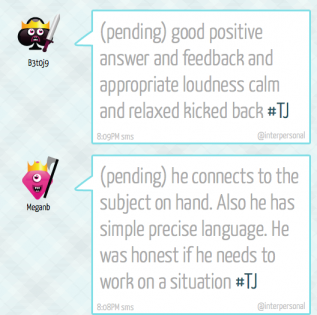
The format for texting in their feedback was @interpersonal (cell) “The Feedback” #(person’s first name).


During the interviews, students texted their observations of the interviewer behaviors to Celly.


After each interview, the feedback was projected on the whiteboard.  This way students could view personal feedback, get ideas of appropriate interview behaviors, and analyze the quality of effective feedback.


A Texting Communications Exercise

This is part of a continued series of blogs in which I reporting about and describing how I am adapting more tradition team building, communications, and problem-solving to include learners’ own mobile devices.

Part 1

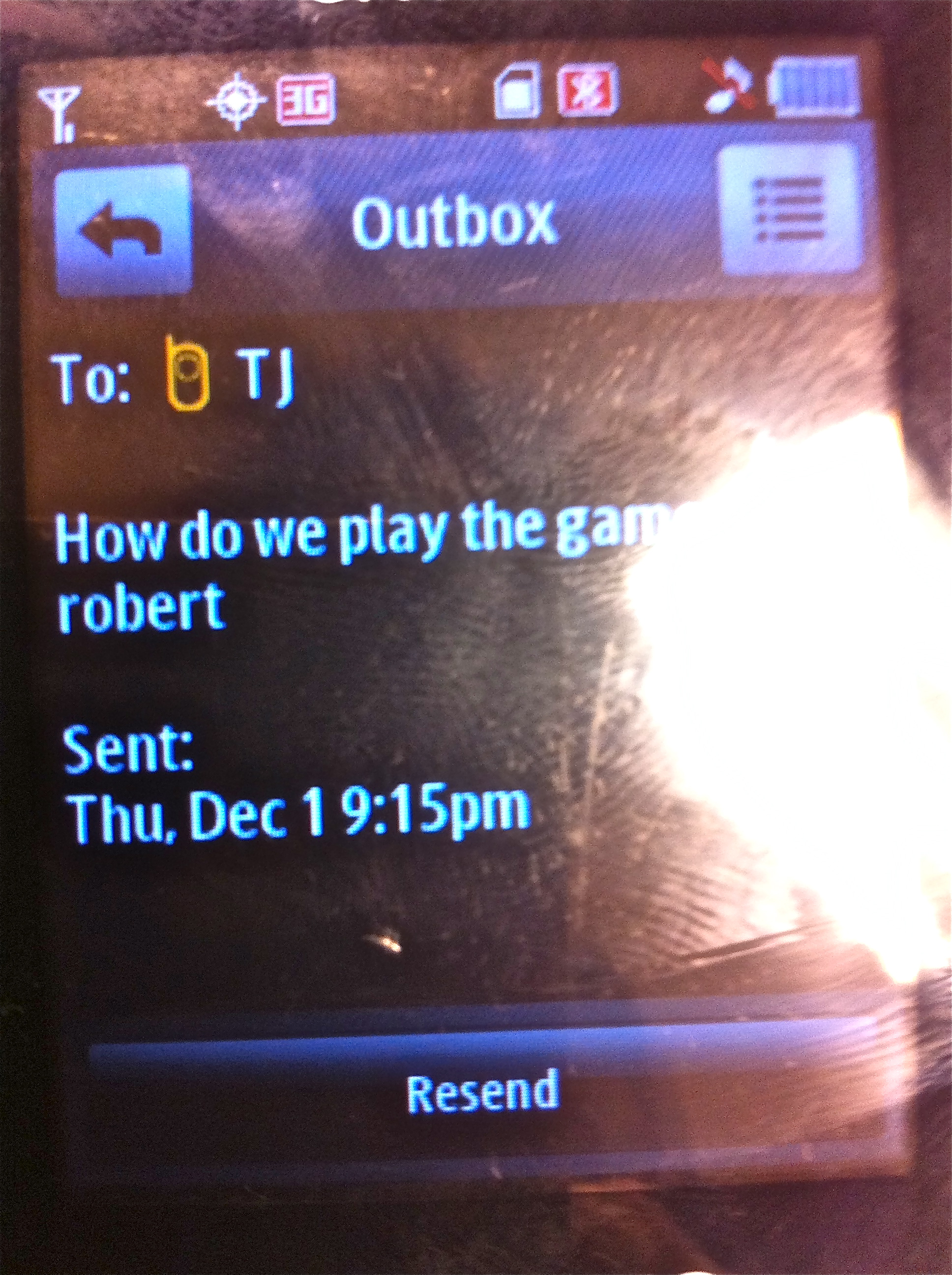
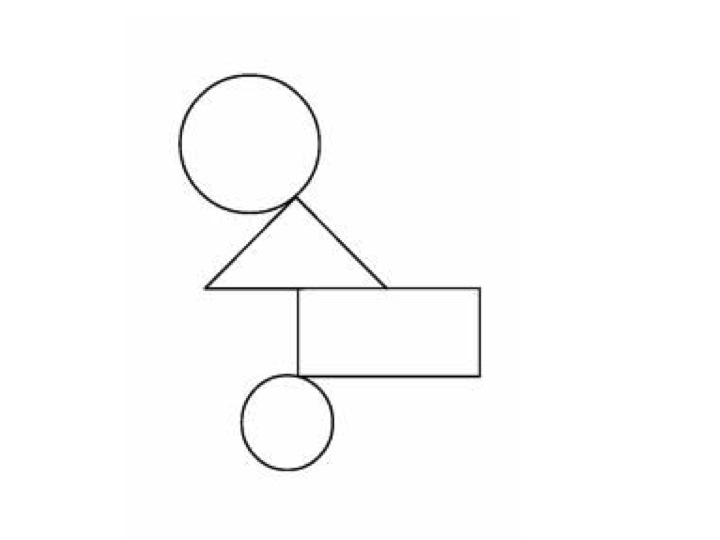
This activity is an adaptation of the Back-to-Back Communications Exercise.  Students found a partner.  One volunteered to give the directions, the other to be the drawer.  They exchanged phone numbers and the drawers went to another room.  The direction givers were provided with the following drawing and told to text in words (one student asked if he could send a picture) the description of the drawing.  The goal was for the drawer to reproduce the drawing to scale.

Part 2

Students then met face-to-face to complete the exercise again using a second picture.

Reflection

After the two exercises, a discussion was facilitated that centered around two questions:

  1. Which of the two exercises produced the best results – where the original and reproduced images best replicated each other?
  2. Which of the two exercises did you prefer?

For the first question, the results were split with about half saying the texting produced the best results and the other half stating it was the face-to-face directions.  Those who selected texting described the ability to read through the directions several times to insure correctness.  Those who believed face-to-face produced better results described the use of body gestures to assist with the results.

For the second question, all but one student preferred the face-to-face . . . and all but one student is of the texting generation (18-20 years old).

Different factors influencing development of settlements

The development of human settlements—whether rural villages or large metropolitan cities—is shaped by a wide range of interrelated factors. These factors determine where settlements emerge, how they grow, their spatial form, and their functional characteristics. Broadly, they can be classified into physical, economic, social, cultural, technological, and political factors. Understanding these determinants is essential for planners, as they explain both historical evolution and contemporary urban dynamics.


1. Physical (Natural) Factors

Physical factors form the foundation of settlement development, especially in the early stages of human civilization.

1.1 Relief and Topography

https://images.openai.com/static-rsc-4/2mSMEw36VIbnQyOlMnEIau9rIdTKKVwmP61hec1l9kMm1FXQLriVewaZxG_X-4YtdxOsy5IFbW0t4ddDxOSsBqKzsLGBupnX55_FQPSPj7nVXN_V6L3XQlRW94znV21w1lhwsjRKEzI9gWioibTCbz-x6Pn25_xnIi7xr9kCMkeHeFw0ebUuCGsIMm6s8eZo?purpose=fullsize
https://images.openai.com/static-rsc-4/n8px47o5M44vnUcacFiMldKDcnMDqMJzp487hFIWlEBI1xw8QbjFv0hqFN8JTfyKvTsTkrF7Kom72p5AGlOOJv4B3-rw50reyjfFoltqWkZArkMhWWIkt-1wfACqotedyMjOkHuHsOQ7Bbi9J2chubEdKVj1EnYzZa7hSsnEqzIbIXILxvpln36UCCU25mmz?purpose=fullsize
https://images.openai.com/static-rsc-4/YJW5lIjxw-LmigcZFXd1UfrsFsVPiQZdK9Ds5cOITEsAokMEUsFve0kDi6rrOKuWh3bC2CcNFxhAmdh9V66Dzh5youyE7hbLcD0yPbv91apAkRxim4h3vl9R3rECPOBlfhFPxHIKLsT_BSL7KpNW_QEslb-eYg0stPSvy6sG4xw4oSW4AZ4pNKLp8fEasbMR?purpose=fullsize

6

  • Flat and gently sloping land is ideal for settlements due to ease of construction and transport.
  • Mountainous and rugged terrain restrict settlement growth due to accessibility issues.
  • Plains (e.g., Indo-Gangetic plain) support dense populations, while hilly areas tend to have sparse settlements.

1.2 Climate

https://images.openai.com/static-rsc-4/qCL5DFO1a1ppuV7dSFrAxorhqrSPCucEy2GgFEWdwNlm8i4CCeULxU-Smt_9PKzmca-qa1ytR1lppLoXIz8RAmizuIvvAHnZUCTjCGp-QqWSo68amKl6ygUpfRGUAbRvApRNATz_Mhrm6UsQhYEpSrR1fnktMATQjlVNiLjNqMik7ptPaT8-HEHibEHwLY61?purpose=fullsize
https://images.openai.com/static-rsc-4/i0acV87i0h7xUIco22Bjc8eJxXrVPnAhWgA5OflV0FUwSLbPWj2Syq1RSWXgbdhOuejuU8ua7vhCP1L0EXN0KWqapiCIrr2ppBvcAVzqR2JlPcMMY4Xq2hFymMo9at_vtK4a5emqRnznmwVNsGu6eCiqlILyTl-sN14plUEVjkTuOnN0t2tyU0Mo8WiPX3js?purpose=fullsize
https://images.openai.com/static-rsc-4/N96jsQglwjB3ja1GXVHzoeVb2gUOxr2DYCJXjiAonNFHJUQguNF1Ws4SWCJUNmnj7GaKS5wluy_960m1EUbB76wbuKCsBuH1kBXH-uFYXfBkRKa5X4LrDBsZZlvJcAbi3pXxY1UCsQ3k1wBmIlRUFqHvtZ9b9d9M5rgeuuD0s3tNZYiFtzOw6Q6ErQbyfp4t?purpose=fullsize

5

  • Moderate climates (temperate regions) attract dense populations.
  • Extreme climates (hot deserts, cold polar regions) discourage settlement.
  • Climate influences building design, lifestyle, and economic activities.

1.3 Water Availability

https://images.openai.com/static-rsc-4/0trs6VuE3CASJZYPVyqK3nv8wl30mgGww7HZYO40CPAVzgopTTF-ZJ_hY8_HvOiV475tVzoprNmf9WNx4BV0daewHwInVVpOnq44T2mlasx8OpHfX0N3zfiO5DUHfKjAmRs6XsGFx_24K5CHVSGjh6aWAdN_8MiY6Eo11pCKQBsr7l6c-fIyA4VZUwEAPLdS?purpose=fullsize
https://images.openai.com/static-rsc-4/rRPBvN27gL-hVp4DTExO0jrtbbOf_kMXComQUhFpFam1Xbk0YLj20bes6XANMO0vTKf8rsVJ4MgcJRV_eszPfNtXcJMuZOuuwZTyaf7PZyLZqkb5fYfyga2lnU-SJ41l74oG6aDYk7wn-LCJXrVTkCbb4uj1ncULTf119uNqp_KFj_QaYqjnrW9t1P4rTm4f?purpose=fullsize
https://images.openai.com/static-rsc-4/5-Pn5BQtE5zqgQ-jEdJeyRjg-Ofxa0PwQR-j0pmpfE2iC4ubJ7-7ONxgWB6QqPejz-JrU3bduy77oPQin9sn9N8BYmR2x9z4btLJfripn_GPFJj5xF00DdcNa2cc8zn0A6bg7u6QGB3G6EOEWeaNAo-IkWDK6v7XlTubstxQIe044mnIzLPZA3PJfhrI0g-Q?purpose=fullsize

7

  • Availability of water is one of the most critical factors.
  • Settlements historically developed near rivers, lakes, and coastlines.
  • Water supports drinking needs, agriculture, industry, and transport.

1.4 Soil and Natural Resources

  • Fertile soil promotes agricultural settlements.
  • Presence of minerals and natural resources leads to industrial settlements.
  • Forests, fisheries, and energy resources influence settlement location and growth.

2. Economic Factors

Economic considerations are among the most powerful drivers of settlement development, especially in modern times.

2.1 Employment Opportunities

https://images.openai.com/static-rsc-4/gjwvrvdgY-fC7iV1fRQNnkv1rXHky-C9_lGqfOgkw9xHXIOY2SD-CeFZTT-krwZfwPk4KHMcyYB28nnphjuq9w3OiLGM9kzqUBjXEGzXNombUubNzhBBcjrW2TMIZMRc01eqP2wIRejO7USW2iR7DVM1JKkN1kgoKoFwUOZQa0-MvQi37U9heOTxoIIvqIap?purpose=fullsize
https://images.openai.com/static-rsc-4/xrK1konRR9fhfyuSpiFkBWs0Nkiu5HWiwwCUOGsMlQjGxHkvk6zSQaEwkoUTRFviAwvrkm0l3AWI4qzmu8rqsY7Ot0imdmhMJ7cbzHgkvdVFWtKe1SWlRHhSMZyEKDArGcaIVRWqJ6mqd3M1NVJHMQNUfoQ66DyCyjmQZ4bwmqEloUtqsV9xOvnciaBOnf2k?purpose=fullsize
https://images.openai.com/static-rsc-4/l5aRQ_SkO_TWGpYIOJrO0ZbB12NyiTSTDHy7fSUcDB6KRcKsELQIi4rxlKqlxyiKCXMyGIqohA4o2xEHtZ_CA9QUzKTEJ5aPJrOIr8xNrAvyEtJbJrEywkx4w4_bTLIgLxxuZ0hxfVnSvtMd1tzctSyq--Uqc2L4ALAP5Y0VpU1C6QzPfqhH360Loxa1GvFF?purpose=fullsize

7

  • Availability of jobs attracts population.
  • Industrial, commercial, and service sectors lead to urban growth.
  • Cities like Mumbai and Bengaluru grew due to economic opportunities.

2.2 Trade and Commerce

  • Settlements often develop at trade routes, ports, and market centers.
  • Historical trade hubs evolved into major cities.
  • Accessibility enhances economic viability.

2.3 Transportation and Accessibility

https://images.openai.com/static-rsc-4/ucfkfLm4ZMxp3mpJGsbiTz4a0GwJqyl2WY3u993vhUz4epwBiLMntaBZgxEKOZsDPrN-IX2OXxL2CxQUsOFlnO31qr0Sahy4eN74SbjvYh7ltJ6MdnyCAWWmKAY_QKim0_ifzIRxXDc5f6Mq0KK8o4Q0q4qmIf6gpiYo10CxQcU3Z1EyIkBzZkjmeCVIP4mA?purpose=fullsize
https://images.openai.com/static-rsc-4/fG6yiw0cPpQwOOoCVyW5aEFNfXDFJVZUNGVrHCGx41YusSG03OOjgzp2TnLfUZmOtgTlj4jO6ZayKe4UpAsIMqEoDxAey3hD6CJ4QbeW24l48XL8EnHbp8aXTTnWbkX855jK5E4HgRo_BQmyDA_TJXBOqJK4UJACPfPqUjn5A9o8GZT4UOmL1lawNnpkN32z?purpose=fullsize
https://images.openai.com/static-rsc-4/mylgGkF3bgSlTi6cdbXwV-fDW3hQ8pLx1P34rOcs8hJb9WbN2-Yf6aAHSHayp3QuQqap9eFOZawpynoshjFam7s_D-y459mtXZWYvM4OOVC7VkY0e3WdzHa88TObDaRHLz4tbeyCLrVwzHVMxJKfnkyQiWxpFIewQjmW4-hsfI4GJLGJo60uK5PFHNB_if79?purpose=fullsize

6

  • Transport networks (roads, railways, ports, airports) influence settlement location.
  • Well-connected areas grow faster due to ease of movement of goods and people.
  • Transit-oriented development (TOD) is a modern example of transport-led growth.

3. Social Factors

Social aspects influence both the formation and organization of settlements.

3.1 Population Characteristics

  • Population size, density, and growth rate affect settlement expansion.
  • Migration patterns significantly influence urbanization.

3.2 Education and Health Facilities

  • Availability of schools, colleges, and hospitals attracts population.
  • Social infrastructure enhances quality of life.

3.3 Social Organization

  • Community structure, caste, and social networks influence settlement patterns, especially in rural areas.

4. Cultural and Religious Factors

4.1 Cultural Significance

https://images.openai.com/static-rsc-4/wkUgfANNW1aQq1U9sM0cO0C_HJ2swqIFO0XsofFaXS71yuCt8PAe-DLU04wBwXcKO95pdHijByjdSNFAqGUsGtzQLDNaO9JPRGNYqO2o0a7CAQl0l7FNeUKeWNk101U1BMPzI2r_UoFLMzS9zwe2uSGKKsmYZP6cK1PcleeG_wcxCZtQrF1YeJipCfskj7-_?purpose=fullsize
https://images.openai.com/static-rsc-4/SQgP9_88Fc0eVjuVF4WXIy9o5723Q3Qj05dFM_68KTucAij6jOy7KQCktJLlDp5N7AS5YmR_RZlkpGGOI-ZEYvFUL-4Sw0IsQm_Zd0n1UwHsq_EDdc9DUeJOb4fEmv6heEMT4bVnMMM_UL-2wDmzs5F6N0GcuJm5DraJbttZe6N6a4_WI3ybC1qIdyiomtp8?purpose=fullsize
https://images.openai.com/static-rsc-4/Yr1tofIF9OQBqmtNrOii6pveVel5D4gXqkb6_3uJ4450PguMeNMWLd0pG47Ok2sXtKR46D-TaPsdKy3dpmvNb6jJ3FTNu7naHACiyO8M9FIlGg3KH75KofDrzrxK2oWiWWeCUTMPRfISd5LJ_gBA1IbzJ--uwMa-JLCEilDMbiSP3EG5Sa2y6b28u_nGytwu?purpose=fullsize

6

  • Settlements often develop around cultural and religious centers.
  • Example: Varanasi developed due to religious importance.

4.2 Traditions and Lifestyle

  • Cultural practices influence housing types, settlement layout, and land use.
  • Traditional settlements often reflect local customs and environmental adaptation.

5. Political and Administrative Factors

5.1 Government Policies

  • Urban planning policies, zoning regulations, and land use controls shape settlements.
  • Government initiatives (e.g., smart cities, industrial corridors) influence growth.

5.2 Administrative Functions

https://images.openai.com/static-rsc-4/iMHXvRF74hrjnpaljGyarXEehgCZX6ACLclfmKm1mQ3J90HgF88cjyZw94IOGVB51gHmiPchg_UCq3JmB3SkU0rUX89vWEN-4ITqUfayKgtaZ8dXUBAN79QT2RNvorJHEk3wqIpywZLBbfejRgLX5qY2NeT-ILvl1k749uk1e3dYcmdvrNyMIwsPeRN0glv2?purpose=fullsize
https://images.openai.com/static-rsc-4/h5tHm1VM-U9UvqEefmk2XZBDb1TyU1UBRFOs1ffIwThMVh03SWbBGHa1iO9VQIpg-PWAu0-P59kzvjK1zV4-0qvFhPvJwtZiNlIAlpLyXyBAxyGT5zEFOQ-TP1l_Qj6S7nKpazlNcUrclL-sIdYFkY4nR5RCqfyBibnoRhxvNUH5iuX40A_ddX588xLmVahC?purpose=fullsize
https://images.openai.com/static-rsc-4/WmSJyV7pUqX5opfJgG6XmO6HhsGhWDz0RW8ChOSRBE0AMWKVpbzyzbpeVwyQr0OZruDvuh-FvC1f5BLjFbLNNNxm1742m4uirHRAfrXUtORsppQeTosElJzbQzNjHpeH7XBje9MKNIPaVqrR_wW-jWGjupZWm6VxzypgK9aKwspsoaLIzTcDaKepKAPelRxl?purpose=fullsize

7

  • Capitals and administrative centers attract population and infrastructure.
  • Example: New Delhi developed as an administrative capital.

5.3 Defense and Security

  • Strategic locations (forts, border areas) influenced settlement development historically.

6. Technological Factors

6.1 Transport and Communication Technology

  • Advances in transport reduce distance barriers.
  • Communication technologies enable remote work and decentralized settlements.

6.2 Construction Technology

  • Modern materials and techniques allow high-rise buildings and dense urban development.
  • Infrastructure development supports large populations.

7. Environmental and Sustainability Factors

7.1 Environmental Constraints

  • Flood-prone areas, earthquake zones, and pollution affect settlement suitability.

7.2 Climate Change

  • Rising sea levels, extreme weather events influence future settlement patterns.

7.3 Sustainable Planning

  • Emphasis on green infrastructure, renewable energy, and resilience is shaping modern settlements.

8. Historical Factors

  • Early civilizations developed near rivers (e.g., Indus Valley).
  • Colonial history influenced port cities and administrative centers.
  • Legacy infrastructure continues to shape current urban form.

9. Interaction of Factors

No single factor determines settlement development. Instead, settlements evolve through the interaction of multiple factors:

  • Physical conditions provide the base
  • Economic factors drive growth
  • Social and cultural factors shape organization
  • Political and technological factors guide expansion

For example, a city may originate due to a river (physical factor), grow due to industry (economic factor), and expand due to transport infrastructure (technological factor).


10. Relevance in Contemporary Planning

In modern planning, especially in the context of sustainable development and TOD, these factors are integrated to:

  • Promote compact and efficient urban growth
  • Enhance accessibility and mobility
  • Improve quality of life
  • Ensure environmental sustainability

Understanding these factors helps planners design settlements that are resilient, inclusive, and efficient.


Conclusion

The development of settlements is a complex process influenced by a wide range of natural and human factors. From the early dependence on physical conditions such as water and climate to the modern dominance of economic and technological drivers, settlements have continuously evolved in response to changing needs and opportunities.

For planners and policymakers, recognizing these influencing factors is essential for guiding future development. A balanced approach that integrates economic growth, social equity, environmental sustainability, and technological innovation is necessary to create well-planned and livable human settlements in the 21st century.

Sugata Mitra: A Model of User-Generated Education (Big Ideas Fest)

Education scientist Sugata Mitra tackles one of the greatest problems of education — the best teachers and schools don’t exist where they’re needed most. In a series of real-life experiments from New Delhi to South Africa to Italy, he gave kids self-supervised access to the web and saw results that could revolutionize how we think about teaching (http://www.huffingtonpost.com/tedtalks/sugata-mitra-the-child-dr_b_708043.html).

“If the world belongs to our children then why don’t we just give it to them” was the title of Sugata Mitra’s talk at the Big Ideas Fest during the opening of the conference.

According to Dr. Mitra,  Of the 1 billion children on Earth.

  • 50 million have ample resources
  • 200 million have adequate resources
  • 750 million have inadequate resources.

To this Dr. Mitra added, “There are places in every country where, good schools cannot be built and good teachers cannot or do not want to go.”  His solution was to install computers with internet access to those places where schools cannot be built and/or teachers do not want to go.  It started with a Hole in the Wall in New Dehli. “Where in the slum do you put a computer? Make a DIY ATM! Computer in a wall.”

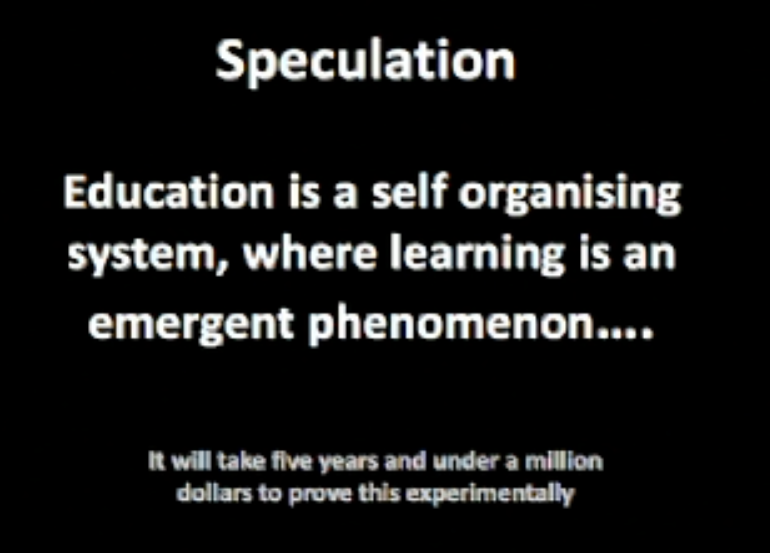
What he discovered was that, “Groups of children can learn to use computer and the internet irrespective of who or where they are.” Dr. Mitra noted that these kids had no teacher to provide the pedagogy.  Can the learners-kids to invent their own pedagogy? Yes, they had done it. “Groups of children can navigate the internet to achieve educational objectives on their own. The bars that children set for themselves can be higher than those we have set for them.”

Dr. Mitra continued to explore what would happen to student learning given the following formula:

  1. Computers
  2. Internet Access
  3. Information and Search Skills
  4. Reading Comprehension
  5. Children Working in Groups
  6. The Right Question

Along with this formula came his teaching style, “I have no idea. And now I am going to go.”  He stressed that,

You can drive children with questions. You don’t have to give them the answers. They can find the answers. If the kids/students didn’t get the “right” answer, then teacher didn’t ask the right question.  The teacher needs to change question.

The research questions he proposed in his next study, the Kalikuppam Experiment, included:

  1. Could Tamil- speaking children in a remote Indian village learn basic molecular biology in English on their own?
  2. Could a friendly mediator with no knowledge of the subject improve the performance of these village children?
  3. How would the learning and test scores of these children in a remote village compare with those of children who were fluent in English and taught by subject teachers in a local state government school and those attending an affluent,  private urban school?

The results to this rearch, Limits to self-organising systems of learning—the
Kalikuppam experiment
, were published by the British Journal of Educational Technology.

What are the limits that children can learn in self-organizing systems?  Dr. Mitra would like to find out . . .

More about Sugata Mitra and his work can be found at http://sugatam.wikispaces.com/.

5th-6th Grade Civil Rights Project: Technology-Based Activating Event

The learning expedition for the 5th and 6th grade this year is civil rights.  The teachers in the three classes started this expedition by having the students study literature and view media (Little Rock Nine) related to civil rights.  During these initial activating events, students identified vocabulary related to civil rights.  The teachers requested that their students create covers for their binders during their technology class.  They asked for Word Clouds of their vocabulary words and a related quote to be included within this cover.

Content Standards Addressed (Idaho)

Technology:

  • Demonstrate increasingly sophisticated operation of technology components.
  • Locate information from electronic resources.
  • Use formatting capabilities of technology for communicating and illustrating.
  • Publish and present information using technology tools.

Language Arts:

  • Use words and concepts necessary for comprehending math, science, social studies, literature and other Grade 6 content area text.
  • Read grade-level-appropriate text.
  • Apply context to identify the meaning of unfamiliar words and identify the intended meaning of words with multiple meanings.

Process

A Google Presentation was set up with sharing permission set for anyone to edit (plans to change to view only once their pages are complete). This permitted all the students in the class to work within the document without the need of an email to log in.  This would not only result in student binder covers, but also in an embeddable presentation of all student work for that class.   A template was developed that included a block for the Word Cloud image and text box for the quote.  The individual student names were included on the slides so the student could find and work on his or her individual slide.

Students came to their technology class with lists of their civil rights words.  Two types of Word Clouds were introduced to the students:  ABCya Word Cloud and Tagxedo.  I introduced Tagxedo during the first group but didn’t realize that Tagxedo needed Microsoft Silverlight to operate.  Due to the block on the system, any additional software needs to be downloaded by the network administrator.  ABCya Word Cloud became the back up tool.  But the third group (another day), got the opportunity to test out Tagxedo.  The students loved producing the word cloud into a shape of their choice.

To find a relevant quote, the students were directed to go to Thinkexist: more than 300,000 quotations by over 20,000 Authors. When students located their quotes, these were copy and pasted into their slide.

So with this few hour exercise, the students learned how to

  • engage in language arts content standards through a technology interface
  • convey their vocabulary words in a visual format
  • creatively play with words
  • download an image
  • insert an image
  • search for and locate a relevant quote
  • copy and paste the quote from a website into a Google doc
  • work collaboratively on an online document

Junior High Technology Project

Rationale
The Junior High Technology project was developed using the following rationale:

  • Sometimes It is About the Technology: Many educators involved in educational technology believe “pedagogy before the technology.”  I agree, but sometimes it has to be about the technology.  Learners may not discover the full potential of a technology without direct instruction. There is a false belief that students, being digital natives, will intuitively learn all how the technology tools operate.   I have observed something quite different. If a student does not immediately understand the workings of a technology, he or she will quickly get frustrated and/or move to onto another. My role as a technology instructor is to know the tool and demonstrate to students how to use that tool . . . learning the tool separate from its connection to a curricular area.
  • Offering Choice of Technologies: I know that has been some questions about the existence of  learning styles, but I also know, through years of working with and observing students of all ages, that they have different needs and desires for expressing their knowledge and understanding of content and concepts. In most classes I teacher, I offer a choice menu of projects – see A Technology-Enhanced Celebration of Learning.
  • Tinkering is Important: At first I expected students to jump into their content-based project. I realized that the students needed to play with the tools to learn how they function. Now when I introduce a tool, I tell the students they can experiment with the tool, create projects on one of their hobbies and interests. Their content-related school project will come after they get the opportunity to explore and tinker with the various technologies being offered.
  • Supporting the Content Area: Educators embracing the potential of educational technology believe, as do I, that technology should be integrated into existing curriculum rather than being offered as a separate course. It is similar to teaching multicultural education and character development. These areas, like educational technology should be embedded into all curricular areas.  But, since I am a technology instructor (and like being so), I want to use technology to support the content being covered in the students’ classrooms.
  • Technology as Project-Based Learning: Along with supporting the content area, the technology project is designed to be just that – a project, one that will take several weeks to complete.
  • Addressing National Education Technology Standards: Built into the structure of the Junior High project is learning and practicing technology skills: developing innovative products and processes using technology; applying digital tools to gather, evaluate, and use information; and practicing safe, legal, and responsible use of information and technology.

Idaho Content Standards Addressed

Technology

Basic Operations and Concepts

  • Students demonstrate a sound understanding of the nature and operation of technology systems.
  • Students are proficient in the use of technology.

Social, Ethical, and Human Issues

  • Students practice responsible use of technology systems, information, and software.
  • Students develop positive attitudes toward technology uses that support lifelong learning, collaboration, personal pursuits, and productivity.

Technology Productivity Tools

  • Students use technology tools to enhance learning, increase productivity, and promote creativity.

Technology Communications Tools

  • Students use a variety of media and formats to communicate information and ideas effectively to multiple audiences.

Technology Research Tools

  • Students use technology to locate, evaluate, and collect information from a variety of sources.
  • Students evaluate and select new information resources and technological innovations based on the appropriateness to specific tasks.

Humanities: Visual Arts

Goal 3.1: Demonstrate skills essential to the visual arts.

Objective(s): By the end of Grade 8, the student will be able to:

  • 6-8.VA.3.1.4 Produce art that demonstrates refined observation skills from life.
  • 6-8.VA.3.1.7 Locate and use appropriate resources in order to work independently, monitoring one’s own understanding and learning needs.

Goal 3.2: Communicate through the visual arts, applying artistic concepts, knowledge, and skills.

Objective(s): By the end of Grade 8, the student will be able to:

  • 6-8.VA.3.2.2 Demonstrate the ability to utilize personal interest, current events, media or techniques as sources for expanding artwork.

Goal 3.3: Communicate through the visual arts with creative expression.

Objective(s): By the end of Grade 8, the student will be able to:

  • 6-8.VA.3.3.2 Create a work of art that expresses personal experience, opinions, and/or beliefs.
  • 6-8.VA.3.3.3 Use the creative process (brainstorm, research, rough sketch, final product) to create a work of art.

The Junior High Technology Project

General Goal:

This is a semester long project.  The goal of this project is for students to use a technology creation tool to demonstrate their knowledge and understanding of one of the following content areas:

  • Digital Citizenship (Technology)
  • Universal Human Rights (2009-10 learning expedition)
  • Africa (2010-11 learning expedition)

Progression of Learning Activities

For five consecutive technology classes, students will be introduced to different Web 2.0 project creation tools – one per class:

Students will be provided with an overview, during these introductory classes, of the expectations of their assignment.

  • At least 10 facts with references about their topic.
  • At lease five live links to additional resources.
  • At least 10 copyright available images.
  • A video embedded into the presentation
  • An audio segment embedded into the presentation.

Safe and responsible internet use will be demonstrated throughout these lessons:

  • Locating appropriate information sites.
  • Judging the validity and legitimacy of a website.
  • Conducting a Google Image search using strict filtering and user rights that permit use of the image.

Beginning with the sixth technology class, students will work on their technology projects.  They will provide the teacher with the topic and the technology tool they will use for their project.  As part of this contract, students will also specify possible extra credit projects.  The expectation is that students will work on their extra credit projects in the case that they finish their project by the end of the semester.

At the time that the students select their project topic and technology tool, they will be provided with a rubric of the assignment criteria.  At the end of each class, they will be asked to write a reflective statement at the bottom of the rubric specifying progress and challenges related to the project.

Criticizing, Pondering, and Actualizing: An Educator’s Guide

I posed the following philosophical question on Twitter yesterday:

Why do folks spend time criticizing what is rather than pondering-actualizing what could be?

Three themes emerged from the Twitter stream of responses:

  • Is Pondering Just for the Privileged?
  • Is it Critical vs. Criticism?
  • Is it action for change or pseudo-action to appease the masses?

Is Pondering Just for the Privileged?

Bill, via his tweets, believes that pondering that (1) is for the privileged and (2) it does not lead to sustaining change.  Pondering is defined as: to weigh in the mind; to think about, reflect on;  to think or consider especially quietly, soberly, and deeply. I disagreed with Bill in that pondering is for the privileged.  I believe that all change begins with pondering. A follow-up question, for me, then becomes, “Can we afford to not ponder what education should and can be?”

Our Junior High students area reading-studying William Kamkwamba’s Boy Who Harnessed the Wind.  He pondered how a windmill could change his village in Malawi.  More about him can be found at Real Life Education ala William Kamkwamba.”

I also included in my original question a double proposition with the first part being pondering and the second one being actualizing (to realize in act and not merely potential).  These two parts equal a more unified whole in terms of possible sustainable results.  Pondering without actualizing leads to stagnation.  Actualizing without pondering leads to shabby and non-sustainable results.

Finally, Bill expressed his concern that his pondering does not lead to change outside of the classroom.  The resiliency research demonstrates that change can occur given a caring adult, often a teacher . . . but that the results may don’t show up for years.  I experienced such a story with Mark http://jackiegerstein.weebly.com/peak-experiences.html

Is it Critical vs. Criticism?

The next theme that came up was the need for critical analysis or criticism for change to occur.

As you can see by Candace’s and Melanie’s tweet, there is a belief that change is driven by criticism.  This prompted me to respond with a difference between viewing problems with a critical (involving skillful judgment as to truth, merit) versus with criticism (the act of passing severe judgment; censure; faultfinding).  Approaching problems without a critical and discerning eye often leads to haphazard and trial-error problem solving.  Approaching problems with criticism often leads to tunnel vision in terms of possible solutions.

Is it action for change or pseudo-action to appease the masses?

The final theme to emerge was related efforts to change.

Candice believes that lots of efforts have been made for educational change.  I agree that there have been efforts.  When I look at them, I think they are more of the same – standards and test driven reform.  I believe this to be pseudo-reform that is often politically driven.  These are efforts to maintain the status quo with only cosmetic change.  Historically, few efforts (e.g. John Dewey and Progressivism) have attempted reform from the ground up.  Given the reform efforts of the past few decades, I tend to side with Alvin Toffler’s position that “We don’t need to reform the system; we need to replace the system.”

It would be hypocritical of me if I just criticized the criticizers.  It might be easier to say and do nothing – especially on my emotions and psyche as swimming up the metaphorical stream takes energy, but in the long run, I would suffer from the incongruence. between my core beliefs and my real world practices.  I had a boss once who said that if we were to come to him with a problem, then we also need to bring along our solution.  I attempt to live education reform in my own local settings –practicing think globally act locally.

This I know to be the problem

  • Human learning cannot be measured through metrics.
  • Competencies are one thing.  Standards are another.  Student should have some basic competencies related both to the process and content of learning.  Specific age-grade level standards are counter-productive to learning.  Standards assume that all students of a given age are developmentally the same . . . cognitively, emotionally, physically, socially.
  • Given the previsous, one size does not fit all.
  • Public schools are not preparing students to successfully maneuver in the real world – now and in the future.
  • Kids are bored in school and similar to Pavlov classical learning theory, they are associating learning with pain.

What I Do “Locally” to promote educational reform

  • I am an educator in both teacher education and elementary settings.
  • I do not give any tests – none!
  • I have chosen positions (PE and gifted) and schools where I can develop the curriculum.
  • The students in my classes speak a lot more than me.
  • I voice my thoughts and ideas – in my work settings and now via Twitter, Facebook, and BLogs.

Finally, these are these are the questions I believe educators, as change agents, “should” be asking themselves:

  • Am I complaining or risking making a change?
  • Am I contributing more to the problem or more to the solution?
  • Am I a criticizer or an actualizer?
  • Do I ponder what could be? Do I give my students and colleagues the time and venue to ponder what could be?
  • What did I do today to actualize educational reform?

Integrating Technology This Week: Resources Discovered, Re-Discovered, or Created

One of my hobbies and frankly, passions, is finding free, exciting, and engaging resources to enhance the curriculum at my K-8 school.  Here are my finds for this week:

Language Arts

Got Brainy – Got Brainy features user-generated visual-based vocabulary definitions.   These include Brainypics (photo/image definitions) and Brainyflix (video definitions).  Students can create and submit their own Brainpics/Brainflix for their own vocabulary words.  If there is enough school-wide interest in this project, we can create our own site of student visual definitions.

International Children’s Digital Library has a digital library of outstanding children’s books from around the world.  The search engine for these online books include categories based on age level, genre, types of characters (kids, imaginary, animals), length, and picture-chapter books.

Tools for Educators offers free word search generators, word search makers, worksheets and programs for preschool, kindergarten teachers, elementary school teachers and language teachers to make word search puzzles to print, games for lessons, lesson plans and K-6 printable materials for classes.

Zooburst is a digital storytelling tool that lets anyone easily create his or her own 3D pop-up books.  I tried it and what I liked is that I can upload my own images into the 3D book.  I think the students are going to love it.

Science

PBS Kids: Sid the Science Guy is a science web site appropriate for our K-2 students.  It includes three discovery zones: the Super Fab Lab at Sid’s school, the playground and Sid’s family kitchen.

National Geographic Creature Features allows kids to search through photographs and videos of all kinds of animals. The photographs are stunning.  This was used with 1st and 2nd graders this past week, all easily staying occupied for their 45 minute technology course.

Golems is a 3D recreational physics simulator.  Some of the older students, Junior High, have expressed an interest in 3D rendering.  I plan to offer this as a choice project later in the year as the Junior High students will be asked to identify technology projects they would like to produce.

Production Tools

Google Apps in the Classroom is a Google site I created that contains an aggregate of Google Presentations on Google Docs, Calendars, Sites, and Maps/Earth.  We have Google Apps for Education for our school.  These resources will, hopefully, get more teachers to utilize these resources.

Stupeflix Studio is a video creator similar to Animoto.  Pictures, video, titles, and music are mixed together to create a video.  They are planning a version for educators.  Animoto has become a very popular tool for the teachers and students at our school.  It will be nice to offer them another option for video mash-ups.

Technology Integration for the Students: The First Month

Technology integration continues at the K-8 Charter School.  To refresh your memory, I took a position as a part-time technology instructor at this school starting in September.  The previous technology instructors were volunteer parents whose primary focus was on keyboarding skills and using the Microsoft suite.  Part of my self-imposed role is assisting teachers in integrating technology into their learning activities and supporting classroom learning during the students’ technology time.  A subgoal is to demonstrate how technology integration can be achieved with computers and internet connection and no other costs.

Here is the summary, an overview of technology integration for the different age groups that occurred during September.

Junior High – 7th and 8th Graders

PBWorks for African Learning Expedition

The learning expedition for the Junior High this year is studying Africa, past to present. Students have been assigned a specific African country to research, to become an “expert” about that country.  A PBWorks was set up for students to post their research.  At this point, the students are posting general facts they are finding about their countries.  These facts will be used to create Glogs, Animoto videos, and Dipity Timelines.

Glogs About Their Countries

This past week during their technology class, the students were introduced to Glogster.  They spent most of their time learning how it works.  A few began creating their Glogs about their African countries.

Part of their instruction included how to use Google Image advanced search to find images for their Glogs using strict filtering and usage rights “labeled as reuse with modification”.

Shelfari for Book Discussions

The Junior High language arts teachers asked all of the students to set up Shelfari accounts.  This was initiated by one of the teachers after she saw me demonstrate it during my interview last Spring.  What follows is part of the permission letter she sent home to parents for permission or students to sign up for Shelfari:

As students discover wonderful books, they will share their reviews and recommendations with each other.  Over the summer a few Anser students piloted an online site for discussing books.  Students found Shelfari.com to be a fun and interactive way to share their excitement about books.  On Shelfari, students can create a virtual bookshelf, rate the books they have read, write and read book reviews, discuss books with readers from around the planet, create a reading wish list, and much, much more.  Our class will also have a private group where we can safely discuss books we are reading together.  Only group members can see our discussions and reply to our questions.

Participating students will have a profile (bookshelf and friend list) on the Shelfari.com site.  In order to create a Shelfari account, students need parental permission.  Shelfari registration requires an email account; however, for the safety of the student, I recommend that you use a parent email to register.

A Group Shelf of books was established for the class.

They are asked to participate in monthly discussions on Shelfari where they post their own questions and respond to questions posted by other students:

Middle and Upper Childhood – 3rd, 4th, 5th, & 6th Graders

Where I’m From PicLits

One of the beginning of the year projects for the 5th and 6th graders was composing lengthy poems. Where I’m From.  The teachers asked how technology could assist with the expression of these poems in an artistic and visual format.  PicLits was the tool I believed could best support this project.

The students’ PicLits were all posted on a single page: http://anserupperchildhood.pbworks.com/Where-I-Am-From-PicLits

Word Clouds for the River Expedition

I showed the teachers Wordle at the beginning of the year and it immediately sparked the interest of the teachers for the students in these grades.  They have requested the creation of word clouds during technology time to support classroom activities.  I started with Wordle but wanted a tool that can easily  saved as images to the desktop.  Wordle does not have this characteristic.  After exploring other options, I decided to use ABCya Word Cloud. The Upper Childhood students practiced using it by inserting autobiographical words.  The Middle Childhood students created word clouds based on their river expedition.  They included words that they associate with rivers.  They will create another similar one after they finish their river study.  The two word clouds will serve as a pre-post assessment of terminology gained from their river learning expedition.

Thinkquest for Networking and Posting Work

I learn about many of the technology tools I use through Twitter and blogs.  Thinkquest was demonstrated to me a few years ago at ISTE’s National Education Computing Conference.  I love this site and so do my students.  I used it when I was a gifted teacher a few years ago.  The students at my “new” school are having the same excited reaction.

I don’t understand why I never hear it mentioned in any of my social networks.  It is a safe place where students can create an online identify, communicate with other students from their own school and from schools from around the world, post questions and polls, and participate in online projects (way too many benefits to describe in this blog entry).

Internet Safety with Professor Garfiled

Along with the production tools the students are learning, they have been studying Internet Safety with Professor Garfield. We watch the video together and then the students work through the Try and Apply components at their own computers.

Kindergarten and Early Childhood – 1st & 2nd Graders

Given the variance in the literacy levels of this age group, especially the 1st and 2nd grade group, the challenge has become how to differentiate to meet the needs of all children in the class.  I believe that technology provides a great venue for differentiation and it has proved to be the case for this age group.

ABCya Educational Games

ABCya provides educational games for grades Kindergarten through Fifth with an assortment of games for each grade.  From their website:

ABCya! is the leader in free educational kids computer games and activities for elementary students to learn educational computer games and activities were created or approved by certified teachers. ABCya! educational games are free and are modeled from primary grade lessons and enhanced to provide an interactive way for children to learn. ABCya! games and activities incorporate content areas such as math and reading while introducing basic computer skills. Many of the kindergarten and first grade games are equipped with sound to enhance understanding. on the web.

This site provides options for self-differentiation as students pick their games based on their grade level and interests.

Literacy Development

For the first half of the Early Childhood classes, I focus on literacy development.  Kidblogs were established for those students who have basic writing skills. The kids, at first, weren’t that thrilled about writing the blogs.  But once they realized they could comment on each other’s blogs, their excitement rose dramatically.  One student asked if it was like Facebook for kids.  Even at age 7, they understand and are attracted to social networking.

While the students are writing their blogs, the other students, emerging readers and writers, listen to and interact with online books such as Pinky Dinky Do.

Online Drawing Tools

The kids love to draw and paint with online tools.  Along with the ABCya games, students have been given the opportunity to draw during the second half of their technology classes.  Tux Paint was downloaded on all of the computers in the technology lab. (Note: even the Junior High students like it!).

Up Next – Technology Integration by the Teachers: The First Month

Comic and Animation Technologies in the Classroom

I have several lists of online project-product creators for my K-8 technology students.  I cover a new tool every week or so.  But being kids, they like to explore the other tools from these lists.  The ones that overwhelmingly get noticed and the ones the students get most excited about are the comics and animation creators.  There were several tweets over the weekend that inspired me add to my knowledge, tools, and personal excitement for using comics and animations in the classrooms.  I have aggregated and compiled the following resources for my students.

Here is what covered S. Hendy in her slideshow plus some additions of my own:

Online Comic Creators

Animations

The following amazing animation, shared via Twitter, was completely made using the open source 3D software, Blender:

contains minor violence but the story is excellent (and sad)

Animation Creation Tools

Using Comics and Animation in the Classroom

My ultimate goal for using technology in education is having students love learning and creating.  The tools are the means to do so.  As such, they can be connected to a number of content-based assignments:

A Technology-Enhanced Celebration of Learning

As part of my Pedagogy of Learning and Psychology of Learning courses for pre- and in-service educators, I included a final project for the course was a Celebration of Learning.  They were asked to synthesize and reflect on their course learning using their own creativity, passions, and personal interests.  The description of this project was:

To demonstrate overall knowledge and integration of the material studied in class and from the texts, students are to do one of the following and demonstrate/report results to their classmates:

  • write a report
  • do a photo essay
  • compile a scrapbook
  • build a model
  • put on a live demonstration
  • do a statistical chart
  • keep a journal
  • record interviews
  • design a mural
  • develop a simulation
  • set up an experiment
  • do a mind-map
  • engage in a debate
  • produce a videotape
  • develop a musical
  • choreograph a dance
  • create a rap or song
  • one of your own own design

You will present your project to the class on the last day. You have up to 15 minutes for your presentation.  The grading criteria for this project includes:

  • Neatness and Professionalism- clean, professionally presented, easy to view, free of grammatical and spelling errors
  • Integration of Course Theory and Content – demonstrates an integration and understanding of class content and your research findings.
  • Quality of Content – the content demonstrates mastery and insights into the subject matter.
  • Creativity and Insight – Materials demonstrate creativity and insight about self and course material.

When students have multiple choices in ways to demonstrate their knowledge, the evidence of their learning is more accurate. We wanted the students to actually become the experts through the learning process. This assessment isn’t just a fancy term for a presentation at the end of a unit. To actually engage in an authentic celebration is to witness a true display of student understanding. Learning Celebrations are Authentic Assessments of Student Understanding

Multiple Means of Expression Giving students a choice of how they want to demonstrate what they learned supports the Universal Design for Learning Principle II: Provide students with multiple means of expression:

What if a student can best show you what they learned through art form? Does it make sense to eliminate this option all together? As educators, it is essential to be attuned to the fact that there is not one form of expression that is optimal for all students. Catering to the natural diversity of expression when designing a course can serve to broaden the impact of your teaching: some ways to do this are through text, verbal presentations, design, film video, multimedia, 3D Models, music/art, recordings, or graphic organizers. Technology plays a big role in facilitating these implementations. The CAST website has a full definition. (http://www.uvm.edu/~cdci/universaldesign/?Page=about-udl/guidelines-principles.php&SM=about-udl/submenu.html)

Technology-Enhanced Celebration of Learning

The concept of celebration of learning, honoring students’ learning preferences, and reinforcing the classroom learning can be enhanced in this age of technology.  Technology provides additional ways and opportunities  to differentiate instruction based on content, interest, and ability.  Choice menus give learners the opportunity to self-select activities that are best suited to their interests and ability.  The result is engaged and motivated learners with resultant products that when shared in the classroom have often made me cry due to the personalized and passionate characteristics of these products.

Options that can be offered that are technology-enhanced include:

Create a Series of Word Clouds

Write and Illustrate an eBook

Draw or Paint a Picture

Make Comic Strip

Do an Animation

Create a Data Visualization

Create an Infographic

Create a  “Media” Presentation (must include at two different types of media – photo, images, audio)

Keep a Blog

Make a Game

Make a Timeline

Make a Google Earth Trip

Make an Online Quiz

Compose a Musical Composition

Make an Audio-Media Message

Make a Book Trailer

Create a Stop Motion Animation

Build a Project in a 3D Virtual Environment

Student Examples This past term, two students in my undergraduate course on Interpersonal Relations selected technology-enhanced projects. TJ loves Minecraft, so his final project included a review of the course concepts using his Minecraft Skills.

Another student, Nicole, created a series of Wordles for each topic covered during the course.

In addition, one student loved the Wordles were created in class so much, she did her own handmade versions for her project.

And the Technology Integration Begins!

This was my first full week at the K-8 Charter School as the new technology instructor.  Technology has been used minimally by the teachers at the school during the ten plus year history of the charter school.  As stated in an earlier blog, Integrating Technology: Technology Tools to Develop a Collaborative, Participatory School Community Learning Space, the principal got excited about the potential of technology integration across the curriculum during and after my interview, wants it, but also knows it needs to be a process driven my the teachers.

I explained to the teachers that I want to support classroom learning expeditions when the learners come to me for their computer class.  I also told them that I am willing to show them technology-based tools they can use to enhance their classroom activities. I know many of the Web 2.0 tools and their potential for instructional applications (as a wear as a badge of honor for my addiction to social networking, online webinars and conferences, and hanging out in places like Second Life).  Based on conversations with the school principal and my own experiences/intuition, I understand that that technology integration needs to made as an offering to the teachers.  They need to decide if and how these tools can be incorporated and integrated into their own classrooms.

So this first week was one of preparation as the students start after Labor Day (first weekend of September for the United States) . . . and to my pleasant surprise, several “incidents” of technology integration occurred.

During this pre-school week, I assisted teachers with technology integration . . .

  • The principal asked to me to use Wordle for a warm-up for a staff training session.  The teachers were instructed to throw out terms that represent how they felt when learning something new. I created a Wordle from their responses.  Several teachers told me later that they plan to use Wordle during the first week of school.
  • T., the Community-Based Curriculum Director, discussed with me the use of Movie Maker to showcase the students’ service projects.  In the past, the parents and kids took photos and then T. used Movie Maker to showcase them.  I showed her Animoto.  She practiced using photos from the pre-school family picnic that occurred this past week.  The next day she excitedly approached me, stating that she now plans to offer students the choice of using Animoto as a means of reflecting on their service learning, that she can then  mash-up the students’ Animoto videos for her end of semester service learning presentation.

  • J., a Junior High teacher, worked with me to set up a PBWorks site for the Junior High Africa Expedition.  Students will work in small groups to study countries and post their findings on the their PBWorks page.

  • I showed Shelfari during my interview.  J. and several of her junior high students set up shelves last spring and actively participated over the summer.  I worked D., another Junior High teacher, to show her Shelfari as she and J. are planning to use it for their JH reading project.

  • M, a middle childhood educator (3rd-4th), and I set up a Weebly page for her classroom and created/inserted a PollDaddy survey to assess her students’ learning style preferences.

  • A., a Kindergarten teacher, asked me to help set up a classroom page for parent information.; and L., the special education coordinator, wants a parent site for homework so she could add IEP-based accommodations.  I wanted to get other opinions about this so I went to my trusted network on Twitter.  The recommendations for this included using Google Calendar for the homework with accommodations and Google Sites for the classroom pages. I asked via Twitter for some example classroom pages using Google Sites and here is a list of what I received:

This was a good first week!  Lesson learned: Technology integration needs to be approached as differentiated instruction for the teachers. They are the users in this case and need to generate their own education.  They should be presented with a choice menu and then given the support to develop the tools and technologies that address their abilities, interests, and teaching styles.

Social Media Revolution Should Be (and is) Creating a New Type of School

I love how the messages of our times are digital.  Folks from the future who look back to study this time will view these digital messages as primary source documents that tell the stories of us.

The following are some of my favorite videos of this past year.  They tell the story of what needs to and should drive education – in this era of social media and educational networking.

These two videos tell the story of what is occurring in the real world -businesses know this,  journalists knows this, the kids on their own time know this  . . .

New Brunswick Department of Education “gets it”:

This video was produced by the New Brunswick Department of Education to stimulate discussion among educators and other stakeholders in public education in the province of New Brunswick. The 21st Century presents unique challenges for education worldwide. In order to keep pace with global change we must focus on 21st Century Skills and public education must adapt to keep students engaged. Rigor and relevance are key,

This principal does not. But note that InnovativeEdu’s editorial re-mix is part of this video:

Yet, it is being implemented within educational projects such as the Flat Classroom Project and Rock Our World:

Hopefully, WHEN (yes – I am hopeful) schools adopt social media as standard operating practice, the results will help lead to enlightenment in the 21st century.

Global Distribution of Settlements and Population

The distribution of human population and settlements across the Earth is highly uneven, shaped by a complex interaction of physical, economic, historical, and technological factors. While some regions are densely populated and heavily urbanized, others remain sparsely inhabited or even uninhabited. Understanding this global distribution is fundamental in urban and regional planning, as it reveals patterns of development, inequality, resource use, and sustainability challenges.


1. Concept of Population and Settlement Distribution

Population distribution refers to the spatial arrangement of people across the Earth’s surface, while settlement distribution refers to the location and spread of human habitations—from small villages to megacities.

The Earth’s population is concentrated in certain regions due to favorable living conditions, while large areas remain sparsely populated due to harsh environmental conditions.


2. Global Population Distribution Patterns

2.1 Major Population Clusters

https://images.openai.com/static-rsc-4/qbv2LZGdfJgO8UOcnUlvNhudNn5orsQFCF_z2ceyxwELl5sUVaGZA0HAxLAG0HZyBsa5BHiRgLTKWrGwByKbdDRftaJvRPDtiuvz6wwCFu-ICbV5SG9RcjolDeUbKDANeoQrcdX4c58cITD8ywsEEdwqB58dY6zSW5PQWE59diZUKgQYh7PsNFMnV3gn96vg?purpose=fullsize
https://images.openai.com/static-rsc-4/f0xuhGlOEOIh1O0FVqLQ8ytFIKBXSMmPPJVvBAgnH85xOjWnWzQUgDoRg0nzyoojfugSYbRRrmfhzenGBzd7hUCWOQUxzXt-iu5OmLCnx_bmq1qsC_bQZY9qpyDd0QUPfj1uWqy13-uZQnwL_n5irXMAuToJFG2-VHbYm6MZmAb3c2HJ7EzUs5uLc2Am3php?purpose=fullsize
https://images.openai.com/static-rsc-4/IN9JGz51X693y7dSBNfvJeAfjsUlmeAn9xIsPZbR-IhbbEi-OlDA_hGL9v67SfHbi-7MZRNQPewHIA_0dHcUK26OkggIjnCYCY6MZQgJSf6HsB_mdGpQXPuILvyIdiB5rOIC0r-yAe8YTlGp4yHdNry51VBdn86bLoNAvs3ccluqjoH6igjRBFxnHCFb12uO?purpose=fullsize

8

Globally, population is concentrated in four major clusters:

a) East Asia

  • Includes China, Japan, and the Koreas
  • High population density in river basins (e.g., Yangtze, Yellow River)
  • Advanced industrial and urban systems

b) South Asia

  • Includes India, Bangladesh, and Pakistan
  • One of the densest population regions in the world
  • Fertile plains (Indo-Gangetic basin) and historical agricultural development

c) Southeast Asia

  • Includes Indonesia, Vietnam, Philippines
  • Dense populations in coastal and delta regions

d) Europe

  • Includes countries like Germany, United Kingdom, France
  • High urbanization and industrialization
  • Well-developed infrastructure

Together, these regions account for the majority of the world’s population.


2.2 Sparsely Populated Regions

https://images.openai.com/static-rsc-4/3zDYYyo14_Kms4IfImt1NQ2t-f4Rj7eOPDX-qk7fUr5WZHX8Azf3yUNgl3NN6F5sDEzA_JMOVmzdv07_fYXbtMQbV9eZk8KsL-Ol_F5VHtXGFKNFvnKvsSfcZrTGXt8kUGkPMwvIvo73kh9TPHdV8x2wnitSolXt_UTZBG1rEEMxnHQ74z5Y8lwSLV4hax-c?purpose=fullsize
https://images.openai.com/static-rsc-4/oRTxd5eKYmlTBFXoWrdWj2JaiUGEsxby4MIhdRxW-1kctV1sda5SLPzdtAoaYXUej6ANfjxON_h8cLsRlegVLc9zlyajJ5h5qkfm9PRG3q9MgrhZmXsK_yqAVJrf89G-EmaODJ4zDN7RFzHEfy2O46ValiLqr9EUrcm3RKxHzhfGA82dGU4uV2LLovXLU62c?purpose=fullsize
https://images.openai.com/static-rsc-4/N4ju6tz2VEFteOhmt0wqReYsPTIJRYwXR2RnXMW9-bLEMxXqyWNb5m3-FBrwEasrQw035vn5A_bnXgXj599IHZJ9E8KUIY5h9wngaDdHoW5pMRO_eweQ8kW7KMXgzLwyggcXZMTQLyMyAKy-nbNZkpTi8A0bClcQ3G1E-EqFSFAjN28S5Ek49hWIk8y0Kpq0?purpose=fullsize

6

Large parts of the world have very low population densities:

  • Deserts (e.g., Sahara, Arabian Desert)
  • Polar regions (e.g., Antarctica, Arctic tundra)
  • Dense forests (e.g., Amazon Basin)
  • High mountains (e.g., Himalayas)

These areas are constrained by extreme climates, poor accessibility, and limited economic opportunities.


3. Global Distribution of Settlements

Settlement distribution closely follows population distribution but is also influenced by accessibility, resources, and economic activities.

3.1 Coastal Concentration

https://images.openai.com/static-rsc-4/KOGvR2Rv7ShtOD9bc2xfuU1XvWRFnpJ-YKhvge14aEtUemqjbj1droRoPMSKMBYTWr-ymwstDzBuCum_n6AGJqnq1IX3iPx8HQdlqMXRyiBNKKC2XUrgBlwNLwoHrQaWAszxnmvT-Gmix1MBAhdCh3s0n8pOaAR-HDNdlgWEqu7osM7hyWiKRNvvB2TW41es?purpose=fullsize
https://images.openai.com/static-rsc-4/qYbyWxSRLkmDWDJXd1VN-9C3YHaZrLCh6uw2e_JJifPzK68qs_rjWyvJ2HGiT4K1h72kHAbSt3mQreryBDY-O_fxy1HiBLpp25feWgNCC1lIckmVOZuvaQM4FtfxAa1UYG3vqL4BB93nkqKeqk8Y81Aaja3r6EYzJpbyYKRefcvXw4RBKI0XGz6UO7VPbmzp?purpose=fullsize
https://images.openai.com/static-rsc-4/PfrBGhYJjLQhAFuwJhtRQNogFjy6g_UtRzih5fDIpiuM4EsdaCCR5aL6InJM9qEgzgV7hiQgWWmROJ-bpwIHMp9R0VB_zi3mIo6oR8SAn8o4pfbOQazbrXYloDeBY_OI7NFsVrT-pRyQliuYB5E1EFVBZ0j7EK-3hUZu_9udwO4QcpfpXn51xG2tREryjLfy?purpose=fullsize

8

A large proportion of the world’s population lives near coastlines.

Reasons:

  • Access to trade and transportation
  • Availability of water resources
  • Favorable climate
  • Historical development of ports

Examples include major coastal cities like Mumbai, Shanghai, and New York.


3.2 River Valley Settlements

https://images.openai.com/static-rsc-4/04o60VHjEHyA-ptWpXBe88WzdFwkaSD2IemCtiJ3hD9cjWJrMb_1mxh565qgrtVuzzMlmJgpgeWgVh-glzKUT3rOFN5bPyfX50Z0ExgpdNMGtQ9rzM8M66Z0BI0XslwqrzxXxB2f4tJzxnFO6vTTGBamYqvX1okTCam3CLa_W4lfj3mDIpIIqZQPfFR07mbq?purpose=fullsize
https://images.openai.com/static-rsc-4/4nDKifP1VWjq26tB6K5585CH4tj_xxnxFl5iHdoNOPGS3_O-x-Mjhg-LZx8_Wrndbgpn5mcsss8e5ecG49E20pd5LPlgNe-TEDqxPVfSJkf73TmvZ4CO3kLGtH3vn2FEwXtNLaQGvuCbvrjZjX_pXaIOmXWZI3pMtwHqWpf26BkPpHsolzbFUwv-VlLkj5xy?purpose=fullsize
https://images.openai.com/static-rsc-4/UK-qvgEeDpZHC2gt3SzuqFMyFiPojabtVsyhCJRkUuFUeWdVQ3YD8TCJZFdRrJaDEe5Wr7Lk6HP9_P9T-JoKe_Kh_RkKLN_SzNVgrOw3rmcoFj7PBycwudgQh1aUmPDp9SIJG1YDwVzdKOMWi39ED-yCY8hH6-9NZDs_7cqFywv5GegfIyEWAMQ5YA-ebEG4?purpose=fullsize

6

Settlements have historically developed along rivers due to:

  • Water availability
  • Fertile soil for agriculture
  • Transport routes

Major river-based settlement regions:

  • Nile Valley
  • Ganga-Brahmaputra Basin
  • Yangtze Basin

3.3 Urban Concentration and Megacities

https://images.openai.com/static-rsc-4/6AMCBlln6HjNBQzgmPQumWgsjugxvC0lyKPXKsExGFV9HAwOmiIYkJsjBXzqBk240lVYke4IisHPnLF7lgqWd9GKWJq8z5mmdhXatKOy1XBTUPrP94VVOjIIN0wrnzlw5asG3jCkYagtBCtMIcGBBtHcnauyrCxYSSn3e5aJKXQhkGNPgZ0YwgRu6S2o9Ab2?purpose=fullsize
https://images.openai.com/static-rsc-4/94jcLwVlWpN_rbifzUcKIK1-dFMahIRIcjj4Q_6cFWCgrFGKrqPSNYvHA57V-POVXKTDXLQVOLlWIEDZt21SX2SCoBLomWyI0xLXTU7PPbej4NNtydaxsttrTFQP-4hZ01iL0U3c6jJ64GbZ5aHEM0bV0Ki7oI7lw8cVKCbG7E2B0SA0uwyGdDEaKK4ubQOh?purpose=fullsize
https://images.openai.com/static-rsc-4/jep8gPKiLSiFQkVUliE1PO7kkxa4HYHWxCb138CFPHHWxXPb5kyD_45IFeyCrQDb1E9wZkQf4550x6TEziTsz2UzzFsaZZ8OEMU9_mMzG_AEs45durIqYY_M2ziMNv6P6bln21pRL6EZimQkaiFWeaCW5LwHOax_CkOu511vZVPQcrxOxsZLHbEnS3hHq13S?purpose=fullsize

6

Urbanization has led to the growth of large cities and megacities (population >10 million).

Examples:

  • Tokyo
  • Delhi
  • New York City

These cities are economic hubs but face challenges like congestion, pollution, and housing shortages.


4. Factors Influencing Global Distribution

4.1 Physical Factors

  • Climate: Moderate climates attract population
  • Topography: Plains are more populated than mountains
  • Water availability: Essential for survival and agriculture

4.2 Economic Factors

  • Industrialization and job opportunities
  • Trade and commerce
  • Infrastructure development

4.3 Historical Factors

  • Early civilizations developed near rivers
  • Colonial trade routes shaped settlement patterns

4.4 Social and Political Factors

  • Government policies
  • Migration and conflicts
  • Urban planning decisions

4.5 Technological Factors

  • Transport networks
  • Communication systems
  • Agricultural advancements

5. Urbanization and Changing Distribution

The global population distribution is rapidly changing due to urbanization:

  • Over 50% of the world’s population now lives in urban areas
  • Rapid urban growth is occurring in developing countries
  • Emergence of megacities and megaregions
  • Decline of rural populations in some regions

Urban corridors and metropolitan regions are becoming dominant spatial forms.


6. Regional Inequalities in Distribution

Population and settlements are unevenly distributed not only globally but also within countries:

  • Dense urban cores vs. underdeveloped rural areas
  • Developed vs. developing regions
  • Coastal vs. inland disparities

These inequalities create challenges in:

  • Infrastructure provision
  • Resource allocation
  • Social equity

7. Implications for Planning and Sustainability

Understanding global distribution is essential for:

7.1 Resource Management

Efficient allocation of land, water, and energy resources.

7.2 Urban Planning

Managing urban growth, especially in rapidly growing cities.

7.3 Transport Planning

Designing efficient mobility systems based on population density and distribution.

7.4 Environmental Sustainability

Reducing ecological footprints and managing climate risks.

7.5 Disaster Risk Reduction

Planning settlements in safe and resilient locations.


8. Future Trends

  • Continued urbanization, especially in Asia and Africa
  • Growth of secondary cities
  • Expansion of urban corridors and megaregions
  • Increasing role of technology and smart cities
  • Climate-induced migration affecting settlement patterns

Conclusion

The global distribution of population and settlements is a product of both natural conditions and human interventions. While favorable regions such as river valleys, coastal areas, and fertile plains attract dense populations, extreme environments remain sparsely populated. Over time, technological advancements and economic development have reshaped these patterns, leading to rapid urbanization and the emergence of megacities.

However, this uneven distribution poses significant challenges in terms of sustainability, equity, and resource management. For planners and policymakers, understanding these spatial patterns is crucial for designing inclusive, resilient, and sustainable human settlements that can accommodate future population growth while preserving environmental balance.

Hello world!

Hi, All,

I am using WordPress as a new blogging platform.  My goal for 2010 is to Blog more often.  I named the Blog User-Generated Education because I believe all of the new technologies are making it ripe for a learner-centric, learner-driven, constructivist education.  I am looking forward to exploring this via this Blog.

Evolution of settlements: Settlement size, pattern and structure

The evolution of human settlements is a reflection of the dynamic relationship between humans, nature, technology, and socio-economic systems. From primitive shelters to complex metropolitan regions, settlements have transformed in terms of size, spatial pattern, and internal structure. This transformation is not random but guided by factors such as geography, economic activities, transport systems, governance, and cultural practices.

Understanding the evolution of settlements is essential in urban and regional planning because it helps explain present urban forms and provides insights for sustainable future development.


1. Concept of Human Settlements

A settlement refers to a place where people establish a community. It includes not only dwellings but also infrastructure, economic activities, and social institutions. Settlements can be broadly classified into:

  • Rural settlements (villages, hamlets)
  • Urban settlements (towns, cities, metropolitan areas)

The evolution of settlements can be analyzed through three key dimensions:

  • Size (population and area)
  • Pattern (spatial arrangement)
  • Structure (internal organization)

2. Evolution of Settlement Size

Settlement size refers to the population and spatial extent of a settlement. Over time, settlements have evolved from small, isolated units to large, interconnected urban regions.

2.1 Prehistoric and Early Settlements

https://images.openai.com/static-rsc-4/pzQJijiggjLCeIaWkDp5iddV77biTg-W2EsoWu-m6jOEBWzP5_1NimUj_ko82YL0F3BPYZrEm_PuDk8CS7uTrMjUjf-tOX03HJednIMpIv9CmW_hniHrvhptGib6RDHZfYw2zQRliWz8JyIeG0mtdMmW0gRLQUGmGO69KNhNBim_SOvi_6OIaLZkjlkii6cK?purpose=fullsize
https://images.openai.com/static-rsc-4/pt78d4JHpSGJ3s-3EclhV68_2OD7cHGhcDhMcjwdd4fLTLoi32BR7mLmyuwLgQiBUPrzXO1-embzIV7RIkeYnoiz7JO5uqBTvmxES9pDQSd_36d8gqjfF9n_Ee4BPO6Ky-ZS93GHsUhh4n2OBBEKxIX7KkmjQj0nfc-5qNIHBj1YVvdKXswhL1XKJcq1g-im?purpose=fullsize
https://images.openai.com/static-rsc-4/ehhLPmkTrIfWZXH4q71O7Wg9UsvBnVQHHiQukEB7jtFGTb7SMdp6xDMA1Sl3L5_-bAmUeE0NWPA_KyPTgPtWWOxv_hViNDE-TqUl1cdw3IpKq64UfZxjFRxjQOoN1xAabqu4yE2I1GGT0BNRdwsUslGBBgVbO5JEo4rBHMPzEy9ep7lhBpTs6iFZiWh0Lltg?purpose=fullsize

6

Early human settlements were small and temporary, primarily consisting of hunting and gathering communities. With the advent of agriculture (Neolithic Revolution), permanent settlements emerged near fertile land and water sources.

Characteristics:

  • Small population
  • Subsistence economy
  • Limited spatial expansion
  • Strong dependence on natural resources

2.2 Medieval Settlements

https://images.openai.com/static-rsc-4/RSQxXrq9YYmb1KJkyIJVfTD50EsRtyjYUDmME86QbzOv8_uybNbuVM2x9QmUHv3lvF0Ed0vE39766ozM0k6brju_9Bhz84b4IVIH17Ujo481MIvES9no8dA2ENiJiKyelgkO-bT9tbVClGmE07u2FrVdIfgBjbu_ZHEu01xZQ5yT3Gg_mSiQgjPZXMQdH6kD?purpose=fullsize
https://images.openai.com/static-rsc-4/rC7N9l8zpIhAJ583oFfSP1BDGsl7d39xXjh7l0M_k6ggduRjfWFl8qJnf-prhu1kNGAwqQSfnTAhs00V9ebd7DKQnefQ3o2vSvhxmzoIrJmXBmV1tYxBg8aY88p-AMaPvpnKAi7qBmHS1LsgzxyoEOAO3UqVWiK4s-_zTdHXyyhlpYUzr-YOkVrG7NLKbvtv?purpose=fullsize
https://images.openai.com/static-rsc-4/cRw2R-kic5UAxGuuonOoGBJpqvgPXoGkw6ELCScD5GDC1X2m6cjIrI7d9UWd8pqzBDtP-QloSqUCd0x-bU7gdchuYRbqvS6KbaqECHOgJ_gIWdUaTMNPgfNn_88DOLjLc6B98gh-Wp7v-zPouy8GnVMUJXentw0500UvT7JzBNtYKhQ_sSfLeNJMh0mxWj-6?purpose=fullsize

6

During the medieval period, settlements grew in size due to trade, administrative functions, and security considerations. Many towns were fortified with walls.

Characteristics:

  • Moderate population growth
  • Compact and dense settlements
  • Defensive structures (walls, forts)
  • Emergence of trade centers

2.3 Industrial Era Settlements

https://images.openai.com/static-rsc-4/C7eavZ1fUGcxW9NFc9qzyCvTMA3Kalrzm1FqNDY1olFa3lTR19m6BhG4nHUr-ZtoE2Mqpj-UQafwOQONevFpTgcdhQnwy-PX5kdHQr0vqnJPaJp0hxfcUIXMhRwomSBRqakTrF-LIXVAVSFQ-blBDB-gjKEX8B-hkI-J9k8P55Y7Y1z-DV25HY2-YwsVgJVe?purpose=fullsize
https://images.openai.com/static-rsc-4/HTfGRXgnVlaG0VAreuz1Iqn_PqaaVzLepwcjaO_6Uv4Z43B2mgXi9CGvbpRFn2moCGj_B5xlJD-oAEwgGCgekRuOXxtxOBhCWSJc-T-pQFrKz1Sy0JRUPuDfEn1h3JaBACRO5GB9E8bCqoYFGUs6lIsf7mwp5NymyiWX1PkjxGqRUShNQ-jKcfgH2abu00Pc?purpose=fullsize
https://images.openai.com/static-rsc-4/JawDvoOSPLqgJKqRexDW01EhxkTAmJAx5WL7Cet7d4asmr4hxFPhMPh86WOIUCgD2Rk6uopVlnrX4863rtyf6H_rOZ9giWL0niGDHqiGooUspai6d0yaqsbLW1Hi6do2BD7bN31UwduUPnP6YwmqGHfyV_z0kBlRfYbgRYOYlrBgc9I14kqo2I_BwECalDN-?purpose=fullsize

6

The Industrial Revolution marked a turning point in settlement growth. Rapid industrialization led to massive rural-to-urban migration.

Characteristics:

  • Rapid population growth
  • Expansion of cities
  • Emergence of slums and overcrowding
  • Development along transport corridors

2.4 Modern and Contemporary Settlements

https://images.openai.com/static-rsc-4/i8dPRi99fc4SqUfuwIDb-oJ8KMljhG3fzEa2MpIAFoE9ulFLGzkD_1ST6C3DjIkIg4jRN_61h_Z9JdjWuuy9Cicn74cafXyXHsLbnPh4dFQ4FbLVec7LNxQgJSKUUTvSK9iRnb62wvEsWstRwgdmNOcfFF2Cf4-gzYOLNKQgGxlV4Lucf_agMD9GOcZmGPvr?purpose=fullsize
https://images.openai.com/static-rsc-4/nC-iVwuPYRFdN9CB5mBVdXDVXdXe4XmO-2-hrKqIOmUDjxbCtUNBOXpdtWSPQzqGNcH8hmwUJc79fDHfp7FS4y2nLJeYCt3Di_UeslQFWmIpnTJpd9zRP7_3DCGI7HXC8Bd9WyE3ya1JiMYldEtrptYrNtMoUq0OVlctYkuLctb0AQVUAsJRCbpD3QfrflNv?purpose=fullsize
https://images.openai.com/static-rsc-4/2q25-KVU56Vy54w03Q-rlZYdziOUAlM2yjXw_GPr2uDv_I7yhNYCFqjyfYoCxhIg-kznn1FQXWDnAmXl-LgAhNqGGf1aARZKmcsst4xxxSAh0kl3WvboQPt8iFoDV5lcn8t8RnmJIVhwsE25dsTNYO-Bk3aTh1m7uEbEP2HU0yy5oAhczvtuSEsruKamSqM-?purpose=fullsize

6

Today, settlements have evolved into megacities, metropolitan regions, and urban corridors.

Characteristics:

  • Large population (millions)
  • Urban sprawl and suburbanization
  • Polycentric urban regions
  • Integration with global economy

2.5 Settlement Hierarchy

Settlement size also determines hierarchy:

  • Hamlet → Village → Town → City → Metropolitan City → Megacity → Megalopolis

This hierarchy reflects increasing complexity, services, and economic functions.


3. Evolution of Settlement Patterns

Settlement pattern refers to the spatial arrangement of buildings, streets, and open spaces.

3.1 Rural Settlement Patterns

https://images.openai.com/static-rsc-4/apAjeYqilMwTiv11WE_R9LJswlT-En6BQfeCqZhz4dqb_WDFy668z1yLIDqtbXLKH_8iK33_w5gwR6fLsNznKnwyC6H40u-TMw2y-qKEnilh3l0VF4Q4G9wz3E2DAsFPeQmiAlpWs-ugA6XPq3NlHWgEfKT1QNIrsu4z-aLdvdjmlefm8CAQ__xJjK-HCCOz?purpose=fullsize
https://images.openai.com/static-rsc-4/F3CeXCemiXx_ETHBPNdhUnCjsUp_v94i9GWlYlweDhGCkQlS0tw1uN-AbXoRqHh951jtNUIcnGnkMjLelzfV4p2M9HYTAIqsaCv1q01QYQ1EEoZjaWbxfdlU545hnlS-8rDf1oY1Eb4LsbEGlSsHo9QuVGHzWtGFQucsFFn1tBjttr_WgIegGUku16eK5zOV?purpose=fullsize
https://images.openai.com/static-rsc-4/xNWvb-yKz-d5fSpYawCR8gEDDGMQGZhOibFg-TnkvvV4_1dwy8ZqRRjfuj67qM9_oaQLsTvuBITQB2rNMPx4x6RppHPtLFSoQ4017qBkgNm5se6zQrJWJ5CAqRu41ZcgcAAVG6Ek1Jkk1EP9RTrhBmpykxR6kP30RyzfDX_yUX1UdAATsUwKlMa37iFU6d1i?purpose=fullsize

7

a) Nucleated Pattern

  • Houses clustered together
  • Common in fertile agricultural regions

b) Linear Pattern

  • Developed along roads, rivers, or canals

c) Dispersed Pattern

  • Isolated houses spread over large areas

d) Circular/Radial Pattern

  • Organized around a central point (temple, water source)

3.2 Urban Settlement Patterns

https://images.openai.com/static-rsc-4/WbLF1KFwaIm2sHR-eIiVanjJWeIDdkWO9-AIBH_qvBSOS6HnzMaDKUexTBUi3R-qk-T2qHw7Jwualp2LlTvS-bWJOHMJ1UA7sJEurQE0pfzQ-obELDey0F8D6BD4ql2UE1YTSCaTZEep76P5F9oweCQsrV-1h4JsWjHmBa5qxo52jBnc_o8sNvA7eM9ALRCi?purpose=fullsize
https://images.openai.com/static-rsc-4/LKNFywzMmQB2p3Sbcr60ji1oEaAt1HBCGOBjBHpZUrf-YBFUjvCucSi-7bifmuOgJXlq-p38tOKf-T24S8bGtFpsCpyhvCujg32V2ZG6xNmTpmT3Uoh0n97N2apGqQvBFFhU6Igqea4rBysCsb7AsfnK0GbF_WSgM5dO1N84-AfaQW8Tn9oFi6JEzJmDhUR4?purpose=fullsize
https://images.openai.com/static-rsc-4/_oQuh8-i3OuF5xQDDSguHtk2B-yLVSq-MHOUSDdchpO7UF_D5luzybI7HRO6_HM8rra3ivibAMmY_Hcz4y4oE5ZUQq4oxSy1v2hDdpWo0AtUhVwIC9FLy2xXWB4rjIl7LDYliFYKzXgQ_AiEZ-pDXe91meEfPsNIp9cIACeXreOS5eiOP44OE03jrSkmvBvz?purpose=fullsize

6

a) Grid-Iron Pattern

  • Planned layout with perpendicular streets
  • Example: New York City

b) Radial/Concentric Pattern

  • Roads radiate from a central core
  • Seen in cities like Paris

c) Organic Pattern

  • Irregular, unplanned growth
  • Common in old cities

d) Sectoral/Planned Pattern

  • Modern planned cities with sectors
  • Example: Chandigarh

4. Evolution of Settlement Structure

Settlement structure refers to the internal organization of land uses and activities within a settlement.

4.1 Classical Urban Structure Models

a) Concentric Zone Model (Burgess Model)

https://images.openai.com/static-rsc-4/Mhhjgf272tgw4fAWGyKBJHj9eo9F-M4tNPCH2HOkrF5sYLZHj91QuRqxg_zPQJ0pJ4nsbrlfHifKCKX69QYWxeYRxZCwwq5nBqaCOfvu8epW2YTrF-YrV92WAGDdz9KHPMP8eTknAXEiAjbUB-pTRyJgNFYz1oL6DbQI3-gF3zOUNw7tKv8oPdUwCyOyZgND?purpose=fullsize
https://images.openai.com/static-rsc-4/BmRtulMH9CZqQK7DQ79nNj2BV9R2T51yBJSZx5Wq4IrwCGrVOF-Yyu2s1MAcfTeW8seLEbj8VH5RzcF3EpeI73cPJvztWx548pG8fFmI9OXRAmeDsutzSVVsJVhQlk9KTbtcd4MWWyBpSAm5FXqQGWfyDiX7XO7pNumF_dOxuE34Yqt7XvVeijqK2SGwsUvo?purpose=fullsize
https://images.openai.com/static-rsc-4/-bFZzdoS5_a4rJmKYKMn5pwZc4zWxEeS9Kuj3UO1beBQhQWO4xZsNkl6qQuCdtlt_X7kEYJjjnmGRjT47f9C-CNkFFbtSmzfM_t2uE2OAEOx6-puk_aRQbfZL2EfHMiQRj5ZQMC8Bt6a2g_UrCs6efhC89ltHjNECRkMRsd1NFeWiEr-zY711Np5Qlqks2TU?purpose=fullsize

6

Proposed by Ernest Burgess, this model suggests that cities grow outward in concentric rings:

  • Central Business District (CBD)
  • Transition zone
  • Residential zones
  • Commuter zones

b) Sector Model (Hoyt Model)

https://images.openai.com/static-rsc-4/Kl_XXWUADnQ2fZaBQSJrCt4qVxd1y1LiD8NB_qdfLSohZJ94RkhigCmCuSX90yOzLSaViP7Y6Hb7zMz_gvzPSWOgnqQOYy-r4YE1ntlaehHFQrZL7SX8Yz2PhD25PwPy1absDqvAsTq3cJWaS2i0R7XbUXsj87lfawAERbxBtoBeB-9nwPZYO1-Uqhl9MnZ_?purpose=fullsize
https://images.openai.com/static-rsc-4/F75gFmYCBuUpgAZcUnCrThdAyQfadyPfNC56sYN8TAO4m9dVF7sSFyW7yzriXuabL1YSxioVbf4KkePJ4q6wW0KaMbKKGBzDmKlNVupjm7fScNM4wEHURi9p4v34hlj1Erzfu6vlb9XgZsQ80T40dhaNAOddQVJxmix5LTWzmGBky--GFIs4qTgeuPqX_Q07?purpose=fullsize
https://images.openai.com/static-rsc-4/oE6k6YfN3m0QCtzerP5kfVNAEdSUOFF01sItToiphpyPY3rBkFaSOLk0Yj-tMLUOSQI5nQC1_9QZHt_lDOX_GtiPrFzhjhqHXN93_J5q9DJJre9ogFJmN7cbchbDgzQSzz1LfDvVFksqTR6mfpJSNVaC5IptNVvB4UHAft4_N6aF1bPPSt5bHQ2DNUPrjq2p?purpose=fullsize

5

Proposed by Homer Hoyt, it suggests growth occurs in sectors along transport corridors.


c) Multiple Nuclei Model

https://images.openai.com/static-rsc-4/74XTvWOrahqjDdJbt8tsrAvhAb5to2vKKxtTaYpG7sqXgaoSSkg7Eo-NHo069zoJjnHxamw0R0EDRarJmZOSkaO4D9N1DIGguS1Y6VnEOviTxVatqeNMY-PbTy9CPMXoS2JfRbTsJCp2ABsJ_b2MNmG7chbOlAc2Xn-WBqB-KVE-UN1xsbl9RptzQSGmSJqy?purpose=fullsize
https://images.openai.com/static-rsc-4/1fuCfKjD5_JAGiXWXeUxuBA9BI-1SFbHeg8dvRDTafM89KusLkVwJo6_mw47rAKeBvm6TNHitpKZRYxsDJB9Bdp7KhXj5ci8FR0F91QGjFaORq72myAOjutXb2dO017OFSFFA5gHqw-uNjcH73K3fltJKnNiastmU544UuTjg9cjO-6Jc9482vm6ZH-O_OSv?purpose=fullsize
https://images.openai.com/static-rsc-4/vH8VeTSDBxXe_esL_nlHJicPU2xP0_XJ0Gjq5AM6RUhE_P4ibhME9wzzWJuihk-IuI-1fEXFxJNo66Om_PhnGIFCZO1FmK5q1s9q_NBNS1L9SSoDTABEf3Cp5PP17RweqxNKgcrTm1vPkwL9mmkLKXd06JDiTSl6JWd5vvcix59blf5TkmoVULJr9JFEngVl?purpose=fullsize

6

Proposed by Chauncy Harris and Edward Ullman, this model suggests cities develop multiple centers (nuclei).


4.2 Contemporary Urban Structure

Modern cities show complex structures influenced by globalization, technology, and mobility:

  • Polycentric Development (multiple business districts)
  • Urban Sprawl (low-density expansion)
  • Edge Cities (commercial hubs outside CBDs)
  • Transit-Oriented Development (TOD) (compact growth around transit nodes)

These structures reflect changing travel behavior, land values, and economic activities.


5. Factors Influencing Settlement Evolution

The transformation of settlements is influenced by multiple factors:

5.1 Physical Factors

  • Topography
  • Climate
  • Water availability

5.2 Economic Factors

  • Agriculture, industry, services
  • Trade and commerce

5.3 Social and Cultural Factors

  • Community organization
  • Traditions and lifestyle

5.4 Technological Factors

  • Transport systems
  • Communication technologies

5.5 Political and Administrative Factors

  • Planning policies
  • Governance systems

6. Relevance to Contemporary Planning

Understanding settlement evolution is crucial for:

  • Managing urban growth
  • Planning sustainable cities
  • Improving transport systems
  • Enhancing livability

In the context of Transit-Oriented Development (TOD), settlement structure plays a key role in influencing:

  • Travel behavior
  • Accessibility
  • Public transport ridership
  • Active travel (walking, cycling)

Conclusion

The evolution of settlements from small agrarian communities to complex metropolitan systems reflects the continuous interaction between human needs, economic forces, and technological advancements. Changes in size demonstrate increasing population and spatial expansion, while shifts in patterns highlight the transition from organic to planned forms. The transformation of structure reveals the growing complexity of urban systems, from monocentric to polycentric models.

In the contemporary era, the challenge is not just to understand this evolution but to guide it toward sustainability. Planners must integrate lessons from past settlement patterns and structures with modern approaches such as TOD, smart growth, and sustainable development to create cities that are efficient, inclusive, and resilient.

Development Plan: Purpose and Process of Preparation

A Development Plan is a statutory, long-term planning document that provides a framework for the spatial, economic, social, and environmental development of a city or region. In the Indian planning system, the term is often used interchangeably with the Master Plan, especially under Town and Country Planning legislation. However, conceptually, a development plan is broader in scope, integrating land use planning with infrastructure, governance, and sustainability considerations.

It acts as a guiding instrument to regulate growth, ensure orderly development, optimize land use, and improve the quality of life of citizens. Given the rapid pace of urbanization, particularly in developing countries, development plans play a crucial role in balancing growth with sustainability.


1. Purpose of a Development Plan

The purpose of a development plan extends beyond physical planning. It aims to create a structured and sustainable pathway for urban and regional growth. The major objectives are as follows:

1.1 Planned and Orderly Development

One of the primary purposes is to ensure that urban growth occurs in a planned and systematic manner rather than haphazardly. Without planning, cities tend to experience unregulated expansion, leading to congestion, slums, and inefficient land use.

1.2 Optimal Land Use Allocation

A development plan allocates land for different uses—residential, commercial, industrial, institutional, recreational, and transportation. This ensures compatibility of land uses and prevents conflicts such as industrial activities in residential areas.

1.3 Provision of Infrastructure and Services

The plan identifies current and future infrastructure needs, including:

  • Water supply
  • Sewerage and sanitation
  • Transportation systems
  • Power supply
  • Social infrastructure (schools, hospitals, parks)

It ensures that infrastructure development keeps pace with population growth.

1.4 Economic Development and Growth

Development plans promote economic activities by:

  • Identifying industrial zones and commercial hubs
  • Supporting employment generation
  • Encouraging investment and business growth

This aligns with broader economic planning goals.

1.5 Social Equity and Inclusiveness

A key purpose is to ensure equitable access to resources and services. This includes:

  • Affordable housing
  • Inclusive public spaces
  • Accessibility for vulnerable groups

Modern development plans emphasize reducing socio-economic disparities.

1.6 Environmental Protection and Sustainability

Development plans incorporate environmental considerations such as:

  • Protection of green areas and water bodies
  • Pollution control measures
  • Climate resilience strategies

This aligns with the principles of sustainable development.

1.7 Regulation and Development Control

The plan provides legal backing for regulating development through:

  • Zoning regulations
  • Building bylaws
  • Floor Area Ratio (FAR) norms

This helps in controlling unauthorized construction and ensuring compliance.

1.8 Guidance for Future Growth

Development plans act as a roadmap for future growth by:

  • Identifying expansion areas
  • Planning urban extensions
  • Anticipating population and economic trends

2. Process of Preparation of a Development Plan

The preparation of a development plan is a systematic, multi-stage process involving technical analysis, stakeholder participation, and statutory procedures. While the exact process may vary across states in India, the general steps are as follows:


2.1 Delineation of Planning Area

The first step is to define the planning area, which may include:

  • Municipal limits
  • Peri-urban areas
  • Surrounding villages

This ensures that future growth areas are included within the planning framework.


2.2 Collection of Base Data

a) Primary and Secondary Data Collection

Planners collect extensive data related to:

  • Population (demographics, growth trends)
  • Land use patterns
  • Economic activities
  • Transport and traffic
  • Infrastructure and services
  • Environment (air, water, green cover)

b) Surveys and Studies

Field surveys, household surveys, traffic counts, and GIS mapping are conducted to understand ground realities.


2.3 Existing Situation Analysis

This stage involves analyzing the collected data to assess:

  • Strengths and weaknesses of the city
  • Infrastructure gaps
  • Land use conflicts
  • Environmental issues
  • Socio-economic conditions

Techniques such as SWOT (Strengths, Weaknesses, Opportunities, Threats) analysis are often used.


2.4 Population and Economic Projections

Future growth is estimated through:

  • Population forecasting methods (arithmetic, geometric, logistic)
  • Employment projections
  • Land demand estimation

These projections form the basis for planning future infrastructure and land use.


2.5 Formulation of Vision and Objectives

A long-term vision statement is developed, reflecting the aspirations of the city. This is often done through stakeholder consultations involving:

  • Government agencies
  • Local communities
  • Experts and planners

Objectives are then defined to achieve this vision.


2.6 Development of Alternative Scenarios

Planners may prepare multiple development scenarios, such as:

  • Compact city model
  • Corridor-based development
  • Transit-Oriented Development (TOD)

Each scenario is evaluated based on feasibility, sustainability, and impact.


2.7 Preparation of Draft Development Plan

This is the most critical stage where detailed proposals are prepared, including:

a) Land Use Plan

Allocation of land for various uses based on projected demand.

b) Transportation Plan

Road networks, public transport systems, and non-motorized transport infrastructure.

c) Infrastructure Plan

Water supply, sewerage, drainage, solid waste management, and energy systems.

d) Social Infrastructure

Schools, hospitals, community centers, and recreational spaces.

e) Environmental Plan

Green belts, conservation areas, and environmental safeguards.

f) Development Control Regulations

Zoning rules, building regulations, FAR, density norms.


2.8 Public Participation and Consultation

The draft plan is made available to the public for feedback. This stage includes:

  • Public notices
  • Stakeholder meetings
  • Objections and suggestions

Public participation enhances transparency and ensures that the plan reflects community needs.


2.9 Revision and Finalization

Based on feedback, necessary modifications are made to the draft plan. This ensures:

  • Practical feasibility
  • Public acceptance
  • Policy alignment

2.10 Approval by Competent Authority

The finalized plan is submitted to the relevant authority (state government or planning authority) for approval. Once approved, it becomes a statutory document.


2.11 Implementation

Implementation involves:

  • Phasing of development
  • Budget allocation
  • Institutional coordination
  • Monitoring mechanisms

Projects are executed by various agencies over the plan period.


2.12 Monitoring and Review

A development plan is not static. It requires:

  • Periodic review (every 5 years)
  • Mid-term corrections
  • Updating based on changing conditions

3. Key Challenges in Development Planning

Despite its structured process, several challenges affect the effectiveness of development plans:

  • Implementation gaps between plan proposals and actual execution
  • Lack of coordination among agencies
  • Data limitations and outdated information
  • Political and administrative constraints
  • Rapid urbanization leading to unforeseen pressures

4. Contemporary Approach to Development Plans

Modern development planning is evolving to address these challenges by incorporating:

  • GIS and data-driven planning
  • Participatory planning approaches
  • Sustainability and climate resilience
  • Transit-Oriented Development (TOD) principles
  • Integration of land use and transport planning

There is also a shift from rigid master plans to more flexible and dynamic planning frameworks.


Conclusion

A development plan is a vital instrument for guiding the growth and transformation of cities and regions. Its purpose is not only to regulate land use but also to ensure economic vitality, social equity, and environmental sustainability. The preparation process is comprehensive and participatory, involving data analysis, forecasting, visioning, and stakeholder engagement.

However, the success of a development plan ultimately depends on effective implementation, institutional capacity, and adaptability to changing conditions. In the context of sustainable development and rapid urbanization, development plans must evolve into more integrated, flexible, and people-centric tools—ensuring that cities grow in a manner that is inclusive, resilient, and sustainable.